


England Golf say golf clubs are facing a “moral responsibility to manage water with care” as the nation struggles with a prolonged drought.
The governing body believe water is becoming “one of the defining sustainability issues for golf in England” as it reminded clubs of the rules that needed to be followed and how the sport would respond.
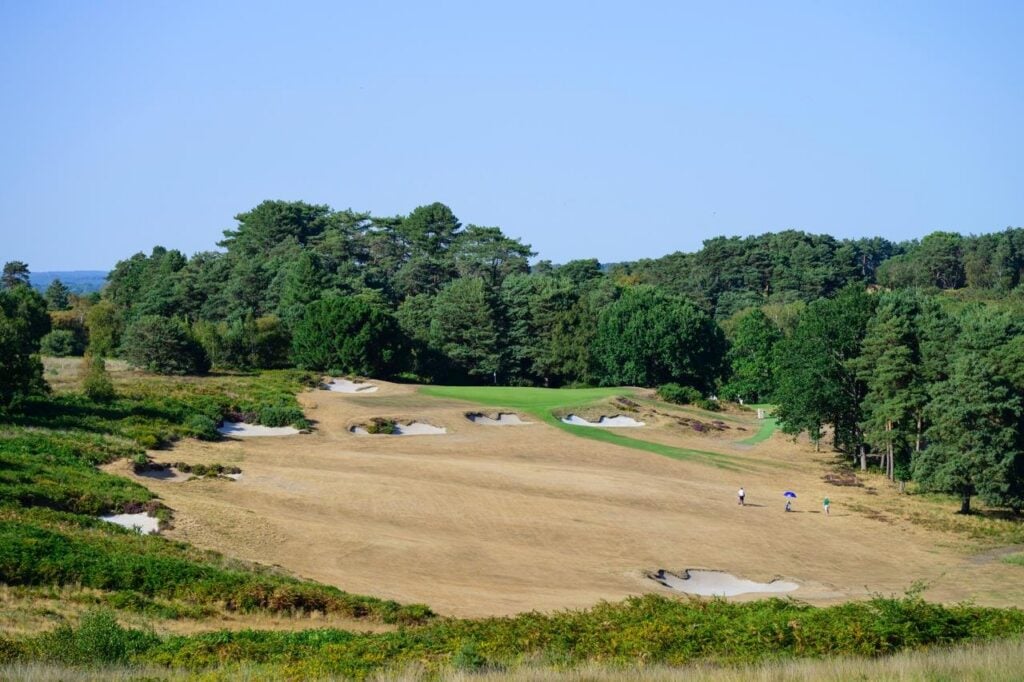
More than 70% of England is experiencing drought conditions and many clubs are operating under Temporary Use Bans which restrict how mains water can be used on the course.
An England Golf statement said: “With prolonged dry spells, rising temperatures, and increasing pressure on national water supplies, golf clubs are facing both regulatory requirements and a moral responsibility to manage water with care.”
It added: “This moment demands clarity, leadership, and action. Golf has an opportunity – not just an obligation – to demonstrate how sport can adapt responsibly to environmental pressures while protecting the playing surfaces that are essential to the game.”
England Golf drought statement: What do the restrictions mean for golf courses?
Last week, the Independent reported that legal restrictions were in place for 26 million people with every southern county subject to a hosepipe ban.
The Met Office are predicting the UK is on course to record the warmest summer on record, with the famous 1976 summer in danger of being surpassed.
England Golf said Temporary Use Bans do apply to golf courses, and while mains water could be used under such an order for greens and teeing areas, it was not permitted for fairways, approaches, rough, ornamental grass around the clubhouse, or landscaping and decorative planting.
“The principle is consistent,” they added. “Mains water must be used sparingly and only where absolutely necessary.”
The governing body continued: “While England currently has no active Non-Essential Use Bans, these tighter restrictions are being considered in some regions. Clubs should prepare now for the possibility of further limitations.”
Advertisement
With legally binding national water targets in place, including a 20% reduction in water put into public supply by 2038, and a 9% reduction in total business water consumption by the same year (rising to 15% by 2050), England Golf said golf clubs “must play their part in meeting these targets”.
“Reducing reliance on mains water and investing in alternative sources is no longer optional – it is a regulatory expectation.”
What should clubs do to reduce water use?
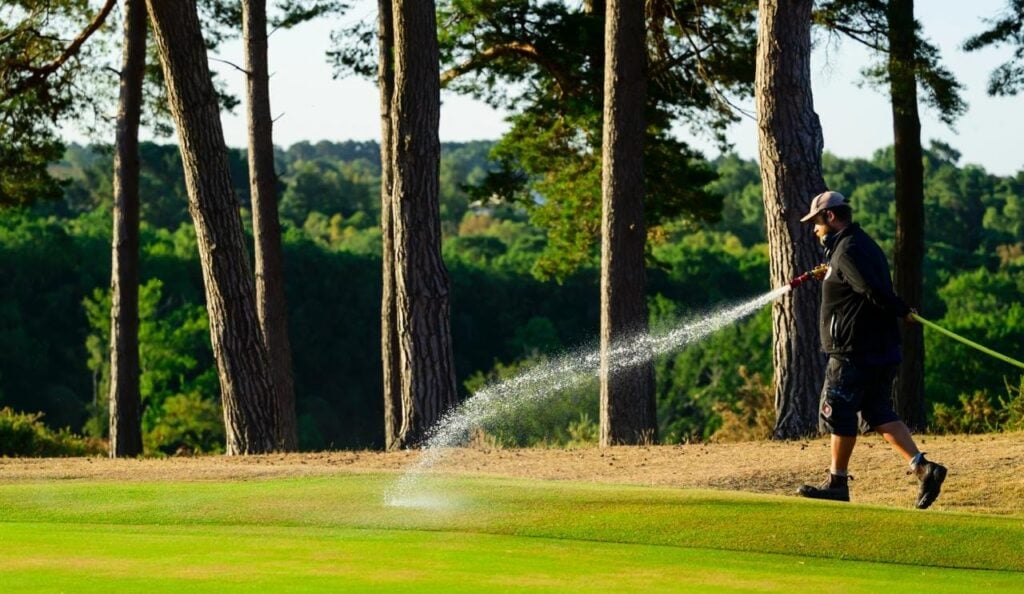
England Golf signposted their Water Security Toolkit, which can help clubs assess their water use, while exploring alternative sources like boreholes, reservoirs and rainwater harvesting.
The R&A’s Golf Course 2030 Project also provides further guidance along with their Water Portal.
England Golf said they were continuing to “work closely” with the Environment Agency, the British and International Golf Greenkeepers Association, and water companies to ensure clubs receive “clear, timely guidance”.
But they said clubs could already act on the following core principles:
- Use mains water only where permitted
- Reduce consumption wherever possible
- Plan for alternative water sources
- Communicate clearly with golfers about course conditions and restrictions
The governing body said the sport had a “collective responsibility” when it came to water use.
“Water security is not just a challenge for greenkeepers or club managers. It is a shared responsibility across the entire golf community. Every club, every golfer, and every governing body has a role to play in protecting this vital resource.
“By embracing water‑smart practices, investing in resilient infrastructure, and staying informed about evolving regulations, golf can continue to thrive—even in a future where water becomes increasingly scarce.
“The drought is a reminder that sustainability is not a distant concept. It is here, now, shaping the way golf must operate. With the right planning and commitment, clubs can safeguard both their courses and the environment for generations to come.”
Now have your say
England Golf drought statement: What do you think? Has your course been struggling during this summer drought? Does golf need to look carefully at how it uses water? Is what we’re seeing this year likely to become the norm? Let us know in the comments, or get in touch on X.
Pictures courtesy of Leaderboard Photography
Advertisement