




At the very heart of the World Handicap System are golf course ratings. It’s the metric that forms the basis for everything else – from difficulty to our own WHS indexes.
All across the Home Unions, teams of experienced volunteers spend countless hours visiting thousands of courses to deliver course and slope ratings and give us the basis for measuring our own ability as golfers.
Jonathan Ward is England Golf‘s national course rating coordinator. His role is to oversee the entire rating programme in the country and to support county and regional advisors to ensure all of the 1,800 clubs have a course that’s rated to WHS requirements.
A former county development officer for the governing body, and the county secretary at the Durham Golf Union for nearly seven years before taking up his new role at England Golf, Jonathan is steeped in the game.
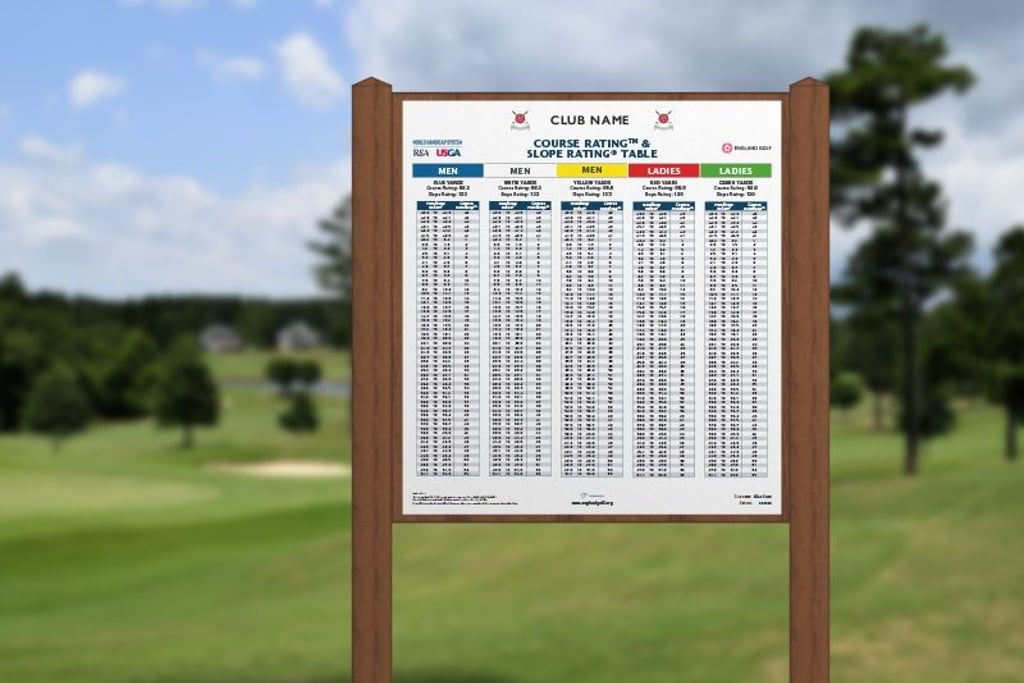
How is a golf Course Rating carried out?
“I think the biggest misconception is that someone walks the golf course, or even plays a course, and decides themselves whether a hole, or a course, is easy or hard,” Jonathan explains.
“While with previous rating systems there might have been a bit more subjectivity, with the new system it’s all about measurements.
“The raters and team leaders are all trained to ensure the right measurements are taken at the right places. Therefore, there can’t be any inconsistency around who was rating a course.
“You could have a scratch player and an 18-handicap golfer rating the course and, as they play, they would obviously see that course very differently. A lot of that is taken out with this process in that everyone is trained to take the right measurements in the right places.
“And the measurements are the measurements so, if they are taken correctly, there can be very little margin for error.
Advertisement
“That’s seen by the fact we have so few appeals to a club rating – because we can back it up with those figures.
“With regards to those measurements, a lot of the rating value comes from the yardage. You can have two 18-hole courses, of the same par, which could be very different in yardage so, obviously, the yardage makes up a lot of that.
“The rest is made up from what we call obstacles. That’s everything a golfer will find during that round of golf – from the carry, rough, bunkers, penalty areas, out of bounds, and the green targets.
“Each course is rated hole by hole and measurements taken. It’s not so much about how many bunkers, or ponds or carries, but where they are.
“We rate for the scratch and bogey golfer and, for example with bunkers, a lot depends on where they are. For the bogey golfer, we measure 200 yards from the tee and see where the nearest bunker, or penalty area, or whatever is found.
“For the scratch golfer, it’s 250 yards from the tee. A golf course can have dozens of bunkers, or ponds, but if they are not in those landing zones, as we call them, they are obviously less of a factor in the course rating.
“There’s a lot more to it than I think a lot of people realise and it probably takes at least four, or four and a half hours, to rate a standard 18-hole course – sometimes a lot more if it’s a very tough course with a lot more measurements to be taken.”
Have your say
What do you think about this discussion on Course Ratings? Let us know on X.