


Golf trips can be expensive these days, particularly if you are not prepared to compromise on the courses that you play.
For me, life is too short to use up time playing sub-standard courses when there are so many very good ones to discover and enjoy here in the British Isles.
But that does not mean I turn my nose up at pretty much any club whose name does not start with a ‘Royal’. Far from it. I take immense pleasure from finding great courses that are off the beaten track and my experience is that courses with character invariably offer something that makes the trip worthwhile.
This year, we are in the process of updating our NCG Top 100s Wales ranking. We have shortlisted almost 70 courses for consideration and will produce a top 50 at the end of the year. I am joined in this highly enjoyable task by over 30 panellists, each one a genuine lover of both golf and golf courses.
There are always courses that I want to go back to, often because more years have passed than I would care to admit since my previous visit, and anyway they are in a state of constant evolution.
Generally, the courses I have returned to in recent years have moved in a positive direction, which is great to see.
I also love taking the chance to see courses for the first time, and when I studied our Wales shortlist last winter, I realised I had spent too much time hugging the coastline, particularly in two broad areas: the north-west corner and along the M4 corridor in the south.
To rectify matters, I planned a trip that started in the south-east of the country and then very roughly followed the border north, eventually culminating in Wrexham.
The trip would take in games at: Newport, West Monmouthshire, Builth Wells, Llandrindod Wells, Welshpool and Vale of Llangollen.
Advertisement
I confidently predict that no golfer has ever played each of the above over the course of three days before but it just about made sense to me. I would love to hear from a reader who can prove me wrong.
Having driven to the starting line of the trip the night before, the days followed a familiar pattern involving drives of around 45 minutes from one course to the next, with our stopovers also helping to move us towards the next destination.
We begin at the course known to the locals as West Mon, the highest in the United Kingdom, and set above the old mining town of Ebbw Vale.
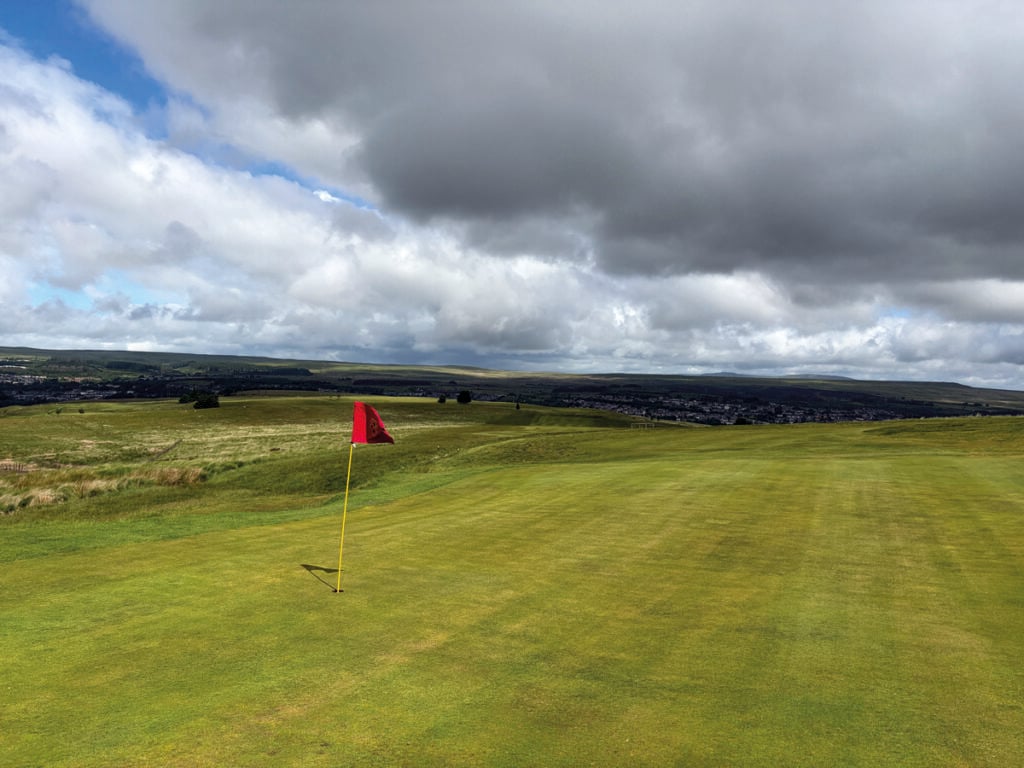
In what becomes a leitmotif for the week, the modest yardage on the scorecard bears no relation to the scale of the challenge. West Monmouthshire comes in at little over 6,000 yards even off the back tees and plays to a par of 71. Yet it asks you to hit every shot in the book – and then some more.
As with many moorland courses, there is an early climb to get to the best of the land but once you have completed the rather intimidating par-5 3rd, there is only one other hole that involves a significant incline and it comes in the form of a very well-constructed short par 5 – the 13th.
That apart, Ben Sayers tended to route play across the slopes, with many holes anyway on a plateau.
The first sign of something out of the ordinary arrives with the subtle undulations of the 6th green – move a yard in any direction when you are around the fringe and the angles of the chip will change again.
This heralds the strongest run of holes on the course, culminating in the 13th, with its green starting invitingly in the front left and angling towards the back-right finger.
The 14th is officially the highest tee in British golf and there is only one way from here back to the clubhouse and that is downhill, most significantly on the 16th.
It is some 240 yards on the card but all it really needs is a decent clip in the direction of the green way below. Then you stand and wait for the contours to do their thing and hopefully gather the ball into what is a natural funnel.
Like at North Wales GC, the 16th and 17th holes are back-to-back par 3s with the latter hole here a gorgeous proposition from the tee, the green defended by a pair of hills on either side.
The final hole is also sporty, a shortish par 4 where there is a reward for finding the higher, right-hand side of the fairway to set up a pitch to an attractively sited green and the chance of a closing birdie.
What a start to the trip.
It is a long way downwards to Newport from here, so much so that the golfer arrives in need of acclimatisation. The moorland vistas and minimalist course presentation is replaced by a well-appointed clubhouse, pristine course furniture, stripy fairways, lush green turf, flowerbeds and treelined fairways. It is genuinely disconcerting.
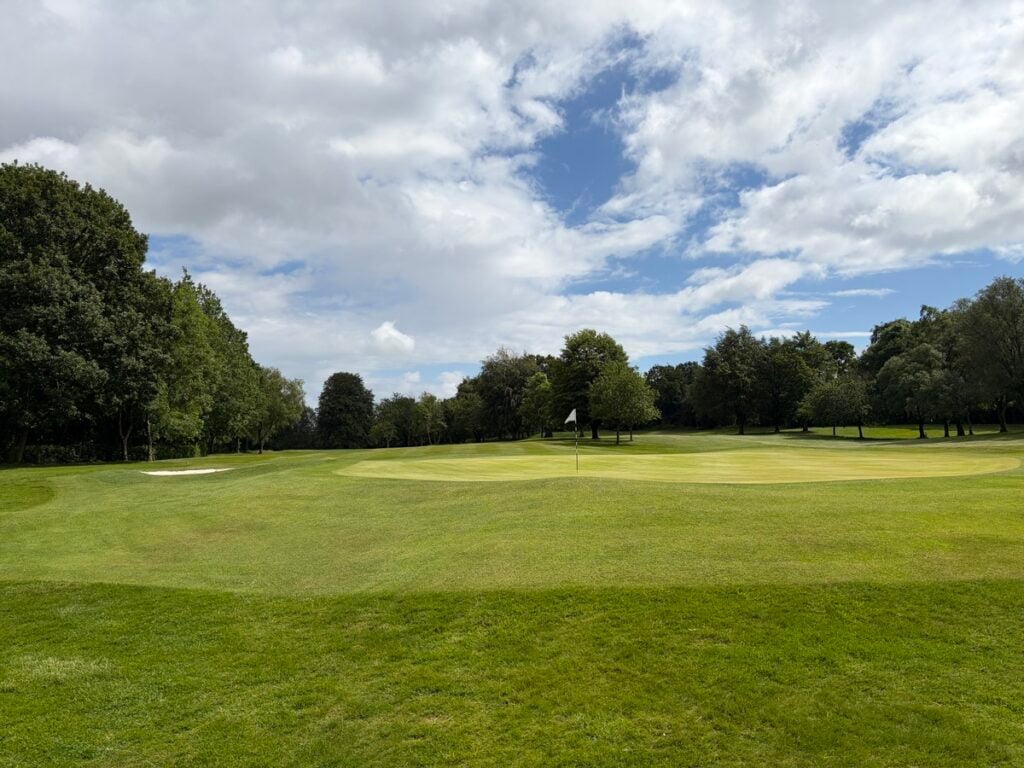
Newport is a Harry Colt design and he used the often-rolling terrain with typical imagination. The front nine comprise three par 3s, three par 4s and three par 5s so there is never a dull moment from the opening hole, a short par 4, doglegging right and uphill, onwards.
Two unmistakably Colt-ish par 3s, the 14th and 16th, the bunkering at the former creating a necklace at the front of the green, are the highlight of the back nine, though the par 4 that separates them, with a fairway set below the raised green, is also very good.
Advertisement
The last hole is a short par 5, which plays mercifully downwind after we are caught in a heavy shower. It provides an uplifting way to end a splendid and contrasting day of golf.
It is satisfying to conclude, from the comfort of the friendly Drovers Arms in Brecon an hour or so later, that West Mon is one of Wales’ outstanding moorlands and Newport one of the standout parklands. To play both in the same day is a real treat.
There is more parkland golf in the morning, at Builth Wells, where we are grateful to find as hospitable and cosy a clubhouse as you could wish for. The weather is not conducive so we take shelter and eventually start at the 6th, on the advice of pro Simon Edwards, which gives us a chance to enjoy the younger and sportier back nine.
There is barely a straight or flat hole here, with several short par 4s zig-zagging dramatically, generally around mature woodland.
We realise that a fade is a significant advantage more often than not, which is bad news for your correspondent.
It is always hard to know how to approach such one-off holes on first acquaintance – suffice to say that discretion seems often to be the better part of valour.
As endearing as the surrounds of charming and friendly Builth Wells are, it is time for us to head up in the world again.
Llandrindod Wells is bunker-less. It may not quite match West Monmouthshire for elevation but it cannot be far off.
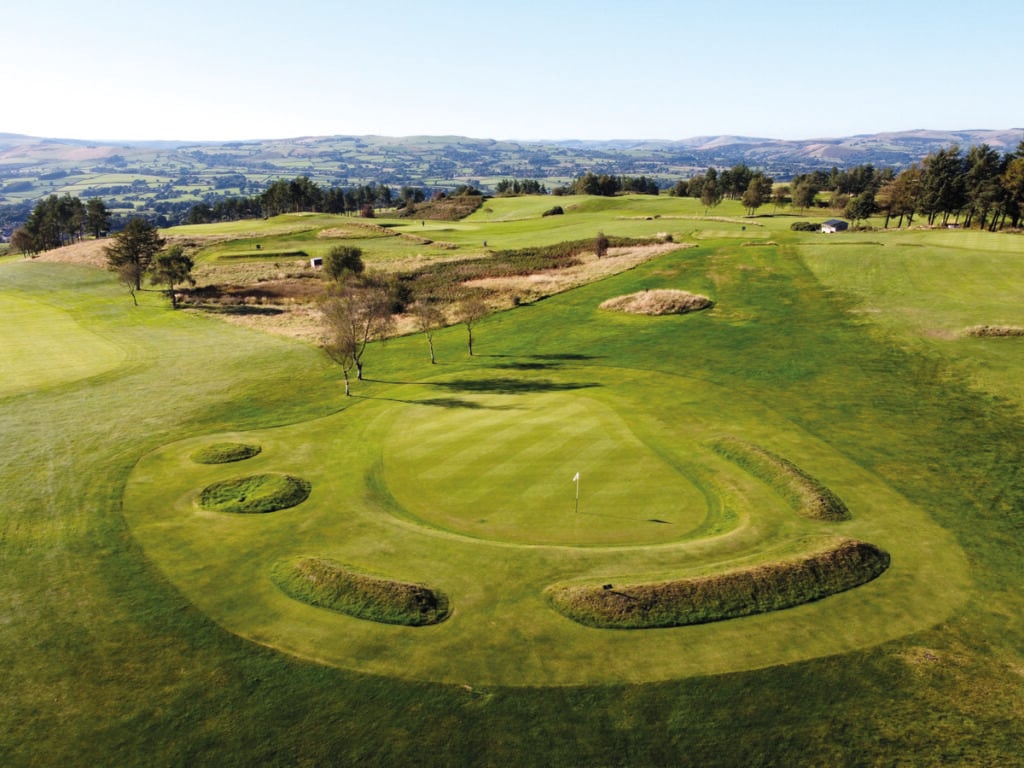
This moorland course is the work of Harry Vardon and James Braid. On an afternoon when the clouds are dark and scudding and the breeze ferocious, the first hole looks positively satanic.
Advertisement
It climbs vertiginously towards the flag in the distance and it comes as a huge surprise to discover that, after a decent drive, the green is only a pitch away and the hole is actually a very good way of getting you on to the flatter ground.
After the short 2nd, the road is crossed and the golf in prospect is stunning in both scale and splendour.
There are shades of the Kings and Queens at Gleneagles, and the higher holes at Broadstone, as well as other moorland classics like Kington, Cleeve Hill and Appleby.
The turf is a joy to hit from – firm and yet slightly yielding.
Wonderful work has been done on the course set up with the bracken, gorse and heather pulled well back away from playing lines to reflect the fact that this is an exposed course with fast-running and sloping fairways.
Even in winds that made it hard to stand up at times, there are few ball searches and no impending sense of a lost ball.
One of Llan Dod’s (the locals are very good at finding economical ways to pronounce long course titles) finest moments comes in the shape of the back-to-back par 3s at the start of the back nine.
The first of them is 240 yards, and is slightly reminiscent of the 11th at Royal Ashdown Forest in scale and vista. The green is large and the approach to it is actually a fairway, meaning there is a way to tackle it as a two-shotter.
You then turn 180 degrees to play a classic moorland par 3, the green a shelf cut out of the hillside, simultaneously an inviting target with gathering slopes and also difficult to find.
The last of half a dozen short holes, no two of them remotely similar, comes at the 17th where you are faced with a rocky hill and the top of a flag beyond. It appears intimidating but there is in fact a lovely flat approach short of the green to leave a straightforward chip. This may be the best of the sextet of one-shotters.
Advertisement
There is still more incident to come – the last hole is called Death or Glory and is a short par 4. It tempts you into a drive across a ravine, over the road and on to a higher plateau where the green is found. It is a fine and dramatic last hole, entirely in keeping with what has gone before.
The evening is spent in Llanidloes, a pretty little town alongside what is the origin of the River Severn, and the following morning sees our final moorland excursion of the week.
We are heading to Welshpool, to study more of Braid’s work. What a course to arrive at, the clubhouse in the middle of the golf, with prime moorland turf and fluttering flags all around.
This feels like golf on the wedge of the world, pristine fairways tumbling away into steep drop-offs and expanses of bracken.
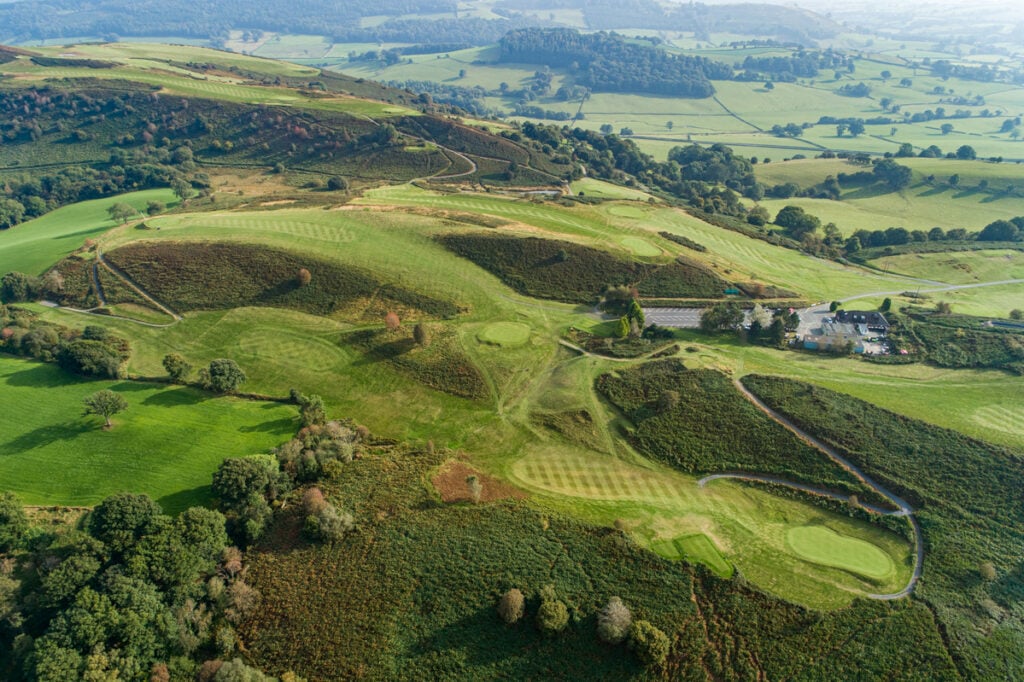
Again, there is a climb in the early stages, in fact much of the front nine tends upwards, with the exception of the 6th. Notably, the 1st, 3rd, 4th and 8th all take you to higher ground before you turn back towards the clubhouse.
There are holes that live long in the memory here, like the par-3 11th, on the highest ground, with its elusive handkerchief-sized target, and the extraordinary 12th, where the drive is over a ravine and the fairway, heading abruptly left, is banked towards the tee. It is a one-off.
By now we are back at the clubhouse and indeed the 13th was originally the opening hole. The last three holes play in a circle around the back of the property and are all shortish par 4s, making for an exciting finish to the round.
Thoroughly windswept, we make our way down, down, down and back to normality, in the shape of the parkland course at Vale of Llangollen, just outside Wrexham.
The scene could hardly be more different – we arrive at the tail end of a seniors’ open competition with grizzled and damp competitors in their waterproofs manoeuvring their Motocaddies back to the car park.
Below us, lush green fairways extend into the distance, towards the River Dee that runs adjacent to several holes.
Beginning with a sharply doglegging opening par 5, this is an altogether different challenge. The fairways are lined by mature trees, there are streams and ponds to traverse and out of bounds is a recurring factor, not just on the perimeter but also on account of the interior practice ground.
The flight of the ball is invariably set against a stunning backdrop of the hills that line the valley, which gives the golf an almost Alpine feel.
The greens are receptive and can be dangerously quick in places, if you miss on the wrong side of the pin.
Fail to find the fairways and you will be chipping out or taking on ambitious recoveries through the trees.
The most challenging stretch of holes begins with the 9th, a long par 4 with the fairway in a crook of the Dee. It doglegs sharply left towards the green, which you only get to see as you round the corner. With trouble left in the form of a hillside, this really is a card-wrecker from start to finish. The run of par 4s that follow are also tricky, though thankfully not as downright menacing as the 9th. Some offer the chance of a drive-and-wedge birdie before we enter the closing stretch that includes two short holes, a par 5 and short 4.
The 18th is a fine par 3, the green set slightly above the tee and on two distinct levels. It is the kind of finishing hole that offers the chance of a late flourish but is also a tricky challenge to round off a decent score.
Not one of the green fees on this trip threatens three figures, and most of them are well under £50, especially if you can be flexible with when you play.
My heartening verdict is that the golf trip as an affordable treat still exists, in Wales at least, allowing us the chance to play outstanding new courses.
I doubt you will want to do as much moving about as we did but take your pick, establish a central base and I guarantee you will enjoy a trip to remember at a price you can countenance.
10 great Welsh courses I have played this year
Aberdovey
In sensational condition, partly thanks to a new irrigation system. Undoubtedly one of the very best links in Wales – and the UK for that matter. You will need to go a long way to find a more striking opening and closing stretch to a course.
Builth Wells
A pretty parkland course that blends the well-ordered (front nine) with the unpredictable (younger back nine). It’s all within a short walk from the cosy clubhouse and charming town centre.
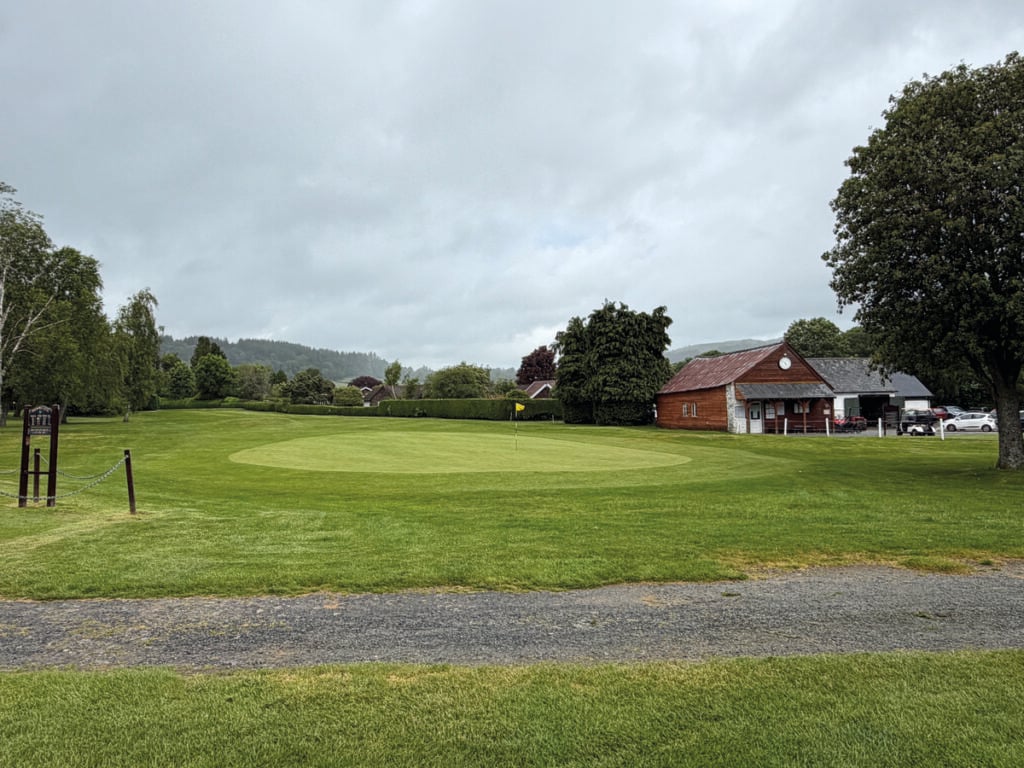
Llandrindod Wells
One of the finest examples of moorland golf in the land. Designed by the combined talents of Harry Vardon and James Braid, it is truly stood the test of time despite the deceptively modest yardage.
Llandudno (Maesdu)
A mainly parkland course separated from North Wales GC by the railway line to Anglesey. Well presented and featuring some tricky greens complexes that are all about angles of approach.
Newport
An impeccably presented Harry Colt-designed parkland that flows imaginatively through woodland and is well bunkered with plenty of variety.
North Wales
There is bags of character at this historic Llandudno links. The highlight of the round comes late on at the back-to-back par-3 16th and 17th holes that form an X shape.
Royal St David’s
Surely the sternest test in Wales, especially when the wind blows across the morfa. Sitting underneath Harlech Castle, the conditioning is exemplary and matches the surroundings.
Vale of Llangollen
Dating back well over a century, this enjoyable parkland is actually within the designated area of a World Heritage Site – namely the Froncysyllte Aquaduct. It is an extremely attractive place to play.
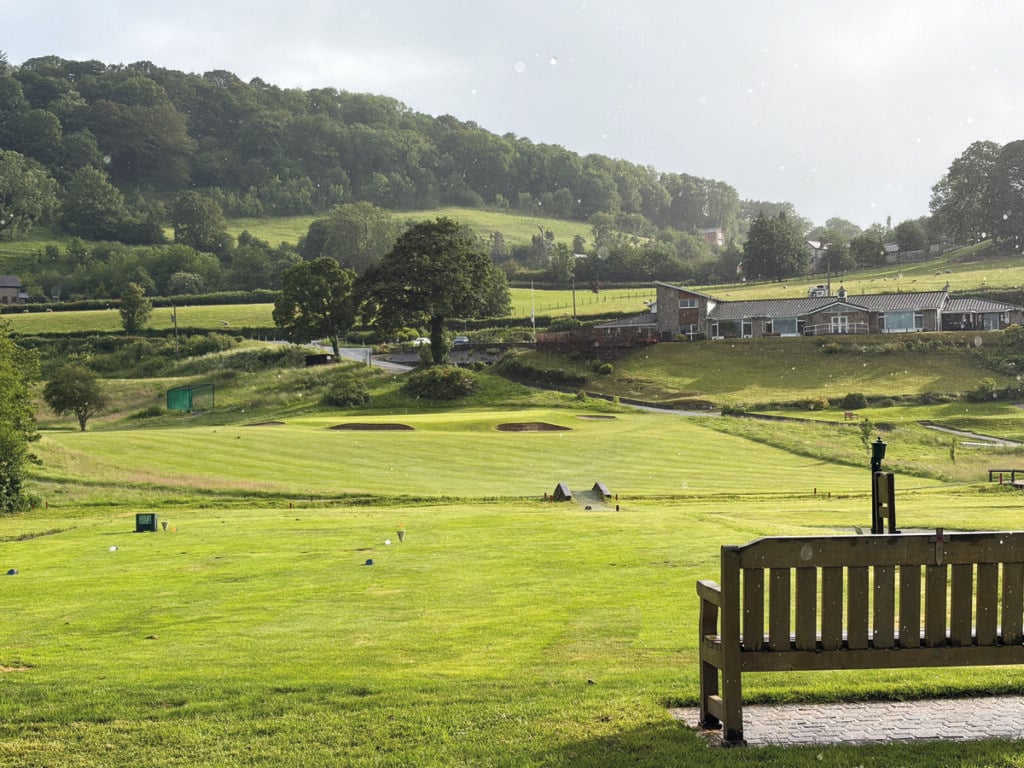
Welshpool
This James Braid moorland features multiple changes of direction and includes some wonderfully situated greens just a mile or two away from the border with England.
West Monmouthshire
The highest golf course in Britain is a spectacular and historic moorland where the excitement just keeps coming. Ben Sayers used the land at his disposal with rare skill, meaning that once the higher ground is found, many of the holes play across rather than up or downhill.
NOW READ: Why Wales offers some of the best value golf in Great Britain & Ireland
NOW READ: Why so many golf clubs are cutting down their trees
NOW READ: How golf course rankings have evolved over the last two decades
What is your favourite course on the Welsh Borders? Tell us why! Comment underneath and on Facebook!