Have you ever stood over a relatively simple chip shot and just felt as though you’ve forgotten how to play golf?
Whether it’s a chunk, a thin, or anything in-between, we’ve all been there when what seems a straightforward shot turns into a bit of a disaster. Your hands tighten, your swing gets a little more tentative and instead of thinking about hitting it close you’re worried about dumping it in the bunker or water.
Some golfers label these as yips. Whilst this may be the case for those who suffer from involuntary movements or twitches, specialist short-game coach Louis Savill believes golfers should be careful about describing every bad chip as the yips.
He argues this could overlooking technical issues and covering up a lack of confidence that could be contributing to their struggles.
“We broadcast all bad short game shots as yips at the moment,” he told the Your Golf podcast. “Someone duffs a chip, ‘I’ve yipped it. That’s it, it’s me over. That’s me done’.
“We don’t do that in any other part of the game bar putting. If I wang a tee shot 50 yards in the tree, I don’t suddenly have driver yips, I just hit a bad tee shot. If I stand there and hook a 7-iron into a bush, which I’m very capable of, I don’t have full swing yips. I just made two bad swings, and we can kind of just chalk it off as tough stuff.
“Whereas in the short game, if we do it, I think because the contacts are a lot slower and the target’s so close, it feels more personal.”
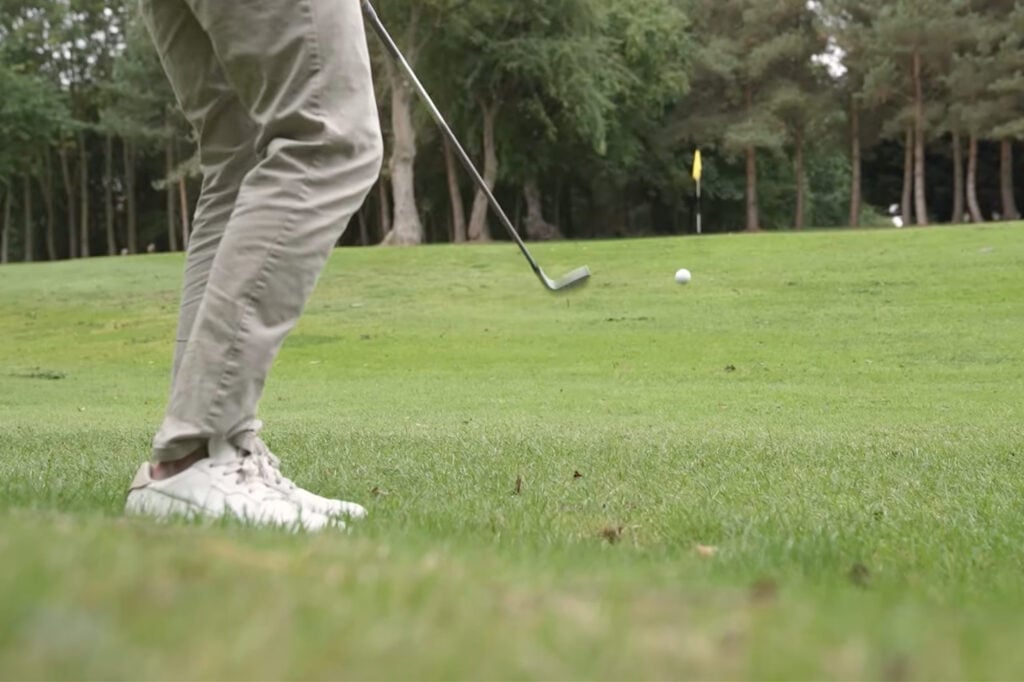
Why chipping is such a mental battle
Even when golfers are improving it’s the constant thought of what can go wrong – and what has previously gone wrong – which offsets that progress.
Advertisement
“I think golf coaches really have two jobs in this scenario,” he explained. “One, we have to get rid of the snakes from the woods. Two, we have to keep convincing you there’s no more snakes in the woods because every twig that you brush, you’re going to think it’s a snake, and there’s no one more harsh on themselves than golfers.
“A lot of what we’ve done through The Yip Project was online support of understanding stuff and understanding different lies, but really just to be that sort of support mechanism.
“The bad shot that you just showed me you hit went to 12 feet, it was okay, we’re good. The bad shot before did not go to 12 feet. It was 12 yards over the back of the green. We’re okay, we’re improving.
“A lot of the time, because we’re looking for that problem, we often find it.”
Savill was keen to distinguish between genuine cases of focal dystonia, a neurological movement disorder, and the fear that can develop when golfers repeatedly struggle with their technique.
“What I see a lot of is fear,” he added. “They’re fearful because, unfortunately, the technique’s rubbish. If anyone had their technique, they’d be fearful too because they’re not hitting good shots a lot.”
He believes repeated technical problems can lead to compensatory movements through impact, which golfers may then interpret as the yips. This can cause confusion about what is the fundamental flaw in a golfer’s swing.
“For me, first things first, it starts as a technical issue. The repetition of that poor technique over and over time creates a compensatory movement, and that’s what I think most people see as a yip – that twitch through impact.
“A lot of the time, and this is my experience, the compensatory movement, that yip, is actually the most functional part of the move. They’re trying to fix something that’s happened way earlier in the swing. That could be a poor setup, a bad concept, something going on in their backswing.”
He added: “If we can put the right mechanics in with the right concept and the right kind of methodology, we can roughly remove the compensatory movement. The fear part of it is the really fun bit because they’re still going to be waiting to hit a bad shot.”
LISTEN TO OUR PODCAST
NOW HAVE YOUR SAY
How does chipping stack up to the rest of your golf game? What is the strongest facet of your game? Are you more confident putting or chipping around the greens? Let us know in the comments or by getting in touch with us on X!
- NOW READ: The biggest putting difference between pros and amateurs is not what you think
- NOW READ: The putting practice mistake almost every golfer makes
Advertisement