



Learning about the golf swing can be a black hole of information and it can seem tough to know where to start. In the video below, PGA professional Jack Backhouse explains the basics of the golf swing and 3 principles you can work on that will improve your game.
- RELATED: 3 Things That Destroy Your Golf Game (EASY TO FIX)
- RELATED: How Far Should You Hit Your Golf Clubs
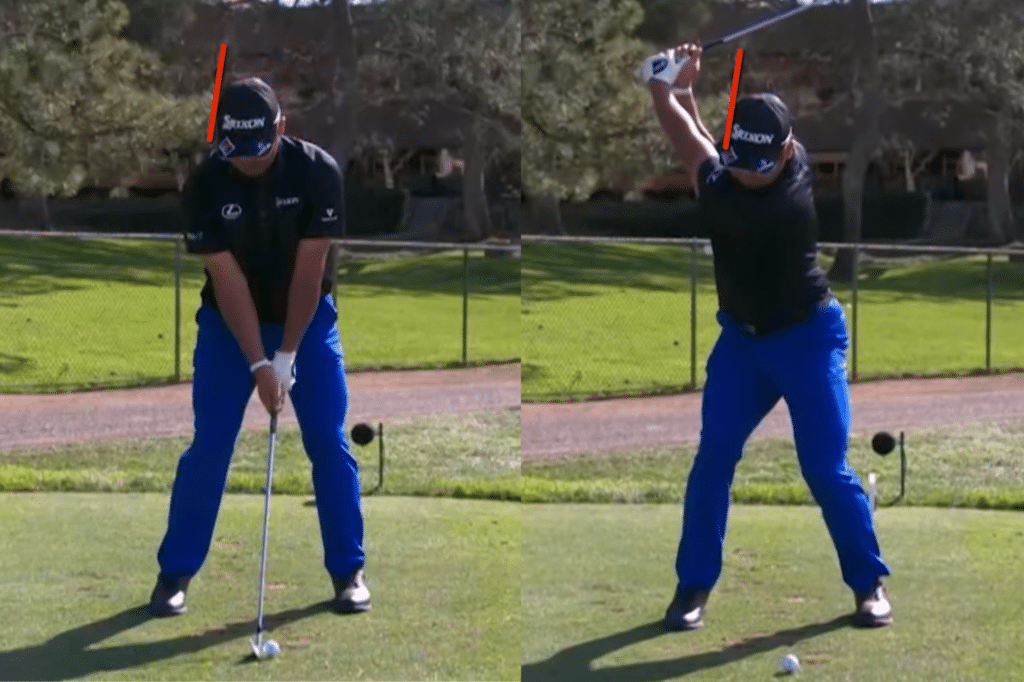
Steady Head
Good contact is the key to low scores and enjoyable golf. Striking the ball before the ground rids your scorecards of any duff shots where the ball travels shorter than you can throw it, and incredible frustration. If you knew you would be on or around the green in two or 3 in every round, you would be breaking 90, no problem.
The first principle of a good golf swing is maintaining a steady head. We all know this, but not everyone knows exactly how to do it.
Golfers want to try to make a full 90-degree shoulder turn and feel like they are staying over the ball. This might feel like the weight stays more towards the front foot, but we want to try and avoid any left-to-right or up-and-down movement throughout the swing.
From there it is very easy move your weight forwards during the rest of the swing, with the upper body and lower body moving to face the target.
This will help improve the club’s strike with the ball, allowing you to advance the ball forwards down to the green effectively.
Straight Lead Arm & Flat Left Wrist
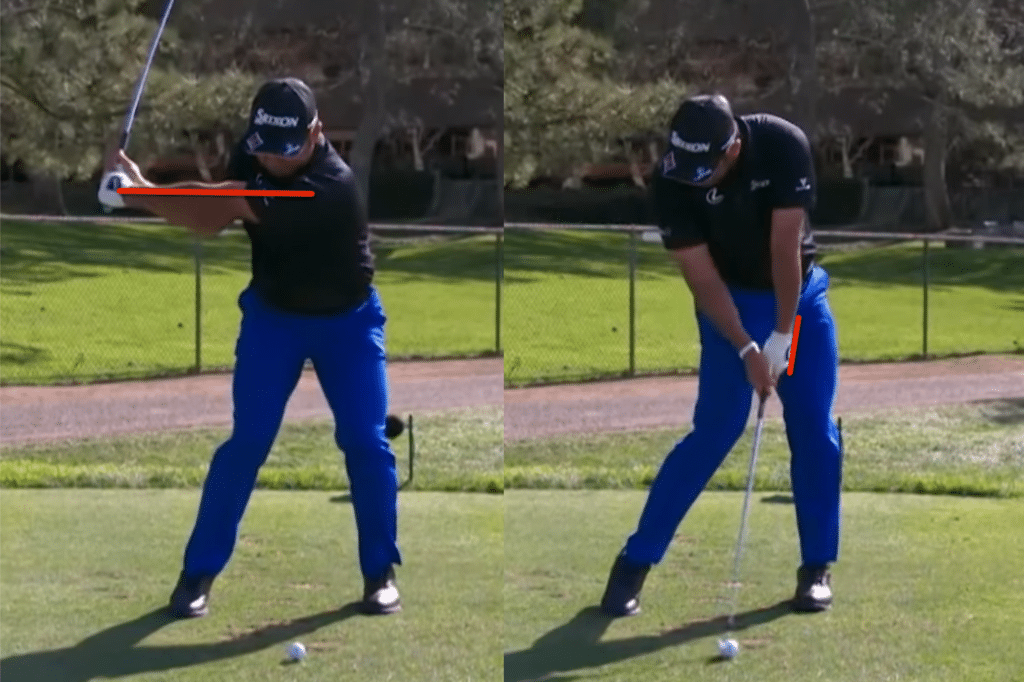
Once we have a centred pivot where our hips and shoulders are rotating without too much unstable movement, the next step is to maintain a straight lead arm (left for a right-handed player and right for a left-handed player) and a flat lead wrist.
Any variation in the wrist and lead arm will affect the strike and the direction of your golf shots. The lead wrist, in particular, is directly correlated to the angle of the club face, provided the grip is correct.
Advertisement
The lead wrist will start slightly bent depending on hand placement, whether you have a ten-finger grip, an overlapping grip, or an interlocking grip, and whether the club is laid down all ten fingers and not too palmy.
The golfer should work the wrist into a flat position as early in the swing as possible and then maintain this angle throughout the rest of the swing.
The trail arm folds as this is a power source, but not far enough to create a bend in the lead elbow.
Trail Arm Release
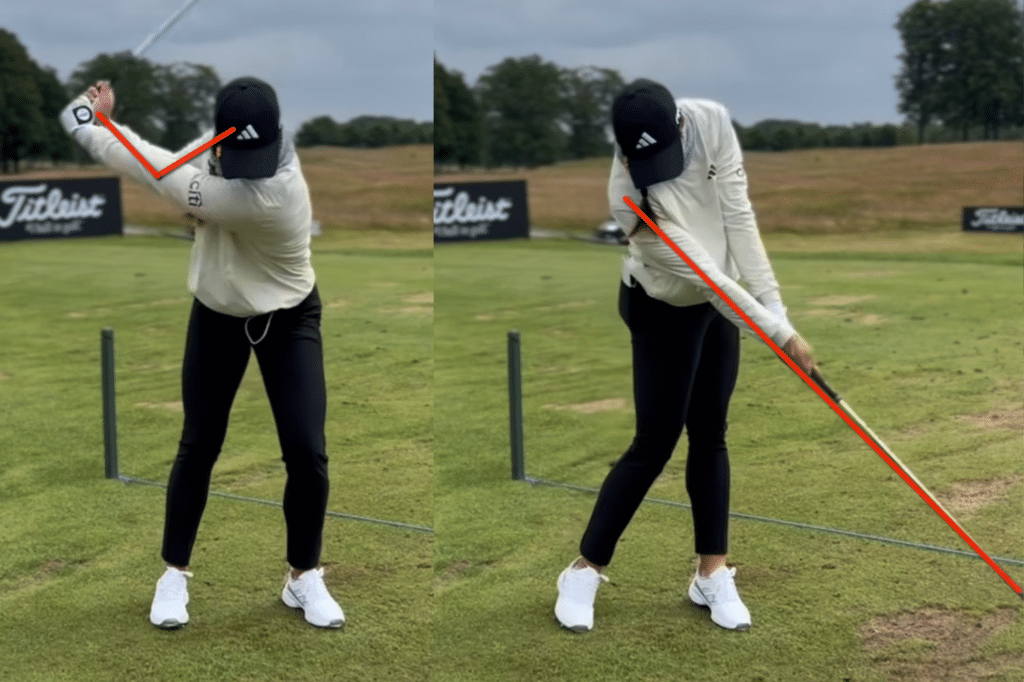
In the backswing, the trail arm should fold, and then it should extend into impact, reaching entirely straight just after the contract.
The quicker the trail arm releases, the faster the golfer can swing the club head. This requires an element of timing in the golf swing, but adding any power source does.
A golfer will learn how to manage the trail arm extension to control speed and trajectory, with a more bent trail arm producing less speed and a lower flight, and maximum extension producing more speed and height.
Working on these 3 rules can help a player of any level improve their ball striking, their control of the golf ball, control of the club face, and help them hit the ball to the target more often.
Improving the conditions of the club at the moment of impact will never be a waste of time and will always improve your game.
Give these tips a try and let us know how you get on! If you want to keep up to date with Jack’s instruction you can subscribe to his YouTube Channel here, or keep watching our instruction page!
If you want to watch some more of Jack’s instruction videos, you can get to his YouTube Technique Tips playlist by clicking here. Please check out our other instruction articles if you like this video on Golf Swing Basics – 3 Principles for ALL Swings.
- RELATED – On Course Scoring Drills: 3 Hole Worst Ball Challenge
- RELATED – How To Drive The Ball Like Rory McIlroy
- RELATED – How To Set Up To Driver
Advertisement