



When the course is wet, generating the same amount of spin you would on a dry day becomes considerably more difficult. But why?
Rain can cause plenty of issues for golfers. We’ve all been there when you hit a wedge that looks destined to stop beside the flag, only for it to land on the green and race away.
It’s infuriating. You might blame the strike, the club or even the greens, but when you’re playing in wetter conditions these things tend to happen. Moisture can change what takes place in the tiny fraction of a second as the ball meets the clubface.
“It (water) just gets in between the ball and the face, so the moisture is there,” Mizuno’s senior marketing lead George Thompson told the Your Golf podcast.
“Bits of wet grass can also affect it as well where you are hitting it. But if we’re just talking moisture, it just gets in between the face and the ball, and that affects spin numbers.”
It’s an issue that can affect lower lofted clubs too, but is particularly noticeable with wedges because of the reliance on friction to generate spin.
Thompson explained that when water gets in-between the ball and clubface that interaction is compromised, which results in a drop-off of spin rates.
“[It] Just means that the traditional grooves can’t grip onto the ball as effectively as they would do when it’s dry, so you end up getting fluctuations in spin,” he added.
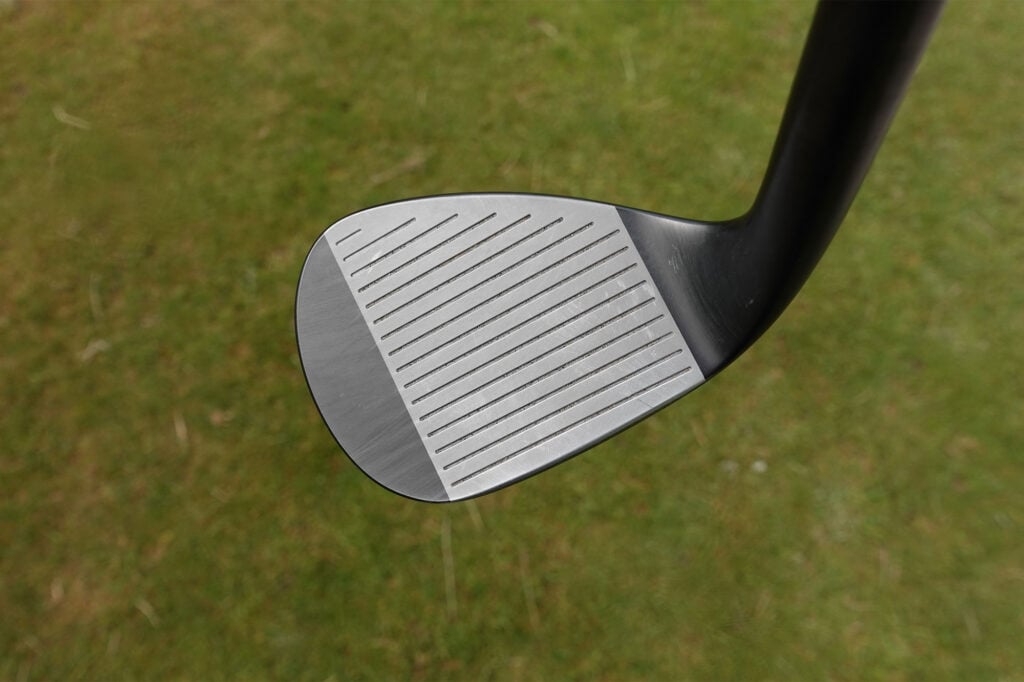
Why do wedges lose spin? How is modern technology helping prevent this?
Groove technology has consequently become an important area in the development of wedges. Modern designs are constructed to help maintain performance levels in more adverse conditions.
Mizuno are one of the manufacturers to have leaned into this with their latest range; the T-Series. They have developed their own Hydroflow micro grooves to help enforce these performance benefits.
Advertisement
“We have quad cut grooves,” Thompson said when explaining their groove tech. “We also have micro grooves on there. So it’s quite commonplace now to have a secondary layer of grooves and we call them hydroflow grooves, which are there for added grip.
“Also in wet conditions they will filter water away from the impact area, so you shouldn’t see that drop off in spin that you sometimes see when you’re hitting in these conditions.
“The quadric grooves are quite aggressive grooves as well, so you’ll end up with really good spin performance on them. They should nip.”
As you’d imagine there are significant engineering challenges involved in developing this technology, especially when trying not to fall foul of rules on groove design.
“I imagine in terms of making sure that the design is conforming, [it] potentially might take a couple of iterations, just because The R&A are so hot on groove tech these days,” Thompson said.
“But I think, in terms of the execution, or the idea, the principle itself is fairly straightforward. It’s a case of having small areas where the moisture can escape to get away from the ball [and] having contact with the big grooves that generate the spin.”
LISTEN TO OUR PODCAST
NOW HAVE YOUR SAY
Why do wedges lose spin? What wedges do you have in the bag? Do they struggle to produce enough spin in the rain? Do you struggle with your short game or is it a stronger part of your game? Let us know in the comments or by getting in touch with us on X!