


Golf clubs are a serious investment. We’d all like to believe spending more money will result in buying a better model that will improve our game. But when the difference between various clubs can span hundreds of pounds, it’s a reasonable ask to know if it’s worth the extra cost.
Recently we tested 20 different wedges to see if spending more money gets you a better golf club.
Value isn’t simply about finding the cheapest wedge. It’s about how good the club is for the price you’re paying.
If a £99 wedge performs almost as well as one costing twice as much, what are you exactly paying the extra for? Is it just the allure of playing a more premium brand? Or are the performance benefits that much greater?
Price and performance doesn’t always go hand-in-hand
During our testing, we were unaware how much each club cost before giving them a go. It made us think about how much our perception of a golf club is influenced by its price.
If you know you’re hitting a £279 wedge before you hit it, you might expect it to feel better. You might expect it to spin more. You might even convince yourself you like it more because you’ve already decided that something costing that much must be better.
Take the Takomo Skyforger 2 wedge. It costs £99 and scored 4.8 out five for value from our testing day. It was impressive, looked good and performed well.
The Wilson Infinite and Rife models offered the same sort of thing. These were wedges around the same sort of mark as the Takomo and offered plenty for their price.
But that still doesn’t mean a £99 wedge can directly rival one that will set you back triple that. On the flip side, spending that much more doesn’t result in three times the performance. It’s all a bit circumstantial.
Advertisement
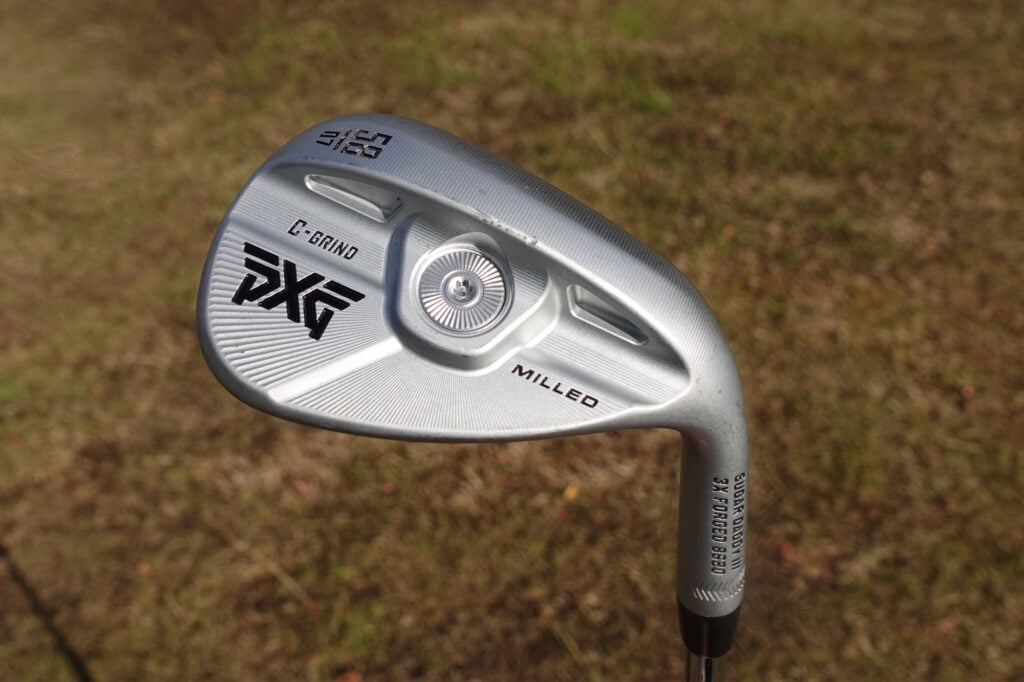
The PXG Sugar Daddy 3, for instance, scored really well across a number of our sections but when it came to value, we gave it a modest two out of five. That really showed how performance and value don’t necessarily go hand-in-hand.
| Takomo Skyforger 2 | Wilson Infinite | Rife | PXG Sugar Daddy III | Proto Concept | |
| Average spin rate (RPM) | 6887 | 6544 | 6547 | 7320 | 6779 |
| Average height (feet) | 29 | 25 | 22 | 29 | 26 |
| Average carry (yards) | 50.6 | 48.6 | 47.9 | 46.8 | 46.8 |
It is totally feasible for a manufacturer to make an excellent wedge, load it with technology and have it perform brilliantly, but if it costs significantly more than its competitors, the price still matters.
Then you factor in that a complete wedge set-up generally consists of three or more different wedge lofts, that extra cost is going to add up.
It’s a tricky balance to strike for golf brands. A wedge costing upwards of £300 doesn’t make it overpriced, and equally I don’t think you can say it is worth the money just because it performs well.
Are you getting noticeably better performance? A shape you prefer? Better fitting options? More adjustability? A feel that you simply can’t get from a cheaper model? Or are you mainly paying for a popular, tour-approved brand?
What our testing showed was that cheaper brands shouldn’t be discounted so quickly, and the more expensive options must justify their extra cost.
LISTEN TO OUR PODCAST
NOW HAVE YOUR SAY
How much would you spend on a wedge or a set of wedges? What’s the most expensive club in your bag? What model and make of wedge do you currently have in the bag? Let us know in the comments or by getting in touch with us on X!