Ever stood over a shot wondering whether to trust your rangefinder or your GPS watch? Yeah, me too.
Distance measuring devices (DMDs) have become an important part of the modern game, but with so many options, which type is actually the best?
I wanted to find out, so I joined the NCG DMD testing day to compare the latest and best rangefinders, watches and hand-held devices from all the big brands. We gave them the full run-through, from ease of use to display quality, accuracy and value for money.
What struck me was just how popular golf watches were, according to our findings as part of a survey we conducted.
To find that 54% of respondents have one on their wrists during a round, compared to just 45.5% who are laser users, was quite the shock.
And if I’m honest, it’s not hard to see why so many favour them.
They operate at lightning speed – a different level of convenience. A glance at your wrist gives you pretty much every conceivable metric you could need. There is no real pause between shots from having to retrieve a device from your golf bag and manually zap a flag.
A laser rangefinder gives you distances to a specific point, but a GPS watch provides a much broader picture of the hole. You can check distances to hazards, identify lay-up points and plan your way around trouble even if you’ve never played that hole before.
As golfers, we’ve been conditioned to want more than just the generic distance to the flag. We treat these DMDs as if they are a caddie. Ahead of every shot, we’re being told where the danger is, how far away it is, and we’re being relayed hazards you can’t see with your eyes.
Advertisement
Ditching my rangefinder will be hard, but it’s time for a change
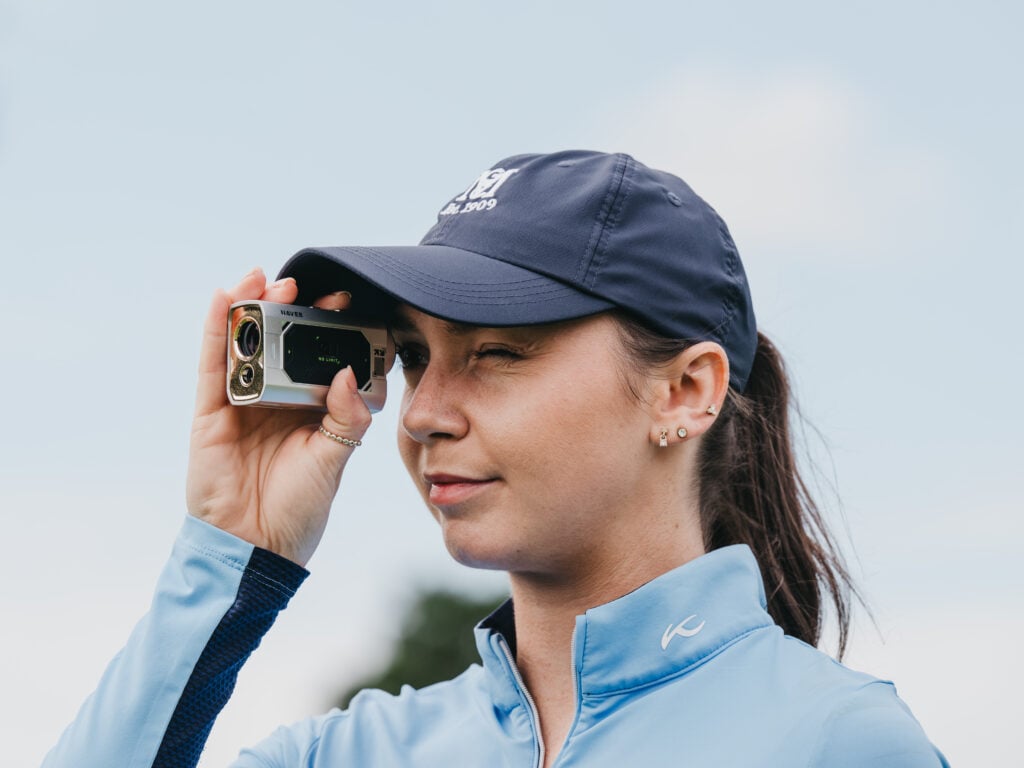
I’ll admit, ditching my laser rangefinder won’t be easy. There’s something reassuring about being able to measure the exact distance to a specific target, whether that’s carrying a bunker or finding the perfect lay-up spot.
They remain a popular choice for a lot of other golfers, I don’t doubt that. Our own research was very close and not much separated those who used a watch and those who went down the more traditional rangefinder route.
For those who like to know the exact distance to a particular target, they offer something a GPS watch cannot replicate in quite the same way.
But after testing the latest devices, I’m ready to commit to a golf watch.
The convenience is hard to ignore. Having distances, hazards and a map of the hole on your wrist makes on-course decisions easier, and that’s before you consider what these devices can do away from the fairways.
It’s quite remarkable how easy they now double as everyday smartwatches. All the big brand offerings feature the things we demand from a touchscreen watch, like tracking steps, heart rate, sleep and other fitness activities.
Depending on the model, they also provide notifications from your phone and help monitor your exercise across a range of sports.
Perhaps that’s a big reason they’ve become so popular. We’ve developed an obsession with tracking our data – a kind of post-pandemic ‘Stravafication’ of everyday life.
From 5k runs to lunchtime walks, we’re all increasingly keen to measure every aspect of our activity and golf GPS watches tap into that mindset.
They play to the gallery better than almost any other device. It’s this seamless ability to combine on-course performance with tracking our bodies which makes them so appealing.
I, as many of you who are deciding which to buy, might find it hard to leave the rangefinder in the past completely, but if I’m choosing one device to take forward, it’s the golf watch all day.
WATCH OUR YOUTUBE VIDEO
NOW HAVE YOUR SAY
What type of distance measuring device do you use out on the golf course? Which is your favourite you have used to date? Do you prefer a watch or a laser? Let us know in the comments or by getting in touch with us on X!
- NOW READ: Most golfers don’t need more GPS data, they need to hit better golf shots
- NOW READ: The sound of your driver matters more than you think
Advertisement