


Whether it’s a heatwave, or a period of prolonged rain, we all know the weather is the key factor in deciding how playable our golf course will be at any point of the year.
But just how tough are extreme weather conditions making it for greenkeepers?
For Your Course, produced by the British and International Golf Greenkeepers Association, we spoke to three course managers from across the UK to understand how are they managing the weather challenges that arise during the year.
This week, we are asking how greenkeepers plan for extreme weather and how they manage the expectations of golfers.
Tackling those questions are Sam Cook, Course Manager at Frinton, in Essex; Alec MacIndoe, West Surrey’s Course Manager; and Geoff Smith, Course Manager at Abridge, in Essex.
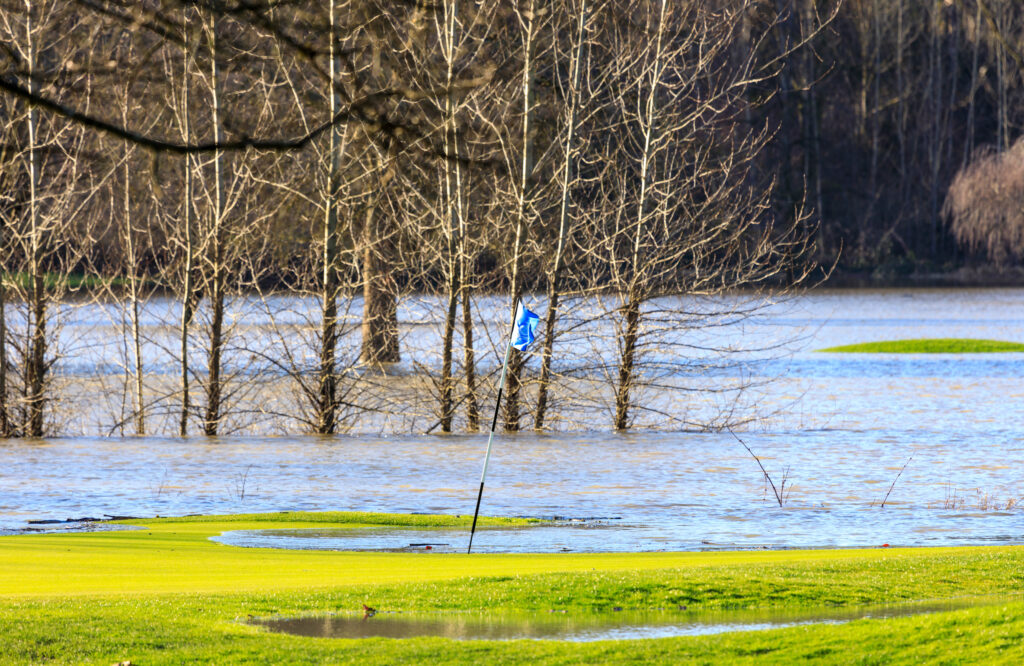
The climate is becoming more extreme and less predictable – how do you plan accordingly?
Sam: With great difficulty. The unpredictability is a nightmare. This year, we went 35 days without a drop of rain – that’s April we’re talking about. Then sometimes we’ve been hammered when we weren’t expecting anything. It makes it almost impossible to plan topdressing, fertilising, seeding – anything.
Geoff: The last 12-18 months have been the toughest I can remember in my time as a greenkeeper, and ‘extreme’ is the right word – from very wet winters and flooding, to record dry spells all through spring. It does make our jobs harder.
Not all clubs have the same weapons to fight this battle with do they?
Alec: Just looking at irrigation, some neighbouring clubs have reservoirs four times the size of ours, so of course they’ll cope better and look better during a dry spell. Then there’s topography – some courses are on clay, others on sand. We’re heavily tree-lined, so humidity is a factor for us too.
Sam: Turf management in dry conditions is expensive – more wetting agents, more fertiliser, more labour. And we’re all trying to balance quality with budget and manpower. I’ve got a decent budget, but we’re competing with clubs that have a lot more and twice the staff. Members might say, ‘Why is it better down the road?’. Well, they’ve got more money and fewer problems.
Advertisement
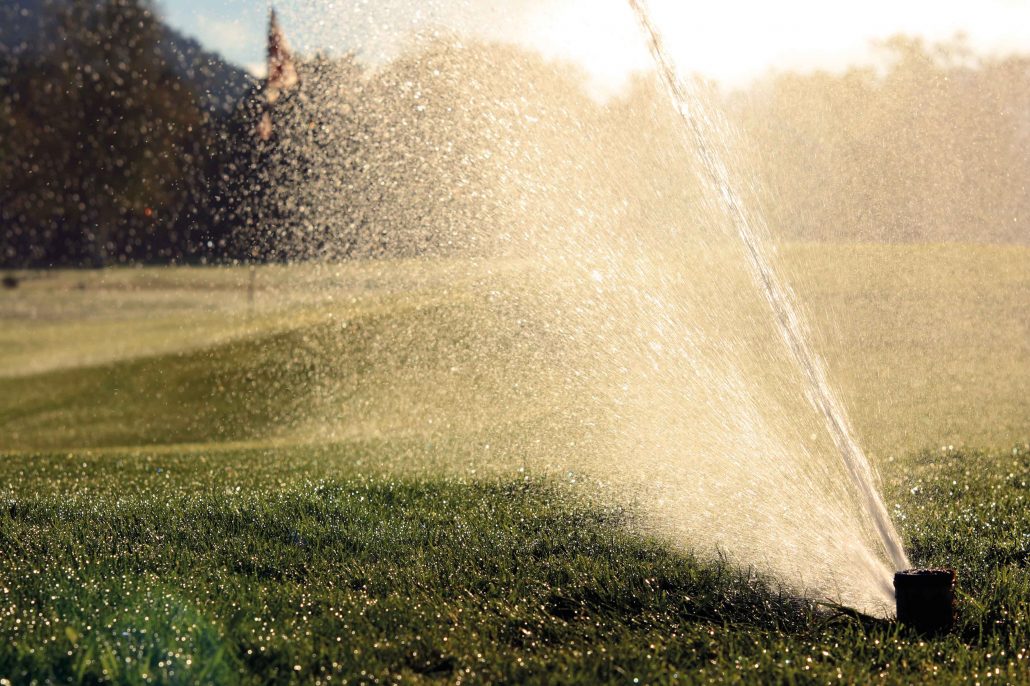
But if you can invest in things like irrigation and drainage, will these things have a long-term impact on extreme weather?
Sam: Our irrigation pipework will last 40 years – it’ll outlast me, half the board and most of the current membership. But people like to see what their money’s bought. All they saw here was some black pipe in the ground. But without that, your golf course has no future.
Alec: It certainly helps, but people should also appreciate that these things are tools – they’re not magic wands that transform a golf course overnight. Good irrigation supports healthy turf agronomically, and that’s the key.
Despite the difficult conditions, do you still find expectations from golfers remain broadly the same?
Alec: Golfers want to play the same course in January as they do in July, but it’s just not possible. They’ve got Gore-Tex suits and electric trolleys and still expect summer conditions in the depths of winter. Same goes for summer. When it’s 34°C, we’re out hand-watering all day. We can’t run sprinklers while golfers are playing. We’re doing everything we can to maintain presentation, but I think we are reaching a ceiling. And unfortunately, that might give some clubs a reason to make financial cutbacks – or even shut down.
Sam: Members want perfect, lush conditions all year round. We’d love to give them that, but it’s not realistic. When things get tough, like during the wet winter when the course was closed a lot, that obviously leads to frustration. What we strive to do is deliver the best surfaces we can in whatever circumstances we’re working under.
What’s the key message for golfers?
Geoff: I hope we can help them understand the challenges we’re facing. Ultimately we have to work with nature. People need to appreciate that when their own gardens are flooded or bone-dry, their golf course has the same issues but on a much larger scale.
Alec: Water is a precious commodity. As Sam said, it’s like gold – we can’t waste it just to give people soft, green turf. I’d also say this: talk to your course manager. If you see us out there, ask questions; we’re happy to have the chance to help people to understand what we do and why we do it.
Sam: Be patient and trust your head greenkeeper. We’re all doing our best, but if a club hasn’t got a modern irrigation system or water storage, they’re fighting a losing battle. Golf clubs need to prioritise infrastructure. Yes, everyone wants a shiny new clubhouse and no one sees the pipes underground, but that infrastructure is crucial.
- This article appears in Your Course, the twice-yearly publication from the British and International Golf Greenkeepers Association. Your Course invites golfers to gain a deeper appreciation of what preparing and maintaining a golf course really involves. Head to www.bigga.org.uk to find out more.
Now have your say on golf course weather
What do you think of these extreme weather challenges your club has seen this year? Let us know by leaving a comment below or on X.
Pictures are illustrative and not of the three courses mentioned in the article
Advertisement