



From a prolonged frost, to a dry spring, and a summer that brought several heatwaves, we’ve seen everything the weather has to offer in 2025. Who knows what winter will bring?
Dealing with extreme spells of dry, hot and wet weather is a huge challenge for greenkeepers, but how do they get their courses through? And what are the challenges for water use when companies are telling homeowners they can’t get out the hosepipes?
For Your Course, produced by the British and International Golf Greenkeepers Association, we spoke to three course managers from across the UK to understand how they manage water and the golf course weather challenges that arise.
This week, we are asking about the effects the day spring this year had on their course and how it holds up when the weather turns bad.
Tackling those questions are Sam Cook, Course Manager at Frinton, in Essex; Alec MacIndoe, West Surrey’s Course Manager; and Geoff Smith, Course Manager at Abridge, in Essex.

Golf course weather: What was the impact of the dry spring this year?
Sam: We are in a very dry area and we don’t have a lot of resources. With our automated irrigation system only covering the greens, the rest of the course isn’t irrigated, so the turf is used to drought-like conditions and has developed decent root systems. The biggest issue this year has been leatherjacket damage. Four fairways have been severely affected.
We lost a huge amount of grass – partly from the pests and partly because it coincided with one of the driest springs since the Second World War.
We just don’t have the water supply to recover from that sort of damage. I’ve only got a 75-cubic-metre tank, and that’s it. If I use that to irrigate fairways, I’ve got nothing left for the greens. With 27 greens to cover, managing that is an absolute juggling act.
Advertisement
Alec: We weren’t anticipating the dry spell would last so long. Initially, we were comfortable putting out as much water as required, but as the dry spell extended and became hotter, we had to change our approach.
We strategically plotted water percentages to maintain good course presentation. Fortunately, our greens stayed healthy, firm and putting at 10-10.5, which keeps golfers happy. We were able to maintain consistent approaches while prioritising agronomics, ensuring the turf remained healthy despite the challenging conditions.
Geoff: With everything we have in place we coped very well, but I know that wasn’t the case for many courses around us and around the country. Even with the set-up we had, it was a struggle at times to get enough water out because we had such a long time where we barely saw a drop of rain.
Any clubs without an irrigation lake or a good supply of water must have had a rough time of it.
What is your reliance on mains water?
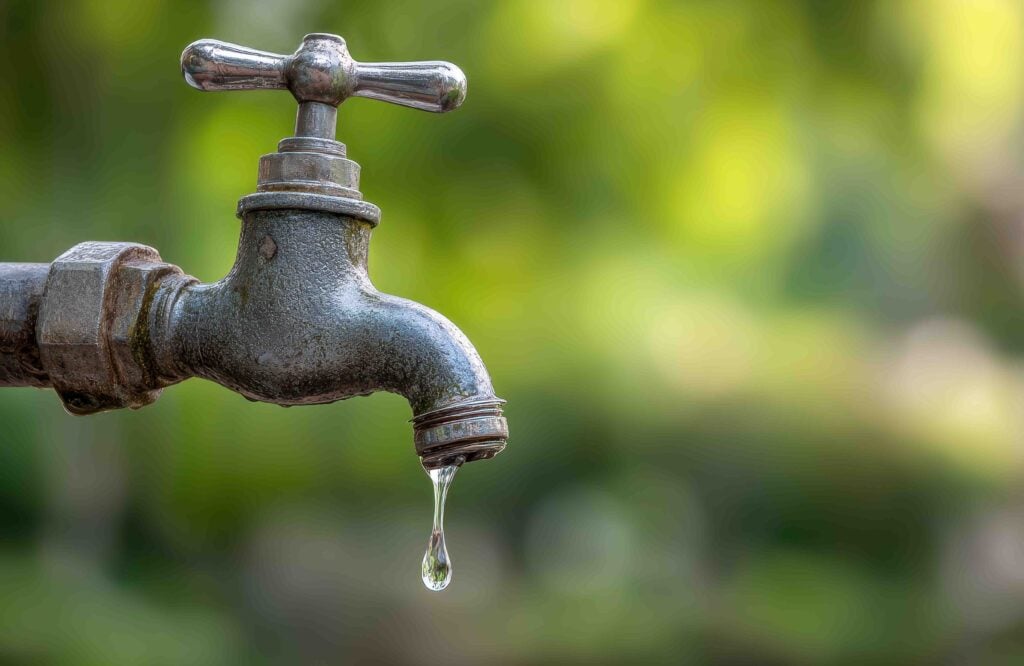
Geoff: We still have it as a back-up, but we know the writing is on the wall and we’ve had the foresight to do something about it. Restrictions on water usage and outright bans will become increasingly common and if you’re reliant on mains water that spells trouble.
Alec: We do have a mains back-up as well, but there’s obviously a cost to that and our priority is to be more efficient with our water than to lean on that back-up.
Sam: We’re staring down a water bill of £15,000 to £18,000, and that’s without watering greens consistently. Water is like liquid gold to us. Storage is everything. We’re landlocked here, so even though we flood and end up with excess water, we’ve got nowhere to store it.
How can you mitigate the impact of a dry spell while still being efficient with your water usage?
Geoff: We have to do a lot of hand watering. That’s manpower and if you haven’t got that manpower, it will take a toll. Some clubs will have to be really selective in the areas that get water and those that don’t.
Alec: Agronomics always come first, before what golfers think they want. It has to be about the longer-term health of the turf, so we’ll use water according to that principle. We’re on sand-based greens, which take more water, but I don’t want high levels of organic matter or soft surfaces, so there’s no chance we’ll be overwatering just to achieve something more visually appealing.
Looking at the other end of the spectrum, how does your course hold up during wet weather?
Alec: We don’t close as often as other local courses, and if we do, we reopen quickly. Our drainage is generally good. That said, there are some wetter areas we’re targeting with surface drainage, rather than deep systems, to move water quickly into less critical areas, like tree lines. We don’t have natural watercourses or ditches.
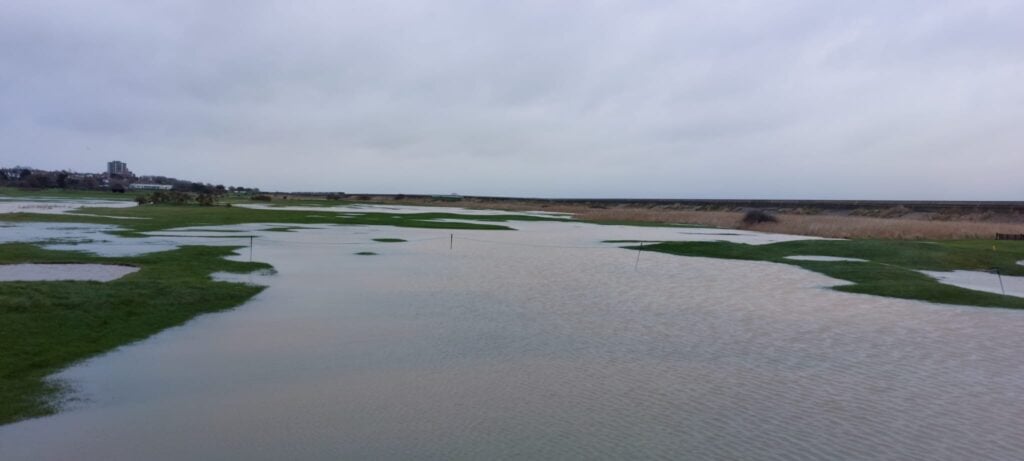
Sam: Our course faces significant challenges during wet weather due to its location on reclaimed salt marshes. We’re essentially a low-lying area where all regional water runoff converges.
The biggest issue is our tidal gates, which are closed for 12 hours a day, preventing water from draining into the sea.This means when peak water levels coincide with closed gates, we experience substantial flooding.
Geoff: We did a lot of drainage work during lockdown, so we’re quite well set on that front. We fill our irrigation lake with drainage and flood water.
Because our bottom three holes are on a floodplain, we applied for a winter abstraction licence and that means that flood water ends up helping with our irrigation needs.
Advertisement
- This article appears in Your Course, the twice-yearly publication from the British and International Golf Greenkeepers Association. Your Course invites golfers to gain a deeper appreciation of what preparing and maintaining a golf course really involves. Head to www.bigga.org.uk to find out more.
Now have your say on golf course weather
What do you think of the golf course weather challenges your club has seen this year? Let us know by leaving a comment on X.
Advertisement