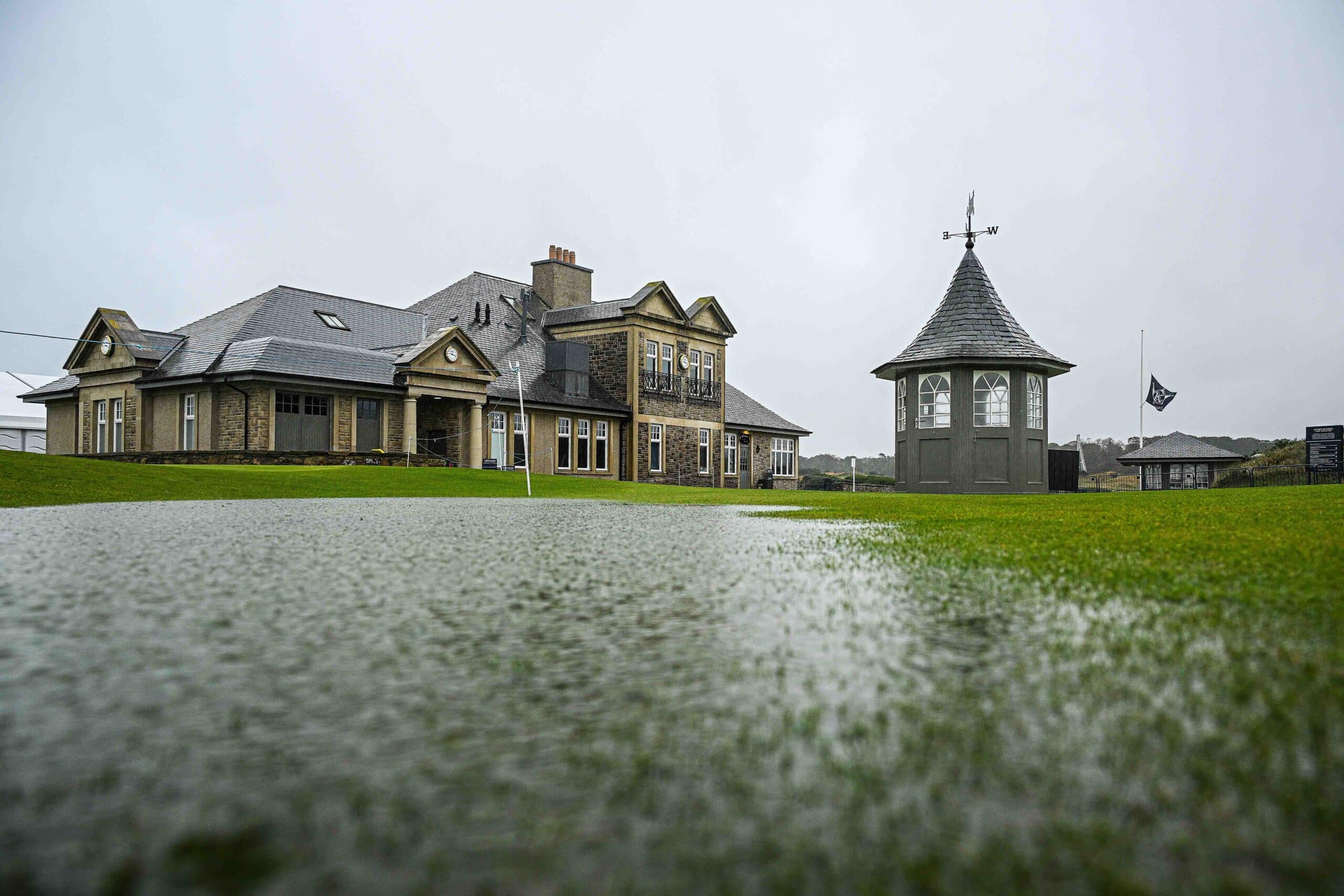



Keeping bunkers in the style golfers demand is a serious commitment of time and money, but have you ever stopped to think about how much?
For Your Course, produced by the British and International Golf Greenkeepers Association, we spoke to three course managers from across the UK to understand how they maintain, develop and pay for their bunkers.
This week, we’re asking about the time they spend raking bunkers and maintaining the sand, as well as the kind of sand they use and the costs.
Tackling those questions are Simon Bell-Tye, course manager at Skylark Country Club in Hampshire; Kerr Rowan, who leads the greenkeeping team at Kilmarnock (Barrasie) in Ayrshire; and Graeme Roberts, course manager at Hayling, in Hampshire.
How much time do you spend maintaining your bunkers? What does that involve?
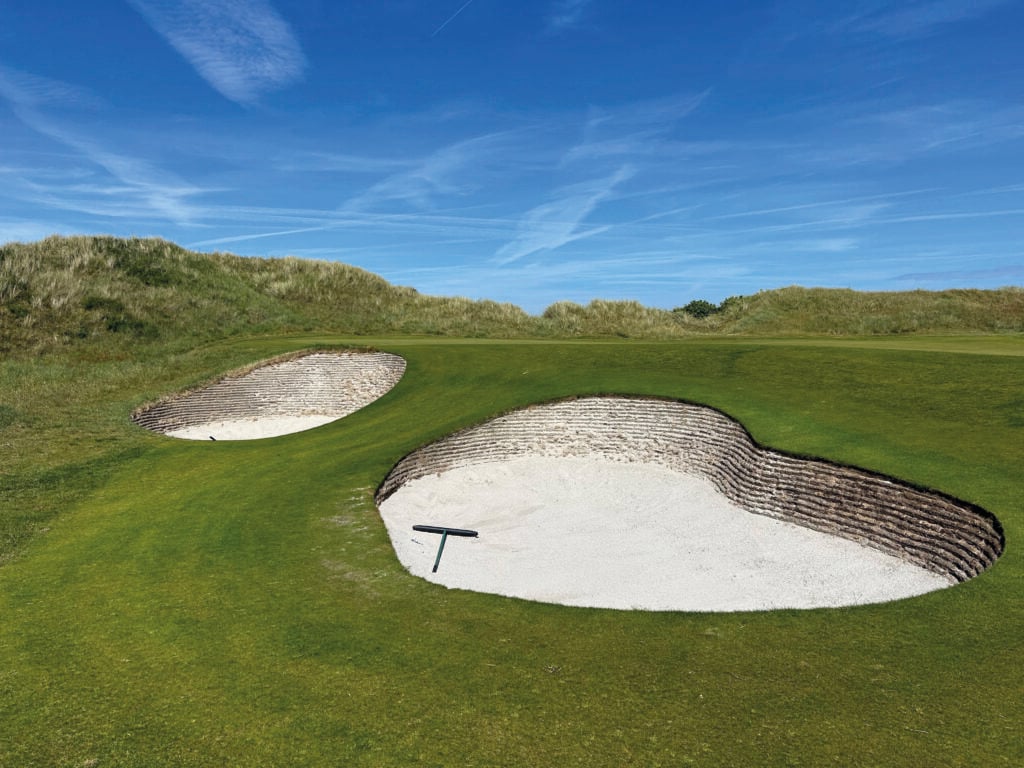
Simon: It’s not a big team here – myself and four others – but it works fine and we rake the bunkers pretty much every day. It can take us about six hours a day. It’s two guys and three hours [each]. We smooth rake the outsides and the middles are all groove raked.
Graeme: Typically, Monday to Friday, we’ll have two members of staff fully raking our bunkers every day. That typically takes them about four hours each. That does include our tee set up as well, so you can probably take about an hour off each of those. It’s one person fully raking bunkers over the weekend – we haven’t got the full team of staff in every weekend.
Apart from the very depths of winter, when we’re doing our winter projects, we generally fully rake every day – apart from the odd occasion when we might footprint them. As part of the overall quality of the course, we want the bunkers to present as well as the rest of the course, day-to-day for visitors and members.
Advertisement
Kerr: Daily, we’ll have two-and-a-half guys raking for about four hours. We must be raking bunkers 10-to-12 hours a day. We’ve got other priorities in the winter, so we probably don’t rake quite as much. It probably takes 100 hours a month just to trim them and cut them.

What type of sand do you use and what are your bunker costs?
Graeme: We used to use native dune sand, which I know a lot of English courses use, but where the site is a Site of Special Scientific Interest (SSSI), Natural England eventually stopped us from using that.
We transitioned and because our site is exposed to wind, we went with cross china clay. It’s a slightly coarser sand but it compacts quite well, so it gives us quite a firm base to play from. It drains very well if we do get excessively wet, and it isn’t as susceptible to wind blowing anywhere near as much as the native sand we have on the site. It rakes up very well.
We typically budget for around 30 tonnes of bunker sand a year, and that tops up bunkers throughout the season as well as any bunker work we do, where we would rebuild bunkers and change that sand out. In the grand scheme of our budget, the cost of the sand itself is minimal. It’s more the labour hours and the time spent managing, maintaining and presenting our bunkers. That’s where the biggest cost is.
Simon: The price of bunker sand has risen a lot, especially with fuel costs. I use china clay and a lot of golf courses I know use it. It packs down really hard and, when you rake it, the top 12 to 15mm is nice and soft.
Keeping them raked helps keep them soft on the top and then it’s packed underneath. They’re about three-to-four inches in depth and between two and two-and-a-half on the walls. We find that works fine, but I do struggle in the summer trying to keep up some of the faces.
I probably use 20 to 30 tonnes to top up each year. I get a load around March time, top them all up ready for the season, and then have 10 to 15 tonnes in a bay. But you find the sand gets moved around the bunkers rather than blows out of them.
Kerr: We’ve got a few pockets of our own native sand, so we’re using our own. We’ve had it all tested, but if you went to buy it, it’s probably not 100% perfect. It’s probably a little bit too fine, but the cost of sand – a ballpark figure – is about £40 a tonne so the savings are absolutely astronomical.
There’s also the sustainability of not having to haul it here and saving on diesel and everything else that goes with it. The small compromise in playability is totally outweighed by the cost and doing the right thing for the environment.
- This article appears in Your Course, published by the British and International Golf Greenkeepers Association. Your Course invites golfers to gain a deeper appreciation of what preparing and maintaining a golf course really involves. Head to www.bigga.org.uk to find out more.
Now have your say
Did you know how much time your greenkeepers invested in maintaining bunkers, along with the bunker costs? Let us know in the comments, or get in touch on X.
Advertisement