


What does sustainability really mean at a golf club? It’s different depending on the golf course. But what most are trying to do is to create a layout that is better equipped for the future – that is a great place to play and can also be a haven for wildlife.
We’ve spoken to four clubs about golf course sustainability and how planning and a willingness to do things differently are delivering benefits for golfers and the natural environment.
From healthier playing surfaces and smarter water management to wildflower planting and community-led projects, they demonstrate that looking after the environment doesn’t have to come at the expense of the playing experience.
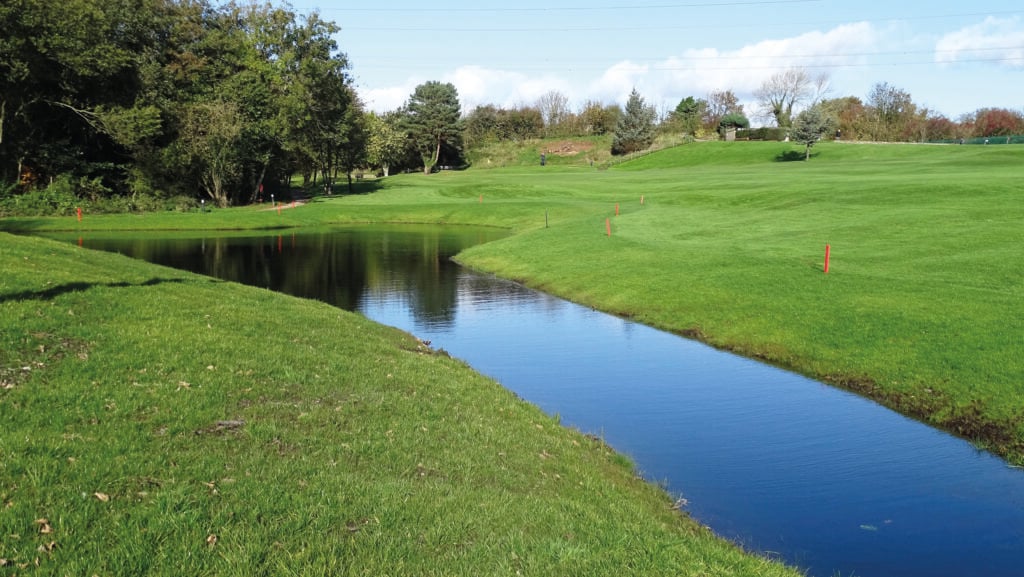
Years of careful planning have helped Heysham become a haven for wildlife and a great place to play golf
When golfers ask why Heysham has remained in such strong condition no matter what the climate, Course Manager Dave Hutchinson points them back through years of planning, investment and small changes in practice that are now making a visible difference.
By the time Dave retires next April, he will have worked at the Lancashire club for 43 years. His son Adam, currently first assistant greenkeeper, is in contention to take over, and that has added a personal edge to Dave’s determination to leave the course in the strongest possible position.
“People come into Heysham and ask why it’s so good,” Dave said.
“I tell them it’s years and years of treatments and altering practices. That’s why they’re benefiting from it now.”
For Dave, sustainable golf course management begins with recognising that good greens cannot be built on short-term decisions. He knows golfers value speed, but he has resisted the temptation to cut too low.
“All golfers want is fast greens,” he said. “But I’m not doing something that’s not good for the grass in the future.”
Instead, Heysham has spent decades overseeding with bentgrass, keeping heights of cut sensible and looking after the soil beneath the surface. Dave has also reduced fungicide use significantly, moving from around five applications a year to one, with the aim of reaching zero.
Advertisement
“You can’t just do it overnight,” he said. “It’s quite a few years of planning to reduce. You’ve got to treat the soil rather than the leaf.”
Biostimulants and biological soil feeds have become part of that shift, helping create healthier turf with fewer inputs. The benefit is surfaces that recover earlier and perform better for longer.
“We’re getting better greens in March straight away,” Dave said. “Your playing season has gone from three or four months of good greens years ago to something closer to 10 months because the greens are very healthy.”
The same thinking sits behind the club’s new irrigation system, which is already allowing the team to water more accurately while using less water overall. Heysham has also invested in a new lagoon, with drainage directed towards it to help capture water that would otherwise run off towards the sea.
That work will be developed further in a separate water-harvesting feature, but for Dave it forms part of a single long-term picture. The club is preparing for tighter restrictions, more volatile weather and rising pressure on resources.
“Failure to plan is planning to fail,” he said. “That’s the biggest thing in golf courses. You’ve got to plan for the future.”
Sustainability at Heysham also includes investment in robotic mowing. The club has bought eight Kress robots, which Dave believes will reduce diesel use dramatically while helping keep the course defined and playable later into autumn and winter, without heavy machinery compacting wet ground.
Around the course, habitat work continues too. Trees removed from beneath power lines were replaced with lower-growing fruit trees to support pollinators. Wildflowers have also been sown near the new lagoon, adding colour, insect life and further ecological value.
Dave knows golfers may not notice every detail behind that work. What they will notice is a course that stays healthier, plays better for longer and is more resilient when conditions turn against it.
“The clubs that are prepared will move forward,” he said. “The clubs that aren’t prepared will either go backwards or struggle. You’ve got to be ahead of the game.”
Careful water use, richer habitats and healthier turf are helping one Welsh club give golfers so much more than good playing surfaces
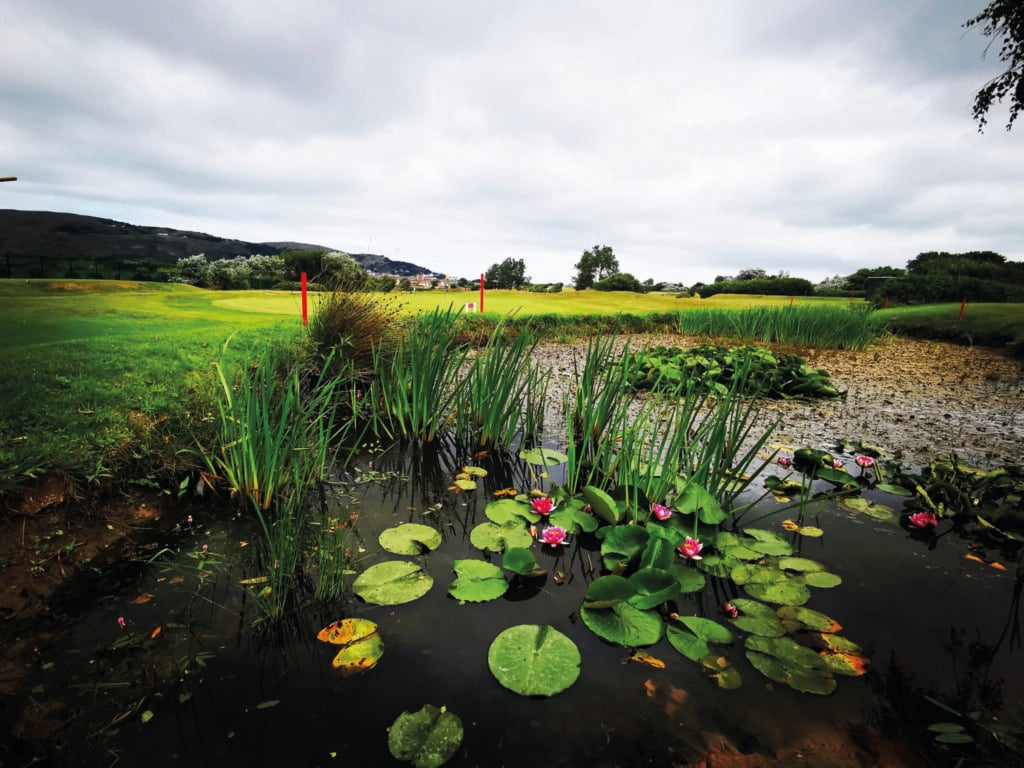
At Llandudno (Maesdu), sustainability is visible in the wildflower areas, ponds, rough, beehives and long-term course management. That means a course with more character, more wildlife and a greenkeeping approach designed to protect playing surfaces while using resources carefully.
That work has already brought recognition. At the start of 2025, Maesdu became the first golf club in North Wales to gain GEO Certification, before going on to win Sustainability Project of the Year at the Wales Golf Awards.
Head Greenkeeper Daniel Evans, who has been at the club for 17 years and leads a six-strong team, has been central to that progress. Working with club member Ian Peters, volunteers and the North Wales Wildlife Trust, the team has looked closely at how the 46-hectare site can support golf and the environment.
Around 7.5 hectares of the course is naturalised, with woodland, bracken and gorse providing habitats, while six ponds cover a further half hectare. A walkaround survey last year recorded 131 different flora and fauna, including 78 plant species and 32 bird species.
For Daniel, wildlife is not just part of his job.
“Wildlife has always been a passion of mine,” he said. “I like the way golf courses can be used for the greater good of the environment, beyond just being somewhere to play golf.”
Advertisement
The club has thinned and enhanced out-of-play areas, planted wildflowers and encouraged more natural rough. Bird boxes, bat boxes, bug houses and pond nesting areas have been introduced, while a club member has helped establish beehives on site.
These features add colour and interest, and allow the greenkeeping team to manage different areas in different ways. Out-of-play areas can become more valuable for wildlife; main playing areas receive the attention golfers expect.
On the playing surfaces, the team uses organic fertilisers and biostimulants to maintain nutrient levels in the soil, supported by daily checks for signs of pest, disease or weed pressure.
The greens, tees, fairways and maintained rough include cool-season grasses, such as fescues, browntop bent, annual meadow grass and ryegrass. Over time, Daniel wants to encourage finer grasses on the greens through overseeding, testing and monitoring, helping the surfaces cope better with changing weather and reducing reliance on intensive inputs.
“It’s about managing the surfaces more organically,” Daniel explained. “A lot of chemicals are being taken off the shelf. It does change the way you have to manage the course, but it’s about using your knowledge and implementing your cultivar methods to keep the plant healthy and maintain quality surfaces.”
That approach means explaining decisions to members, who are more likely to support work if they understand the reasons behind it. Cutting heights, irrigation and surface management all affect how the course looks and plays.
“It’s part of my job to educate the members by letting them know what we’re doing and why we’re doing it,” Daniel said.
From being fully reliant on mains water five years ago, water has been one of Maesdu’s biggest practical wins. In 2023, the club secured a £24,000 grant from Sport Wales to reduce mains water use, funding a 2,000-litre bowser filled from the ponds and a borehole that now provides 20,000 litres a day.
Advertisement
The next focus is a review of bunkers. Those that no longer add enough to the playing challenge may be converted to grass or replaced with features that are easier to maintain while preserving the course’s character.
For Maesdu, sustainability has become part of everyday course management. “We’re proud of the work we’re doing,” said Daniel. “And I know it makes the members proud to be part of Maesdu.”
This club’s beehives are creating a real buzz – and helping fund even more ecology work
Goring & Streatley’s wildflower-rich downland is already a haven for pollinators, but one part of the club’s ecology work has become especially sweet.
The West Berkshire venue’s beehives are now very much part of the furniture, bringing together wildlife, members, greenkeepers and a rather handy source of income for future environmental projects.
The idea came through Ecology Manager Melissa Winkworth’s passion for the project and a little help from one of Course Manager Matt Aplin’s friends. That friend happened to be a beekeeper, which is useful if you suddenly decide your golf course would benefit from a community of winged residents.
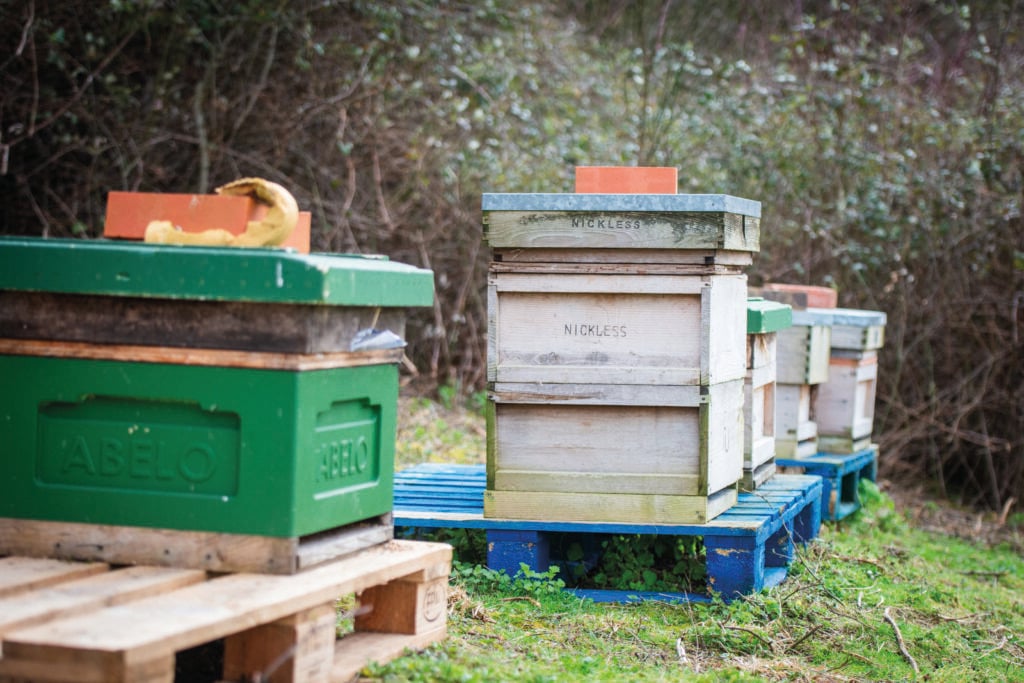
There are around 30 hives on the site, positioned across the wildflower-rich terrain, giving the bees plenty to work with and golfers another reminder of how much is happening beyond the fairways and greens.
The arrangement is collaborative. The beekeeper looks after the hives, manages the maintenance and honey production and has also been mentoring Melissa along the way. The result is a project that supports pollinators, engages members and turns the course’s ecology work into something golfers can quite literally take home in a jar.
Members can buy the locally produced honey, with the club’s share of the profits reinvested into ecological improvements around the course. At a time when many clubs are looking for practical, visible ways to support wildlife, Goring & Streatley’s bees are helping make the case one pot at a time.
Advertisement
“In winter 2024, we invested £900 from those proceeds in hedgerow plants for a new hedge along the side of our 11th hole and behind our 1st tee area,” said Melissa.
“These are great for providing a food source for birds and pollinators. We also spent a further £700 on wildflower seeds and sowed these in the areas we cleared last year and a few small pockets where we cut turf to use in other places.”
Formby Ladies have overseen the restoration of ecologically valuable land in tandem with an improved playing experience
At Formby Ladies, the route to more sustainable course management has also been a route to better golf. The work carried out has improved the condition, character and resilience of the course, while helping reduce inputs, protect rare habitat and make decisions that support its future.
For Course Manager Rob Sandilands, sustainability has never been only about ecology. It is about building an operation that can keep delivering good playing surfaces without asking more of the land, the team or the club’s resources than they can realistically provide.
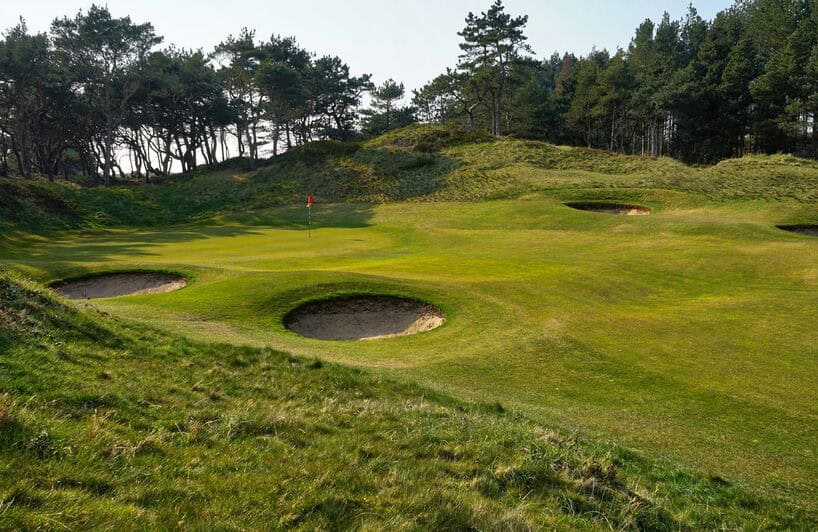
Formby Ladies sits within a Site of Special Scientific Interest (SSSI) on the Sefton Coast, a landscape of dune grassland, heather and rare coastal habitat. When Rob arrived in 2016, that habitat was under pressure. Trees, scrub and less desirable grasses had slowly encroached on areas that gave the course its identity and ecological value.
A long-term plan was needed, covering habitat restoration, playing surfaces, resources, governance and finance.
“I think sustainability starts with asking a simple question,” Rob said. “If you carried on doing what you’re doing day to day, would that still be workable in 10 or 20 years? That principle applies to everyone.”
At Formby Ladies, answering that question meant being honest about the course, the business and the condition of the land. Tree and scrub removal helped reopen dune and heathland areas, while gorse and heather management encouraged a more diverse age structure and improved habitat quality. The club’s SSSI compartment has since returned to favourable condition.
On the playing surfaces, the team began encouraging finer grasses better suited to the site. That has been central to making the course more sustainable and more playable.
“One of the reasons we tried to put more fine grass in our playing surfaces was because we have quite a small greenkeeping team,” Rob said.
“If a lot of our inputs and operational tasks every day were more intense, we just wouldn’t have the manpower to accomplish that.”
The transition brought disruption. Species change, renovation, topdressing and habitat work all needed explanation. Rob believes the key was to be open with golfers about the process, while supporting decisions with evidence.
“We tried to pre-empt a lot of these things by saying, ‘this is a phase we’re going to go through, and it’s probably going to happen next year and the year after’.”
When golfers questioned if the work was improving the course, the team could point to measurements for smoothness, trueness and firmness, alongside agronomy reports showing the direction of travel.
“We would say, ‘I see where you’re coming from, but here’s the data’,” Rob explained. “Maybe cosmetically they’ve got a way to go, but playing wise, this is the objective measurement.”
That approach has helped golfers connect maintenance with progress. Work that may once have been seen as disruption is now more readily understood as part of producing better surfaces.
The wider results have been significant. Formby Ladies is recognised in multiple course rankings, attracts more attention from visiting golfers and now generates greater income, which can be reinvested into the course, the team, welfare facilities and equipment.
“We’re a modest club with modest resources,” Rob said. “We’ve just done things that are within our means. That is all any club can do.”
For Rob, the important point is that sustainability succeeds only when the whole club is structured to support it. Ecology, course quality, staffing, planning and money all sit within the same conversation.
“If you’re not financially sustainable, then you’ve got no chance of achieving any of these other objectives and keeping them going,” he concluded.
- This article appears in Your Course, the twice-yearly publication from the British and International Golf Greenkeepers Association. Your Course invites golfers to gain a deeper appreciation of what preparing and maintaining a golf course really involves. Head to www.bigga.org.uk to find out more.
Now have your say on golf course sustainability
What is your club doing to invest in the future? Have sustainability projects made the golf course better? Let us know in the comments, or get in touch on X.
NOW READ: BIGGA chief says extreme weather is now ‘normal’ as golf faces ongoing water crisis