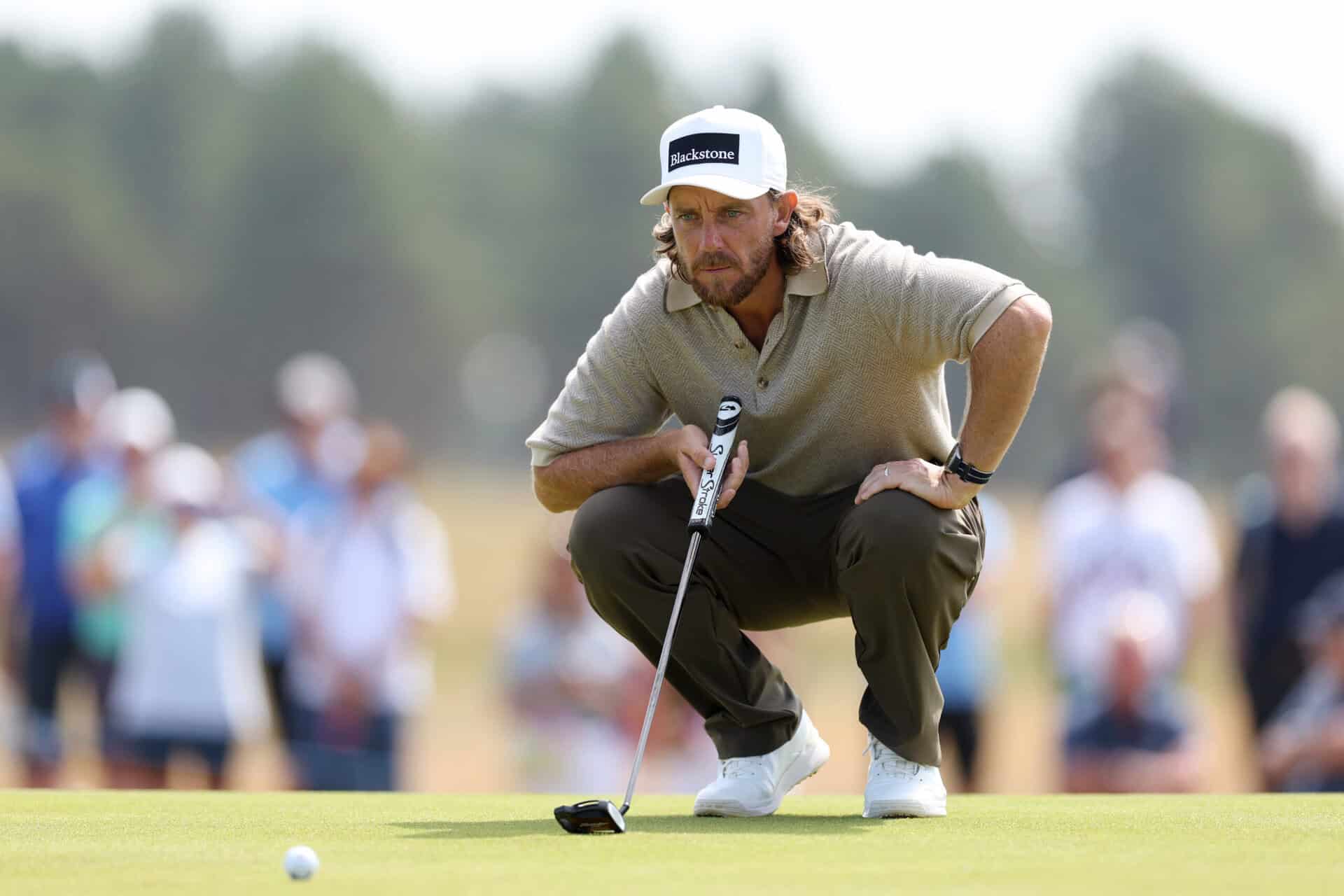


The one thing a world class golfer fears must be uncertainty. “I felt like I didn’t know what club to hit,” said Justin Thomas after he’d encountered Royal Birkdale’s fearsome finishing hole in the first round of The Open.
“I ended up hitting 5-wood. I had 252 in. I felt like the 3-wood had nowhere to go, it was going into the bunkers, and I felt like driver didn’t have anywhere to go”.
The 18th has been slaying scorecards at The Open. It played the second hardest hole on the first day – leaving a trail of carnage in its wake.
There were only seven birdies all day, one of which was the result of a daredevil approach from Rory McIlroy as the sun was setting on Thursday. There were 47 bogeys, five double bogeys and one ‘other’.
Alex Smalley certainly had reason to lament the 508-yard par 4. He was leading the Championship standing on the last at 5-under. He left it two shots worse after hitting it out of bounds.
LISTEN TO THE NCG GOLF PODCAST
ALSO AVAILABLE ON:
Apple Podcasts: Listen Now
Spotify: Listen Now
Amazon Music: Listen Now
To put the difficulty of this hole into context, there were as many doubles on the 18th on the first day at Birkdale as there were during the entire week on the final hole at Royal Troon in 2024.
When Tiger Christensen walked off with a six in the first game of the second round, they’d already matched the week-long total of the finishing hole at Royal Portrush.
There was no letting up during the second round. Through the first 13 groups, and 39 players, there were 18 bogeys. Darren Clarke’s day imploded with a treble bogey 7. There were more dropped shots than pars.
And Justin Herbert’s short missed par putt robbed him of sole possession of the men’s all-time major scoring record.
Advertisement
So what makes it so difficult?
Why Royal Birkdale’s 18th hole has become The Open’s most fearsome challenge
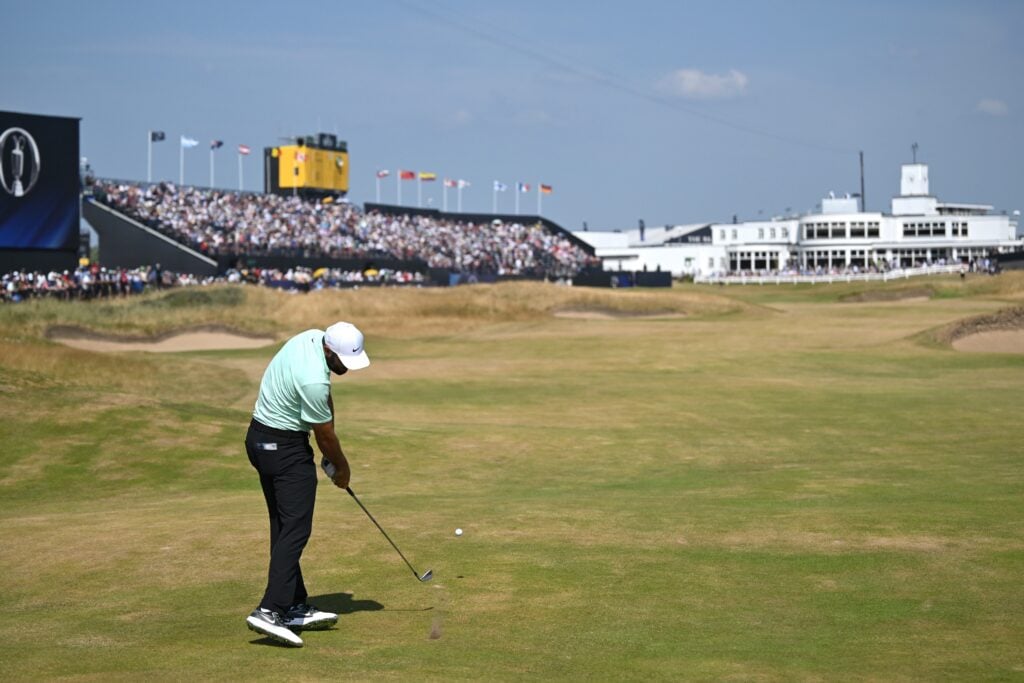
“The tee has been moved left and the tee shot tightened considerably with bunkering, four on the right of the fairway and two on the left,” said Padraig Harrington, the 2008 winner at Royal Birkdale, in The Open programme.
“With rough and out of bounds down the right as well, there is a need to be careful.”
The tee shot certainly is claustrophobic with all that sand. It feels like the bunkers move away from you in an arrow formation. Avoid the first couple and there are more waiting to snare the ball.
The crosswind – it was into and gusting both off the left and right in the time NCG was stood around the 18th tee – puts further doubt in the mind.
Added Thomas: “I think it really is just committing because I think the crosswinds when fairways are this firm are so difficult to hit.”
It’s a long-iron in for many, a wooden club for some, which feels as rare a shot as it comes on tour these days. “It’s often about holding the ball up in the wind to find the middle of the putting surface,” explained Harrington.
But while there is trepidation, there is also admiration.
“That is the best finishing hole in links Open golf,” said Matt Wallace, who walked off with a second round par to cap a 67.
“It’s unbelievable. You have to think about everything. You can hit 2-iron, but that first right trap is in play if you hit it over there.
“I think Xander [Schauffele] hit it in there yesterday. Wind dependent, everything is difficult. If you hit 2-iron you’re going to have another 2-iron into a tight narrow area where it rolls off.
“It’s the hole that you think about the most out there because you’re really trying to dissect it, or you just do what I do and just blast it way right and not worry about it and get a drop.
“[I] Wasn’t happy with that tee shot but got away with it and still had 4-iron off a relatively whiffed driver. Brilliant finishing hole and, if you can hit the fairway, you still have a chance of making birdie.”
Bob MacIntyre may not agree, the Scotsman firing off a few choice words after he pulled it into the grandstand on Thursday.
Laurie Canter, though, was in no doubt. “This is The Open. You cannot bail out on any shot there. My mindset, finishing up with a par, was I can’t make a 6.
“If I make a 6, I’m going home. Even making a 5, I still have to take the bunker on. That’s true if you hit 4-iron off the tee or perhaps a driver.
“It’s fantastic golf. The second shot, I think, gives you a little bit. It’s not particularly hard for you to get up-and-down.
“You just have to be in the right spot. Length-wise I can understand why people wouldn’t want that. I think it’s a masterpiece.”
The last is by no means a one-trick pony at Birkdale, it’s the climax of a challenging stretch that will test the skills of the contenders all week long.
The 13th ranked the third hardest hole on the first day, while the new par 3 15th was the fourth hardest.
There have been many magical moments on Royal Birkdale’s 18th down the decades: Justin Rose’s hole out in 1998, Tom Watson’s 2-iron in 1983, and Seve’s chip between the bunkers seven years earlier to name just three.
Advertisement
It will likely take another, on one of the most difficult closing holes we’ve seen in championship golf for many years, to claim the Claret Jug on Sunday.
Now have your say
What have you made of the 18th at Royal Birkdale? Is it as fearsome as we think? How does it match up in the annals of finishing holes at The Open? Let us know in the comments or get in touch on X.
Advertisement