


The principles and foundations that have shaped the sport of golf from its origins to the present day stand in striking contrast to a debate currently surrounding the game.
As expected, the 2025 Ryder Cup descended into a grim contest of who could shout the worst and the loudest thing, which culminated in a drink being thrown at Rory McIlroy’s wife, among other heinous incidents that were entirely alien to the respect and tranquillity that golf is built on.
Crowd behaviour at that event has been scrutinised for some time, and the scenes from Long Island added fuel to the ongoing, fiery discussion around etiquette outside the ropes in general. But it is no longer exclusive to American crowds, or even Ryder Cups, as much as European fans might like to think it is.
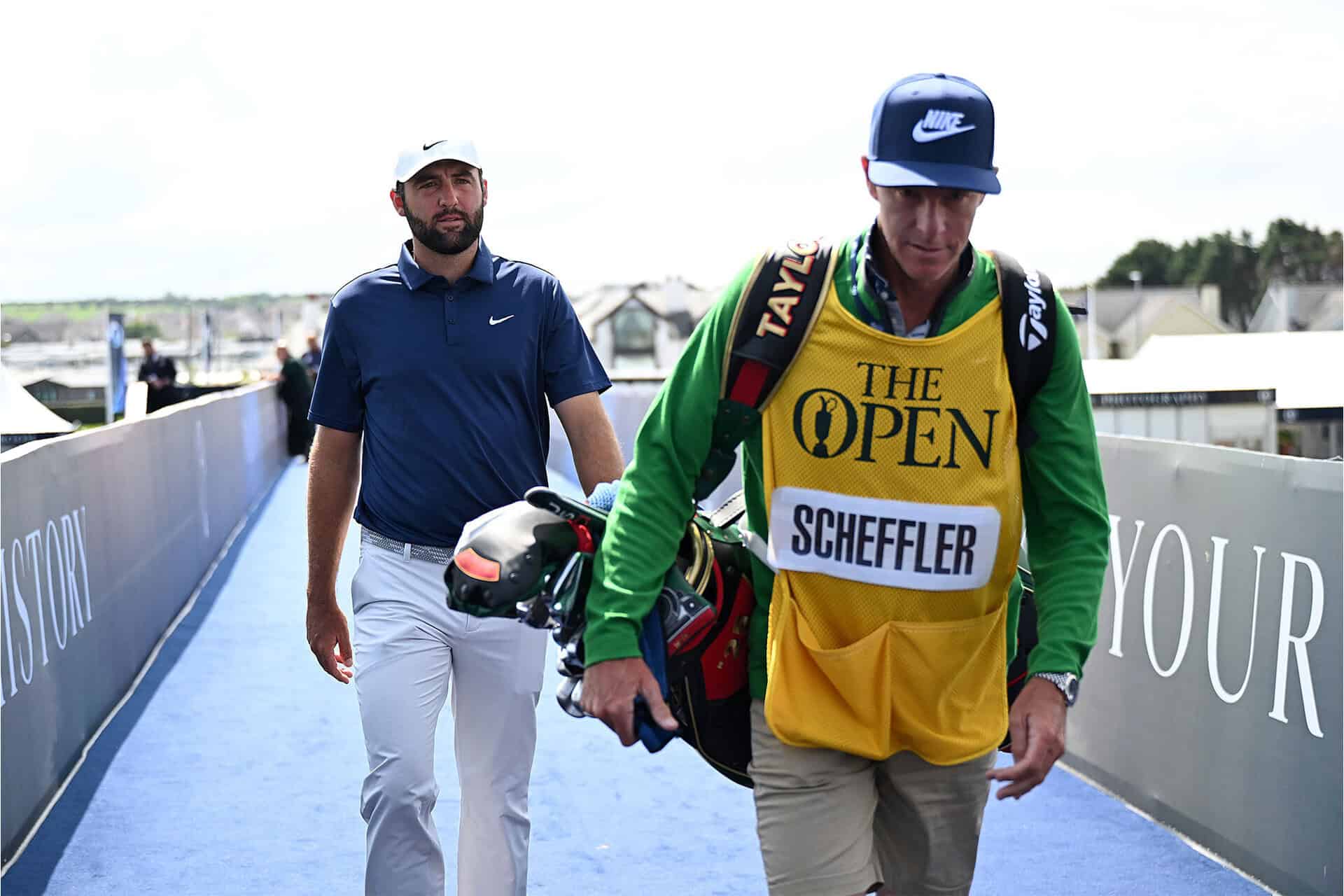
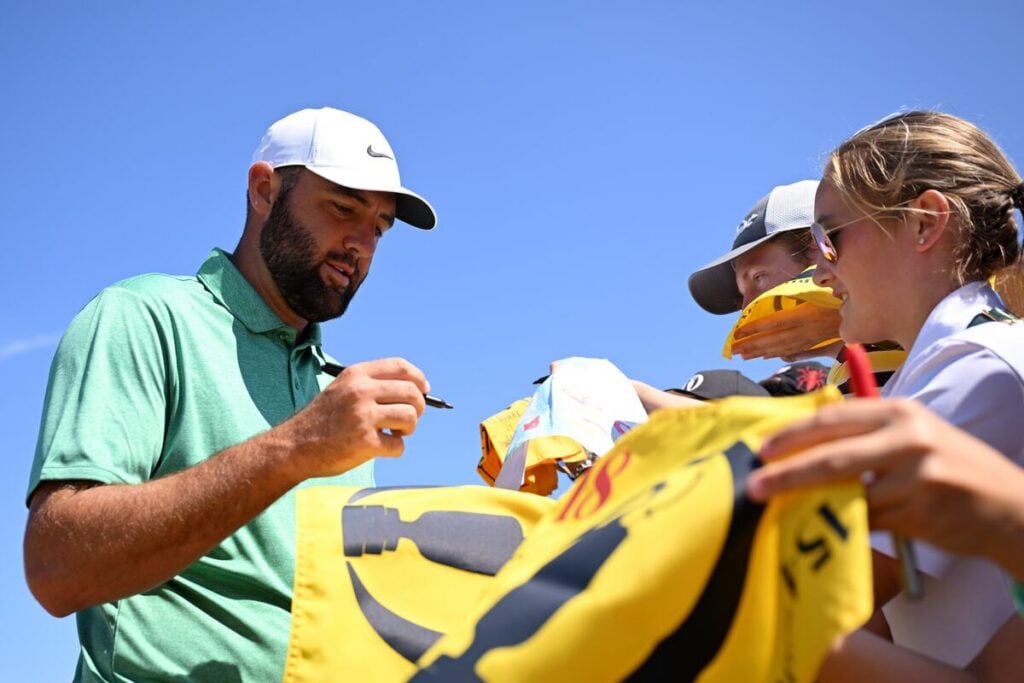
In 2023, Brian Harman experienced tangible opposition from the fans at Royal Liverpool, as he swept the field aside on a rainy weekend to win The Open. In Northern Ireland last year, Scottie Scheffler had to overcome the boo boys at Portrush to hoist the Claret Jug, as home favourite McIlroy contended at the top of the leaderboard.
Even before the last Ryder Cup, McIlroy was being urged to victory at the Irish Open. Cheers met the ball of Joakim Lagergren splashing into the water on the 18th hole at the K Club, as McIlroy delivered in front of his people to secure the trophy in a playoff, in the same year he had become a grand slam champion at the Masters.
But is there something more at play, besides compatriotism? Do fans hoot and holler because their money is down and they can’t cope with ripping up another betslip?
I asked the six-time major winner himself at Royal Birkdale:
“We’ve had gambling over here for forever, and I would say the crowd behaviour has been pretty good for the most part,” McIlroy said.
Advertisement
“Obviously it’s a newer thing in the United States. You could see how people that have a bet could… it’s a very easy game to influence. The crowd aren’t far away from you. I feel like certain things have happened to me over the years where it’s definitely been because of that, but it’s very rare, I would say.
“But certainly it’s a thing that we’ve definitely talked about when I was on the board of the PGA Tour, on the PAC (Player Advisory Council), like whenever gambling or sports betting in the United States was coming into golf in a big way, it was something we talked about and how do we place it to make sure the integrity of the competition isn’t jeopardised by letting this stuff happen.
“I feel like it’s policed pretty well. In every crowd of thousands of people, you’re going to have your few bad eggs here and there, but for the most part, I think golf crowds are pretty respectful.”
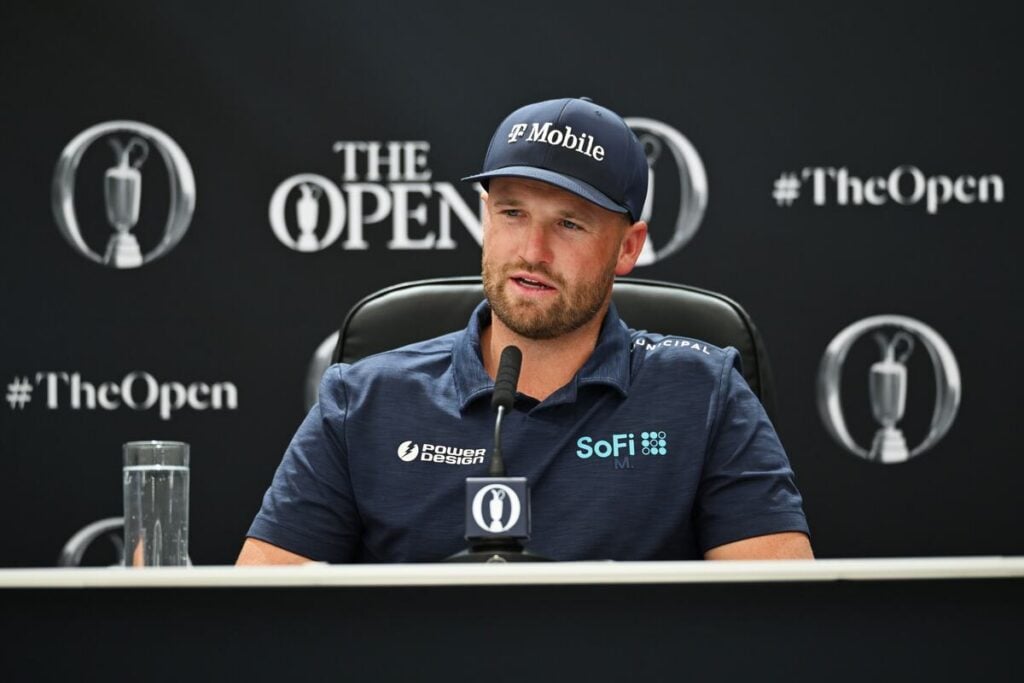
The effect gambling has on crowds doesn’t seem to sit well with three-time major winner Jordan Spieth after the 2026 US Open, which was won by Wyndham Clark. 12 months before, Clark had smashed up the locker rooms at Oakmont at the same tournament, but although we might’ve expected some stick to come his way, it was constant and lasted until he finished on the 18th green at Shinnecock Hills to secure his second US Open title.
“I think the one thing that I’ll point out is I do think that betting in golf is something that’s going to have to be tackled here soon, because I don’t know how much of, say, the Wyndham scenario was the fact that it was enticing to bet the field verse Wyndham on Sunday in a legalised betting state, and you could have had people out there that essentially have $100 to $10,000, depending on who it is, on the field versus somebody else,” Spieth said at the John Deere Classic.
“In golf, it’s tricky because you could actually impact the outcome if you wanted to. It may not last very long, but you could impact a shot if you wanted to. I don’t know of another sport that you could impact as a fan like you can golf. So I don’t know how much that’s having to do with it, if it’s different than it used to be.”
At The Open, I asked Matt Fitzpatrick about it all, the US Open winner from Sheffield and hot contender this week at Birkdale, and he showed the same concern.
“It’s a great question because you just look at all the messages people get – footballers, tennis players, you name it, everyone’s getting messages of, ‘Oh, you missed that penalty; you cost me this. Oh, you didn’t make a birdie; it cost me this.’
“I’ve had my fair share,” Fitzpatrick continued. “I would say every golfer that’s played a professional tournament has had a message of abuse from someone that is related to gambling. You could see it this week. You go and type in a player’s name who maybe isn’t playing well, maybe someone who’s favoured to play well, you type the name into Twitter (X), and you’ll just see their name followed by abuse after abuse after abuse.
Advertisement
“It’s difficult because I’ve had £20 on England to win the World Cup, but at the same time, if it doesn’t come in, I’m not going to send a message to Harry Kane and be like, ‘Why did you play rubbish?’ There are obviously individuals that have that problem.
“Obviously I don’t condone gambling in the slightest. It’s not really for me. It’s a thing that me and my mate do every World Cup and Euros, that’s it. For me, it’s definitely becoming a problem, and the issue is, particularly in golf, it would be very easy to influence a bet, whether you’re shouting on someone’s backswing, shouting on a putting stroke. It’s really easy. Obviously that is really hard to monitor, but it is definitely an issue.”
The United States of America and the PGA Tour respectively have a varied and institutionalised relationship with sports betting. In 2018, the Professional and Amateur Sports Protection Act (PASPA) was repealed by the Supreme Court, which meant the legalisation of sports betting became a state-by-state decision.
Sports betting is legal in 39 states, and Washington DC as of May. 30 states offer legal online sports betting through licensed apps. A cursory look at the PGA Tour’s website can take you to a Fantasy & Betting section where there is all manner of insight into who you should consider placing your hard-earned on every week.
Much like gambling adverts and social media accounts from bookmakers that beam into our eyes every day, it all appeals to that part of our brains that wants a piece of the action. But in golf, there is, without a doubt, a concern that the failure to accept defeat when taking the action might be the root of the fan behaviour rot.
Advertisement
I also asked Clark what he makes of the influence that gambling can have on crowd behaviour in golf:
“I think it’s definitely one of the factors. The amount of times we hear guys in tournaments saying, ‘ Oh, Wyndham, I have you 30-to-1 to win this week or 100-to-1, I’m betting on you.’
“That happens all the time. So I do think in some instances that is definitely one of the culprits.”
Again, though, this is likely not a problem exclusive to the States. Having previously referred to the treatment of Harman and Scheffler at previous Open Championships, the R&A will take no prisoners on the northwest coast of England this week, if fans are caught defying the new behavioural guidelines.
There is also a crackdown on player behaviour, meaning that the game’s governing bodies are growing tired of both the competitors and the spectators overstepping the mark. Joaquin Niemann got a two-shot penalty at last month’s US Open for throwing a club, while Bob MacIntyre and Sergio Garcia got slapped on the wrists by officials at Augusta National in April for their unruly behaviour.
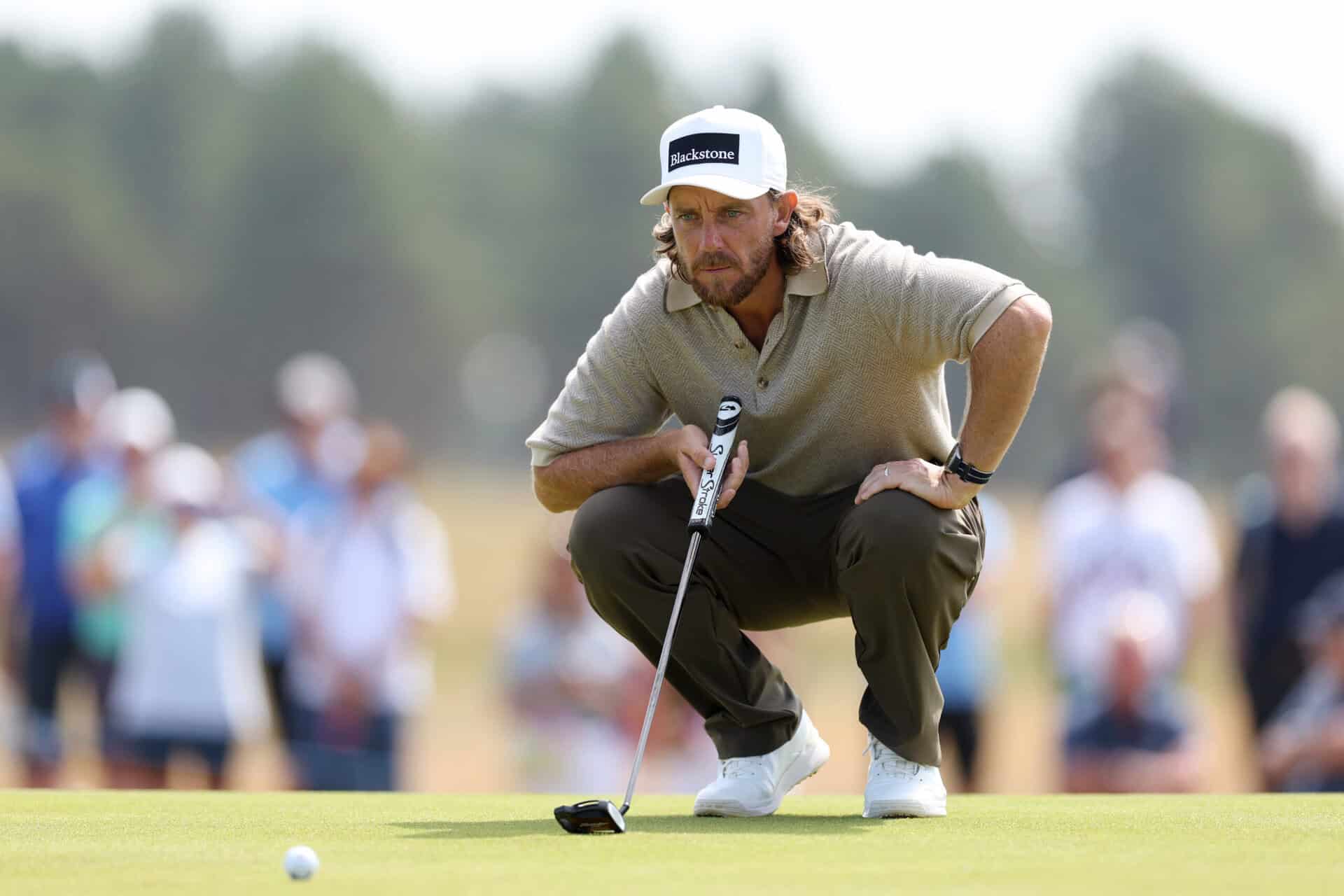
Tommy Fleetwood was typically diplomatic when probed by yours truly on the subject of betting and behaviour. The Englishman has been in the major tournament and Ryder Cup cauldron long enough now, and never was it more intense than at Bethpage Black last year, where the American crowds were most boisterous and blood-thirsty towards Tommy’s victorious Team Europe.
While acknowledging the issue, Fleetwood also recognised the impossibility of every golf fan upholding the same standard of conduct.
“It’s a good point. It’s a fair point. I don’t think it’s ever really been my experience. I think you’re aware probably of people that are betting, and you might get somebody telling you a putt breaks right to left instead of left to right, but you should be able to figure that out on your own.
Advertisement
“It’s a really tricky one. I think the crowds are a huge part of it, of golf, and – it’s really difficult to ask everyone to behave in a manner that you would want them to behave in while wanting the atmosphere to be as big as possible and as good as possible. I think that’s always tricky.
“I’ve always been very lucky with my fan interaction and support. Again, it’s easy when you haven’t had the same experiences of those to just give your opinion on it and have it different.
“Betting isn’t going to go away, and I think you don’t want the crowds to be any smaller, or it’s hard to change people in terms of how they want to be when you go to a golf tournament. I just think that’s a really difficult one.”
NOW READ: The Open Betting Tips 2026: Who will win at Royal Birkdale?
NOW READ: Upset that the Last Chance Qualifier wasn’t televised? Come and watch it next time
Is there a golf betting problem at the heart of poor fan behaviour at live events? Tell us what you think on Facebook!