

There isn’t a golfer among us who has not tangled with a boundary object – usually because of a shot that has us wincing, and hoping, it’s not going to come to grief.
But while you may know the basics, are you up to speed with everything you need to know about them?
Strap yourselves in as I reveal all…
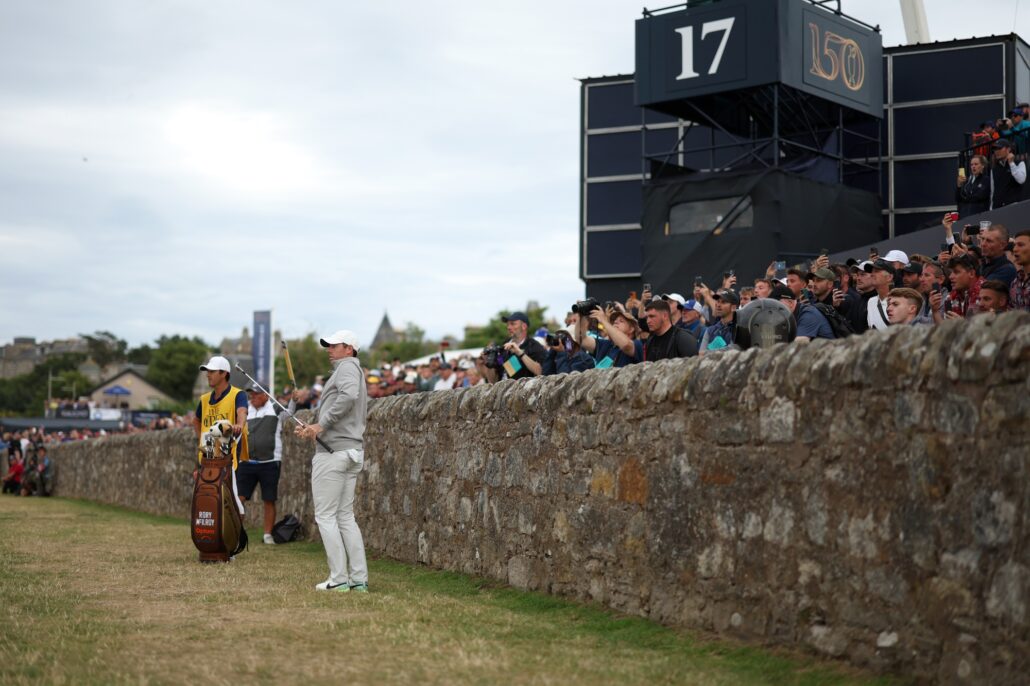
What are boundary objects?
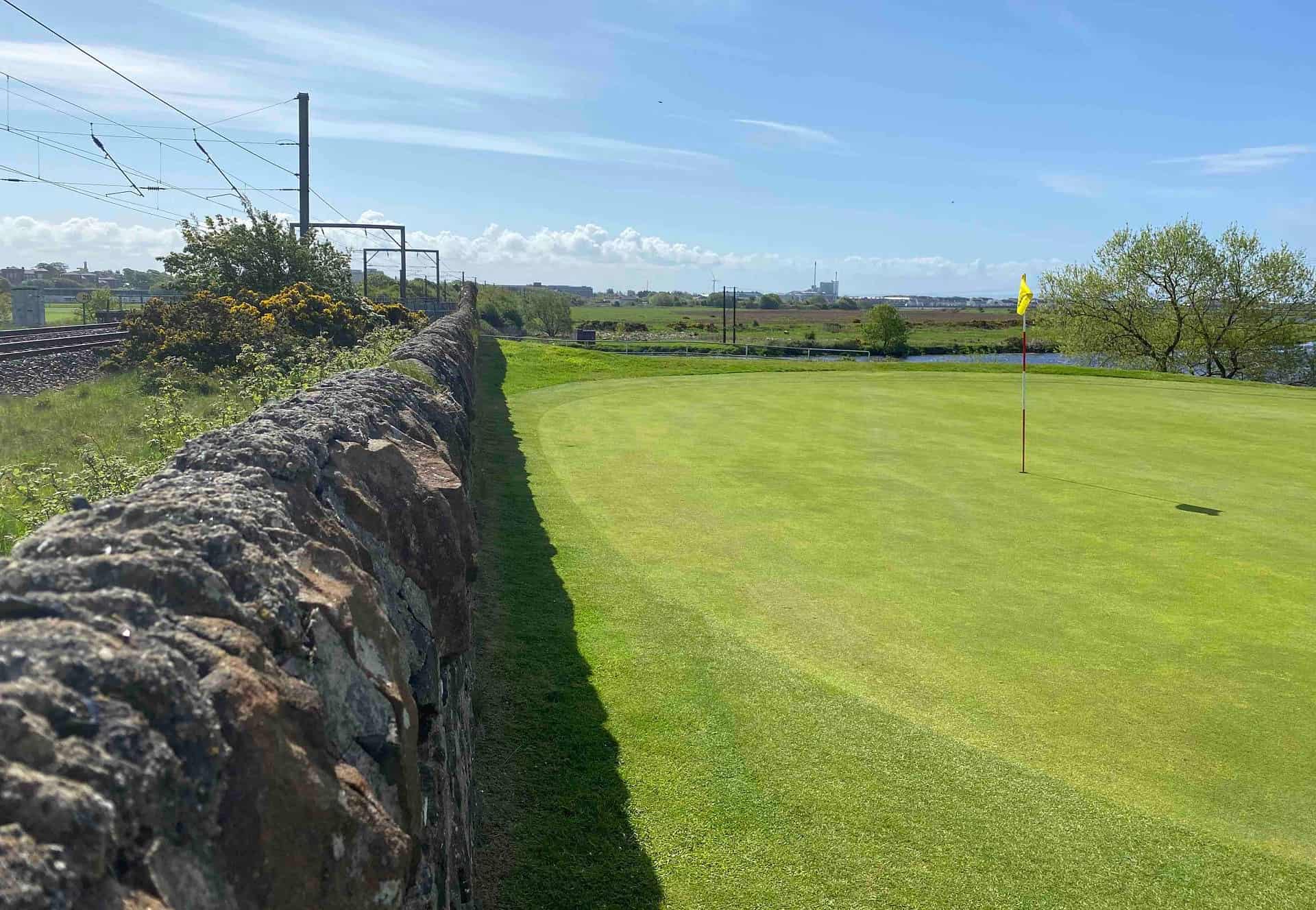
These are outlined in the definitions in the Rules of Golf and are said to be “artificial objects defining or showing out of bounds”.
That includes walls, fences, stakes and railings and also any base or post of a boundary fence.
But these are not boundary objects:
– Steps, bridges, or any “similar construction used for getting over the wall or fence”
– Angled supports or guy wires that are attached to a wall or fence
– Obstructions or integral objects
Can I move a boundary object?
Obviously, it’s a bit difficult to shift a wall or a fence but boundaries are also defined by posts and you could pull them out of the ground.
Do not do this, though. Even if they are movable, or if any part of them is movable, they are treated as immovable. Don’t move them.
Can I get free relief from a boundary object?
No. Play it as lies, take stroke-and-distance relief for a penalty stroke, or use one of the options available for an unplayable ball – also for a penalty stroke.
What if I have moved a boundary object?
Got a little trigger happy? This is almost always going to happen with white posts defining out of bounds. Let’s say one was interfering with your stance and you removed it.
While you’re not allowed to remove a boundary object, you can avoid picking up the general penalty (two strokes or loss of hole in match play) that you’d incur under Rule 8.1a for improving the conditions affecting the stroke. You do that through eliminating the improvement by “restoring the original conditions”.
Advertisement
In plain English? Rule 8.1c (1) allows you to put the object back as nearly as possible into its original position. If you do that before you make your next stroke, and so “the improvement created by the breach is eliminated”, you’ll avoid a penalty.
But, if you can’t do that – say you’ve broken the stake in removing it and can’t restore it or do so sufficiently – then the penalty is coming your way.
What about attachments to boundary objects?
This is where it can get a little bit complex. We’ve already outlined that angled supports and guy wires that are attached to a fence, for instance, are not boundary objects.
Those objects that are attached to, but are not part of, the boundary object are obstructions and you may be able to get free relief.
This might not necessarily sit well with your committee, though, and they can class the obstruction as an integral object through a Local Rule. If they do that, your prospects for free relief disappear.
Why would they take such an option? A clarification to the definition of Boundary Object gives a perfect example, outlining an occasion where angled supports are very close to a boundary fence.
If that essentially also gave players free relief from the boundary object, then changing them into integral objects would rectify that.
There’s something else, isn’t there?
Model Local Rule F-26 looks at gates in boundary fences and walls. It allows a committee to treat a closed gate as part of the boundary object, which means you couldn’t move it if you found it in such a position. If the gate is open, though, you could treat it as a movable obstruction.
Got a question for our expert?
Despite the changes to the Rules of Golf in 2019 and 2023, there are still some that leave us scratching our heads. I’ll try to help by featuring the best of your queries in this column.
What do you think about these rules on boundary objects? Let me know by leaving a comment on X.
Advertisement