



Golf has a habit of humbling even the most confident players. Many club golfers go into a round believing they have certain aspects of the game under control, only to come away frustrated when reality doesn’t quite match that expectation we all have.
- RELATED: 4 Things I Learned From Robert Rock
- RELATED: 4 reasons why sports massage will significantly improve your golf game
- RELATED: 3 ways to build explosive clubhead speed in the gym
What makes the sport so addictive is also what makes it so cruel. It is often the gulf between what we think we can do and what we can actually do that frustrates us the most. Many of us amateur golfers, in particular, are guilty of overestimating our abilities out of the golf course in certain key areas of the game.
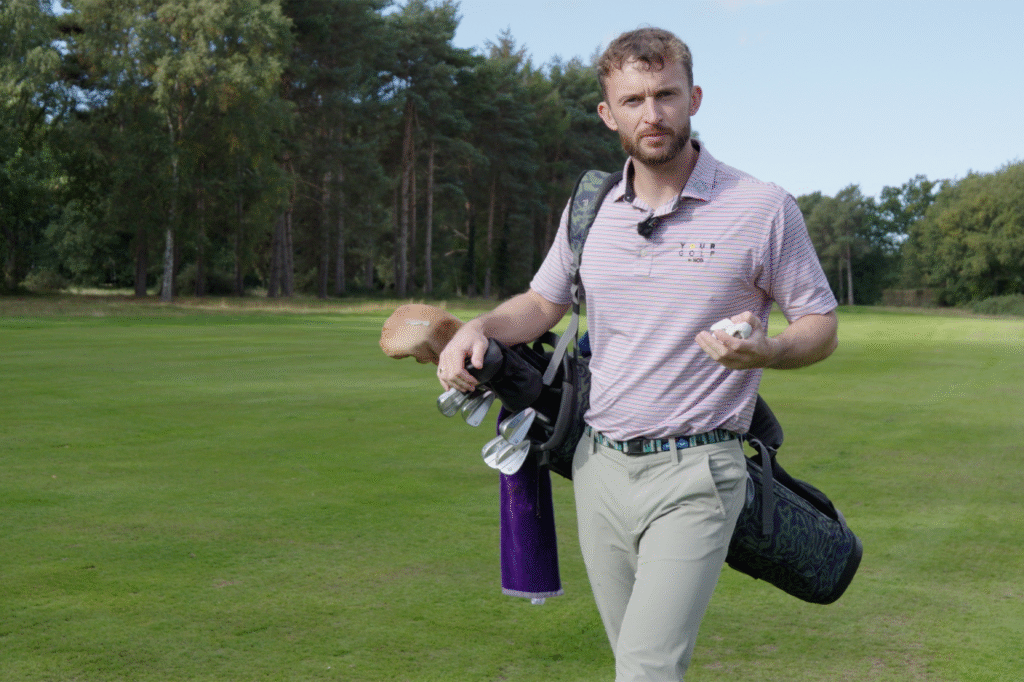
Jack Backhouse, PGA Professional and presenter on the Your Golf NCG channel, has highlighted five areas where golfers regularly kid themselves. From choosing the wrong club to overcomplicating swing faults, these are the traps most of us fall into without even realising. The good news? By being more realistic and more disciplined can get you saving shots straight away.
Here are the five big ones every golfer needs to be honest about.
1. Club Selection
Most golfers plan for the perfect strike. If you’re 142 yards out, you might instinctively reach for your 9-iron because that’s your stock yardage. The problem? Perfect strikes are rare. In truth, only one or two out of ten shots, for the average club golfer, will come off exactly as intended.
Factor in wind, lie, or slope, and the ball will almost always finish short. Taking one more club improves the odds of finishing pin-high and avoids the all-too-frequent miss into trouble short of the green.
2. Playing with What You’ve Got
On the driving range, it makes sense to work on fixing a slice or hook. But on the course, honesty about your ball flight is essential. Too many slicers aim straight down the fairway, only to watch their ball cut into the right rough, or worse.
Advertisement

Instead, accept your ball flight shape and play to it. If you’re drawing or hooking the ball, start it right. If you’re fading, start it left. You don’t need to know exactly how many yards of curvature your average ball flight has, or anything like that, you just need to stop fighting your natural shape during the round. Golf is easier when you play to your strengths.
3. Green Reading

Many golfers think green reading is an innate talent, but it’s a skill you can develop. Jack Backhouse has found, through his coaching, that a lot of amateurs under-read break. They also fail to learn from previous putts on familiar greens.
At your home club, flags often return to similar spots every few weeks, giving you a chance to build a mental library of how putts behave from different areas on the green. For longer putts, Jack advises players to focus on pace and give the ball enough room to break. Simply walking to the low side of the putt to feel the slope under your feet can improve your read dramatically.
4. Short Game Heroics
Nothing derails a scorecard faster than overconfidence around the greens. Faced with a short-sided chip over a bunker, many golfers try to pull off a fancy flop shot Phil Mickelson-esque. This is instead of playing the percentage shot.
The smarter play is often to take your medicine. There is no harm in chipping out to the fat side of the green and accepting a 15- to 20-foot putt. This will help to avoid any disasters like doubles and triples. Safety first.

5. Diagnosing Swing Faults
When shots go astray, club golfers tend to reach for complicated technical fixes, like ‘I need to keep my head down,’ or ‘I’m coming over the top’. But on the course, this self diagnosis and doubting will only do more harm than good.
Jack explains the technicalities of golf shots being inaccurate by stating that topped shots happen because the club strikes too high; fats because the club bottoms out too soon; pushes because the face is open; pulls because it’s closed. Thinking in terms of impact – striking the ground earlier or later, face more open or closed – keeps it simple and helps you get back on track without changing your entire swing mid-round.
- RELATED: Deals of the week: Grab yourself a bargain!
- RELARED: Golf Giveaways: WIN golf stuff for FREE!
Don’t forget to check out and like our YouTube channel – YOUR GOLF NCG – where you will find lots of hints, tips and equipment reviews.
Advertisement