



Big storms. Rain that never seems to stop, and heatwaves when it does. Our weather seems more unpredictable than ever. And as the reality of climate change becomes more apparent with every flood or wildfire we see on our TV screens, it’s starting to have very real effects on our golf courses.
Dr Fred Yelverton, one of the world’s pre-eminent turfgrass weed specialists, is an expert on the effects of climate change on turfgrass management and pests.
Earlier this year, giving a speech at the BIGGA Turf Management Exhibition in Harrogate, he outlined some of the impacts he’s witnessing on the ground with golf and climate change…
Golf and climate change: Is it affecting the UK’s golf courses?
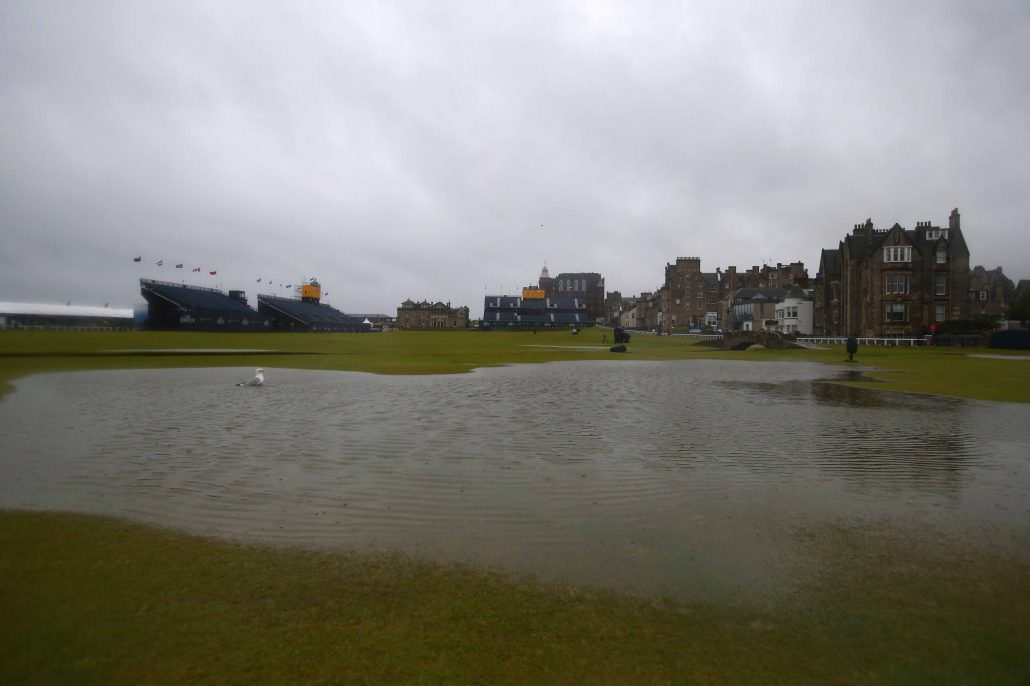
Our courses are getting wetter
“When we discuss global climate change, how that is impacting rainfall levels is a mixed bag.. Some places may get drier, and some places may get wetter. It appears that in the UK you’re getting wetter.”
Yelverton referenced figures which showed the amount of annual rainfall had increased by 100mm (around four inches) in the last 140 years.
For somewhere like Newcastle upon Tyne or Swansea, that’s the equivalent of an entire January’s worth of additional rainfall. For drier parts of the country, it’s an even more significant addition.
“The patterns of rainfall are also changing,” said Yelverton. “You’re also experiencing much more severe rainfall events.”
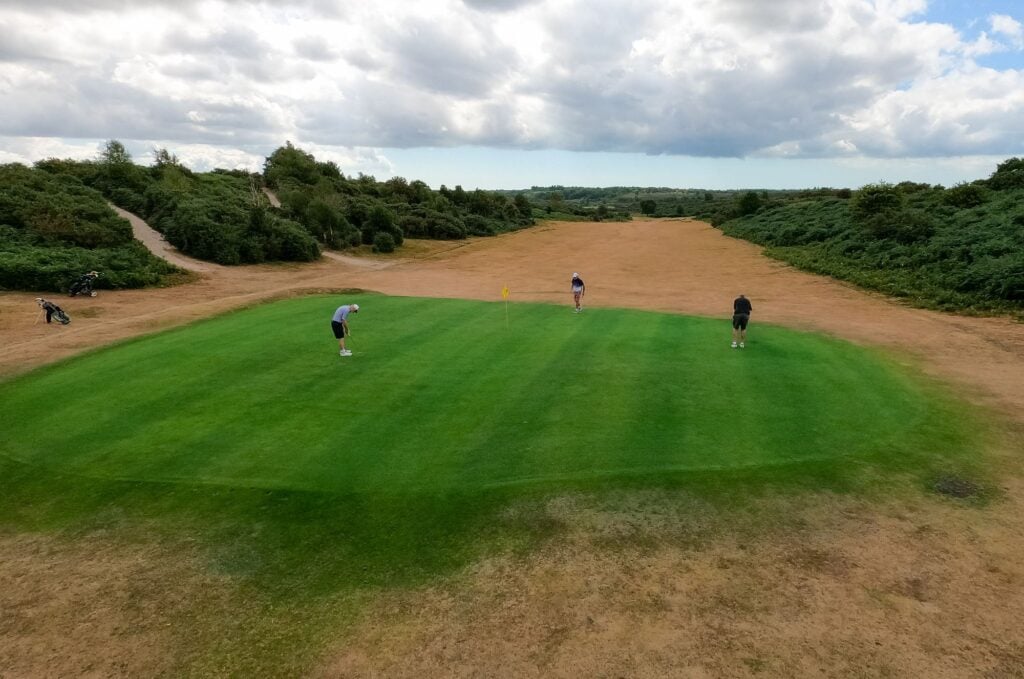
Longer summers lead to more growing days
We’ve had a global increase in temperatures of 1.4˚C in the period between 1880 and 2020. It might not sound a lot but its impact from a turfgrass management and weed standpoint are profound.
Yelverton revealed figures showing the UK growing season, when plants are most active, was 27 days longer from 2012 to 2021 than from 1961 to 1990.
“Longer summers is basically what it is saying,” he said. “So a 1.5˚C increase in temperature doesn’t sound like much, but when you put it in concepts like this, it is a big deal. Twenty seven days, that’s a lot. And that has profound impacts on turfgrass management.”
Advertisement
Warmer nights reduce turf recovery time
It’s not just during the day where we’re seeing the mercury rise. Night-time temperatures are on the increase and they’re on a steeper incline too.
“That has huge implications for turfgrass management,” Yelverton said. “Cool season turfgrasses, such as you find in the UK, rely on night-time temperatures to recover during periods of high stress, such as the height of summer.
“But as night-time temperatures start to warm, they don’t get as much opportunity to recover.”
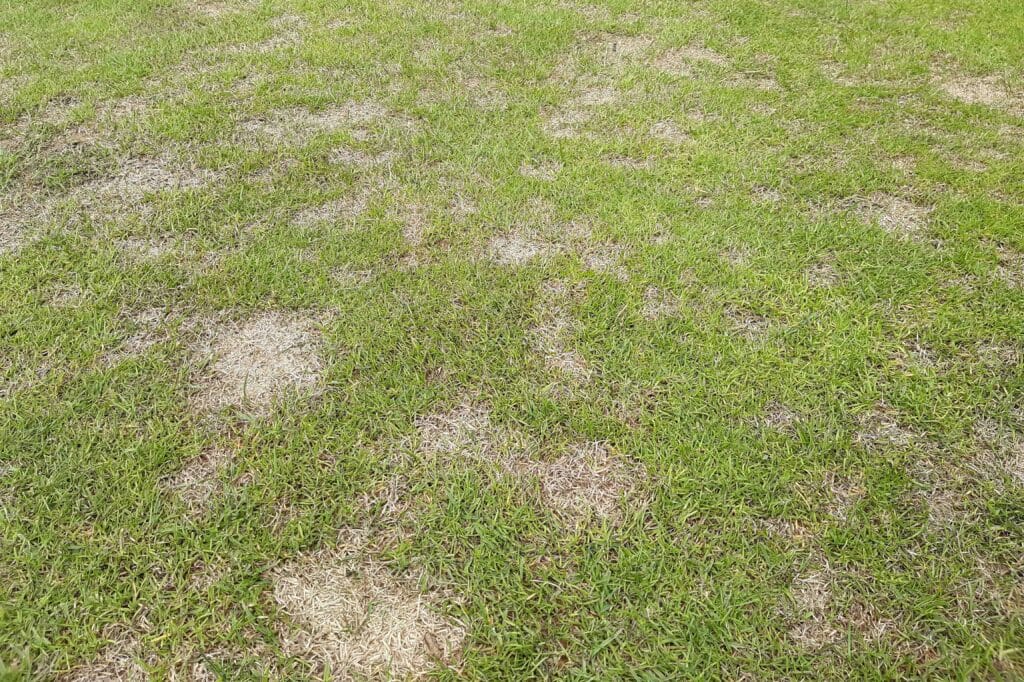
Golf and climate change: Pests and diseases are on the move
Yelverton said: “In the US, we’re seeing pests moving north – insects, diseases, and weeds. If there was a weed that was common in Florida, we now have it in North Carolina. If there was a weed common in North Carolina, it’s now up in New York.
“We see this gradual movement of vegetation. I don’t think there is as much of that going on in the UK and it’s because you’re an island. That slows things quite a bit, but you’re already beginning to see weeds and diseases steadily creeping northwards as the climate warms.”
Hotter temperatures are changing the types of turf that thrive
Yelverton explained that in the 1990s in North Carolina, putting greens on golf courses were generally around 80 per cent bentgrass and 20 per cent Bermuda.
But as the state has warmed, particularly at night, so have the types of grasses now being used on golf courses. He said, as of 2021, it was around 70 per cent Bermuda and 30 per cent bentgrass.
“In my career, we have totally changed putting green surfaces and it is predominantly because our night-time temperatures are getting warmer,” Yelverton said.
“Particularly in southern areas of the UK, turfgrasses that traditionally formed putting surfaces are transitioning to species that are more accustomed to a warmer climate.
“These have different maintenance requirements, leading greenkeepers to adjust their practices and learn new techniques.”
- This article appears in Your Course, the twice-yearly publication from the British and International Golf Greenkeepers Association. Your Course invites golfers to gain a deeper appreciation of what preparing and maintaining a golf course really involves. Head to www.bigga.org.uk to find out more.
Now have your say on golf and climate change
Have you noticed conditions at your golf course changing? What do you think about golf and climate change? Do you think things will get worse? Let us know by leaving a comment on X.
Advertisement