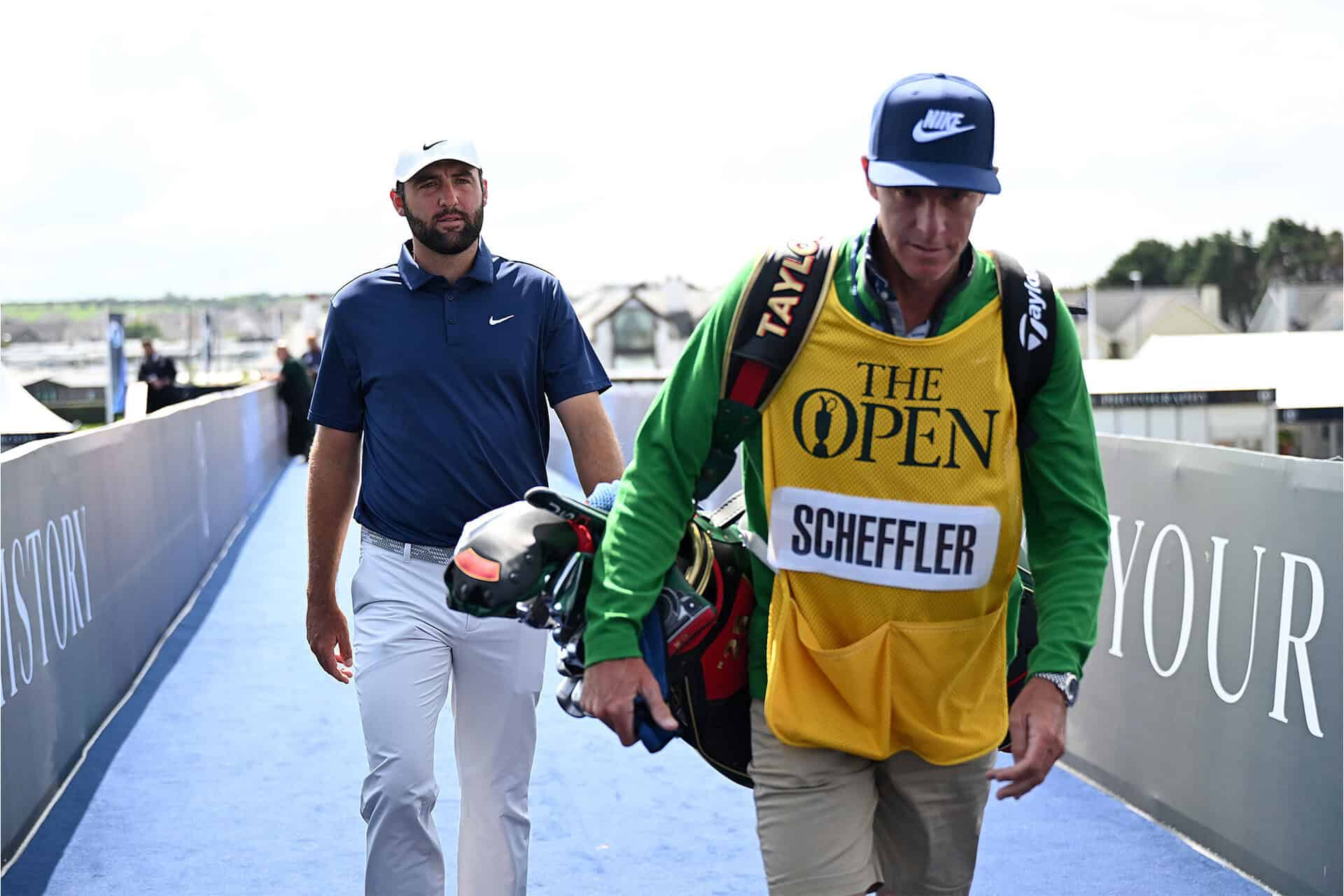


I’m a mum, a nurse and an accidental golf volunteer. And after three years behind the ropes volunteering at six professional tournaments, I started wondering whether club golfers really know what to do if something went seriously wrong halfway around the course.
You’re standing on the 15th tee.
It’s a decent day. The rain has, for once, stayed away. You’ve played reasonably well and are beginning to think this might finally be the round you tell everyone about afterwards. Then your playing partner collapses.
Suddenly, the golf doesn’t matter. It’s just you, your playing partner and a golf course.
Who do you call? How do you explain exactly where you are? Where is the nearest AED? And how quickly could someone find you?
These aren’t questions most golfers ask before putting the kettle on, loading the clubs into the car and heading for the 1st tee.
Perhaps they should.
I’m not actually a golfer. This may seem an odd confession for someone writing about golf, but it matters.
My husband is a golfer. A proper golfer. He can happily spend hours watching, talking about and analysing golf. If someone asked me to explain the difference between a draw and a fade, there was every chance I would point vaguely towards the nearest toilet.
Then, somehow, I ended up volunteering at professional golf tournaments.
One minute I was the wife of a golfer. The next I was standing behind the ropes at professional events, surrounded by people who knew considerably more about golf than I did. And I loved it.
I wasn’t there to analyse swings or offer an opinion on club selection. I was part of the Event Information Team, which gave me a completely different view of the game: the crowds, teamwork, camaraderie, excitement, unpredictability and, naturally, the great British weather.
Advertisement
But while everyone else was watching the golf, I found myself watching something else. The people behind it.
Behind the ropes…
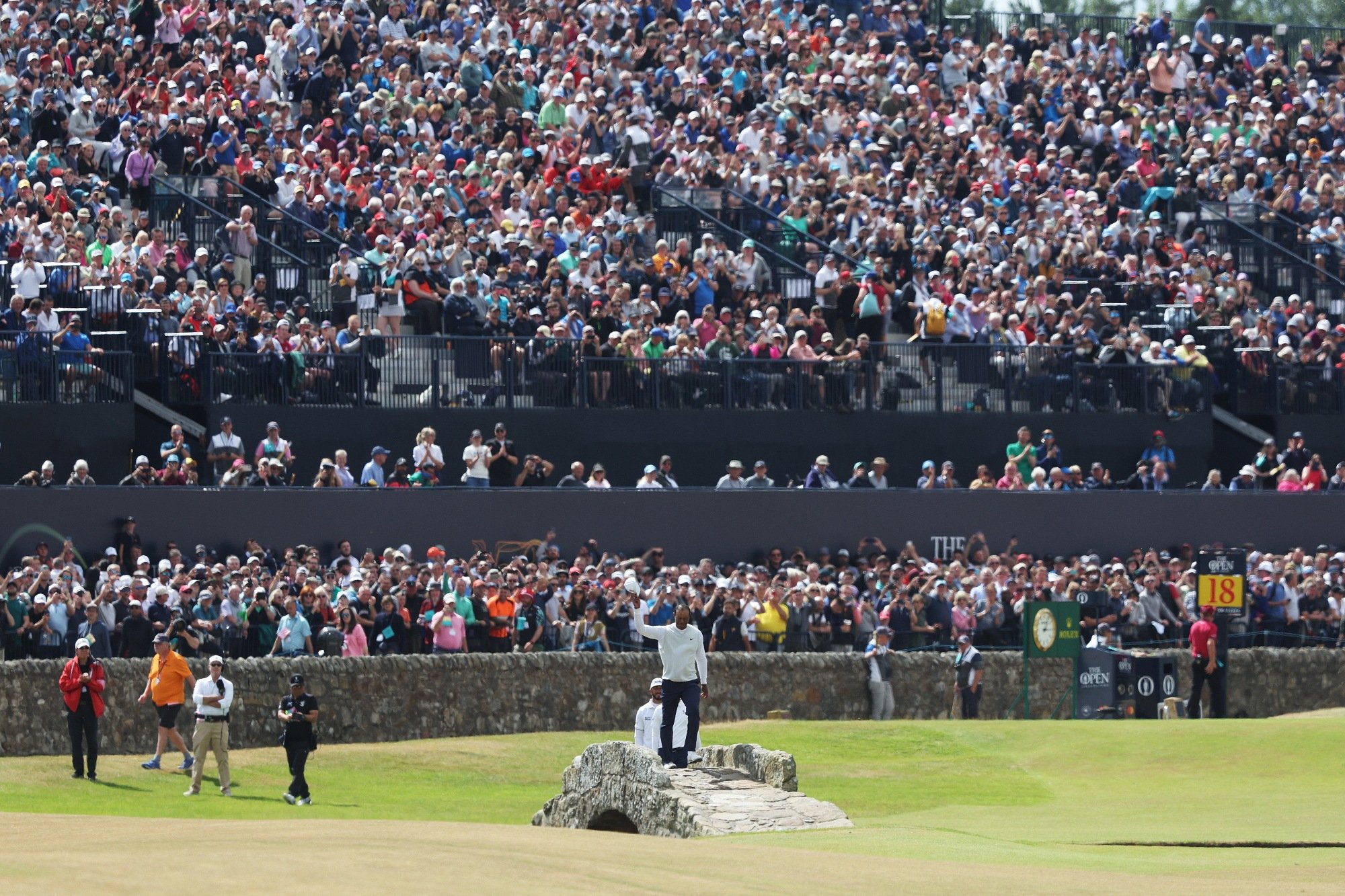
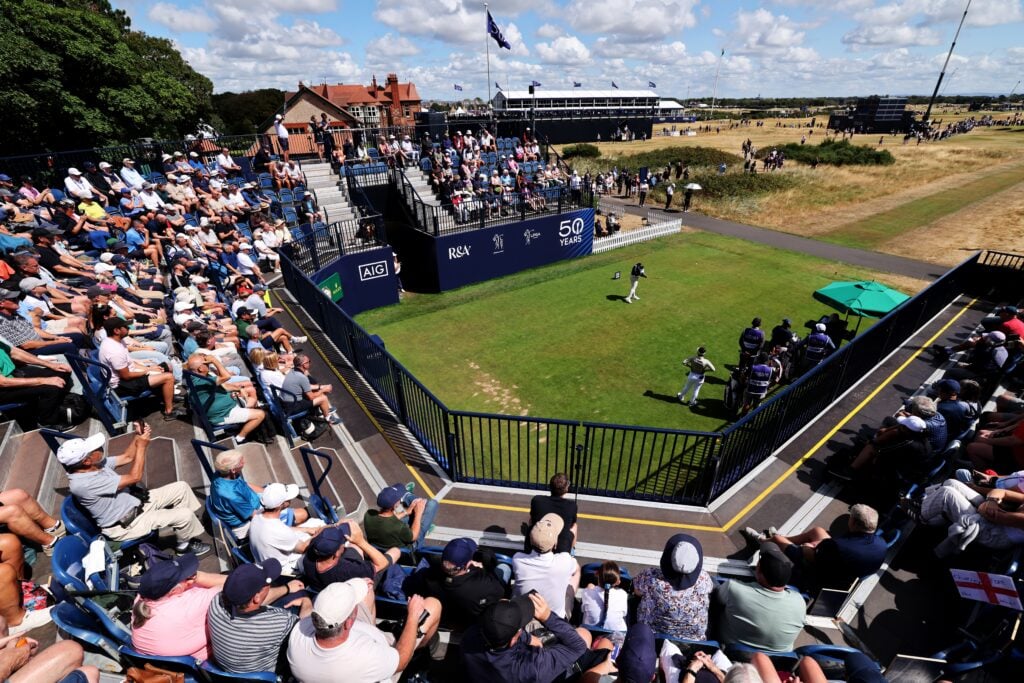
At professional tournaments, something quite remarkable happens. The golf course becomes a temporary city.
There are players, spectators, officials, volunteers, security teams, accessibility teams, broadcasters, hospitality staff and medical personnel. People are constantly moving around the course, communicating and dealing with whatever problem appears next.
If a spectator needs help, someone responds. If somebody becomes unwell, there are people whose job it is to deal with it. If something goes wrong, there is a system.
As someone who works in healthcare, I noticed that. But I also noticed how different it must feel when all those people aren’t there.
Eventually, the tournament finishes. The grandstands come down, the crowds disappear and the television cameras go home.
The golf course becomes what it is for most of the year: a place where ordinary people come to play an ordinary round of golf.
Except the course itself hasn’t changed.
The 15th is still the 15th. The same trees are there. The same rough is waiting to swallow anything hit vaguely in its direction.
And the possibility of something unexpected happening hasn’t disappeared either.
That was when I started thinking about my husband. What would happen if he collapsed on the 15th? Not at a professional tournament, surrounded by medical teams, marshals and event staff. At his club. With just his playing partners around him.
Golf courses don’t feel particularly difficult to reach when you’re playing them. You know the holes and roughly where the clubhouse is. You probably don’t spend much time considering how an ambulance would reach a particular patch of fairway.
But step back for a moment and think about the size of the place.
Golfers are spread across a large area. There may be roads, paths, trees, rough, water and other obstacles between you and the clubhouse.
And if something serious happens, “We’re on the 15th” isn’t necessarily enough information.
Which part of the 15th? Near the tee? Halfway down? Behind the green? Which entrance should emergency services use? Is there vehicle access? Where is the nearest AED?
Who knows the answers?
Five minutes that could matter…
I’m not suggesting anyone should arrive for their Saturday morning game carrying a medical handbook. Golf is supposed to be an escape. It’s exercise without necessarily feeling like exercise, friendship, fresh air, competition and a few hours away from work and family life.
And sometimes it’s an excellent opportunity to blame the wind for a dreadful tee shot. But perhaps, before the round starts, there are a few things worth knowing.
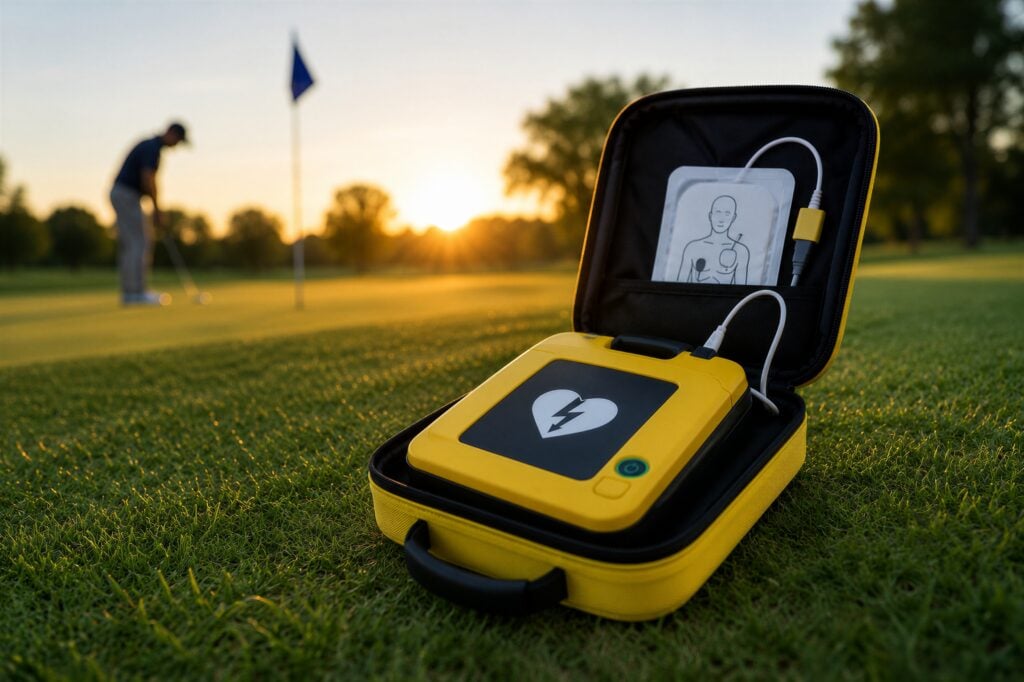
Where is the club’s AED? If you had to call for help from the course, how would you describe your location?
Does your playing partner know? Does the club have a system for identifying different parts of the course?
What happens if the clubhouse is closed? None of these questions is particularly exciting. They’re certainly less interesting than debating whether the pin position makes the 15th a sensible birdie opportunity.
But they’re worth knowing the answers to. And finding out doesn’t require a three-hour training course. It might take five minutes. Hopefully, you’ll never need the information. But that’s rather the point.
A practical example…
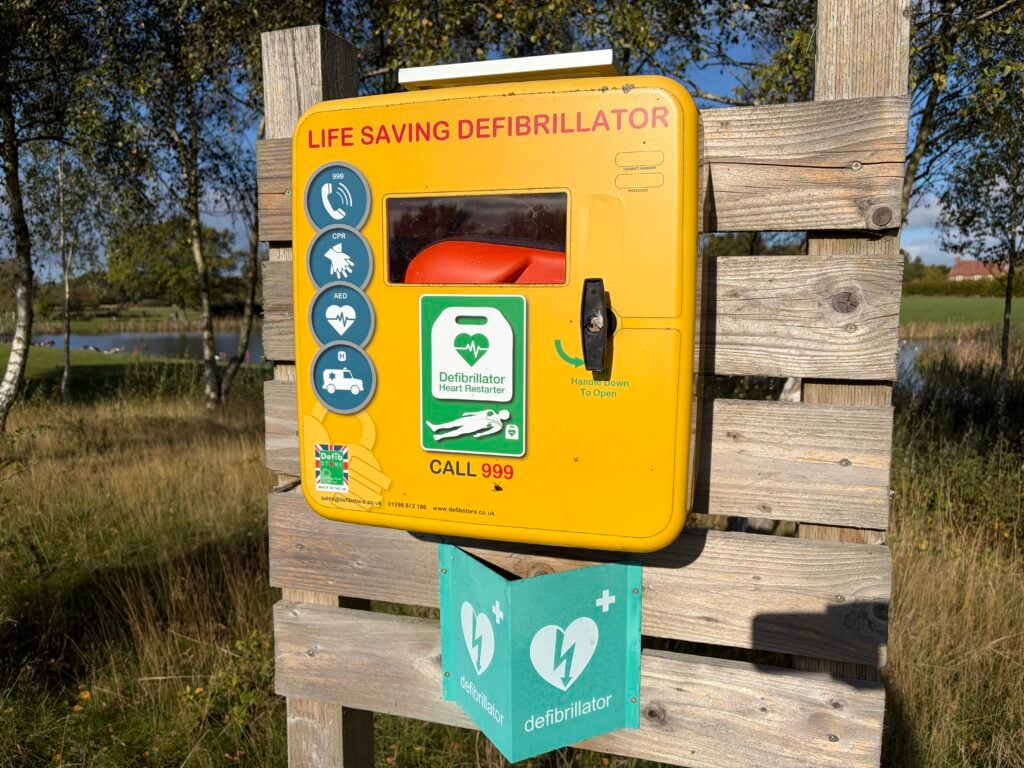
I asked my local club how it approaches cardiac emergencies on the course. There is an AED in the clubhouse foyer, although it isn’t accessible when the clubhouse is closed.
If an emergency occurs elsewhere on the course, the response depends on where the player is and the time of day. A greenkeeper may be able to assist, or a buggy can be sent from the professional shop.
Advertisement
Interestingly, the club previously had a buggy specifically designated for emergencies. It was rarely used, though, and the cost of hiring it eventually meant it was returned to the rental company.
There is, however, a practical solution for emergency vehicle access. The greenkeepers’ shed sits in the middle of the course, with a road leading directly to it, providing a route for emergency vehicles if required.
The club has also made cardiac awareness part of its wider approach to member safety. This year’s captains’ charity is Heartwize, and some members have taken advantage of the free training it provides.
The AED’s location is included in the health and safety information in the new-member welcome pack, while signs are displayed on the club’s noticeboards.
The club have gone one step further and ensured all scorecards have emergency contact numbers on the reverse and when asked for the one piece of advice they would want every member to remember, the answer was simple: always carry your phone with you.
This club was prepared. It communicated clearly. And, importantly, it had made the health and safety of its members a priority,
But it also brought me back to the question that prompted this article. Knowing that a plan exists isn’t necessarily the same as knowing what to do when you’re standing on the 15th fairway.
The person left standing…
Perhaps the most uncomfortable part isn’t thinking about being the person who collapses. It’s thinking about being the person left standing.
You’re not expecting it. You’re halfway through a round and probably wondering whether your handicap is going to survive the back nine.
Advertisement
Then, suddenly, someone else’s life may depend on what you do next. You don’t need to become a paramedic. You don’t need to know everything. But you do need to know who to call, where you are and how to get help to you.
That is a very different question from simply asking whether your club has an emergency plan. The question is whether you know what that plan is.
It’s not really about golf. Golf can feel like an individual sport. It’s you against the course. You hit your own shots, mark your own card and count your own score. You can spend a considerable amount of time having an internal argument about why that four-putt suddenly looked impossible.
But golf is rarely played entirely alone.
There are playing partners, friends, members and visitors. People you’ve known for years and people you’ve only just met on the 1st tee.
You walk the course together. You share the good shots and the bad ones. You congratulate each other, encourage each other and occasionally pretend not to notice when someone’s ball has gone spectacularly in the wrong direction.
That’s part of what makes club golf special. And perhaps looking out for one another is simply another part of being on the course.
The accidental golf convert…
The funny thing is that, after three years volunteering at professional tournaments, I still don’t play golf. I haven’t suddenly developed a desire to buy a set of clubs and spend my weekends trying to master a seven iron.
But I have developed a genuine affection for the game. Not necessarily because I understand every rule or appreciate every technical detail. I’ve developed it because I’ve seen the people behind it. I’ve seen teamwork. I’ve seen communities come together. I’ve seen strangers become teams.
Advertisement
Perhaps being a non-golfer gave me a slightly different perspective. I arrived without assumptions. I didn’t know what had “always been done”. So, I asked questions.
Sometimes the people who know the least about something are the ones who notice what everyone else has stopped seeing.
And that’s why I keep coming back to the 15th. Because the next time you’re standing there, you probably won’t be thinking about emergencies. You’ll be thinking about your score. You’ll be thinking about the wind. You’ll be wondering whether you’ve got enough club.
And hopefully, you’ll never need to know what to do if the person beside you suddenly collapses. But perhaps that’s exactly why you should find out.
Because if something goes wrong on the 15th, it will be too late to start asking.
About Leanne
I’m a mum, a nurse, a wife to an avid golfer and daughter-in-law to an even more passionate one. But, despite being surrounded by golfing enthusiasm, I’m not a golfer myself.
My love for the game comes from behind the ropes, where I’m fascinated by the people, atmosphere and stories that sit alongside the action. My nursing background means I naturally notice the human side of sport; the pressure, emotion, resilience and moments that might otherwise go unseen. After three years volunteering at professional tournaments, I’ve become hooked on telling those stories.
- This piece also appears in the GCMA’s monthly Insights newsletter that is packed with expert opinion on matters relating to golf club management. Sign up to Insights for FREE here.

Now have your say
Is your club equipped to deal with a golf course emergency? Should all golfers know about their club’s emergency plan? Does your club have an AED and the right measures in place should something happen on the course? Let us know in the comments, or get in touch on X.
NOW READ: Do golf clubs need to sell more than just golf?
NOW READ: Emergencies aside, mobile phones are nothing but a distraction on the golf course