



“Hit it hard, go find it, and hit it again.” Arnold Palmer knew what he was talking about. Why make golf more complicated than it needs to be?
In a game that’s played over such a wide area, though, and with plenty of hazards and obstacles lurking for an errant shot, sometimes just locating your ball isn’t always that straightforward.
But the Rules of Golf have guidance in place to help make it easier, to ensure you can properly identify your ball, and deal with what happens if you inadvertently move it while you’re hunting it down.
So let’s get stuck into the magic and mysteries of Rule 7…
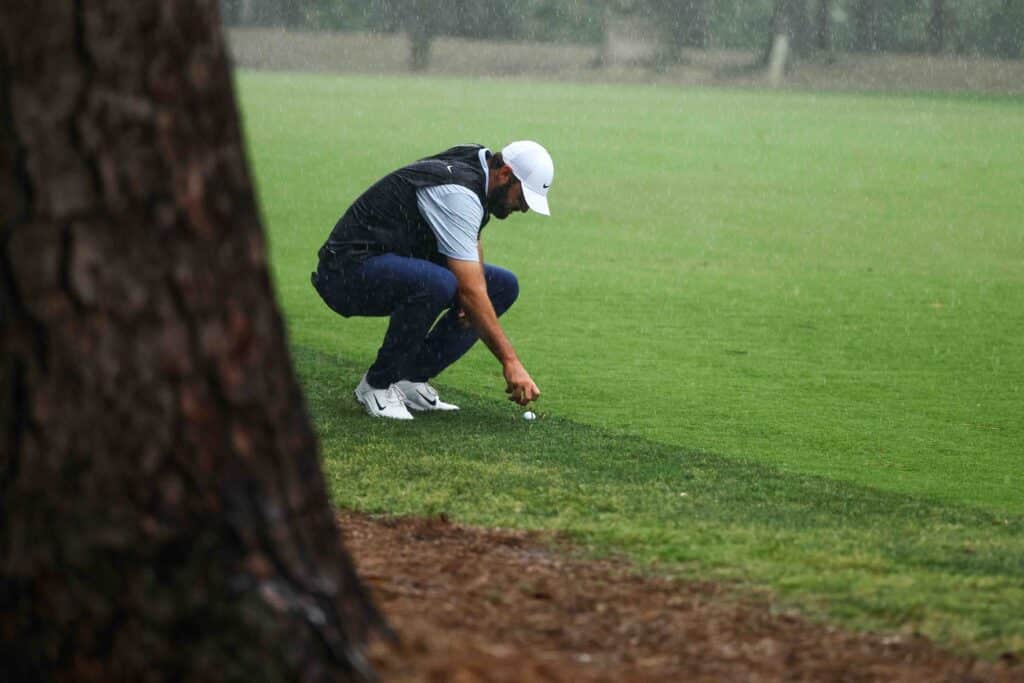
How to identify your golf ball
How do you find your ball?
It’s your responsibility to find your ball in play each time you make a stroke. Most of the time, you’ll come straight across it.
If you find yourselves tangled, though, there are a number of measures you can take in what’s termed a “fair search” for the ball.
You can shift sand and water, you can move and bend grass, bushes, tree branches and other “growing or attached natural objects”.
You can even break them. But the key here is that it is done as part of “reasonable actions” to find and identify the ball.
If that’s the case, you won’t pick up a penalty, even if what you do improves the conditions affecting the stroke.
But if your actions are not reasonable, the general penalty – two strokes in stroke play and loss of hole in match play – is coming for a breach of .