


What is a cheat? They’re a charlatan, a con artist, a crook. A rogue, a swindler, and a trickster. They deceive and defraud. They dodge, double-deal and double-cross. They’re a scammer, a shark, and a shyster. They dupe, trick and swindle.
There are so many ways in the English language – the phrasing almost Dickensian in its disdain – to describe someone who behaves dishonestly to get what they want.
People have always sought to gain an advantage by whatever means they can, and that’s not confined to sport or golf.
But it’s probably easier to cheat in our beloved game than many others, because of the wide-open spaces on which it’s played and its ethos of self-governance.
Perhaps that’s why when a player is caught breaking the rules, clubhouses unite in outcry. It doesn’t just offend us, it feels like it’s a slight on the entire game itself.
It’s been a summer of drought, and maybe the heat has gone straight to the heads of some over the last few months.
Craig Surgeon was banned from Lothians Golf Association competitions after it’s understood he dropped a ball on the final hole of his second round at the Lothians Amateur Championship, played at Turnhouse in July.
It was reported he claimed it was a provisional he’d hit off the tee, but he was spotted and subsequently disqualified himself from the event.
“It was me,” he said on X shortly afterwards. “I DQ myself and I have owned up and am facing the consequences.”
After an investigation, Surgeon was handed a five-year sanction this month, three of which were suspended, and the ban was also replicated by his club – with a disciplinary process under way.
In August, Zach Holland admitted to staging a hole-in-one during a competition at WingHaven Country Club, in Missouri.
Advertisement
Reports revealed Holland told his group he had to take a phone call, so would go ahead to the par 3 4th tee and hit first.
They later discovered a ball in the hole. But security footage checked by staff showed he had been in the vicinity of the hole before his tee time.
It’s not just in golf where there has been a furore this year. Cricket was gripped by the alleged antics of ‘Clicky Ponting’, a fielder accused of clicking his fingers to convince umpires a batsman had nicked an edge.
They are a trio of incidents that have propelled allegations of cheating in amateur sport into countless videos, memes, and the pages of newspapers all over the world.
But is this just tip of the iceberg? Are there cheats all around us? Why do people do it, and do their actions deserve global distain?
Is cheating in golf widespread?
Whether it’s paranoia about players manipulating their handicaps, or outright skulduggery, you never have to go too far at a golf club without smelling the whiff of suspicion.
Thousands of you who filled in a massive NCG survey earlier this year said they either suspected or had experienced cheating while playing.
More than 16% of people who replied said there were a “few known cheats at my club and we have proved it”, while a further six per cent revealed they knew lots of people who deliberately cheat.
More worryingly, nearly 40% of respondents said there were known cheats at their club but they had not been able to prove it yet.
For those so minded, the opportunities to cheat at golf are almost endless. It’s a self-policing sport, with golfers expected – but also trusted – to apply their own penalties and protect the field by raising concerns about those they think are not playing to the same standards.
LISTEN TO THE NCG GOLF PODCAST
ALSO AVAILABLE ON:
Apple Podcasts: Listen Now
Spotify: Listen Now
Amazon Music: Listen Now
Why do golfers cheat?
Why do it? In an article for The PGA, Professor Adam Nicholls, a specialist in sport psychology at the University of Hull, said we need to understand why people are motivated to play. Are they task- or ego-oriented?
He told me: “If you have a task-oriented approach, your goals are to get better and to improve. If you have an ego approach, you want to outperform others. Your performance is based on comparing yourself to your friends and other people.”
Nicholls identified three particular traits in people that were associated with their propensity to cheat. These were:
Machiavellianism – More likely to be manipulative, corrupt and often immoral
Narcissism – Having inflated self-importance, can be vain and have a strong sense of entitlement
Psychopathy – Showing little empathy and displaying anti-social tendencies
If we all know cheating is wrong, why does it happen? Prof Nicholls said: “Some people are much better at disengaging from their morals and uncoupling from their normal standards of right and wrong.
“They justify it by saying, ‘No one’s getting hurt if I miss’, or ‘Everyone else does it’.”
He added: “For you and me, it might be hard to understand why people would do that. But these personality types think they can get away with it and can manipulate and distract others to let them get away with it.
“We make evaluations based on threats and benefits. This is appraisal theory. If we believe the benefits outweigh the threats, we’ll do it.
“People make an evaluation every time they engage in cheating behaviour. If I’m in the woods, can’t find my ball, and think, ‘I could just drop another ball down now and no one will see it’, the benefit outweighs the risks of being caught.”
Advertisement

Where do we draw the line and is it becoming more acceptable to cheat?
But the opprobrium that surrounds incidents of rule breaking isn’t universal. “In team sports,” added Prof Nicholls, “if you can get away with a professional foul – or can get away with something – then there seems to be an expectation that players should do it.”
We’ll kick up a fuss if a footballer dives and a penalty is awarded against our team but secretly applaud a player for being ‘crafty’ if the decision goes our way.
While rubbing sandpaper on a cricket ball causes outrage, there are fewer concerns if a batter knows they’ve edged a ball but doesn’t walk. We expect the umpires, or the referees in football, to make the decisions – and for them, and technology, to take the fall if they get it wrong.
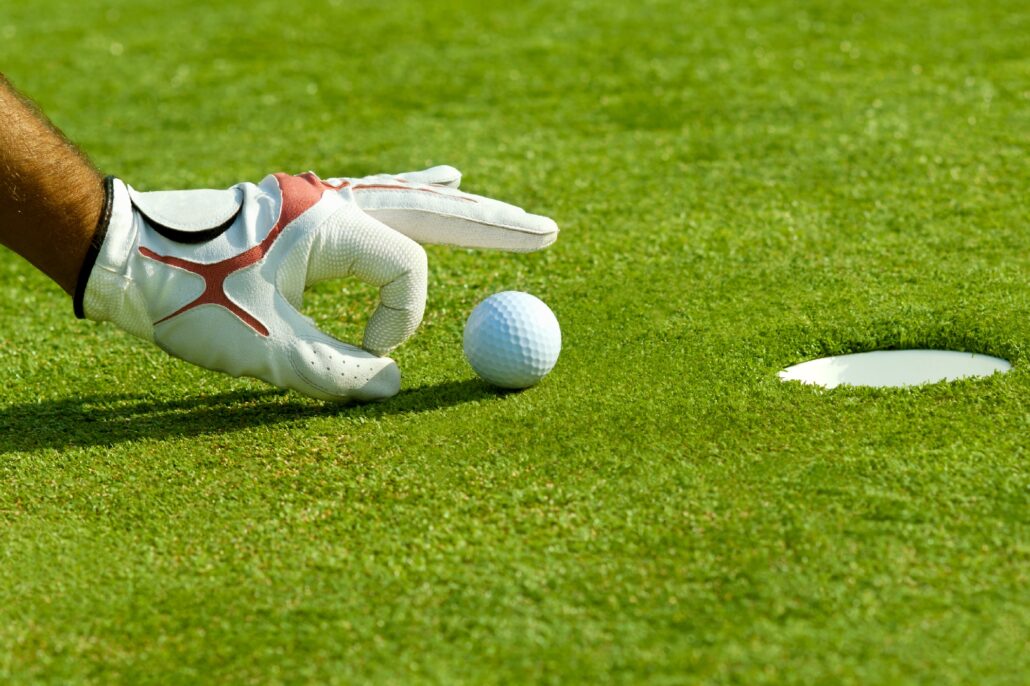
Even in golf, there are layers to how players treat rule-breaking. Dropping a ball, kicking it away from a bad lie, marking it wrongly, or fiddling with a scorecard – these are capital offences and anyone caught can expect to be dealt with harshly.
But manipulating handicaps? Getting people you haven’t played with to attest general play scores you want to record? Being selective about what scores you submit?
These are all breaches of the Rules of Handicapping, but I’ve had stand-up arguments with people who will swear this isn’t cheating.
I think it is, and it’s not just me. The R&A – the governing body that makes the rules – believes so as well.
“What we tend to find is that people don’t really look upon the Rules of Handicapping in the same way they would look upon the Rules of Golf,” said Grant Moir, then R&A director of governance, on The NCG Golf Podcast.
Advertisement
The R&A had launched an awareness campaign for the World Handicap System which, rather bluntly, stated that golfers who didn’t play by the WHS rules were cheats.
But is the punishment getting out of hand?
Cheating violates principles of fairness and equity upon which most of our sporting culture is built. Go back to those original Corinthian ideals and they were as much about how you played the game as to whether you won.
We all agree those found to have broken the rules need to be punished but how far should that go?
With every golf club – and every person in fact – having the ability to self-publish thanks to social media, we’ve seen that a club incident can go global very quickly.
Fuelled by an engagement culture that pays for clicks and views, individuals can quickly find themselves at the centre of a storm that would previously never have gone further than being a local affair.
Don’t do the crime, if you can’t do the time. That’s how many of you might judge those who have been caught breaking the rules.
The prospect of potential worldwide notoriety may also serve as a deterrent to some of those who might be tempted to cheat, even if it inevitably becomes virtual chip wrapping.
But I find myself unsettled by such nationwide uproar. We all love a bit of drama, but there’s increasingly something of the pitchfork and torch about the noise that surrounds these cases – fuelled by a society whose views are increasingly shaped by what social media companies serve up in their feed.
Should cheats be punished? Absolutely. Should they be subject to discipline by their clubs and counties? Definitely. Should they be stuck in the stocks of social media and pelted with virtual tomatoes on the internet? That’s where I leave the train.
Advertisement
Now have your say
Why do people cheat at golf? Why do you think golfers cheat and what should happen to those who are caught? Are you comfortable with players being disgraced in public, or is that a just sanction for an unforgivable act that threatens the very integrity of the game? Let us know in the comments, or get in touch with us on X.
NOW READ: We can’t believe how many club golfers have witnessed cheating
NOW READ: Want to stop cheats? Here are four simple things your club needs to do