


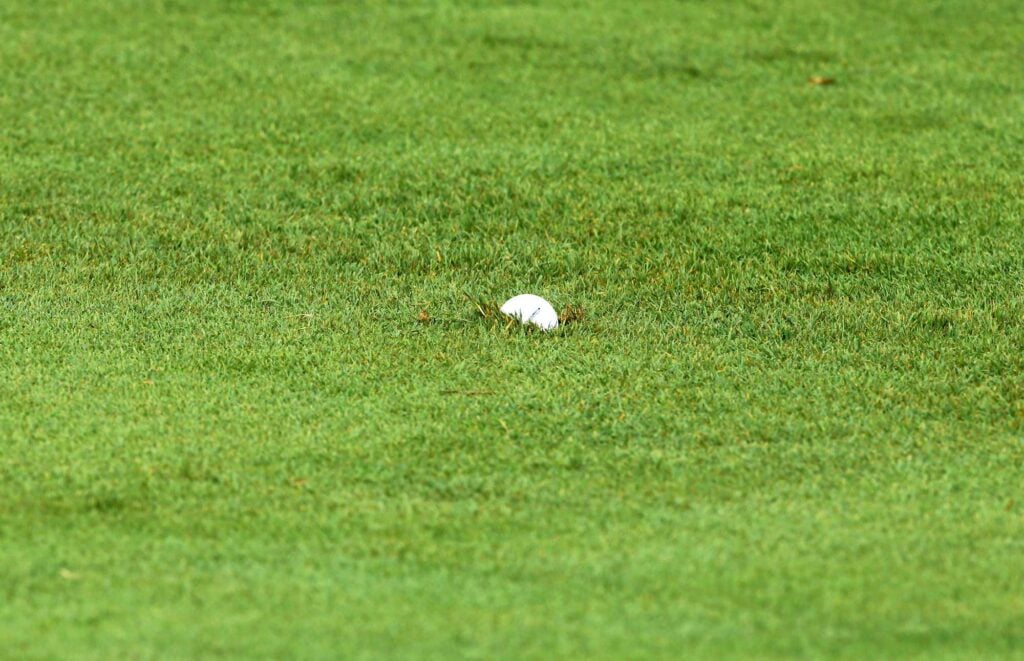
Shane Lowry didn’t need cameras to know his ball was plugged. Standing in the 8th fairway at the PGA Championship last year at Quail Hollow, he could see it was below the surface of the ground. So could everyone else.
But because the ball wasn’t embedded in his pitch-mark, he couldn’t get free relief.
The Irishman was pretty ticked off and embedded ball rulings like this have irked tour players for years.
Now the game’s rules chiefs have responded.
Model Local Rule F-2.3, unveiled in the latest set of R&A and USGA clarifications at the start of January, alters how referees can deal with plugged-lie situations in televised events.
Under Rule 16.3a, free relief is only allowed when a players’ ball is embedded in the general area and, under 16.3b, if it is in its “own pitch mark made as a result of the player’s previous stroke and part of the ball is below the level of the ground”.
If there is any doubt – if the pitch mark might be from another ball – a player is allowed to treat their ball as embedded “if it is reasonable to conclude” that the ball is in its own pitch-mark.
This frustrates players. The ball is plugged and on tour, where landing areas can be peppered with pitch-marks, it’s not that unusual an occurrence.
Officials rule in real-time. But when the cameras enter, and super slow-motion replays can track every movement of the ball, decisions can turn out to be incorrect– even if the letter of the law was applied correctly.
It’s this gap between rulings and what TV might subsequently show that this Local Rule is hoping to close.
What does the new Local Rule say about embedded balls?
It’s only recommended for competitions with live television coverage – so that tells you very clearly who and what it’s being aimed at – and where a ruling “made in real time may later be questioned based on when video evidence of that player’s stroke is shown on the broadcast”.
Advertisement
It states if a referee decides it is known or virtually certain that part of a player’s ball is “below the level of the ground in a pitch-mark in the general area that is cut to fairway height or less that has not been repaired in some way and was made as a result of any player’s stroke”, the player can take free relief.
There’s quite a lot to break down there, but the key point is: it can be in a pitch-mark made by any player’s stroke.
Once again: Referees no longer need to identify whose pitch-mark it is.
The full text of F-2.3 reads: “In addition to when relief is allowed under Rule 16.3a, if a referee determines that it is known or virtually certain that part of a player’s ball is below the level of the ground in a pitch-mark in the general area that is cut to fairway height or less that has not been repaired in some way and was made as a result of any player’s stroke, the player may take free relief using the procedures in Rule 16.3b.
“A pitch-mark has been repaired in some way when it has been pressed down or undergone any form of repair by anyone whether deliberate or incidental, and regardless of the quality or completeness of the repair.
“Examples of repaired in some way include when a pitch-mark has been pressed down with a club or foot, anyone has attempted to repair it with a tee or some other device, or when the pitch-mark is in an area over which a mower has passed or has been otherwise prepared by maintenance staff. A pitch-mark that has been repaired in some way can and will often result in a visible indentation from which there is no relief under this Local Rule.”
Why has it been brought in?
Referees often don’t have video evidence, and quick-fire replays to hand, when making decisions. They give their rulings based on the evidence they can gather at the time and sometimes it’s difficult to come to a decision.
But TV cameras, and subsequently social media, can freeze-frame, slow-down, and magnify to the miniscule.
Television may later reveal new, or more, detail that wasn’t available on the spot and this Local Rule, which will see this season on the PGA Tour and further afield, now gives officials some space.
Now have your say
What do you think of this new embedded ball Local Rule? Will it make it easier for tour players or will it help rules officials make decisions? Let us know by leaving a comment below, or get in touch on X.
Advertisement