We sometimes use affiliate links to products and services on retailer sites for which we can receive compensation if you click on those links or make purchases through them.
Is this as good as a blade putter gets? Find out as Jonathan Taylor reviews the Mizuno M.Craft City Series Kyoto Putter.
It may surprise you to hear that Scotty Cameron manufactured a line of Mizuno putters in the early 1990s, and Bob Bettinardi partnered with Mizuno from 2005 to 2008.
But Mizuno has not generally been regarded as a putter manufacturer, although they have produced some novel designs over the last few years. But is that about to change?
New for 2026 is the M.Craft City Series, featuring four distinct models. Mizuno tells us that these models are inspired by the spirit and character of Japan’s most iconic cities, namely Tokyo, Kyoto, Osaka and Nagoya. In this review I test the Kyoto P putter in Grey Ion (which translates to black). The Kyoto is their traditional blade putter, and the P variant indicates a plumber’s neck.
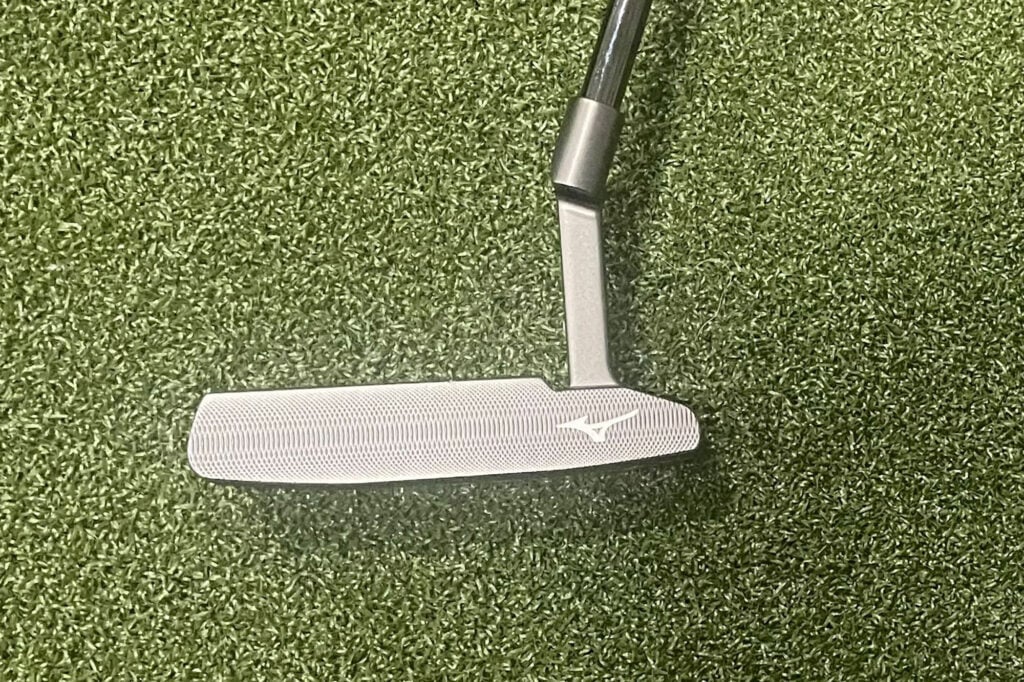
This is a beautiful looking putter. It features a traditional, tour inspired look. There is a handsome milled face, a small sightline, a comfortable grip and a premium head cover. It also offers excellent value when compared to some competitor brands.
At first glance, this putter ticks all the boxes. Admittedly I have always favoured an Anser/Newport blade type of putter for most of my golfing life. More recently I have been seduced by the performance advantages of mallet type putters, and even more recently by zero torque options.
Everything about the Kyoto P exudes quality. The head (forged in Japan, of course!) is constructed from Pure Select 1025E mild carbon steel and is beautifully proportioned with a squared-off shape (more Newport 2 than Newport in Scotty Cameron terms). The milled face (no inserts here) has been refined to offer a smoother roll and purer acoustic feedback.
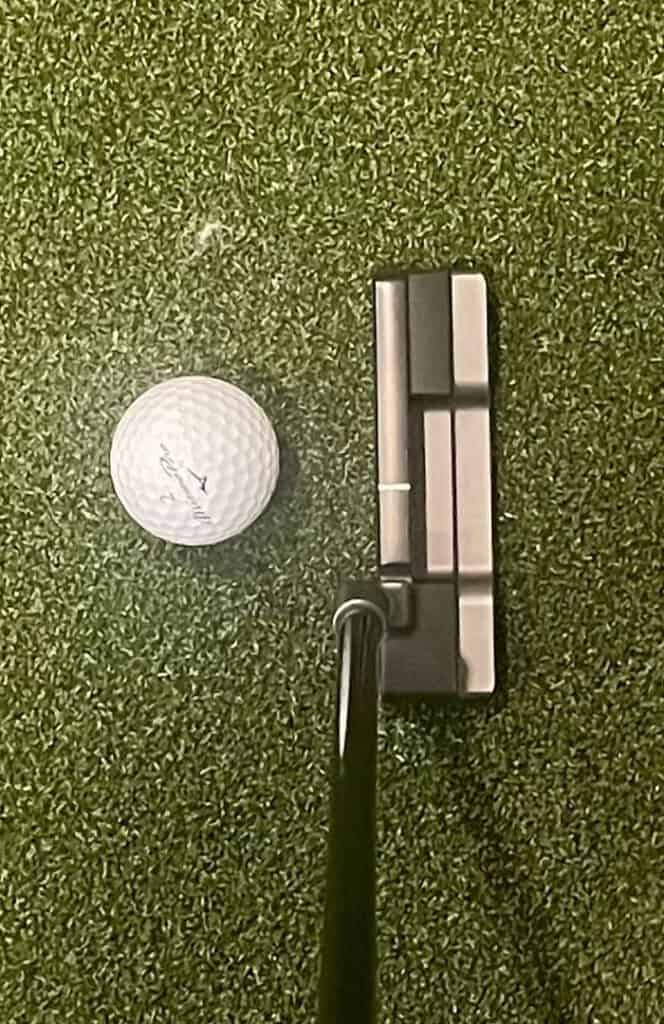
The Grey Ion finish frames the ball nicely. There is a complementary black KBS CT Tour shaft and a handsome Lamkin Deep Etched Grey Cord grip which offers a secure hold.
The Kyoto is available in a plumber’s neck (P) with 35′ of toe hang, and in a slant neck (S) with 50′ of toe hang. If you’re a left-hander you only get the P option ,but every version is available in premium black or nickel finishes.
Advertisement
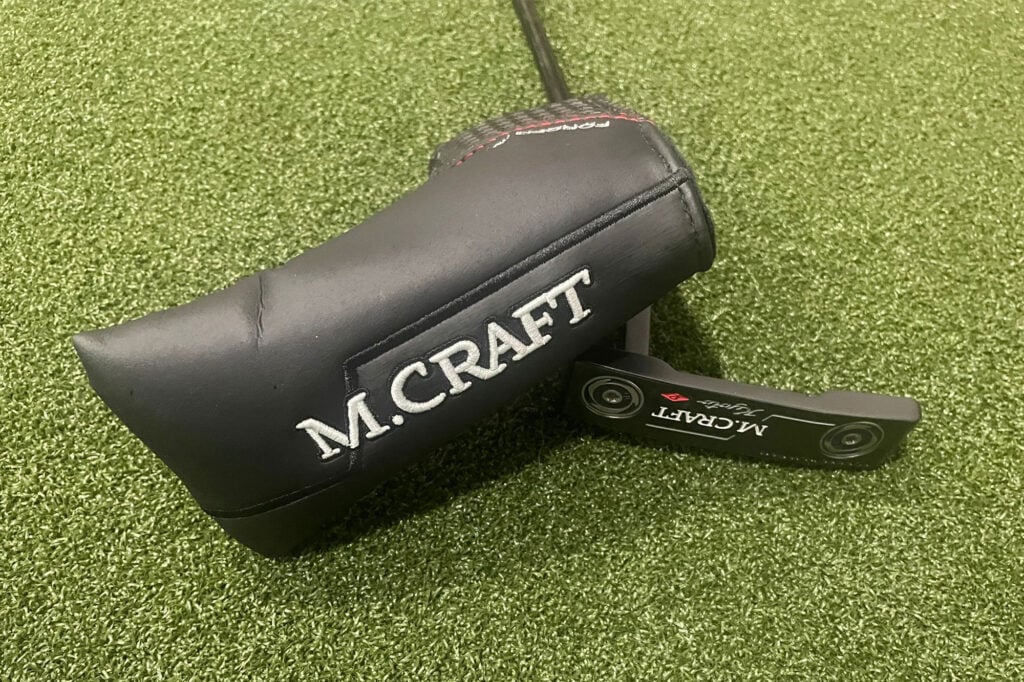
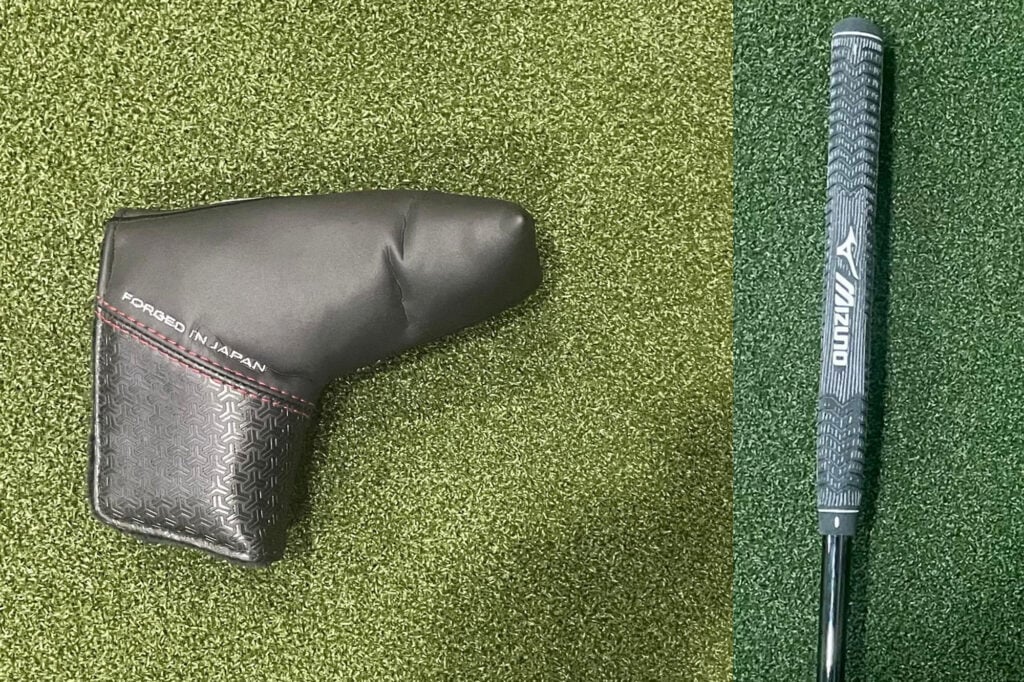
A beautiful head cover with a soft furry liner, magnetic closure (so much better than Velcro) and a leather look completes the package.
So far, so good. But how does this handsome putter perform on the course.
NCG Review
As an ageing golfer who is clinging on to Category 1 status with a handicap of 3.8, I regard myself as an average putter. Historically I have mostly used a toe-hang putter of the Anser/Newport style, with an opening/closing stroke, much like Tiger Woods in his prime. But I’m always on the lookout for assistance. For a while I used a Yes! putter with a heavy shaft, and I still have a couple of Odyssey Tank putters with heavy heads and counterbalanced weight in the grips. What I like about these models is that I’m using a good-looking putter and look like a proper golfer, while secretly getting some technological support.
But when you look at the putter choices of the professionals on tour, then most surveys indicate that mallet- style putters are preferred by 80-90% of players. So in 2025, I generally gamed an Odyssey Milled 7X (as used by Xander Schauffele), which I found offered easy alignment, good distance control and stability on those pressure-laden four or five foot putts. And I think that 2026 may be the year I venture into zero torque territory.
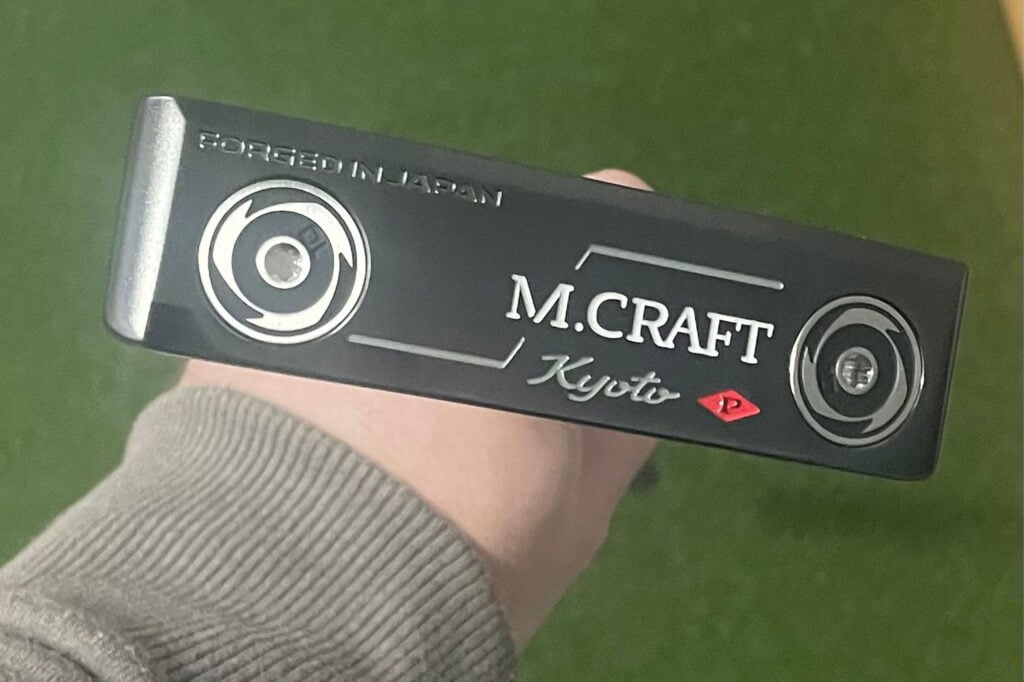
But if anything can stem this drift to function over form, it is a lovely looking blade such as this Kyoto. It’s available in 34″ and 35″. My test putter was my preferred 34″ length. The head weight is recorded as 365 gms at both shaft lengths. There are two adjustable weights in the head. The 10gm weights, which I presume are standard. was just right for me.
The Kyoto felt nicely weighted, and sat nicely behind the ball. The only hint of alignment assistance is a top-edge decal, which for me acted as a sweet spot indicator rather than any aid to alignment. So I’d suggest this is not the putter for you if you prefer strong visual assistance.
The 35′ of toe hang on offer with the plumber’s neck suited my stroke nicely. If you want more, the slant neck (Kyoto S) provides 50′.
The clean look of the putter meant that I had no issues with alignment. When I hit the ball out of the middle of the putter, I was able to achieve good end-over-end ball roll with a nice feel at impact. However, in testing, I reckoned I only hit the ball out of the sweet spot about 60% of the time.
It’s always difficult to test putters properly at this time of year on actual greens in the UK because of climate conditions but it won’t surprise you to hear that off-centre strikes with this putter did lead to loss of distance. I really need a few weeks of testing on Spring/Summer greens to quantify this. I can say that distance control will be an issue with the Kyoto if you aren’t consistently finding the middle of the putter.
I haven’t putted with a Lamkin Deep Etched Grey Cord grip before and found it suited the Kyoto nicely. I also enjoyed the leather-look premium head cover with magnetic closure and ” Forged in Japan’ written on the side.
NCG Verdict
To summarize, this putter looks absolutely beautiful and I cannot wait to try it on the greens on my home course once there’s some growth (we’ve had particularly cold weather recently). The Kyoto is not for you if you prefer alignment assistance or you have an inconsistent stroke.
Advertisement
If you’re in that category then check out my review of the Tokyo model in the City Series range.
But if you prefer a traditional blade putter which doesn’t offer much in the way of assistance then you really should test the Kyoto out.
Mizuno was established as a company back in 1913 when it made baseball bats. Mizuno golf equipment was first manufactured in 1933, along with skis and a few years later, tennis racquets. Mizuno’s international reputation for producing the finest quality sports equipment was established in the 1970s when it started to export its golf clubs to Europe. Mizuno irons have been used by some of the great ball strikers and, to this day, they are renowned for their superb feel.
Jonathan also known as JT, is one of the biggest golf nuts on the NCG team.
He has quickly become a go-to for expertise on golf shoes and technical apparel. In fact he may have a different pair of shoes and a new waterproof jacket for every club medal he plays in.
He previously worked as a GP, which means he likes to get into the details of things, such as weighing golf shoes with his kitchen scales.
Jonathan is a member at Alwoodley Golf Club and regularly gets out on the golf course to maintain his handicap of five.