


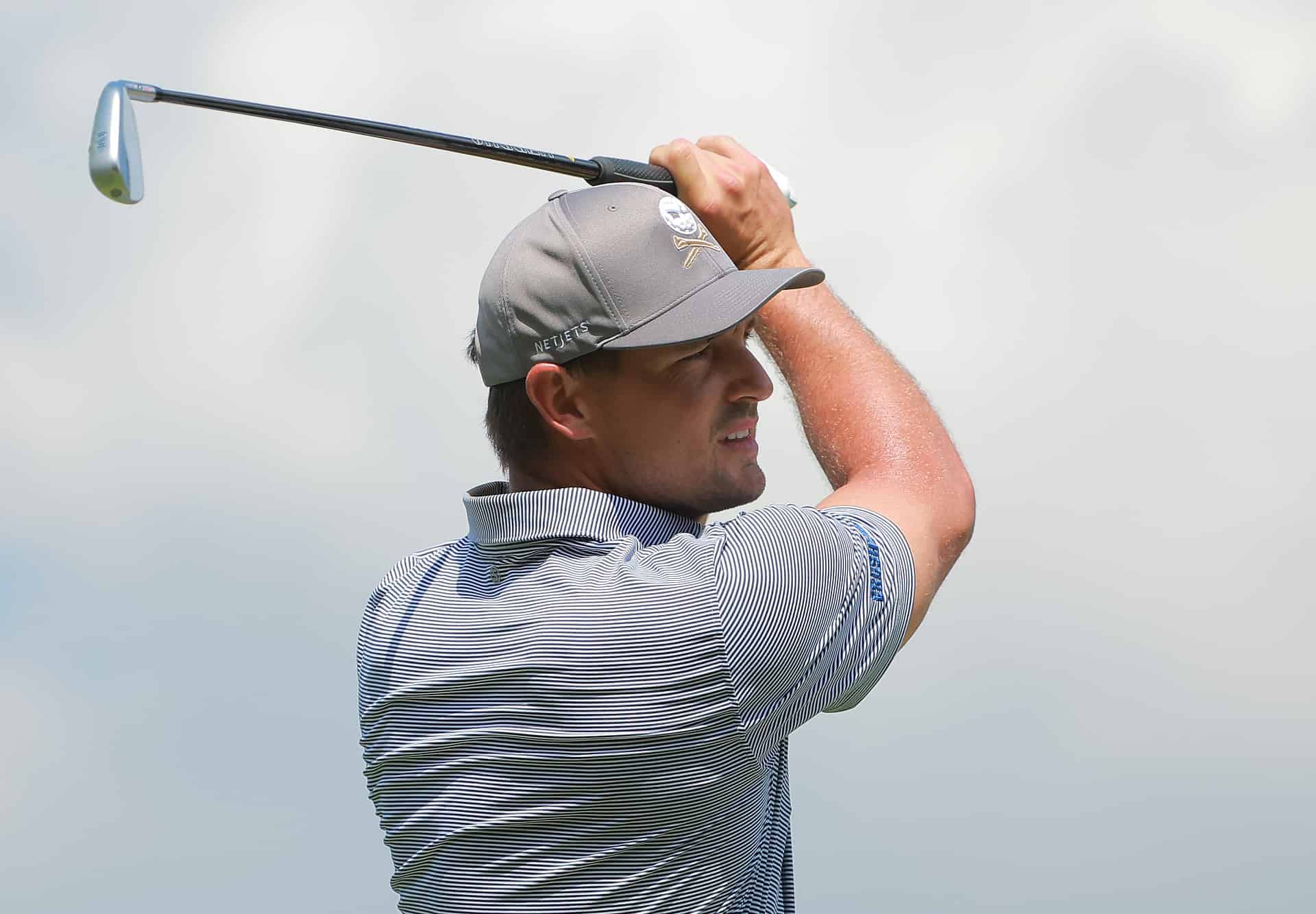
Bryson DeChambeau didn’t earn his nickname ‘The Scientist’ for nothing.
As well as making headlines on the course, most notably by winning the US Open in 2020, he regularly causes rumbles off it for the meticulous and detailed way for which he prepares.
This ultimately led to the demise of his relationship with Cobra, with the brand’s PGA Tour rep Ben Schomin claiming DeChambeau was “looking for a unicorn” in pursuit of a perfect driver.
Ahead of LIV Golf’s season opener, DeChambeau visited Ping’s headquarters in Arizona. The company and its incredibly talented golf club engineers were put through their paces, taking their gear to the limit in creating the 29-year-old’s new set of one-length irons.
Golf.com described the mind-boggling sequence of events which began with DeChambeau telling Ping Tour rep Spencer Rothluebber the characteristics he wanted in his new irons.
Rothluebber set about modifying a set of Ping i230 irons, starting with heavy grinding to the toe section to create a draw at impact.
“The more and more I’ve learned about him, he’s not swing-weight oriented but rather total weight,” Rothluebber explained. “So his clubs were roughly 516 grams, swing-weighted B9 to C1. For him, it’s about establishing a weight baseline. He likes to feel it’s the same across the board.”
DeChambeau allegedly aims at a specific total weight in each of his irons that includes the head, shaft, and grip. Ping wanted to create a 275-gram head weight from the 4-iron through to the Glide 4.0 lob wedge, but overall head weight naturally decreases from the top as a 3-iron head weighs significantly less than this.
Ping’s engineering team used the existing toe and tip weight ports found inside the i230 heads to increase the iron head weight, together with an elastomer weight found in the cavity.

