

Ludvig Aberg has been a professional for less than a year but has already won over $10,000,000 dollars, won on both the DP World Tour and PGA Tour, played in a Ryder Cup winning team, made it to number 3 in the OWGR and finished in the top 10 in majors. It’s an unbelievable resume. In the below Ludvig Aberg Swing Analysis, I break down his golf swing to see why he is a world-beater already.
- RELATED: Ludvig Aberg Player Profile
- RELATED: How To Reset Your Golf Swing After A Bad Start
- RELATED: Bryson DeChambeau Swing Analysis
Set-Up
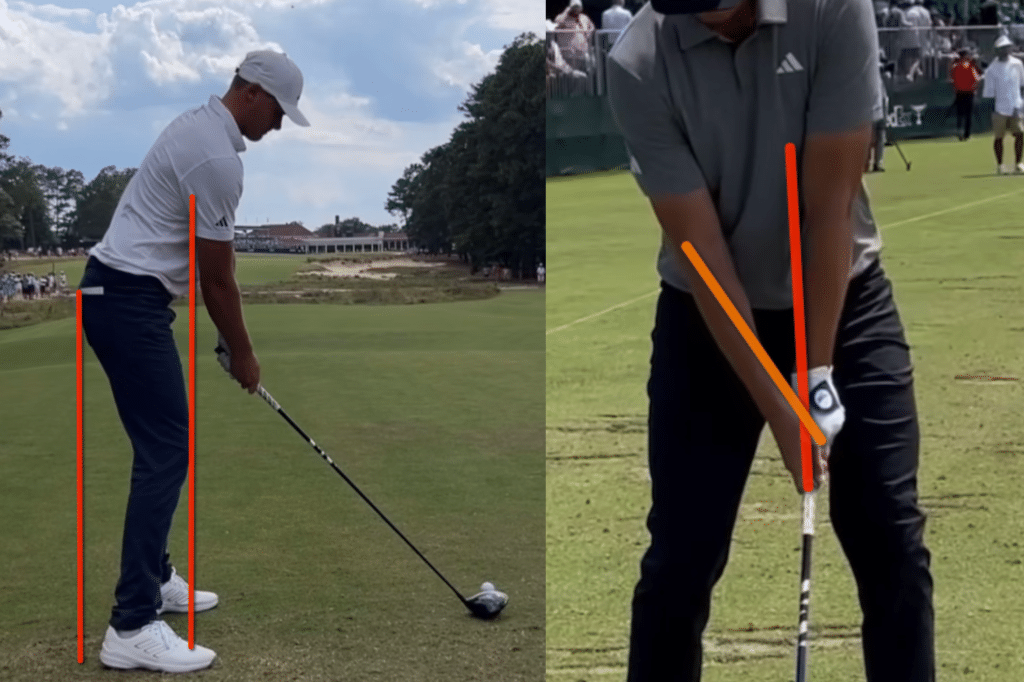
Ludvig Aberg has a very similar grip to Rory Mcilroy, a very strong left hand with a neutral to almost weak right hand. This gives him control of the club face (left hand) but the ability to manipulate loft and strike (right hand). This is an excellent grip to emulate.
Ludvig is 6ft 3 inches tall and stands pretty close to the ball. This gives him a very tall posture, with his balance points in perfect positioning, with armpits over balls of feet and backswing just behind heels. This is actually a pretty relaxed position that will allow him to stretch and reach up to the top of the swing.
Backswing
Aberg starts his backswing with quite a significant hip sway to his right, maybe 2 or 3 inches. This moves his weight back early in the swing, and is done so to combat his swing tendency of staying too much ahead of the ball on his left side.
The club goes away very closed and stays outside for quite a long time in his takeaway. This is great as it gets the club moving up early and in sequence.
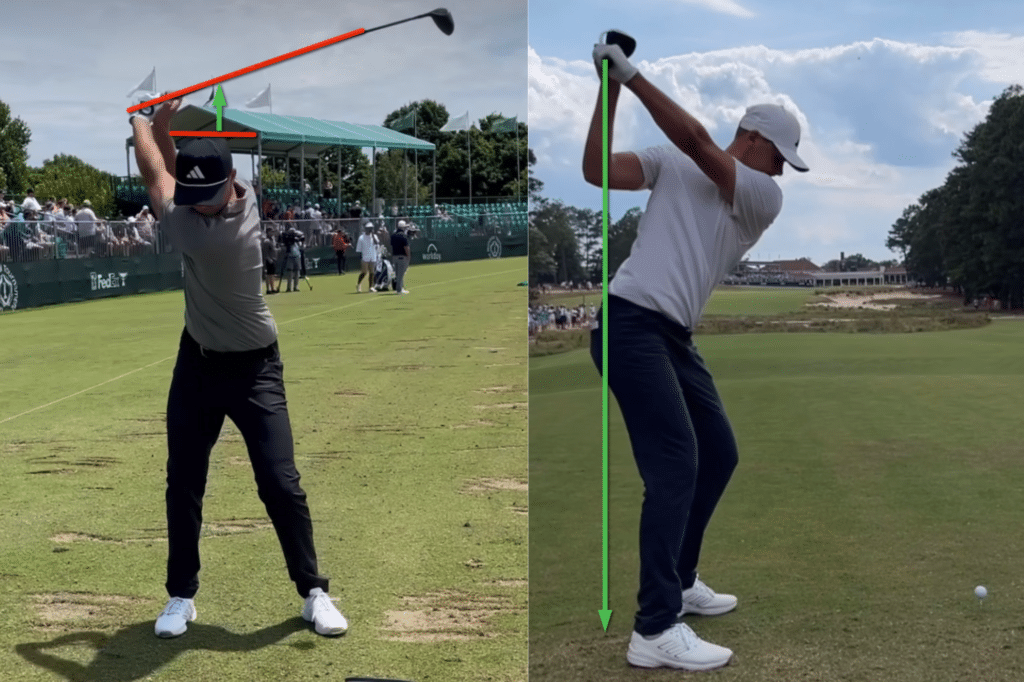
I really like how wide he keeps his hands up to the top of the swing, this is a perfect position to create power and speed. Aberg doesn’t have much hip turn at the top but he doesnt need it because he still manages a more than 90 degree shoulder turn, and achieves enough depth to his hands.
Advertisement
This might not be possible for the average player, and a golfer should prioritise a full shoulder turn and good depth at the top over a restricted lower body.
Downswing
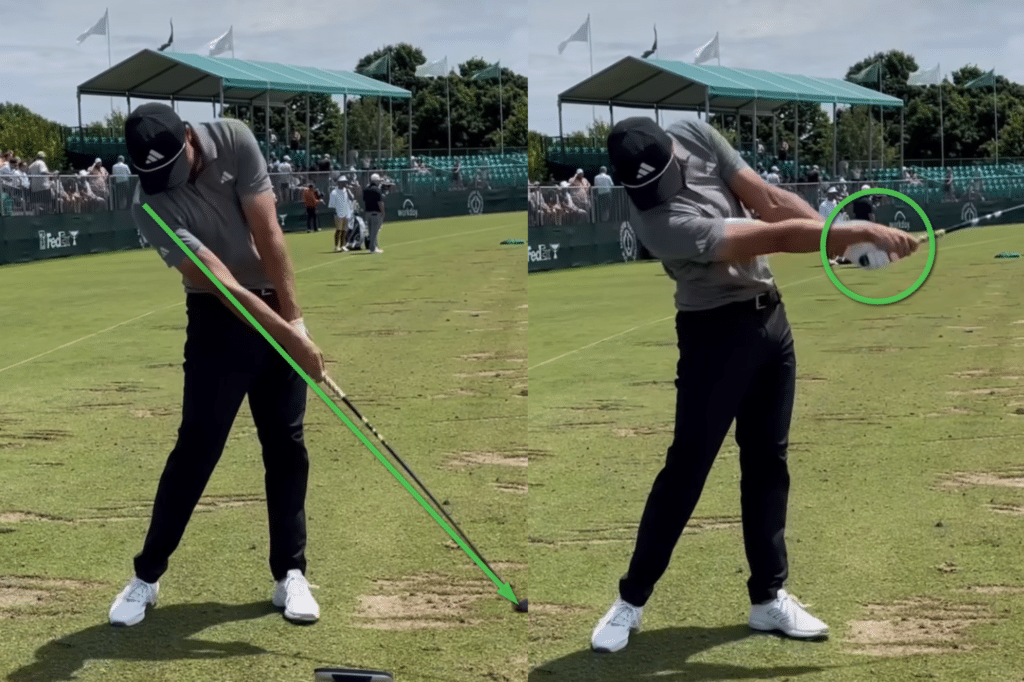
Aberg starts the downswing with an enormous hip shift, really grabbing the ground with his left foot and applying pressure through his lead leg. This allows him to get his arms down into a shallow hitting position, where his arms and legs are primed to create speed into the ball.
Really interestingly Aberg has a huge right arm throw and release into the ball from half way down, one that rivals Rory Mcilroy. He goes from right arm bent and face slightly open, to right arm extended with a huge roll of the wrists after the ball in a very short amount of time.
This is the part of the swing where he is releasing the power out of his body and into the club head, and is incredible to watch.
Into The Finish
Post impact Ludvig has a huge full body extension; legs, hips, spine, arms, wrists, all of which contribute to him hitting the ball really high and really far. He is some how able to then slow everything down and finish in a well balanced position.
This follow through part of his golf swing really is text book and impossible to fault.
What can we learn?
Ludvig Aberg has a swing well worth studying, and he will be studying it a lot over what I’m sure will be a long PGA Tour career. These are the key points I think are worth copying for amateur golfers:
- Solid address position
- Wide, deep backswing
- Get the arms down in sequence with the lower body
- extend everything through the ball for more speed and height to your shots
We might not be able look like Ludvig Aberg, but emulating these parts of his golf swing will improve your game.
If you enjoyed this Ludvig Aberg golf swing analysis, keep an eye out for more tour winners’ swing analysis in the future. Technical Perfection? Ludvig Aberg Swing Analysis
[object Object]
- RELATED – How To Draw The Golf Ball
- RELATED – MORE TOUR PLAYER SWING ANALYSIS
- RELATED – How To Release The Golf Club
Advertisement