



Joining fees have made a comeback. The boom in players rushing to take up golf in the wake of the Coronavirus pandemic has seen clubs racing to reintroduce the fee they ask new members to pay.
They are controversial. Berated by some as a tax on membership, they are perceived both as a loyalty payment and making golf expensive.
A recent Golfshake survey revealed a quarter of players who had been members of a club for less than two years had paid a joining fee – compared to 17% who had been a member for between two and five years.
But is it unfair to brand joining fees in this way? Or do they have a use that makes them a valuable addition to a club’s financial armoury?
At Foxhills, the Surrey proprietary club that has three courses alongside a sprawling leisure and business, it’s certainly been the latter, says membership manager Marcus Weatherburn.
“I’ve worked in the industry now for 10 years and a lot of clubs have a joining fee almost just to say they have it,” he said. “The chances are, if you drill down into it, they’ll probably waive that joining fee if you go ahead and join at certain times.
“I’ve been at the club for four years now and every new member – golf and leisure – pays the joining fee. That’s a massive revenue stream.
“That becomes our investment pot. It’s what allows us to grow – to spend £7 million on a new leisure facility, or £2 million on the golf renovations we’re doing.
“That all comes off the back of joining fees. While some members will say, what do I get from that? We’re very honest and we sit down and say, ‘this is what we’ve spent over the last four years.
Advertisement
“We’ve spent £10 million on projects whether it’s a short game area, whether it’s a new yoga cabin, or a new hole on a Longcross course, all that money comes from those joining fees’.
Is there a better way of handling joining fees?
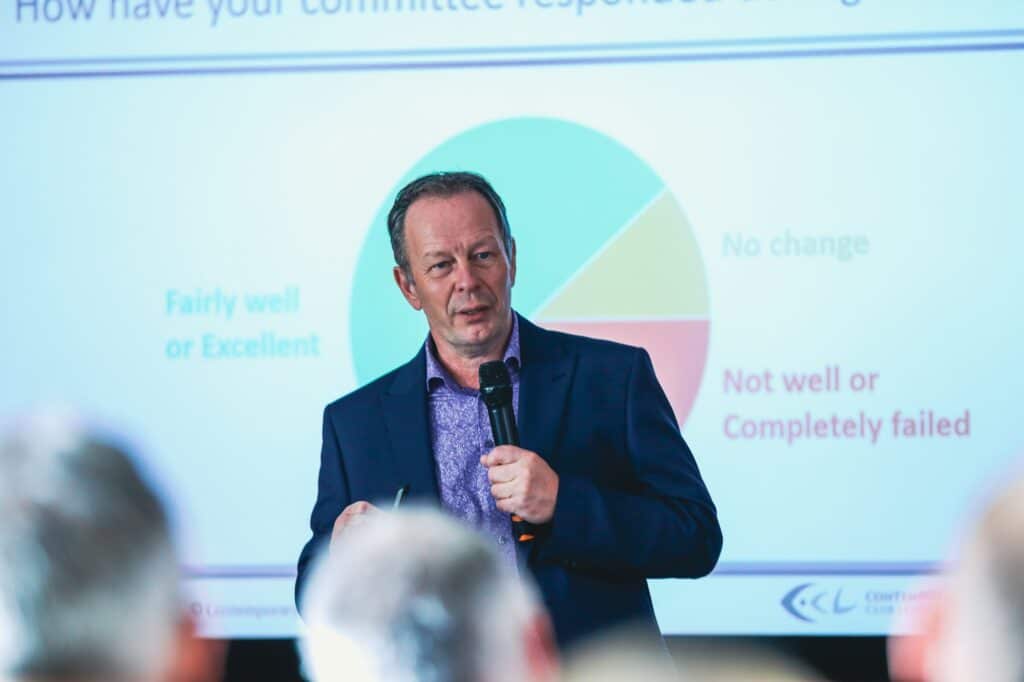
Renowned industry expert Kevin Fish, whose Contemporary Club Leadership consultancy (www.ccl.services) drills deep into golf club’s finances, says entry fees remain an important part of a club’s capital investment strategy. He briefly describes the history and purpose of the practice.
“Let’s just say you me and our wives decided to go off and build a golf club because we’d won the pools. We each put a million in and that’s £4 million,” he said.
“After a while, we said, ‘we’re a bit bored with just the four of us playing so why don’t we let four more people in?’ You could charge them an annual sub for coming in.
“But you’d probably also say, ‘this is a bit unfair. We all put a million in to build this place, so whilst we won’t ask for a million, lets ask for say, £100,000 each as a joining fee and we can keep improving the club?’
“That’s how it started. It was designed to allow the club to re-invest, to keep the facility up to date and attractive.”
While Fish continued to welcome joining fees, he said there could be a better way to raise the money for capital projects that involved the whole membership.
He explained: “I know from my deep financial analysis of over 200 UK clubs what the typical numbers are. Let’s say the average number of members in a club is about 500 and the typical resignation rate is 6 per cent.
“That’s 30 people a year joining, and therefore 30 people each paying an entry fee of £1,000. That’s £30,000 towards your club’s capital investment strategy. Brilliant – as long as they keep coming and as long as they want to pay the entry fee!
Advertisement
“Here’s a better idea. Still charge those 30 people that entry fee of £1,000, but lets also charge all 500 existing members £250 each year, forever. Now that’s an extra £125,000.
“What could your club do with an annual injection of £125k, rather than just £30k? Boards often like to place the financial burden on the new members, but that’s just playing around the edges, compared to saying, ‘this is our club. We’re in this together. Who is coming with us?’
He added: “At present most clubs in the UK tend to rely on their annual profits to fund the replacement of their assets and any new aspirational capital investment work.
“But how many members have you heard criticise their club for ‘making a profit out of us’? It’s partly understandable, but ask these same members: ‘How else are the club going to replace the existing assets?’
“Clubs would be better off charging a lower subscription that clearly shows it is designed to break even, but also charge a new annual fee for capital investment.
“Members will start to take a bit more interest in where that investment is being spent, which has two more major benefits. Firstly, it will focus the minds of the Board on the importance of funding one single plan, rather than a series of pet projects.
“Secondly, you may find the members suggesting they pay more, because they can see how it will allow the club to redo that green, buy a turf iron, or improve the patio area for summer use.
“The unexpected benefit of this is that we flip a switch and members acknowledge that they are ‘not just a customer, but an owner of a business’. And with that comes the responsibility to maintain it and develop it appropriately, to keep it attractive to the next generation, and not just the last. And, of course, there is an alternative.
Advertisement
“Let’s break even each year. Fail to have the funds to replace our existing assets or invest in any new ones. Or get the club into debt and let our kids worry about it.
“Board members reading this may well be worried that their members are already sharpening their pitch forks for the next AGM, but if it’s not the members’ job to look after their own asset, and make sure it’s there for their children, then whose is it?
“Clubs need to work much harder at explaining where the money comes from and where it goes, and trust that their members are smart enough to come with them on that journey.”
Listen to The NCG Golf Podcast
Tom Irwin and Steve Carroll get stuck into this debate, along with joining fees, in a special episode. Click the banners in this article to catch up with the pod or, to listen to this specific episode, click here.

- This piece also appears in the GCMA’s monthly Insights newsletter that is packed with expert opinion on matters relating to golf club management. Visit here to sign up.
Now have your say
What do you think about joining fees? Are you in favour or would you rather clubs didn’t use them? Let me know your thoughts by leaving a comment on X.
Advertisement