



Sometimes it’s the most innocuous creatures that can do lots of damage. We’ve all seen the issues leatherjackets and chafer grubs can do to our golf course.
But there is another menace out there that can cause greenkeepers just as much trouble and you’ll never consider it to be a big threat.
In a regular series, Sean Loakes, technical manager at Syngenta, takes you through some of the major pests seen on golf courses and outlines why they’re so destructive. This time, he’s talking about the humble earthworm…
What are earthworms?
There are a huge variety of earthworms and some are great friends on the golf course – dragging thatch material, broken and dead leaves, down into the soil and digesting them, helping to remove organic matter in areas we don’t like.
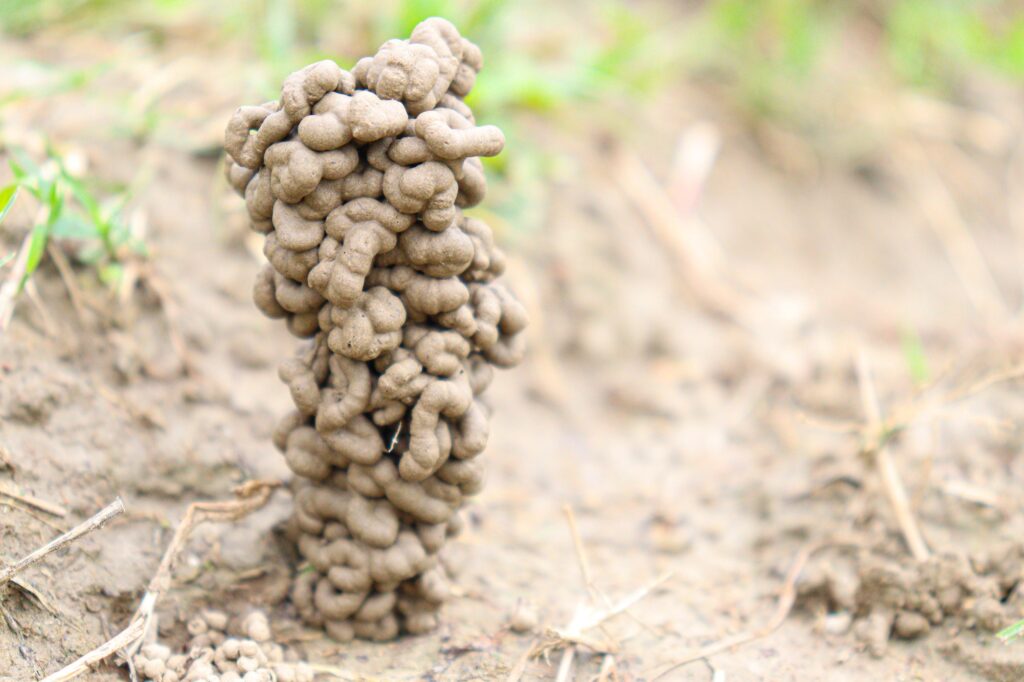
But a few species produce large wormcasts, and if you’re on heavy clay sites and get a lot of rainfall in the winter it can be a big problem.
What do they do to golf course turf?
They are taking in this material and digesting what they can but anything they can’t digest is excreted at the surface. If you ever look at one, you’ll see there is a lot of sand and soil in there and it’s been pushed to the surface.
Mowers then smear these wormcasts and suffocate any grasses there. They can knock fine-tuned mowing units out of specification – if you’ve got enough wormcasts, they’re going to knock the bottom blade so it changes the height of cut. It’s also going to blunt the blades a lot quicker.
The higher the wormcast rate, the more readily you’re going to have to resharpen those blades to keep the quality of cut. Those blunter blades are smashing the leaves rather than cleanly cutting them.
So the course doesn’t present as well and the grass isn’t as healthy. You can lose areas of grass and there is nothing the manufacturing companies are able to deliver in this space.
Advertisement
What can be done about earthworms?
There are no plant protection products registered for worms and that’s because most of what we do is driven by agriculture. If something kills worms in agriculture, it just isn’t taken any further.
It’s understandable because they are so important for soil health and agriculture but it’s a very challenging area for golf courses, because we don’t have any active ingredients coming through. It’s a very political hot potato to hurt worms.
What do golfers need to know?
There is nothing you can legally do about them.
- This article appears in Your Course, the twice-yearly publication from the British and International Golf Greenkeepers Association. Your Course invites golfers to gain a deeper appreciation of what preparing and maintaining a golf course really involves. Head to www.bigga.org.uk to find out more.
Now have your say
Has your golf club suffered with earthworms and wormcasts? What were they able to do about them? Let us know by leaving a comment below or on X.