



Have you ever found yourself on a particularly tricky par-4, one with a never-ending yardage, and wondered, ‘why isn’t this a par-5?’
It gets in my head. I’m defeatist from the off. I think there is no possible way I can get the required number. I overreach. A double, and often worse, usually follows.
It’s up to golf clubs and designers to set par but if you have a wander through the Rules of Handicapping (go right to the back) you will notice there is an appendix that’s all about “establishing par”.
Some will tell you to forget about par and, as we’re about to discover, there is some truth to that argument depending on good at the game you are.
But par still matters when it comes to handicap. It features as a factor in net par and for holes not played.
More relevant for choppers like myself, it also helps establishes the net double bogey. This is the maximum score that goes down for handicap if you’ve had a disaster on any given hole.
So what is par – in handicapping terms – and what do the governing bodies reckon should go into establishing a particular number? Let’s dive in…
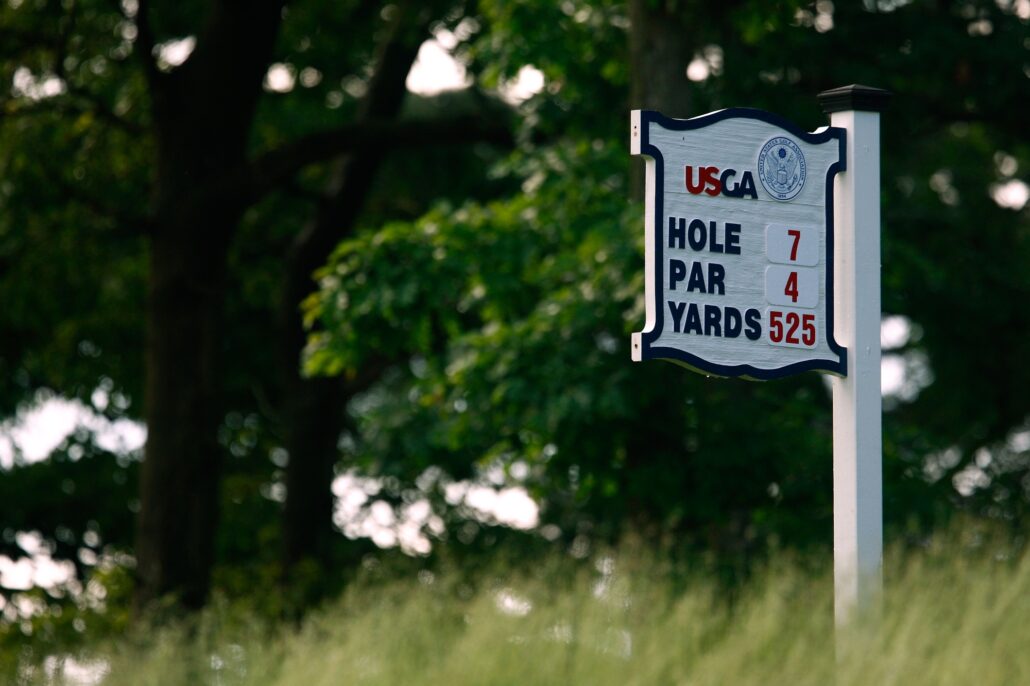
What is par in golf and how is it worked out?
We all feel a tinge of frustration when we can’t put a par down on our scorecards. But on its own the number is relatively meaningless to average players.
Par “reflects the score a scratch player is expected to score on a given hole”. There are many things which go into allocating that number including: how difficult the hole is, how long it is, whether there are any forced lay-ups, if the elevation changes, and even how the prevailing wind affects play.
So how long is it recommended a hole is for each par? The numbers might surprise you…
Advertisement
Par-3: Up to 260 yards (240 metres) for men; Up to 220 yards (200 metres) for women
Par-4: From 240 to 490 yards (220 to 450 metres) for men; From 200 to 420 yards (180 to 300 metres) for women
Par-5: From 450 yards to 710 yards (410 to 650 metres) for men; From 370 to 600 yards (340 to 550 metres) for women
Par-6: 670 yards and up (610 metres onwards) for men; 570 yards and up (520 metres and onwards) for women
Good luck if you’ve having to take on a par-5 that’s more than 700 yards! Mainly, though, what these numbers show is the scope your club has when it comes to changing a hole par or establishing a new hole.
The keen scorecard watchers among you may have already worked out what happens if the length of a hole falls between two ranges.
Takes the example of a 470-yard hole for men or 400 yards for women. In that case, the par could be either four or five depending on the difficulty of the hole.
How was it designed to be taken on may prove the key in deciding what par the hole is allocated. The appendix gives the example of a hole that from all sets of tees lies within a recommended par 4 for men, but the forward tees are at 250 yards. It says it can still be a par-4 “due to the way the hole is designed to be played”.
Innovations within the World Handicap System now allows clubs to use the same par for each gender across all tee sets rated for that gender.
That means the yardages of each hole, and from each tee, no longer matters for those who take that path and gives clubs further flexibility in how they sort out their scorecards.
Now have your say
Satisfied you now know what is a par in golf? Should the recommendations on par be changed? Let us know by leaving a comment on X.
Advertisement
Advertisement