



The R&A and USGA have been running a survey asking people what they think of the World Handicap System.
If I was a betting man, and I’ve been known to have a flutter from time to time, I reckon a fair number of respondents will write some derivative of the following:
“WHS has made it easier for high handicappers”.
It’s a feeling that has persisted since the introduction of the new system in Great Britain & Ireland at the end of 2020. Is there anything to it? Is perception all that matters?
Let’s take a look at some of the arguments…
Unfair or just fine? How does the World Handicap System treat high handicappers?
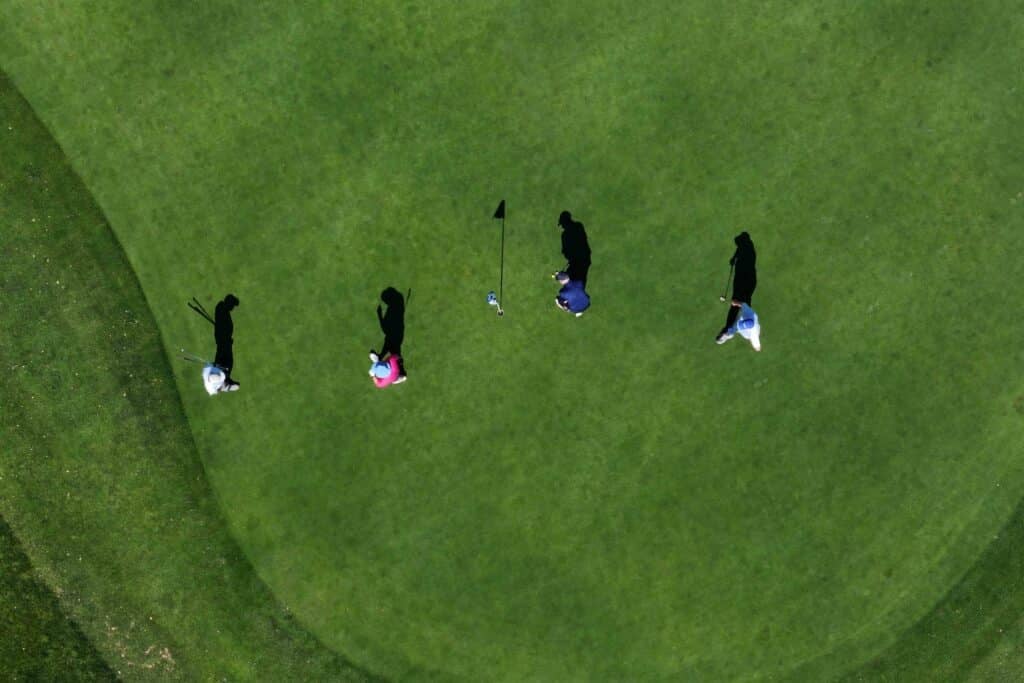
There are a lot more higher handicappers
We all like to think we’re great golfers but the statistics suggest otherwise. In 2023, England Golf revealed the average WHS index in the country was 17.1 for males and 27.2 for females.
Even more starkly, around 30 per cent of male players held handicaps between 21 and 28 and 42 per cent between 13 and 20. That’s nearly three quarters of male golf club members in England with a handicap index over 13.
Fewer than five per cent came in at five handicap and below. If you take a huge body of players, some with far more room for improvement than a narrow and more talented band, it’s probably not a surprise the bigger group will dominate leaderboards. That’s even with a system that attempts to level everyone out.
So are they winning competitions?
Oh, the joys of technology. You can digitally look up competition results and I have done this at my club. OK, the results from one entity are hardly binding but my experience might give you an idea of what’s happening on the ground away from the bickering on social media. Try it for yourself too.
Of the 21 men’s competitions I’ve been able to track this season, two were won by players with handicaps over 30. One of those was an improving junior, the other was a stalwart club veteran. Players are allowed to play well.
Advertisement
Seven winners had a handicap of 9 and under, the lowest victor being off +3. Four other winners were 20 or over and eight were between 10 and 20.
This layout has a course rating of 70.6 and a slope rating of 128 from the back tees. It’s fairly run-of the-mill as far as difficulty is concerned.
Does it seem that higher handicappers are running rampant here? Lies, damned lies, and statistics and all that but it feels like it’s a pretty even spread. In fact, it looks a lot like some of those percentages we talked about earlier.

But are Stableford competitions making it easier?
Back in 2022, Golf Monthly got hold of some very interesting figures from HowDidiDo.
They’d tracked the average number of Stableford points in competitions before and after the introduction of WHS and they revealed a substantial change in the way players were scoring.
Prior to WHS, the old category one golfers (scratch to five) topped the points tables – averaging 31.8 and 32.1 points in two six-month periods from January to July 2019 and January to July 2020.
But once WHS got into full swing, this changed dramatically. Those Cat 1 scores dropped to 28.5 and 27.48 respectively in the period from January to July 2021 and the same period in 2022. That sent them from first to worst in the category list.
The big winners were Cat 4 and Cat 5 players whose totals rose from 25.96 and 17.5 to 27.62 and 28.1.
What the pre World Handicap System period showed was there was a disparity in favour of the Cat 1 and Cat 2 golfer. But this had narrowed substantially since the new handicap was launched.
There was no more than a two point average gap between Cat 1 and Cat 5 in those 2022 figures, whereas back in 2019 there was a 14.5 points difference in favour of the lower handicapper.
So if you say higher handicappers are winning more Stableford competitions, it is because they probably are and it appears that’s because WHS has neutralised the previous advantages of better players.
Has it gone too far? While you’re never going to get a completely straight line in handicapping – how many horses all hit the finish line together at the same time in a race? – is the low handicapper now being an average two points behind their Cat 3 and 4 contemporaries too big a bridge to cross? Especially given the latter’s wider room to conjure a bigger total.
It’s certainly possible. But what these numbers should do is give clubs pause for thought. Competition calendars at many are now chock-full with Stablefords.
It’s easy to see why. They allow players to make mistakes and keep them competitive for longer. They are incentivised to finish in a way that doesn’t necessarily happen in medal once a 9 goes on the scorecard – and that’s with the WHS provisions that have made no return a non-runner.
It would be interesting to see if this trend has continued in the last two years and, if so, whether it’s time for committees to consider their competition calendars and the events they include.
Are players manipulating general play scores to get higher handicaps?
Undoubtedly there are examples of this. I’ve attended England Golf workshops where they have shared some. These include players who’ve tried to put in scores when it’s completely dark, or who have been caught out by geolocation as being in an entirely different part of the country to the course they claimed to be playing.
I’m not convinced this behaviour is rampant, though. For a start, I’m just not sure the wider body of golfers is that bothered about spending weeks deliberately posting bad scores to inflate their handicaps and win a pot.
Advertisement
While a section of our clubs are trophy obsessed, the vast majority of those who enter competitions just want to play well. If they pick something up, whether it be a cup or a prize for a two, all the better for it.
Secondly, I’m also not sure those who are bent on skulduggery are bright enough to cover their tracks. If your committee are so inclined, it’s really easy to see what’s going on with the various reports available within the World Handicap System. Reports that just weren’t available under the old CONGU system.
Back then you were often guessing. Now you’ve got data in front of you showing every player’s tendencies. Competition vs General Play is just the start.
Committees are getting wise to this and more are using their new powers effectively. Catch a few, make a show of it, and discourage anyone else who might be tempted to have a go.

Are players more likely to shoot under their handicap?
Here’s where people misunderstand WHS. Your index is your demonstrated ability. It has been honed over the last 20 scores. That figure, translated into a Course Handicap, is what the system believes you can score.
That’s different to the old CONGU system which projected your potential. You were meant to hit your mark something around one in 10 rounds. It’s all change now.
I believe it is probably easier to shoot a better score if you experience an upturn in form as your index – even with the soft and hard caps applied – moves quicker than it did in the past.
But I don’t believe that’s necessarily a bad thing. Let’s go back to the old horseracing analogy. Thoroughbreds are continually monitored, and adjusted, depending on how they perform in races. Run well and they get more weight. Run badly and the lead is taken off their backs.
Advertisement
It’s not a static system as the old .1 was often maligned for being. There are those who might look to stay ahead of the handicapper, as the saying goes, but they can’t evade them for long. It is more reflective of form.
Is WHS perfect? Absolutely not. Just like horseracing, though, find me a system that is.
Now have your say
What do you think of this World Handicap System debate? Are you swayed by the arguments on golf handicaps? What do you think is happening on the ground? Let me know by leaving me a comment on X.
Also check out the latest product reviews and deals –
- Deals of the week
- FootJoy Pro/SLX Carbon Golf Shoe Review
- Best budget balls 2024
- Best budget golf drivers 2024
- The 6 best putters to transform your mid-handicap into a low-handicap
Advertisement