



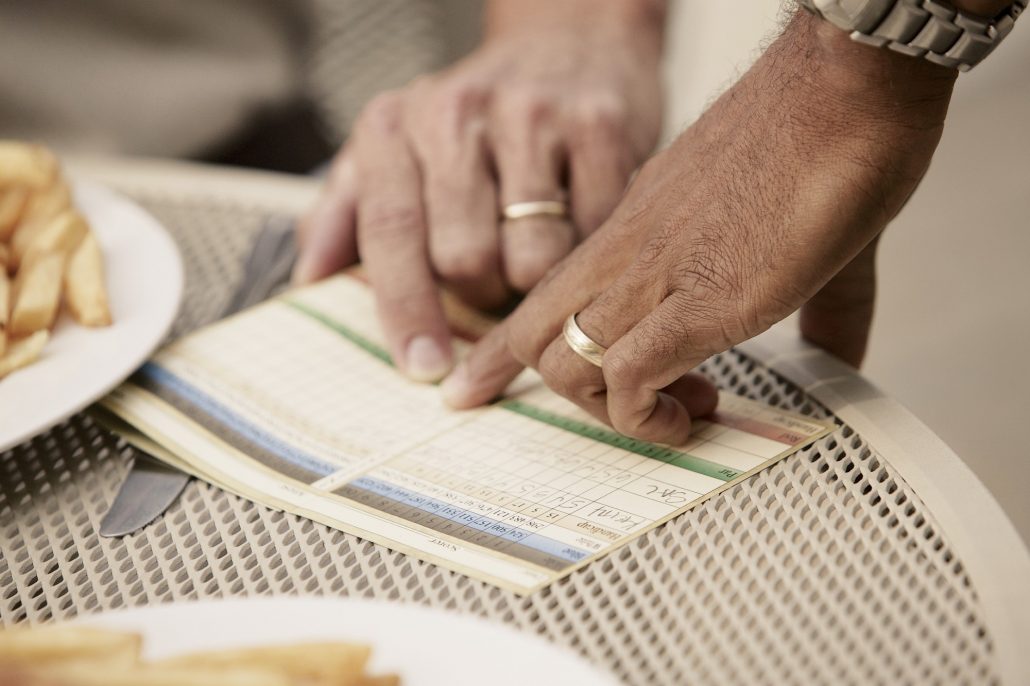
A humble pencil and a piece of card – for many of us it’s still the go-to way to record our adventures on the course.
There may be a digital push these days, but whether it’s putting in a general play score, or fashioning 18-holes of competition play, there are plenty of clubs that opt for a traditional method when it comes to recording our numbers.
If your club avoid using apps, or they just want physical evidence of the digits you’ve punched into the computer after your rounds, then you’re literally going to be signing your name.
Depending on how many people play in competitions, and how busy the season is, clubs can quickly rack up enough bits of paper to warrant a sizeable trip to the recycling centre before too long.

How long should your club keep your golf scorecard?
So how long should they keep hold of your golf scorecards? Do they need to stay tucked away in drawers for years, or can they be disposed of as soon as the competition committee is happy a result is final?
There is surprisingly no mention in the Rules of Handicapping as to how long scorecards should be retained.
But, CONGU, who administer handicapping in the UK and Ireland do give clubs advice.
They advise “where physical scorecards are used, they need to be retained for a maximum of one year (effectively until the current year Annual Review has been completed)”.
Frequently Asked Questions about the World Handicap System
What is the World Handicap System?
Also known colloquially as WHS, the system was developed by the R&A and USGA together with existing handicapping bodies around the world.
Designed to be unified, it aims to provide a “single, consistent measure of playing ability that calculates a golfer’s handicap in the same way regardless of their location in the world”.
It is now used by more than 120 national associations. With the Rules of Golf, Rules of Handicapping and Rules of Amateur Status under a single set of regulations, WHS brought handicapping under the same umbrella.
Advertisement
What are the benefits?
The R&A, on their website, say the benefits of WHS are:
- Consistency of calculation around the world;
- Portability of handicaps from course to course and country to country;
- As the world becomes a smaller place with a much greater frequency of international play, the development of a single handicap system facilitates easier administration of international events;
- The potential for National Associations to focus attention on other areas.
How does it work?
Your Handicap Index is worked out from the lowest scoring differentials in your record. A full record is considered to be one that contains at least 20 scores.
The index is then calculated by averaging the best eight of those 20.
Having obtained a Handicap Index, that is converted into a Course Handicap which takes into account the difficulty of the course and the tees from which you are playing.
Working out that number requires considering a number of factors, including Course Rating, Slope Rating and Bogey Rating.
In competitions only, depending on the format, an allowance can then be applied that changes the Course Handicap.
But this Playing Handicap, which aims to provide equity, does not affect the Score Differential produced for your handicap record.
How can I get a Handicap Index?
Join a golf club, or an independent golfer scheme (such as iGolf in England or OpenPlay in Scotland) and submit a minimum of 54 holes.
That can be done using any combination of 9- and 18-hole scores.
Now have your say
Does your club have a golf scorecard dating back to the dawn of time, or do they get rid too quickly? Is keeping them for a year sensible? Let me know by getting in touch on X.
Advertisement