


General Play rounds get a bad press. Critics say they are easy to manipulate – a driver of the ‘cheat’s charter’ that some have branded the World Handicap System.
But there is another side to the format that doesn’t grab the same headlines or get people furiously typing into social media apps.
For every golfer who might be concerned, there is another grateful for its presence. For those, General Play, which allows golfers to enter a score outside the confines of a competition, isn’t about skewing their handicap mark.
It’s allowing them to maintain that handicap and do so on their own terms.
“I don’t know if I’d have a handicap [without General Play],” says Crawford McGhie, a 12-handicapper who plays at Kingsfield, a 9-hole course on the edge of Linlithgow, in Scotland’s West Lothian.
McGhie has played golf for around 40 years but is the epitome of the time-pressed family-focused player who can’t commit weekends to the course.
“Having the time to take four hours out of your day at the weekend to play a round of golf was not going to be possible when the kids were little,” he explains.
“Then, as they’ve grown a bit and have activities, you’re running around doing all of that. It might be that playing golf on a Sunday afternoon and just doing that for a couple of hours is more suitable.”
McGhie rarely plays competitions and rarely plays 18-holes – “Anything I’ve done in the past three years has probably always been 9-hole General Play”.
But he says it’s still important for him to have a handicap, and he has ambitions to reach single figures in the future.
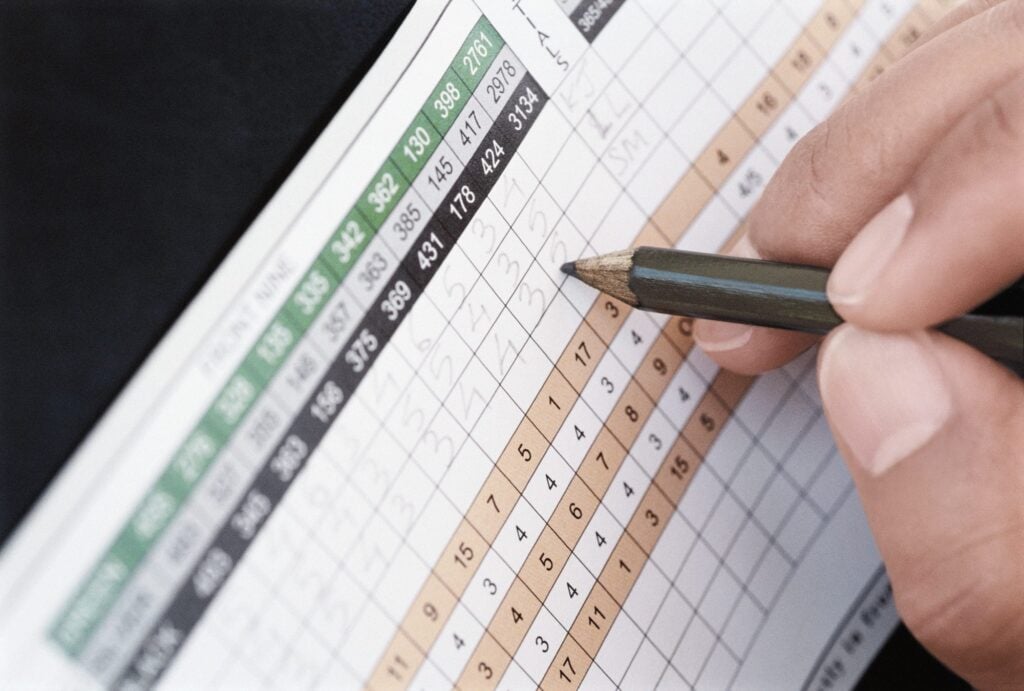
Why do golfers need a handicap if they’re not playing on competitions?
“You need it for certain things, and it’s important to put in General Play cards so you are keeping it up to date and it’s a reflection [of your ability],” McGhie says.
Advertisement
“Even when I go away with my friends, we’ll play a competition and it’s important the handicaps are realistic. There’s a couple who don’t and there’s one who is quite a good golfer – but doesn’t have an official handicap.
“It’s a standing joke – what’s your handicap going to be this year? For those who have a handicap, and know it’s quite up to date, it’s really helpful.
“My handicap is 12 and, before kids, I got it down to 10. But I was playing at least once a week and maybe more. I still have the ambition that I could get down to single figures at some point in my life.”
Is having the flexibility worth the risk of those who might be tempted to corrupt the General Play ideal? McGhie is in no doubt.
“People who are going to manipulate their handicaps are going to do it anyway – no matter what system you’ve got in place. They’re clearly motivated by other things than just enjoying golf.
“And I do need a handicap, because I do play in some events. On those special occasions, when people invite you to their course, maybe to play in a greensomes or whatever, you need a handicap.
“One of my friends lives in the Netherlands. A few of us have been out there and the first thing he asked us for when he was arranging it all was a handicap: give me your World Handicap System number.”
McGhie adds: “It’s not just General Play. It’s the whole World Handicap System that has stopped the need for three rounds a year. I wouldn’t achieve three competitive rounds a year. It just wouldn’t happen.
“But I’ve got the opportunity when time allows – and I get into the habit – to get that handicap down through my own means. I think I would have lost my handicap if the World Handicap System hadn’t come into place. So it’s a great thing.”
Main image: Crawford McGhie playing a shot | Source: Crawford McGhie
Now have your say on General Play scores
What do you think about General Play? Does it give players an opportunity to maintain a handicap? Should handicaps be detached for competitions? Have you benefited from being able to use General Play scores? Would you otherwise have left the game? Let me know in the comments, drop me an email at s.carroll@nationalclubgolfer.com, or get in touch on X.
Advertisement