



We saw a record number of general play scores in 2024 – some 4.4 million in England alone – with handicap chiefs arguing the numbers show many golfers are adapting to the World Handicap System. But is general play now the new normal? Will it surprise competition scores over time at golf clubs? Last year, Steve Carroll assessed its impact and the future of general play. Here’s what he had to say…
There is some corner of the internet that is forever furious.
For golf, that corridor is occupied by the World Handicap System. The global unification of handicaps arrived in Great Britain & Ireland at the end of 2020 and yet there remains little to match it for debate and drama.
Much like Brexit, it splits opinion in tribal fashion. Either, as the R&A and USGA would like to see it, WHS opens the game up and makes it more accessible to anyone who wants to track their progress.
Or it has ruined club competitions and allowed golfers with nefarious aims – whether that’s to push their handicaps up or down – to flourish almost unchecked.
Nowhere has that view been crystallised more than in the introduction of general play scores.
Arguably WHS’s defining characteristic, general play allows players to submit a score for handicap any time they want. Right from the start, it got some people’s backs up.
That’s because it immediately uncoupled handicaps from competitive play and in our culture, where events structure an entire club’s year, that concept is simply alien.
From the governing bodies’ point of view, though, general play is probably the most important part of WHS because it is what they believe makes golf truly accessible to all.
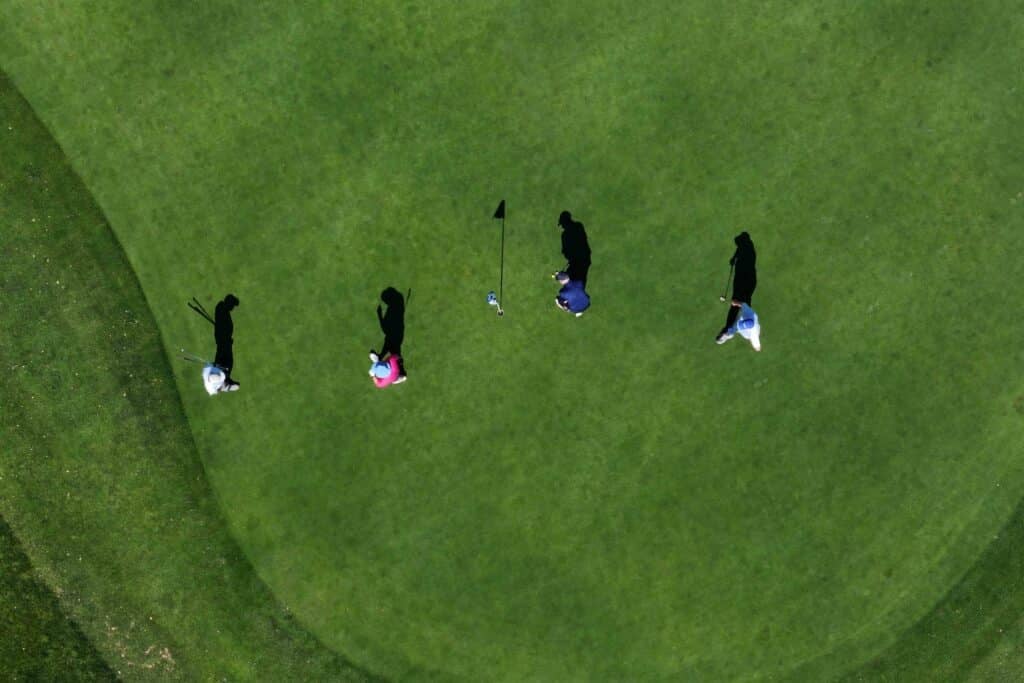
General play score WHS: Has it eroded trust in some quarters in handicapping?
No matter where you are in GB&I, you can enter a score if you follow the rules. For those who want to maintain a handicap but find it difficult to play in competitions, this has been a liberator.
Advertisement
But it has also meant clubs previously used to keeping tight control of their members’ numbers have ceded a great deal of their previous authority – with players trusted to perform with integrity when scoring casual rounds.
There are plenty of examples where players have manipulated the system or just downright cheated it and that has certainly eroded trust in some quarters in handicapping.
Their doubts were only heightened in 2023 when England Golf sought to limit the impact general play scores could have on some of its oversubscribed competitions.
They did not ban or restrict them, but players were denied entry where there was a significant gap between the differentials in their competition and general play cards.
When clubs got wind of this, some held the view it was a tacit admission general play was a cheat’s charter.
So they took elements of England Golf’s scheme and mixed it with their own – either demanding increasing numbers of competitive scores over a year of play to enter events or restricting and even banning, in some cases, general play scores.
Such practices reportedly left the R&A and USGA displeased and saw England Golf demand clubs stop the curbs.

No handicap system is perfect. WHS, like any other, remains reliant on an unpredictable component: humans.
Sometimes we play well. Sometimes we play badly. Sometimes we just don’t want to be out there at all.
And, yes, people aren’t always honest. But there’s little any computer programme on its own can do about those determined to deceive.
To pin the perceived ills of general play on the mechanics rather misses the point. CONGU wasn’t without its faults either.
Advertisement
Another fly in the ointment for those who would rather rid themselves of it is its growing popularity. Figures show the number of rounds being submitted to the WHS portal in England are on the rise.

General play score WHS: Is this way of playing now king?
More people engaging and more people playing golf? Manna from heaven for those behind the WHS. Even its critics surely can’t complain this is a bad thing.
So how do we on the one hand embrace the concept, while also upholding the integrity of WHS? The answer lies with the club handicap committee.
Where there are suspicions general play scores might be used for ill, they need to investigate and, where appropriate, act.
This is always difficult when it might provoke conflict, but the reality is it’s those who know their golfers best, and who are closer to the action, who must be the ones to step in.
Luckily, they’ve got far more tools through WHS than they’ve had under previous iterations – such as competition scores vs general play, which allows them to look at the way players perform between the two formats.
Other clues, such as time of submission, where golfers were when they did so and where their markers were too, are revealed in a digital footprint which leaves little leeway when players are caught.
It’s easier than ever to catch a handicap cheat and more of them are getting collared.
If the intention was to give golfers flexibility in the way they approached the game, and how they viewed their handicap, then general play has certainly done that.
We sometimes forget that many of our members aren’t interested in playing competitions regularly – or even at all. The argument was always, ‘well, why do they need a handicap?’ Now it’s, ‘why shouldn’t they have one?’
Advertisement
Welcome to the new world, where general play is king.
- This piece also appears in the GCMA’s monthly Insights newsletter that is packed with expert opinion on matters relating to golf club management. Sign up to Insights for FREE here.

Now have your say
What do you think about this general play score WHS opinion? Has your view of this changed since Steve last wrote about it? Is it the future of club golf? Let us know what you think with a comment on X.
Advertisement