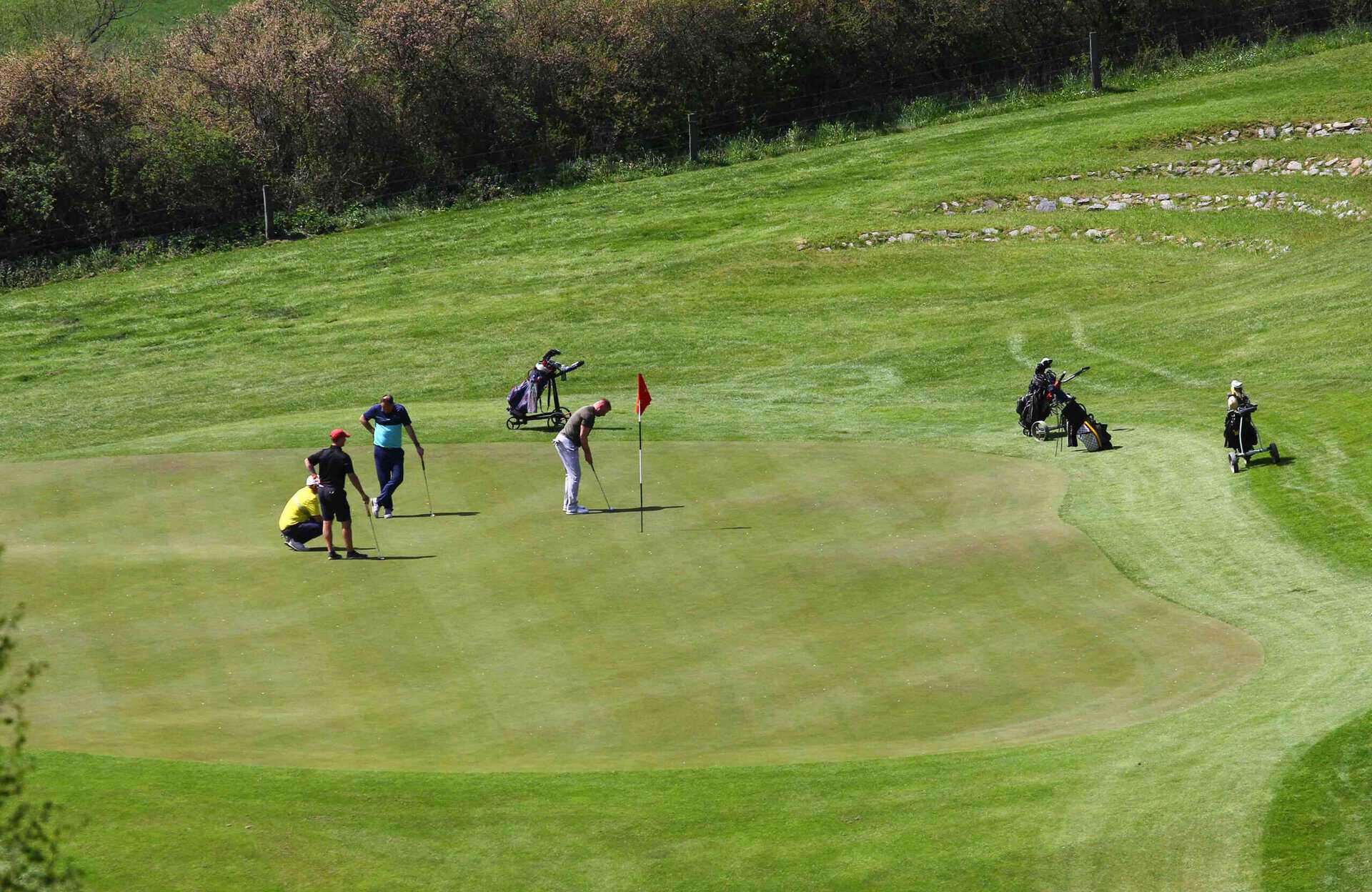



They help stop debris falling into the hole and can keep it intact during the worst of the weather.
But they had been ‘banned’ under the Rules of Golf, with scores submitted while they were in place deemed not acceptable for handicapping.
Going through some incredibly wet winters, though, led the game’s governing bodies to have a re-think and the guidance on Plastic Hole Stabilising Rings changed.
England Golf’s Adverse/Extreme Weather Guide reveals that, as of May 3 last year, “any scores returned for handicap purposes when the stabilising rings are in place are acceptable for handicap purposes”.
NCG had previously reported how the rings, which are placed above the top-hole liner and cover the top inch of soil, were deemed by the R&A not to comply with the Rules of Golf.
That led to criticisms from clubs and greenkeeping teams, who consider the rings allowed holes to look more aesthetically pleasing and were also useful when teams carried out maintenance work on putting surfaces.

Golf hole WHS rules: What was the problem with plastic hole stabilising rings?
In the Rules of Golf, the definition of hole says if a lining is used it “must be sunk at least 1 inch (25.4mm) below the putting green surface, unless the nature of the soil requires that it be closer to the surface”.
Mike Greener, England Golf’s national handicap co-ordinator, had contacted the R&A for guidance and revealed at WHS update seminars last year that: “The R&A would only allow an exemption on the use of these stabilising rings if the soil type was a really dry, crumbly, type – probably a really dry, desert type, climate. In this part of the world, we don’t get those types of soil types.”
What’s changed and what’s the guidance now?
But now England Golf said the R&A had “revised their position on the use of stabilising rings”. They said the governing body recommended the “one-inch stipulation be followed as far as possible”, saying a higher liner can increase the risk of the ball bouncing out of the hole, the liner or stabiliser protruding above the ground, or the earthen wall moving away from the liner/stabiliser.
Advertisement
The checklist tells clubs: “The R&A appreciates that our current climate can result in considerable challenges for green keepers and course managers.
“Consequently, if there are times of the year when the nature of the soil is such that having a hole liner closer to the surface will help to protect the integrity of the hole, there is flexibility within the Rules to allow for that.
“It is also important to note that as soon as the ground conditions are such that hole liners are no longer required, they must be removed.”
Now have your say
What do you think of these golf hole WHS rules? Are you pleased these plastic hole stabilising rings rules have been altered? Was it all a lot of fuss about nothing? Let me know by leaving a comment on X.
- NOW READ: Can a golf hole location be illegal?
- NOW READ: When is the ball actually holed?