



How do England Golf assess the first five years of the World Handicap System? How can we increase confidence and trust in the system?
Over the last few months, we’ve been posing various World Handicap System questions – both in articles and reflecting views submitted by you.
On the fifth anniversary of the calculator’s arrival in Great Britain & Ireland, we put some of those questions to Sarah Barter, England Golf’s head of handicapping and course rating.
In the first part of a two-part interview, she assesses the impact of the World Handicap System, complaints from golfers, and why the governing body can’t say more about the mechanics behind course rating.
Tomorrow, she’ll discuss whether committees need to do more to help their members and visitors, whether scores could be time limited or weighted, and when the system might truly become global.

How have the past five years gone in your view?
To an extent it’s (WHS) still in its infancy. Five years is very short in comparison to CONGU. It’s bedding in and the positives of the system are starting to come through and that’s reflected in the number of scores that we’re seeing,
Up to the end of August, we had just shy of nine million scores submitted on the platform. To put that in context, in 2021 – the first full year we could get that data – we had eight million scores in total for the whole year. We’re 15% up on last year.
It’s proof that people are rating the system and working with that. iGolf has had a big part to play in this. The growth of iGolf has been phenomenal. We’re now over 70,000 members and we’re seeing more golfers turn to golf membership because of it as well.
The reality is we know when golfers have a handicap index they’re more likely to stay within the sport and engage with the sport.
Advertisement
Promoting an independent handicap through iGolf, and also through club golf and iPlay – as a form of people getting a handicap index – is really important and it’s great to see that coming through in the scores.
We do keep track of the split of general play scores and competition scores and that does start to really tell the story. In men, it’s an equal split in the type of scores being submitted. It’s 51 to 49 competition versus general play. In 2021 it was 69 in competitions and 31 in general play.
Women tend to enjoy more competitive golf – so it’s 71% competition scores for women, as opposed to 29 in general play. That started off as 81% and 19%.
We’re seeing 9-hole scores slowly increase in men. Nine per cent of scores submitted this year been 9-hole but, for women, it’s 22% – so the change has been more drastic in women than men, showing that more women are interested in 9-hole rounds as opposed to a full 18.
We’re seeing a real shift in the type of golf that’s being played. It’s not just traditional 18-hole competition. It’s 9-hole, general play, 18-hole general play and, as we see shorter courses come into play, it’s something else we need to factor in looking at the future of WHS.
How do these 12-hole and 6-hole facilities, as they go, fit into WHS?
Covid was in play for two of the years and obviously that was a priority for a lot of people at the time. We saw club membership benefit on the back of that.
There is still a lot of work to do in terms of education around WHS. People are familiar with the system but the education around it is probably more important than ever.
Advertisement

How long before WHS settles down? There are still a lot of complaints from golfers…
It’s really hard to put a definitive number on that. The reality is the system is here to stay. I think the sooner people realise that no matter how much you scream and shout and stamp your feet, it’s here to stay. It’s basically something we’re going to have to work with.
Obviously, we have to tailor it and my job is to work with the R&A, the USGA, and my counterparts within GB&I to make sure what works best for the golfers within this country.
As we move towards interoperability and having a World Handicap System – as it was described to us, where all scores can talk to each other from across the world – I think people will feel better about it as that was a key selling point to the system.
I know the R&A and working hard on that and we’re hoping to see some updates on that in the next year to 18 months. As we start talking about the new updates in 2028 that’s going to be a question that we ask – how that’s coming along and what the timeline is.
When you’ve got generations of golfers that have worked with multiple systems – and not just CONGU – obviously everyone’s going to have a favourite system that they like and embracing a new one, once you’ve got familiar to the one you just use, is difficult as well.
I think it’s just going to take time. If you wanted me to put a number on it, I probably wouldn’t feel comfortable doing that. But I think interoperability is the key feature. I think once that kicks off, people will start to feel a bit more comfortable with it and will enjoy it for what it is.”
Advertisement
How do we separate competitions from handicaps? When people talk about issues with general play, it’s because they say those scores are being manipulated…
From a handicap perspective, whether it’s general play or competition, a score is a score to represent your playing ability.
In my short time in post, I’ve seen a lot of issues around competitions with lower handicappers saying they can’t win, or a club saying it’s the same winners time after time.
It generally comes down to not having robust terms of competition in place. Do you have handicap limits in place? Do you have a minimum number of scores that you require? Do you ask that players have a certain number of scores within the last calendar year – not necessarily in competitions?
The reason for those is that once you’re happy every golfer is satisfying the needs of the competition, you’ve got a fair playing field as much as possible, it encourages your members to embrace the club, engage with the club, and then hopefully your retention improves.
The other element of it is education. I know you’ve said before that everyone feels they fulfil their responsibilities. If you can confidently say that every single person on your tee sheet, when they’re playing on a Saturday morning, or whenever, is aware of all their responsibilities and what they need to do then great.
But we need to get out that there, we need to diversify, and we need to look at how everyone receives that information to make sure they do get it and understand what they are doing.
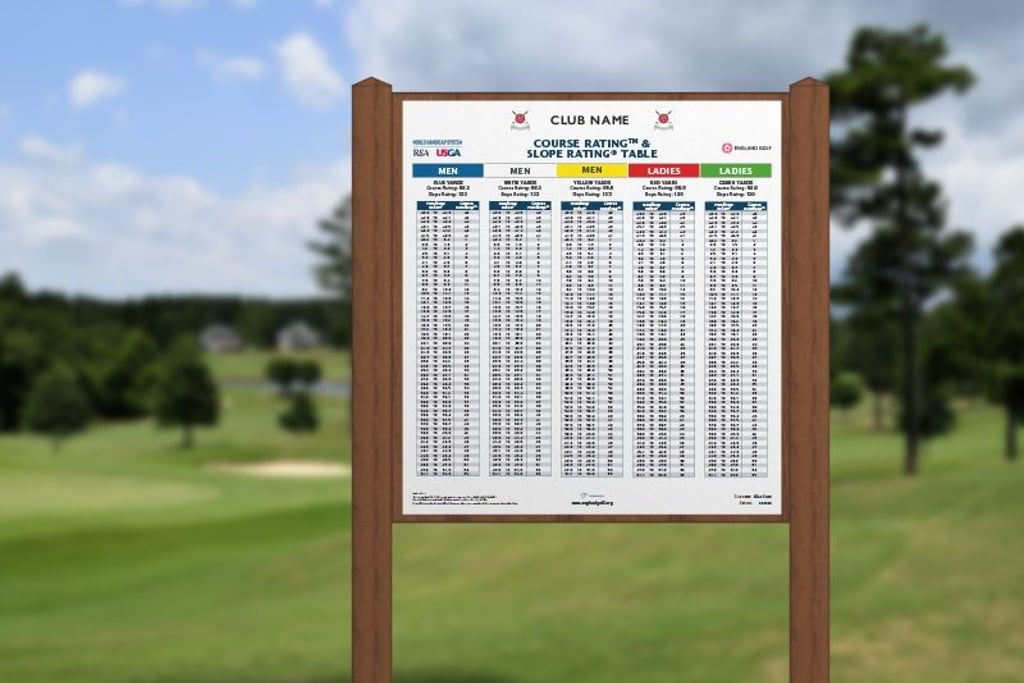
There are concerns about Course Rating, around the PCC, and expected score – yet England Golf can’t tell us how they work. How can we increase confidence?
It’s licensed and trademarked by the appropriate people so we’re not in a position to do that. We do take on board people’s comments, and we do feed it back. I know there are conversations that will always be had around, ‘can they do more within those calculations to make it fit better and do what it needs to do?’ We feed that back to the powers that be – we know they take that on board – and we continue to push for those updates.
Advertisement
On Course Rating, a bit like WHS, we’re licensed to operate course rating standards per that agreement. We have guidelines and have strict ways in which we have to rate courses.
We know our golfing ecosystem in England is very diverse. We have parkland, heathland, moorland, downland, links and we appreciate those standards don’t necessarily fit a mould – like the US, for example, that predominantly has courses of the same type and distinction.
We continue to feedback that we do operate in a temperate climate, and we would like to see some modernisation within course rating. We are exploring data and technology and how we can utilise that to be more consistent but also manage the workforce within that.
We do rely on a lot of dedicated and passionate volunteers in course rating for that all to take place. To gain more confidence, we need to make sure the system is working as it’s intended so people trust in it. That will come with time and with consistency.
Now have your say
What do you think of the first part of our interview with Sarah Barter, England Golf’s head of handicapping? Do you agree the World Handicap System is making progress? Let us know in the comments, email me at s.carroll@nationalclubgolfer.com, or get in touch on X.
Advertisement