


The question about what truly makes a links course has long divided golfers. For many, it represents the game in its purest form.
The Open, the game’s oldest major championship, is contested on a links course every year. It is considered by many to be the truest test of all professional tournaments.
That’s down to so many factors – the unpredictable weather and the different ways the course can test a golfer across a championship to name just a couple.
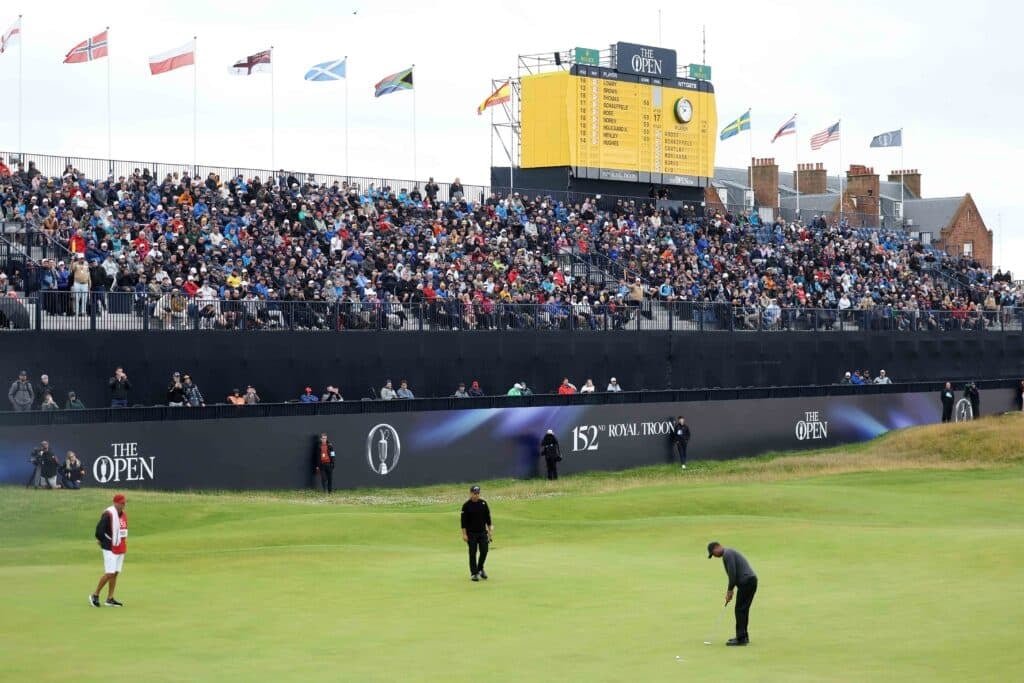
In an episode of the NCG Top 100s podcast, Tom Irwin and Dan Murphy debated what makes a links course what it is.
“We don’t know, that’s the problem,” Murphy joked. “Almost every time you come up with something you’re happy to hang your hat on, you realise there’s an exception. It’s a really British thing.
“It’s one of those things where I can’t describe it but if I see it, I know it.”
What makes a links golf course? It’s a definition full of exceptions
One of the widely considered fundamentals of a links is it should be situated near the coast. But, Murphy said, even that can be disputed when considering all the courses classified as a links.
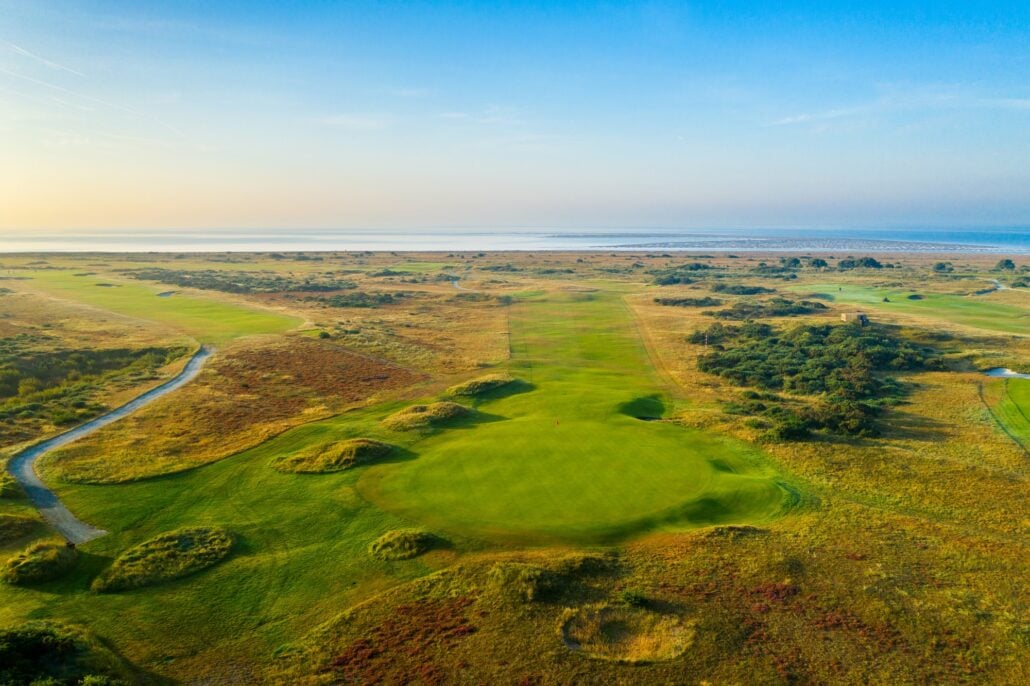
“I guess what we are originally talking about with those courses (a links) is that they are close to the sea, are on this infertile ground – between the beach and fields and land that could be used for cattle and agriculture,” he explained.
“The only thing it (the area of land) was useful for was this game of golf that was created.
“That’s kind of the starting point but within that you go much further into certain things you want a links course to do. But at every turn we will find exceptions for them.
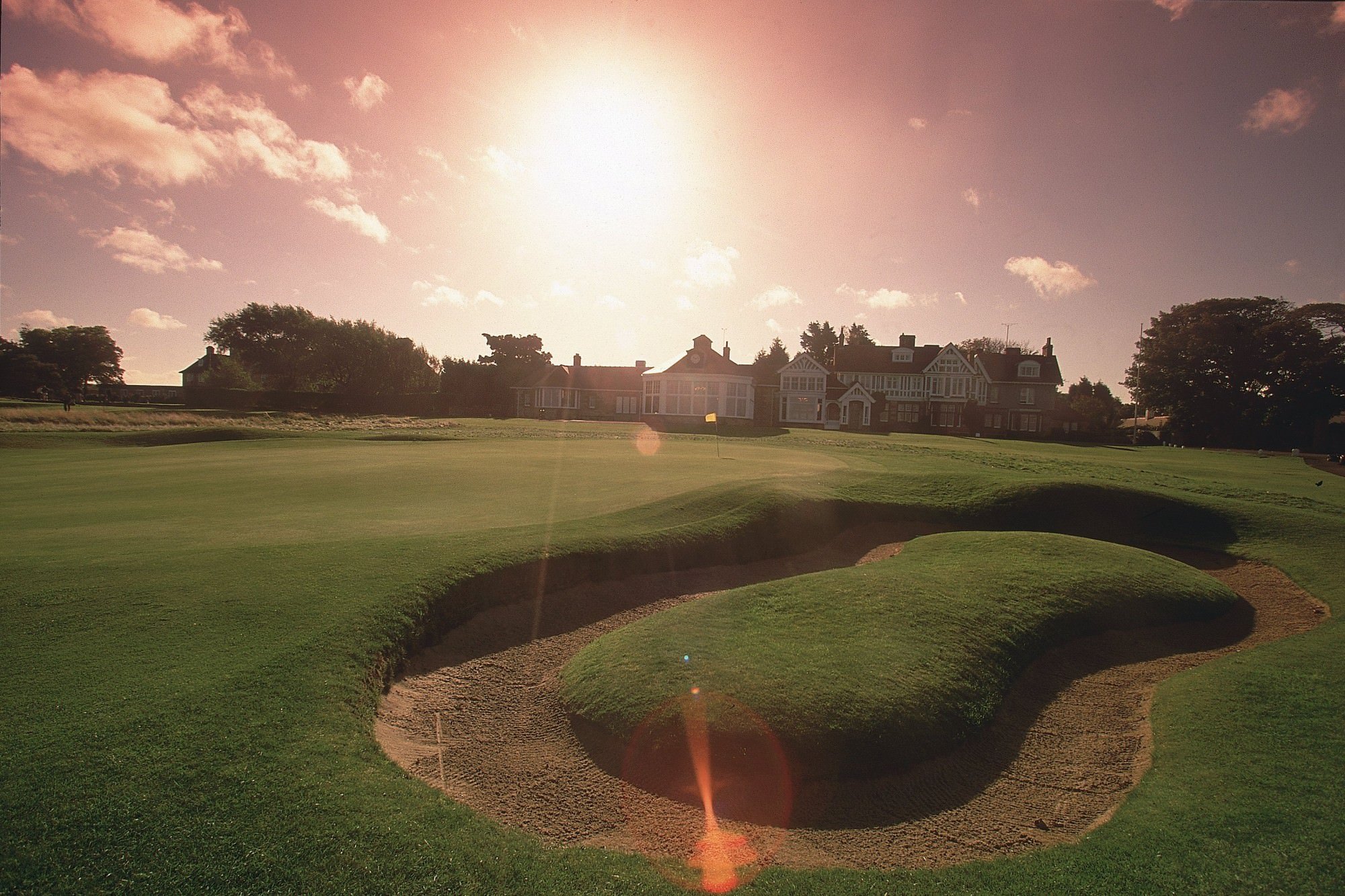
“Straight away, you think ‘I know you should be able to see the sea’. And then, of course, you immediately run into Lytham as the most famous example (of defying this rule).
Advertisement
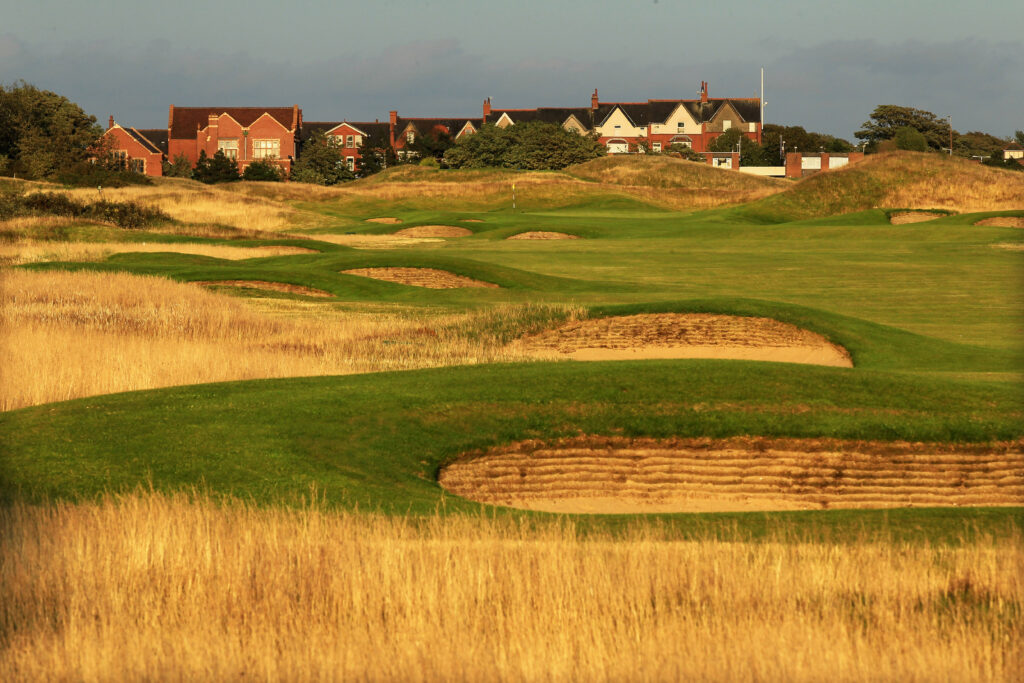
“You might go into the types of grasses, which is definitely up there with something that is links defining. But even there you think all links courses are on fescue, but it’s not quite true. There are lots of different types of grasses.
“Very few are pure fescue, and pure fescue is often unsustainable. It’s not possible to keep the surfaces right over a period of time.
“Then you might think sandy soil. You’d generally be right on sandy soil, but there are other courses that are built on other things like gravel.
“I believe Hayling is a good example of that, and nobody would say Hayling is not a links.
Source: Supplied
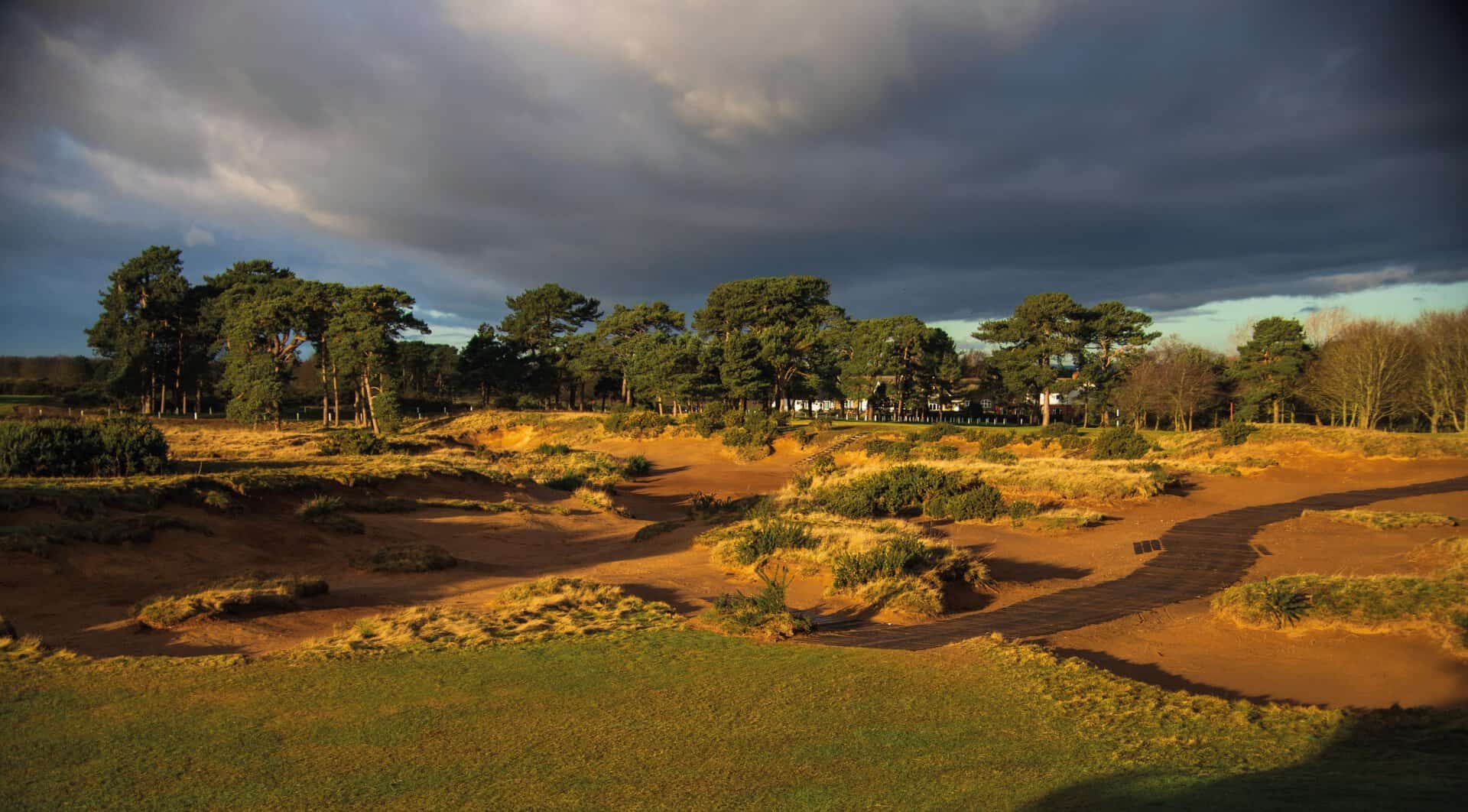
“You think there are no trees. But I can think of any number of links courses that feature trees, sometimes quite famous trees as well.
“The final thing to say, because I could go on for hours, is that the land changes from one end of a golf course to another.
“There are any number of courses where there are parts of a course that are categorically links and very easy to categorify.
“But then you might cross a road and you’re into something completely different. You are into those really difficult ones that are a mixture of things (different categories).”
The ‘holy grail’ of golf
Despite the ambiguity, Irwin was in no doubt around the appeal of links golf. He described it as the ‘holy grail’, pointing to the features and characteristics he believes makes the game that bit more enjoyable.
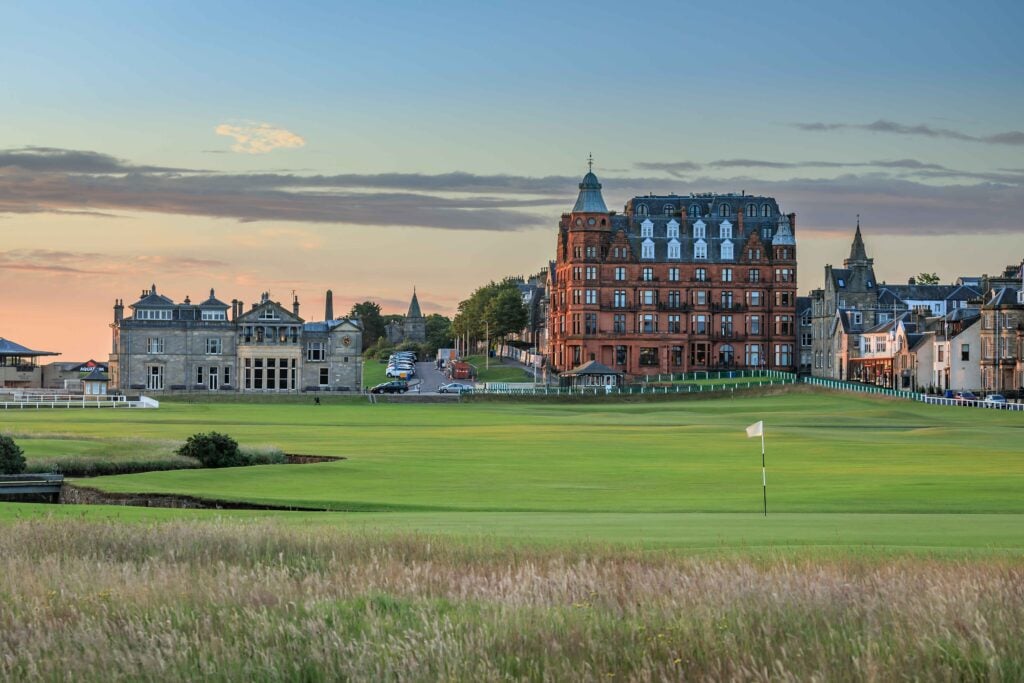
He said: “The types of things that define what you would view to be a links course [are] the ball moving on the ground, the wind exposed, firm turf, by the sea.
Source: Supplied
“These are all the things that make golf infinitely more interesting and a much, much better game to play.”
Listen to the NCG Top 100s Podcast
- NOW READ: Could Wales host The Open?
- NOW READ: The overlooked coastline offering some of the best-value golf in Britain and Ireland
- NOW READ: Is The Open heading to the Republic of Ireland?
NOW HAVE YOUR SAY
What are the defining features of a true links golf course? What separates a heathland from a links golf course? Can a course be both a links and a heathland? Let us know by leaving a comment or get in touch with us on X!
Advertisement