



It is an incredible project, but what about the men behind the work going into Curracloe Beach?
Jason Straka and Dana Fry are the architects that are constructing a soon-to-be world class golf facility in and amongst the dunes and linksland of south east Ireland.
Straka, a former President of the American Society of Golf Course Architects (ASGCA), had worked with Fry for two decades before the pair formed Fry/Straka Global Golf Course Design in 2012.
The pair have an incredible body of work, which includes the venue for the 2017 US Open, Erin Hills.
I was fortunate enough to speak to Jason Straka about the project, one that he is very excited about bringing to the Irish public.
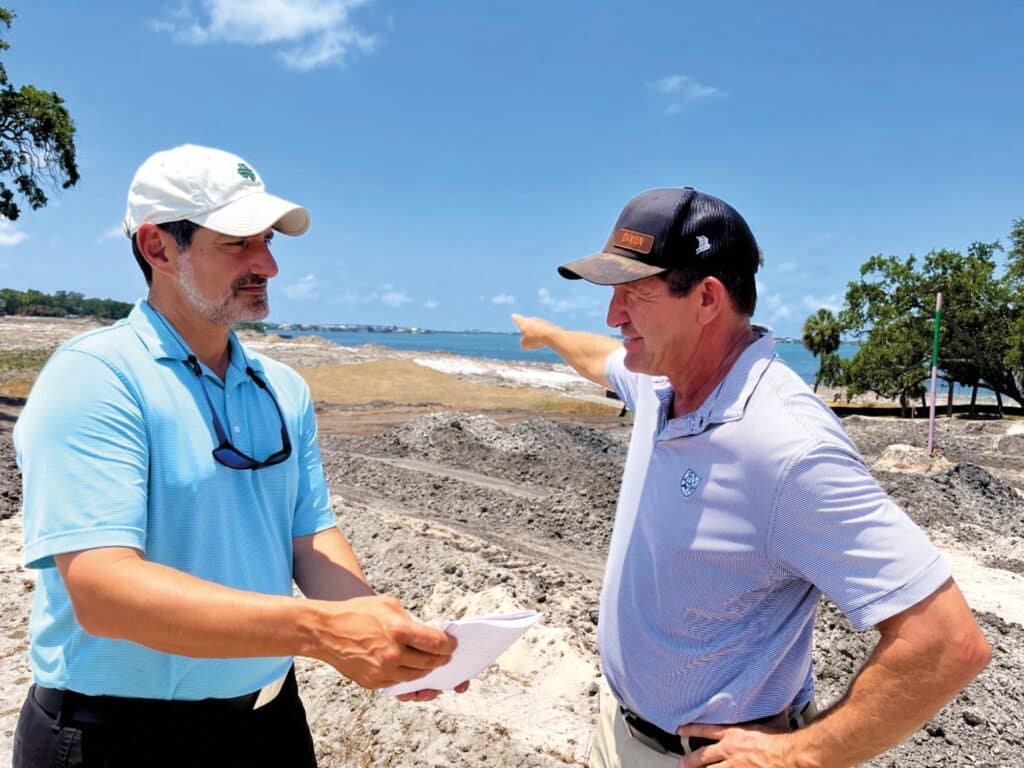
“Dramatic”: Curracloe architect’s first impressions of the site…
Dan Murphy (DM): When did you first get wind of the project?
Jason Straka (JS): The project has been 28 years in the making in the permitting process in Ireland. We have a mutual friend to the owner. John Clark, of Turfgrass, is an agronomist with a team based out of Dublin. He is the one who found the property and decided that it needed to have a golf course on it and that it would fill a niche for the south east of Ireland.
Seamus Neville is the managing director of Neville Hotels and ended up buying it. They have also bought Druids Glen and refurbished those golf courses and the hotel there. That’s really their first foray into golf. They’re just finishing putting a new hotel on our site at Curracloe. It’s primarily there to serve people going to the beach.
A lot of people know Curracloe for being the site where they filmed Saving Private Ryan, as it was most similar to the beaches at Normandy. A lot of Dubliners go down for a holiday. When they were ready to start on the design of the golf course, and the permitting started to fall into place, they then put it out to tender. John and Turfgrass were asked to select a number of architects for the Neville group to interview and we were fortunate that we were selected in the end.
Advertisement
DM: When did you first see the site?
JS: Early 2023. We made three trips [to Curracloe] before we were selected. I went over to see the site and it’s a two-way interview for us – we want to make sure that the site’s nice and that the owner is committed to building something of quality.
Of course, that was the case here. Then I met with Seamus and his group and then set a more formal interview where Dana Fry, my business partner, and I both flew over and did a formal presentation. And then we had a third follow-up.
DM: Describe your first impressions of the site
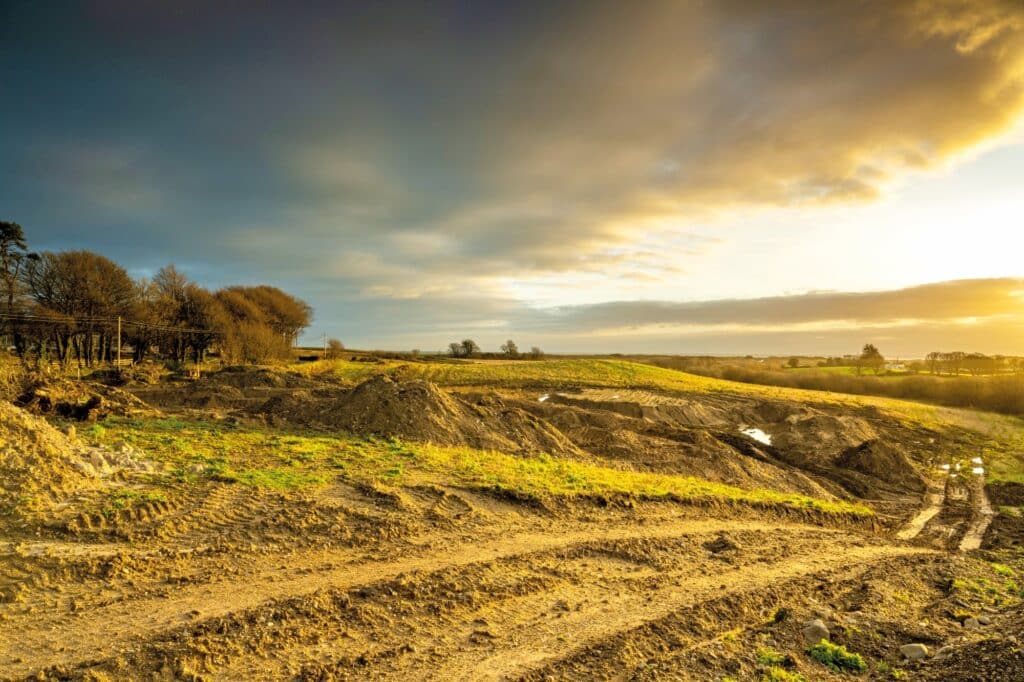
JS: Dramatic. That’s a big part of it. It’s split by a tiny little two-lane road with a rock wall on either side. Most North Americans would wince as they were trying to drive around the curves. On the south side of the road, the land generally slopes directly towards the sea and abuts the sand dunes.
You have these wonderful long vistas over the course to the dunes and then the sea. When you cross the road, you get up on to a high sand ridge, and that rises fairly dramatically. And then the terrain becomes really rollicking. It’s almost two different sites in the middle of a big one and we criss-cross them on both nines, which is fun, and take advantage of all types of terrain.
DM: Could you see some of the holes as soon as you set eyes on the land?
JS: There were a few of them. In particular, the 10th and the 11th. That was our ‘never forget’ because we got up on top of the sand ridge. We were actually looking to play to the north.
There’s an unbelievably dramatic valley with perfectly laid out terrain where you could go and carve bunkers into the sides of the hills and rock walls and gorse on either side.
I remember Dana looked at me and said this will be one of the world’s top holes – no matter what, we have to have a hole there.
And then we get up to the north-east corner of the property, which is also the highest, and there ended up being a really neat par 3 there where you hit over a chasm of gorse. The backdrop is rock walls and the gorse, and it just fit perfectly, so those two holes were there without doing a whole lot of anything.
DM: What kind of a course do you hope to create at Curracloe?
JS: First off, the brief is it’s not an Irish Open course. This is to be resort golf – fun and dramatic. Those are the two things we’re looking to instil here: to make it fun, memorable, visually dramatic. As people traverse this corner of the country, it’s beautiful and it’s called the sunny south-east for a reason.
But other than maybe Rosslare, which hardcore golf architecture aficionados might know about, everybody just bypasses this area. In the early discussions, it was do we cater to Dubliners who are coming down? Maybe they play a round and then go to the beach in the afternoon, and we just have a lower price point?
Advertisement
Or do we market it to North American golfers, which drives at least 85 per cent of the green fee revenue in Ireland. That was one of the reasons, frankly, that Dana and I got hired – when they decided to make that move, they knew that they wanted to have a name architect from North America.
The most recent opening was Tom Doak’s St Patrick’s Links, so they were looking for a different name. Gil Hanse has done quite a bit in Scotland and Ireland now. We were fortunate that we were on that list and put our best foot forward. It is then about really marketing to that North American base. That’s what they’re hoping to get out of it. They want to be right at the top of that list.
I don’t think anybody’s going to overcome Lahinch, Ballybunion and Portrush, but to be at least worthy of that list and for people to come and make this a destination. And it brings people to a wonderful corner of Ireland.
DM: What does it mean to you to be given a piece of Irish linksland?
JS: It’s a dream of a golf course architect to work in either Ireland or Scotland so this is a dream come true. We’ll maybe never ever get another opportunity to do something like this. Most architects don’t ever.
And part of it is that we have goals for the course. Number one is to fulfil our client’s goal, that is most important. And number two, we want to design something where people come and, if they don’t know who the designers are, they just say, ‘wow, this is a pretty cool place that we found’.
But then it goes way beyond that, for Dana and I. We’re at the point in our careers where we look for projects that are of interest to us and where we like the people. Irish people are welcoming, and we love spending time in Ireland.
Advertisement
We also like to travel, so we’re going to spend a lot of time on site together. And we may be there two or three days, and maybe we’ll take off in two, three days and go explore the country a little bit more, and then come back to the property for two, three days, and maybe launch over to London for a couple of days.
It’s just wonderful for us at this point of our careers to immerse ourselves in that culture. And to keep in mind the best golf courses have a sense of place so the more that we spend time there and understand all the little nuances of what makes that corner of Ireland special, the more detail we can add to that facility to make it truly authentic.
DM: Are you widely travelled in Ireland and Irish golf?
JS: I’m down to now trying to see a lot of the hidden gems. I’ve been fortunate. On one of my first professional trips overseas, we went over for two weeks and played a bunch of Irish golf courses with greenkeeper colleagues. This was all the way back in the early 1990s.
I come from a family and friends of crazy golfers where everybody’s a golf nut. We would go over for 10 or 11 days and play 15 or 16 rounds of golf, but not in one locale. The last trip, we played at Portmarnock and The European then went up north to St Patrick’s and Ballyliffin, then Enniscrone, Ballybunion and Lahinch, which is one of my favourites, then Waterville and Old Head. So I’ve seen pretty much all of the main highlights in Ireland.
Advertisement
DM: Which other Irish courses have you played and love?
JS: I love them all for different reasons. I love Lahinch because I love the quirkiness to it; Ballybunion to me is dramatic because of the scale of the place and the dunes, but it’s also a very difficult golf course; Waterville is a very calm links, it’s quintessential Ireland.
It’s expansive because you can see over almost all of the dunes, whereas at Lahinch and Ballybunion, the dunes are so big you can almost feel claustrophobic.
Royal County Down is one of my favourites, but that’s a very difficult golf course for most average golfers, so that’s not something that we want to emulate, but certainly they have beautiful blowout bunkers. The scale of the place, with the Mountains of Mourne in the background, is just utterly dramatic.
DM: Tell us about Curracloe
JS: Curracloe Beach, to the north of Wexford city, is expected to open in 2026. The Neville Hotel Group are developing the project. It will be Neville’s fifth property, joining Royal Marine Hotel in Dun Laoghaire, Druids Glen Hotel and Golf Resort in County Wicklow, the River Court Hotel in Kilkenny and the Tower Hotel in Waterford.
As golf architects we’re artists too, so we’re also studying the colour, texture and height. For example, the marram grass at Royal County Down and how they use it on bunkers gives a very different texture to it. Gorse can be not directly in play but also give the landscape a different colour and texture to it.
DM: Which of those do you think Curracloe might end up most similar to in terms of style?
JS: I think there’s a combination of all of them here. That’s a frequent question that we get asked, and our goals are to bring something a bit unique. We’re not going to have revetted bunkers. We’re going to build blow-out bunkers. We’re not under major pressure to get things done and open, so we’re going to take our time. We’re trying to give something different that the other golf courses don’t have. We can also focus on fun and being playable.
It’s a tough question to answer because we don’t really want to make it feel or look or even play like any of the other famous links courses in Ireland. We want it to have its own characteristics.
DM: On playability, St Patrick’s is arguably the first of its type in Ireland where you are not necessarily going to lose a ball if you are offline. Is it fair to say that is a 21st-century view of architecture?
JS: For sure. On our routing plan for Curracloe, we’ve got interconnected fairways so that you have a large expanse of very playable turf. Now, that doesn’t mean that it’s easy, because we can defend that from an architectural perspective, but at least you can find your ball.
St. Patrick’s uses incredible elevation changes and scale within the dramatic, rollicking greens. We’re not going for that level of green contouring, but we want to make things compelling and interesting, especially for good golfers.
We want this to be a celebration of the ground game. People very rarely come over to England, Ireland and Scotland to play parkland golf, right?
They’re coming over for that links experience, and we definitely want to give it to them. So if you get a high handicapper, who is thrilled to death to bump their way up onto the green and just end up on the green someplace and have a long putt and maybe make a par once in a while and a bunch of bogeys, do an occasional double bogey and get on to the next hole and have fun without losing a golf ball – great.
But skilled golfers, we want to confound them. If they miss a shot then rather than just getting it onto the green, they’re trying to get it within a few feet. And we want to make that very thoughtful and compelling and difficult for them, frankly, so it becomes a different game but on the same golf course.
Have you played golf in Ireland before? How excited are you about Project Curracloe? Let us know your thoughts with a post on X, formerly Twitter!