



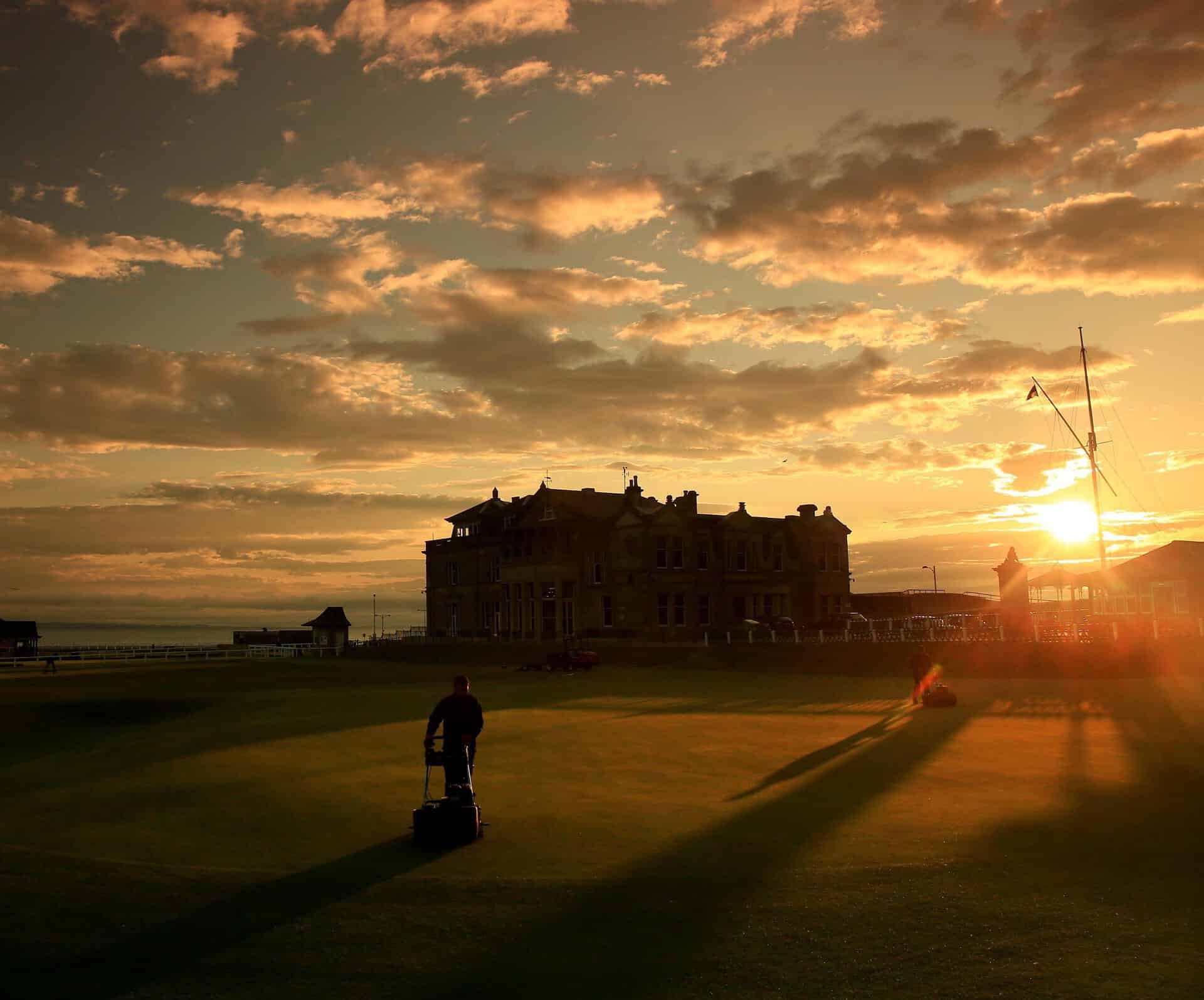
The first thing you notice when you pitch up by the R&A clubhouse at St Andrews is the queue.
The line of single golfers at the starter’s pavilion has been in place since the early hours of the morning and they are there more in hope than expectation.
They’re hoping to snatch a precious spot, with a willing group that has a space, to play the famous Old Course.
If people are prepared to hunker down for hours to play on golf’s most famous piece of turf, imagine what it’s like to be the man charged with keeping it looking great.
Gordon McKie has been the course manager for the Old for 11 years, having served his apprenticeship on the Eden and New.
He’s steered a path through Open Championships, Dunhill Links Championships, Women’s British Opens and prepared a course that’s been played by hundreds of thousands of golfers in his time there.
We asked the greenkeeping veteran what it takes to keep the hallowed grass in tip-top shape…

You’re the latest in a line of Old Course greenkeepers that starts with Old Tom Morris. What’s that like?
For a greenkeeper, and particularly a links greenkeeper, it is the ultimate. I was reminded when I first took over the role that ‘you are only the 9th greenkeeper since Old Tom to look after this place’.
That just shows you how many greenkeepers have done it. So to be doing it on a daily basis is like a boyhood dream.
You get into greenkeeping, you read the books, and it is all about Old Tom. He is the godfather of greenkeeping. He’s the guy we look up to and we look back and see what he did – particularly here.
Some of the practices he put into place all those years ago, we still try to maintain those in the philosophy of how we manage. That’s not only the Old Course but all the courses.
Advertisement
What’s your approach to working on the Old Course?
It’s a very busy golf course and it is held in such high esteem by not only the local people in the community in St Andrews but worldwide.
For everyone who comes here, it’s a bucket list golf course and they’ve saved up for months and even years to come and play this course.
But it’s 18 holes of golf and grass like any other golf course. It’s a special place and I’m very lucky and fortunate to work in a place like St Andrews.
Do you have to keep the heritage and history of the course in your mind?
You know the world’s eyes are always watching you. You are very conscious of what you are doing, when and how you are doing it.
We try and present the golf course every single day as if it was in championship condition. That’s what everyone who comes here is expecting. They have seen it on TV and they want the same conditions the pros get.
It’s a challenge to look after but it is a good privilege.

There are 50,000 rounds played on the Old every year. That’s an awful lot of traffic…
Probably the biggest comment we get is people can’t believe the condition the course is in given the amount of people who play it – and that’s only six days a week. We’re closed on Sundays. We use Sundays for maintenance.
We are very lucky that we get the resources to put into the course.
Advertisement
The philosophy is that everything we do on the greens – which is the number one area on a course – we do all over the place.
We spend a lot of time on areas off greens, on surrounds and walkways and areas where there is heavy traffic to try and make them as good.
You’ve got to try and apply resources to allow them to do that. It’s still a challenge – with the divots, the double greens and the nature of the undulations. You’ve got a lot more areas in the fairway where the ball will gather.
We’ve got a big team that can help us do that and we’re lucky we have got everything that is required to help us maintain the golf course in top class condition.

How big is that team?
There are 14 of us full-time and through the summer we take on nine seasonal interns.
That’s made up of six full-time guys and three part-time. We’ve got semi-retired guys that come back and work for four hours (at a time), which is great and that helps us rake bunkers, helps with divoting and we train them up to do a bit of machinery. That helps us get done what we need to with the time constraints we have.
The first tee time is 6.30am (during the summer) so we need a lot of staff to get that course set up ahead of golf.
You’ll be racing around in the morning…
We start at 5.15am and we always give ourselves an hour’s grace just to get ahead. Even then, by the time we get to 7 or 8, we are just starting to be caught up.
The thing with the Old Course is that because you have got double greens, you are effectively cutting two greens – not one. If you look round and say ‘I’ll catch that green on the way in’ you are going to swamped with golf.
Advertisement
That’s why we’ve got such large numbers. The area of our greens is probably three times the size of a normal golf club.
So you might say ‘he’s got 14 staff’ but that’s the reason. I have got three times the area to maintain ahead of golf.

You hand cut those greens as well…
It’s all about numbers and resources. We can’t hand cut the greens without having at least six people on it. With that six people we can do it in about two and a half hours and the guys double up on the big double greens.
They are very experienced.
You always find when you get new staff coming here, they might have cut greens, but you’ve got one of those big large double greens that might be 100 yards. You’ve got to try and keep it (the mower) in a straight line.
Sunlight is a huge thing. You try and cut the green when you are heading into the sunlight and you’ll get found out. There’s a lot of thinking you have to do to try and do a good job.
Does the way the Old Course is set up change when a top tournament comes to St Andrews? What does an average day entail for McKie and his team? Find out on the next page…
How does the condition of the course differ between a tournament, like the Dunhill, and every day play?
A week before the Dunhill, what we were doing that week and what we were doing the next was not very different.
The maintenance practices are just the same. You cut your greens, tees, fairways and green surrounds, you get your bunkers raked and get the holes all changed.
Advertisement
There will be a few extra jobs to manicure it a wee bit differently but, in general, it’s the same set up we would have on a day-to-day basis.

How do you do maintain that standard all year round in different conditions and seasons?
We’re managing moisture levels and we are keeping an eye on the heights of cuts. On a links you have the elements and the wind can make a big difference.
We’re taking firmness levels on the green – how they perform – and measuring green speed on a regular basis. When the wind picks up the greens dry out a lot quicker.
Sometimes we might not need to cut the green – because it’s that dry and windy – and one of the tools in the bag is that we might not cut.
Rolling is something we do less and less of as well. We can get the conditions without putting too much stress on that turf.
You will close the course, though, when it is frosty…
When you think about frost, it is the foot burn in the aftermath. At the time it doesn’t seem that bad but it’s when you get to the spring and the grass tries to re-grow. That’s when the damage is done and you get the root break.
Our policy is that the course is closed until the frost is naturally lifted and then we’ll open up the courses. We have a cut off point at about 12pm in the day and, when the sun starts to go the other way, if the frost hasn’t cleared there’s absolutely no chance then.
Advertisement
You do see the benefit of that coming into the spring.
It’s not an easy thing to communicate to golfers and they go out and see some parts of the course where the frost has disappeared.
But a course is spread over a big area. Different things can be happening in different areas.

What’s an average day on the Old Course?
We’re getting the greens all cut, all the greens and surrounds cut and all the bunkers raked.
When we were forecasted 40 miles-per-hour gusts a few weeks ago, we pre-prepared the bunkers.
We were raking the bunkers but watering them down to try and hold the sand in to try and save us some work in the days that follow.
We’re lucky we are still allowed under licence to take some sand off the sea-bed, but it’s very fine and once it dries out, and the wind hits a certain amount, it starts to disperse and blow about.
That can cause us a lot of problems in the amount of people we need to throw at that particular job.
We are trying to get the golf course set up in the best possible way we can every single day of the week.

Did you know?
Golf has been played at St Andrews for more than 600 years. The right of the people of the town to play on the links was recognised in a 1552 charter.
The fairways and surrounds on the Old Course measure 12 hectares – or 120,000 square metres.
The 1st and 18th fairway covers a total of 7.2 acres. It’s 129 yards wide at Grannie Clark’s Wynd.
More than 230,000 rounds are played on St Andrews’ seven public links each year. More than 50,000 of those on the Old Course.
The largest double green on the Old Course is the 5th and 13th. At more than 90 metres long and 39 metres wide it is almost the size of a football pitch.
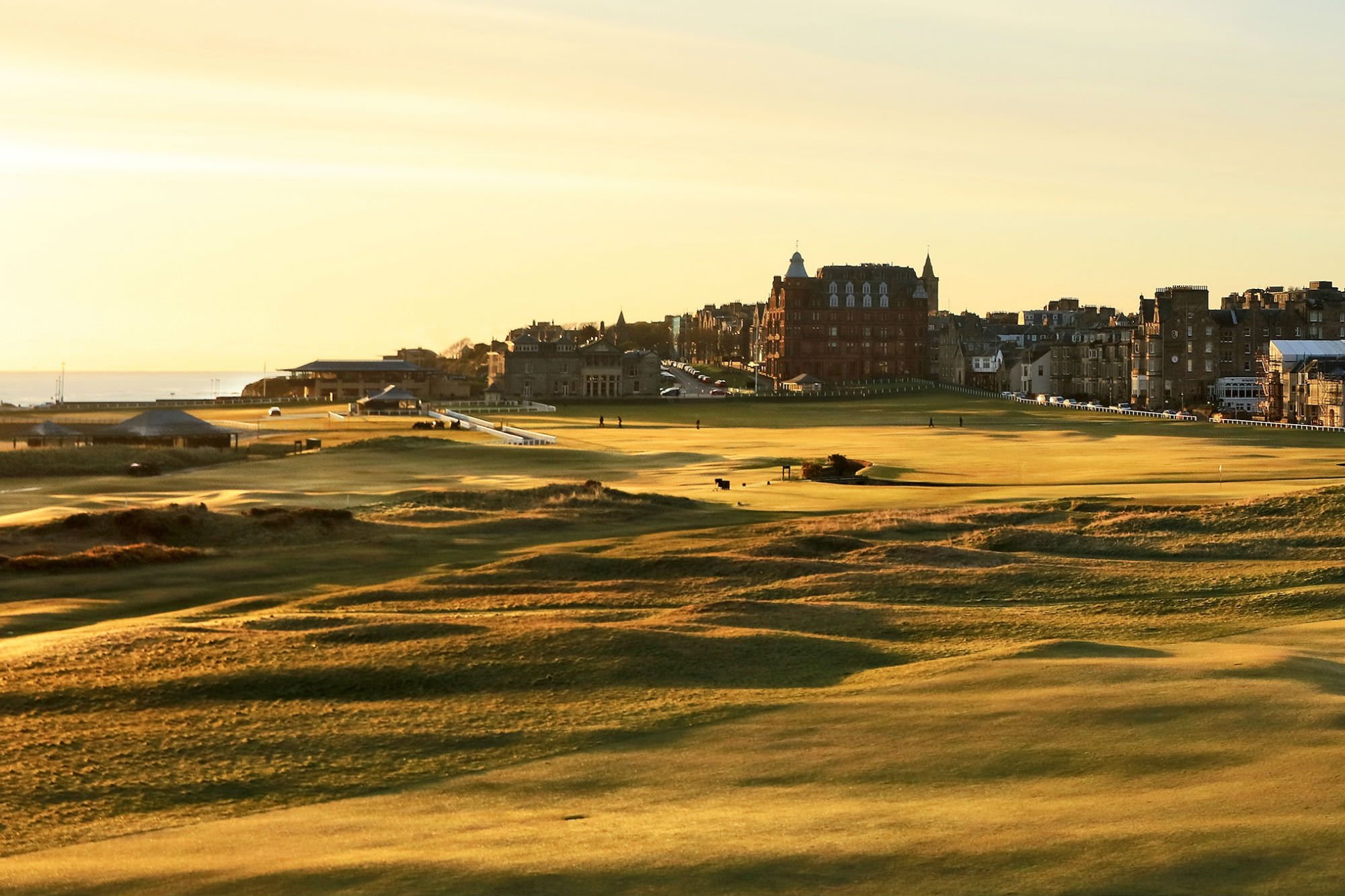
An alternative guide to the Old Course
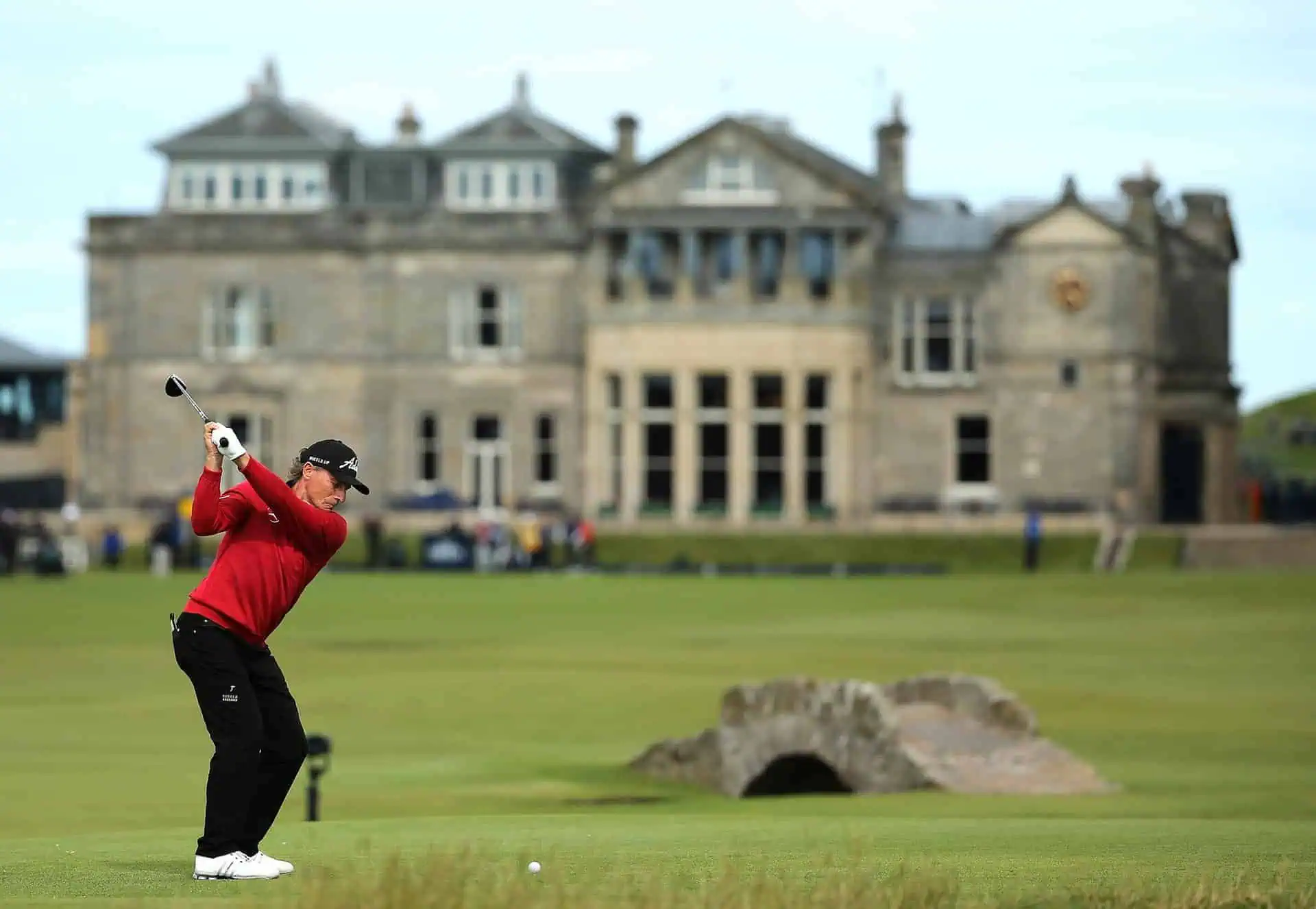
‘When I first played the Old Course I actually didn’t like it all’
