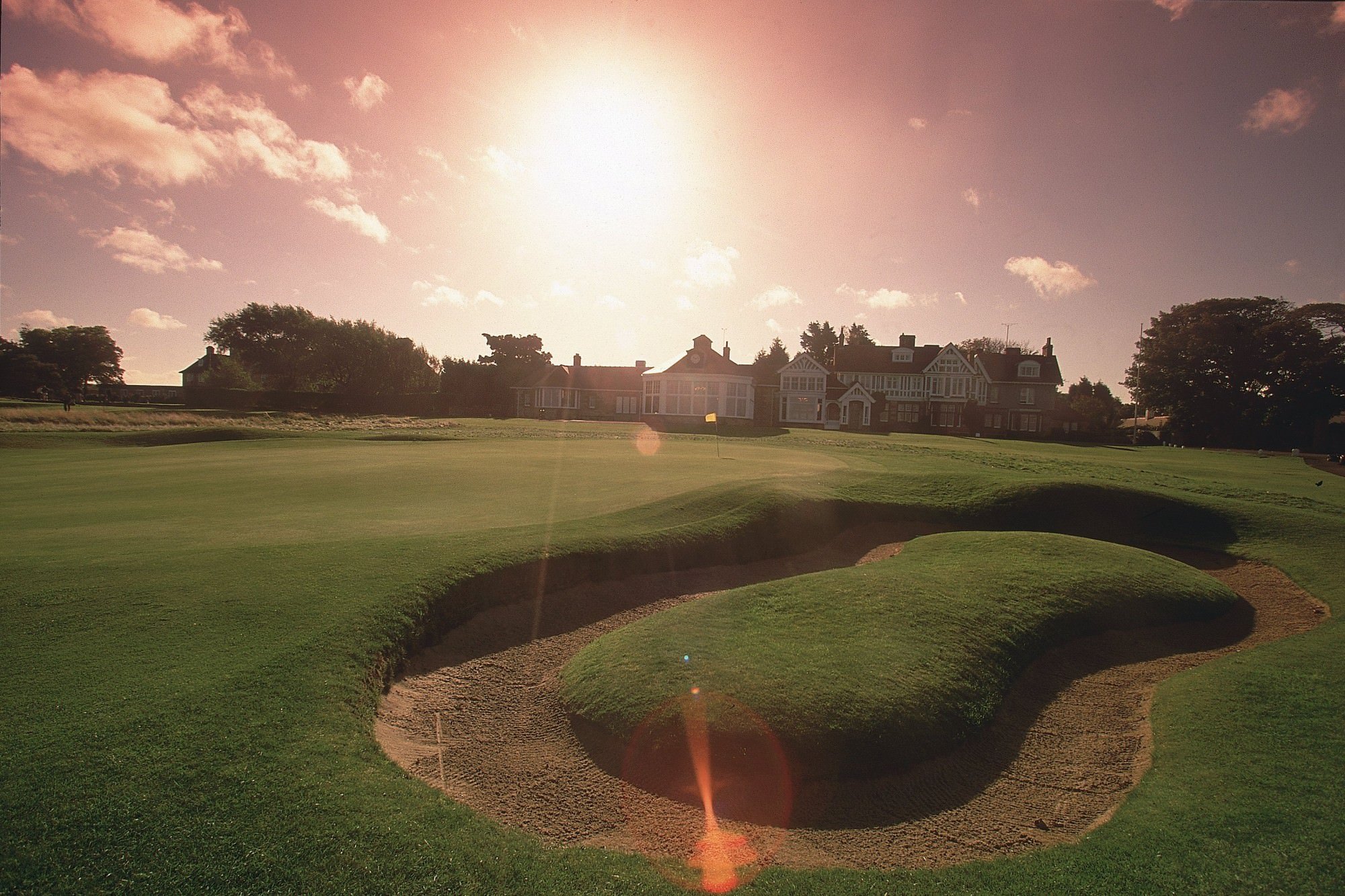



To the reader, I offer a conundrum. How can a course universally ranked in the world’s top 100 be underrated? This is a course that has played host to 11 Open Championships, five Women’s Opens, Walker Cups, Curtis Cups, Ryder Cups and more. It is as storied and distinguished as English golf gets. Respected, but not always loved.
Lytham & St Annes Golf Club was founded in 1886 but, with ongoing disputes over the lease of the land, only moved to this site in 1897. George Lowe, the club’s professional, laid out the links on their new site and they have contentedly remained here ever since.
By the time the Great War ended in 1919, Harry Colt was invited to make improvements to the course. To a greater or lesser degree, every hole was altered.
Colt made further changes to the links over the 1930s and it became a regular fixture on the Open Championship Rota from the 1950s.
What strikes me most about this course is not the sheer quantity of bunkers, but their shape and arrangement. The fairways are wide and the greens large and shapely.
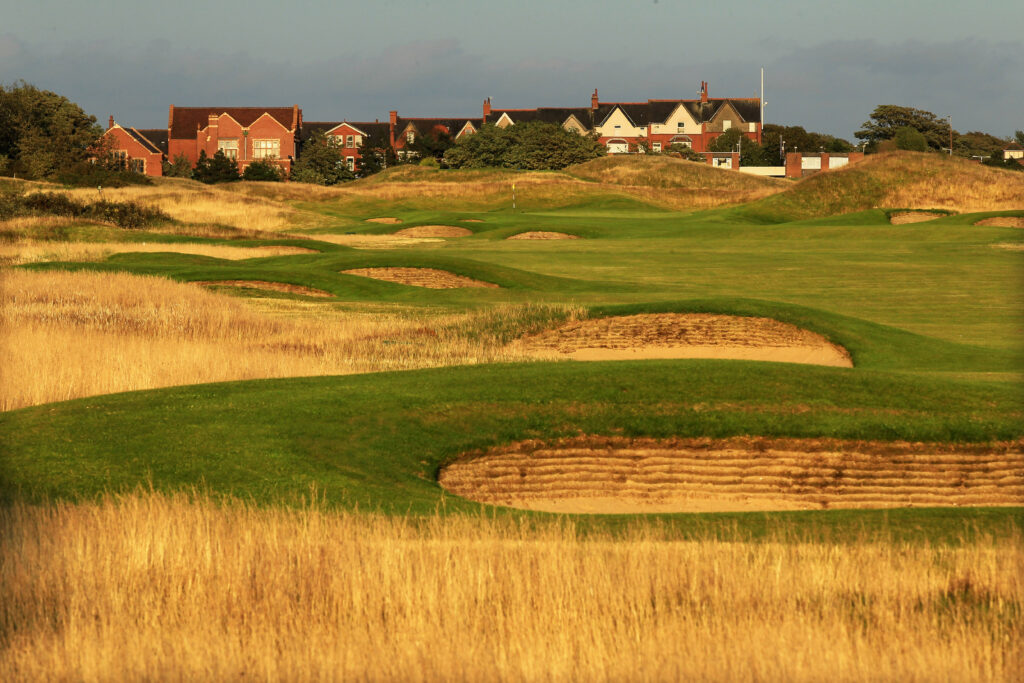
Most unusually, the opening one is a par 3 and a crisp and accurate iron shot is required from the outset. The drive on the 2nd is little easier – a long par 4 running along the railway line. The 3rd is similar – but would have been a greater test still in Colt’s day. It’s one of the only holes to have gained fairway bunkers.
The 4th swings away from the railway and the 5th plays as a par 3 into the heart of the site.
The long 6th hole makes full use of this crumpled landscape. One of the more underrated holes on the course, a dogleg sweeps to the left and demands an inch-perfect approach by doing so.
Advertisement
The 7th is a brute, but we quickly return to fine linksland again on the magnificent 8th hole. After driving parallel to the railway boundary again, we find it is the green complex that makes this hole so vexing. Three bunkers sit in the ridge that partially obscures the green – raised and with steep drop-offs around the putting surface.
The 9th is another of the famous Fylde Threes – a par 3 so distinctive in style to this region.
The 10th has a sand hill eating into the left edge of the fairway, enough to push tee shots right – away from the ideal angle into this well-protected green.
The 11th is another very long par 5, but it leads to my favourite par 3 on the course probably the most intelligent of the lot. The 12th green is almost ‘L-shaped’, a narrow tongue protruding short before the bulk of the green swings round to the right. The bunkers around this green feel placed, rather than simply dropped at random.
Holes 13 through 15 are par 4s of increasing length, the 13th the most interesting and the 15th the most conventionally difficult.
It would be remiss to describe the closing three holes at Lytham without referencing some of the key events that have played out over them.

ALSO: Links From The Road excerpt: What are the best 18 holes in Lancashire and Cumbria?
In 1979, it was the 16th hole that proved pivotal for a teenage Seve Ballesteros. In the final round, his slice came to rest under one of a handful of cars between this and the 15th hole. Benefitting from a free drop, he pitched to 20 feet and rolled in the putt for a Seve-esque three. He went on to win his first major championship title by three strokes.
On the 17th, fifteen bunkers line the hole now, but there were at least 19 in 1926.
Having pulled his drive into a sandy wilderness down the left side of this penultimate hole, Bobby Jones played a long iron that cleared the sand, gorse, dunes and all other trouble to nestle safely on the distant green.
Finally, the closing hole must rank as one of the best on the rota. It is certainly iconic – the imposing clubhouse and dormy house standing immediately behind the home green.
In 2012, Adam Scott’s drive trickled into a bunker here and his closing bogey handed the Claret Jug to Ernie Els. In 1969, Legendary commentator Henry Longhurst sounded emotional as he described Tony Jacklin’s closing drive: “What a corker! He’s driven it absolutely miles!”
If ever there were a course that has stood the test of time, this must surely be it. Since Colt’s changes a century ago, the routing has hardly changed.
It is a club with a championship pedigree the equal of any other. Lytham makes no apologies and nor should it. It has its own inimitable style, and it wears it well.
Subscribe to Links from the Road
This is an excerpt from Volume 2 of Sam Cooper’s Links from the Road journals.
This 18-volume series includes detailed, deep-dive features on every links course in Great Britain. Read the full version of this essay in Volume 2: Fylde Coast, Lake District & Cumbria. It is available to purchase now from www.linksfromtheroad.com for £19.95 with subscription offers also available.
NOW READ: What makes a links course?
NOW READ: Links from the Road excerpt: Why Royal Birkdale is the most-loved English course on the Open rota
What do you make of Royal Lytham and St Annes? How do you rate Royal Lytham and St Annes in your top English golf courses? Tell us on X!
Advertisement
Advertisement