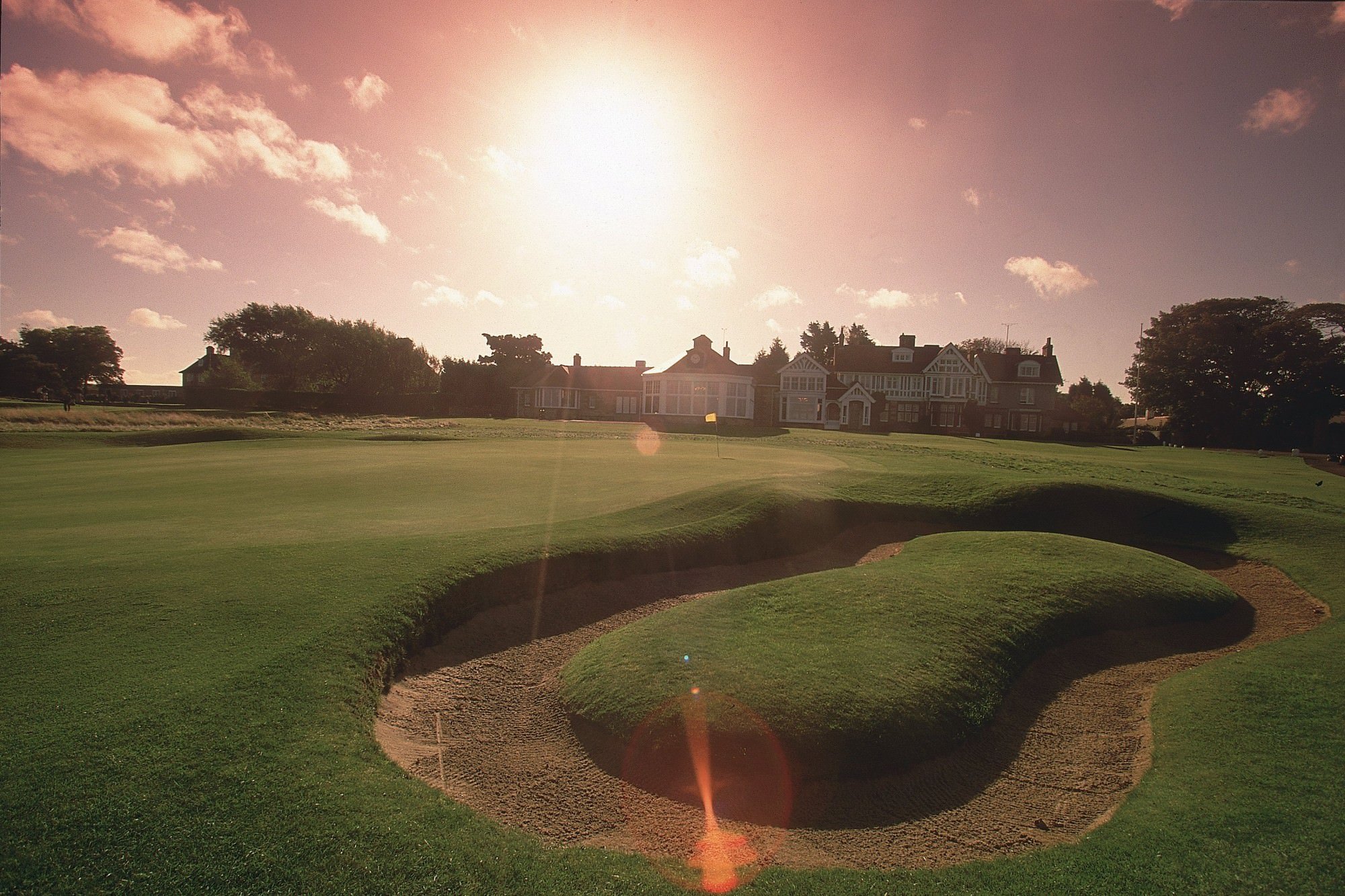


St Annes Old Links is generally flat. There are few dunes, but no shortage of bunkers or vexing run-offs and ridges. It’s a course that I think improves with repeat plays, but has stand-out moments that will impress even on a cursory visit.
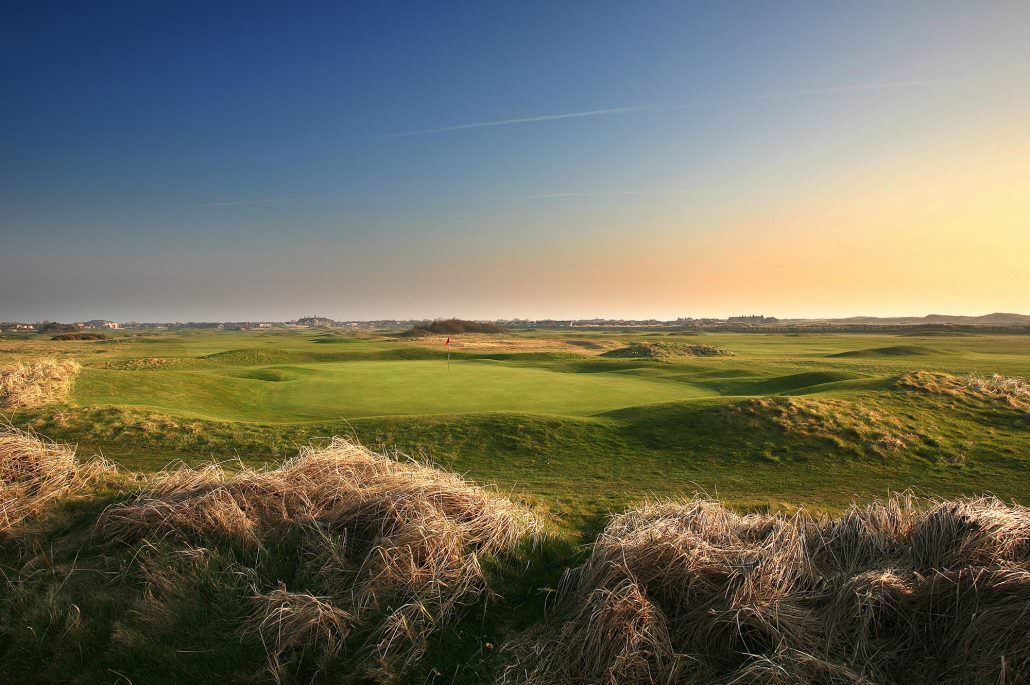
The front nine winds in a loop along the ‘inland’ half of the site. The course never ventures quite to the water, separated by a railway line and road from the beach – but the westerly section of the site is the ‘linksier’ portion.
The 1st and 6th greens are almost a double green – just the cut height of the apron separating the putting surfaces here. The 3rd is a devilishly bunkered par 3 and sets the early standard for one of the best collections of par 3s in the region.
5 and 6 are back-to-back par 5s, a feature you rarely come across – but one repeated later in the same round on holes 17 & 18. But amongst the good holes of the front 9, the highlight without question is the famous 9th hole.
The hole, called ‘The Cannon’, is said to have so impressed Bobby Jones – visiting before his maiden Open Championship victory at Lytham in 1926, described it as ‘difficult to improve upon’.
Apart from the stately 10th, with all its historical pedigree, the back 9 really comes into its own from the 13th. Again, a par 3 that on another course would be a standout, before one of the most intimidatingly bunkered approaches to the par 4 15th. No fewer than eleven bunkers defend his hole.
ALSO: Links From The Road: Is Castletown the most spectacular links course in the British Isles?
The reward for surviving 15 is the equally intimidating 16th hole. ‘Keepers Trap’ is the appropriate name for this par 3, an upturned green wearing a delicate necklace of pot bunkers.
Advertisement
17, another of the original Lytham & St Annes holes from 1886, has been stretched to a gargantuan 621-yard par 5 – but provides enough challenge from the members tees.
If 17 is a bit of brawn, 18 is all brain. By some margin, the shortest par 5 on the course. Rather than see this as a weakness, the savvy members of the Old Links understand that the chance to go for triumph, risking disaster at the same time, is the ultimate challenge of a closing hole.
An average round can be turned into a great one with a strong finish, just as a good one can be thrown away with a couple of ill-conceived swings at the death.
I do always wonder what visiting golfers make of this links as they retire to the clubhouse to reflect. My guess is it passes many of them by. They might wonder why a course from 1901 is considered ‘Old’. They might wonder why it’s not quite as grand nor as polished as the Royal club two miles down the road. They might think the flat landscape was less than they were expecting and, par 3s aside, it was a course they found difficult rather than enjoyable and memorable.
Personally, I think that misses the point of the Old Links. In many ways, it was founded to be something very different to Lytham & St Annes.
It’s a course that gets better with each visit, revealing its strategies and secrets at its own pace.
Subscribe to Links from the Road
This is an excerpt from Volume 2 of Sam Cooper’s Links from the Road journals.
This 18-volume series includes detailed, deep-dive features on every links course in Great Britain. Read the full version of this essay in Volume 2: Fylde Coast, Lake District & Cumbria. It is available to purchase now from www.linksfromtheroad.com for £19.95 with subscription offers also available.
NOW READ: Links From The Road excerpt: What are the best 18 holes in Lancashire and Cumbria?
NOW READ: Links from the Road excerpt: Why Royal Birkdale is the most-loved English course on the Open rota
Have you been to St Annes Old Links Golf Club yet? What are your thoughts on St Annes Old Links Golf Club? Tell us on X!
Advertisement