

The last time the United States had lost the Ryder Cup was to a Great Britain and Ireland side at Lindrick in 1957. This time around, 24 years later, we had the might of the European players to call upon, something that had only been introduced in 1979 where it made little difference.
Europe’s sole major winners and the two men who would do more than anyone to tilt the balance Europe’s way in the years to come – Tony Jacklin and Seve Ballesteros – were overlooked by John Jacobs after not making one of the top 10 automatic spots.
Jacklin had played on the past six teams while Ballesteros, who lost four of his five matches on debut at The Greenbrier, missed out following a wrangle over appearance money and his absence from Europe for much of the season.
The visitors on the other hand, with Dave Marr as their skipper, had the current Masters, Open and PGA champions in Tom Watson, Bill Rogers and Larry Nelson in their ranks along with what could easily be the American Hall of Fame from that period – Jack Nicklaus, Ray Floyd, Hale Irwin, Lee Trevino, Johnny Miller, Jerry Pate, Ben Crenshaw, Bruce Lietzke and Tom Kite. Only the last three had yet to win a major at that point, the others had 36 between them.
Marr talked up the European chances – ‘We’re gonna be in a dog fight for three days and it’s not the size of the dog that counts, it’s the size of the fight in the dog.’
We spoke to five people who were there; America’s Hale Irwin, Europe’s Mark James, Walton Heath’s then tournament professional and now Sky Sports’ lead commentator Ewen Murray and two former captains John Woods and Peter Renshaw.
JW: I was captain in 1979 when the PGA approached us. We had just signed up to have the 1980 European Open and the then secretary Bill McCrae came to me and said the PGA wants to know if we would have them for the 1981 Ryder Cup.
Advertisement
They were supposed to be going to The Belfry but they weren’t ready. The PGA in those days was for the club pros and they were based at the Oval and I think getting in and out of London was getting awkward for them and they did a deal with a company called Ellerman Lines to own The Belfry.
The deal was that they would get accommodation at a peppercorn rent providing that agreed to take the ‘81 and ‘85 Ryder Cups there. By 1979 the PGA realised The Belfry wasn’t going to be up to standard so we said yes. We then had to sit on this information for six months while they extracted themselves from their contract with Ellerman Lines.
They weren’t terribly happy about all this but eventually they ended up proving that the course wasn’t going to be in good enough shape, they actually flew agronomists across the Atlantic, before they agreed.
So they said they would have to bring the Ryder Cup in 1989, as well as 1985.

EM: I joined as an assistant in 1973 and I was then the tournament professional from 1977 to 1989.
It had only been nine years since the members took the course over, it was owned by Sir William Carr who edited the News of the World for more than 50 years.
That was led by Alick Renshaw, who had a queen’s award for industry and lived to the left of the 1st green, so this was a huge moment in the club’s history and to get the Ryder Cup soon after that was huge.
It was important to have the European Open there in 1978 and 1980 which were won by the Americans Bobby Wadkins and Tom Kite.
We had a great captain in John Jacobs while Dave Marr was an absolutely outstanding man and I was lucky enough to work with him in later years.
MJ: John Jacobs was great, I had got on well with him in 1979, he was very laid back and easy to speak to. More goes into captaincy now, they feel like they have to put more into it these days, John would pick the pairings as he saw them and that was pretty much all he could do.
And of course he was a very good coach. If you wanted a quick bit of advice he would be great to have a word with, he was very generous with his time and it was always very simple so if you were over-thinking your swing he would be great.
JW: At the first European Open 17 Americans came over, they moved together and putted together and chatted to the members in the clubhouse, it was all very pleasant.
EM: Walton Heath is one of the great clubs. Coming from the outskirts of Edinburgh I was suddenly talking with business people in London which I found very interesting. And they had some interesting members like John Junor who was editor of the Sunday Express for 32 years and he was like a second father to me having left home at 18. They have a wonderful and supportive membership, I probably should have been concentrating more on my tournament play but I just loved being there.
I find it difficult to separate one course from the other. Sunningdale members will tell you that they prefer the New to the Old, it’s the same at Walton Heath but equally 50 per cent will see it the other way.
Advertisement

HI: Dave Marr was the ultimate gentleman, very well spoken and mannered and he carried forward the banner very well. He was very level headed in all the meetings and I think he sensed that he had the talent there.
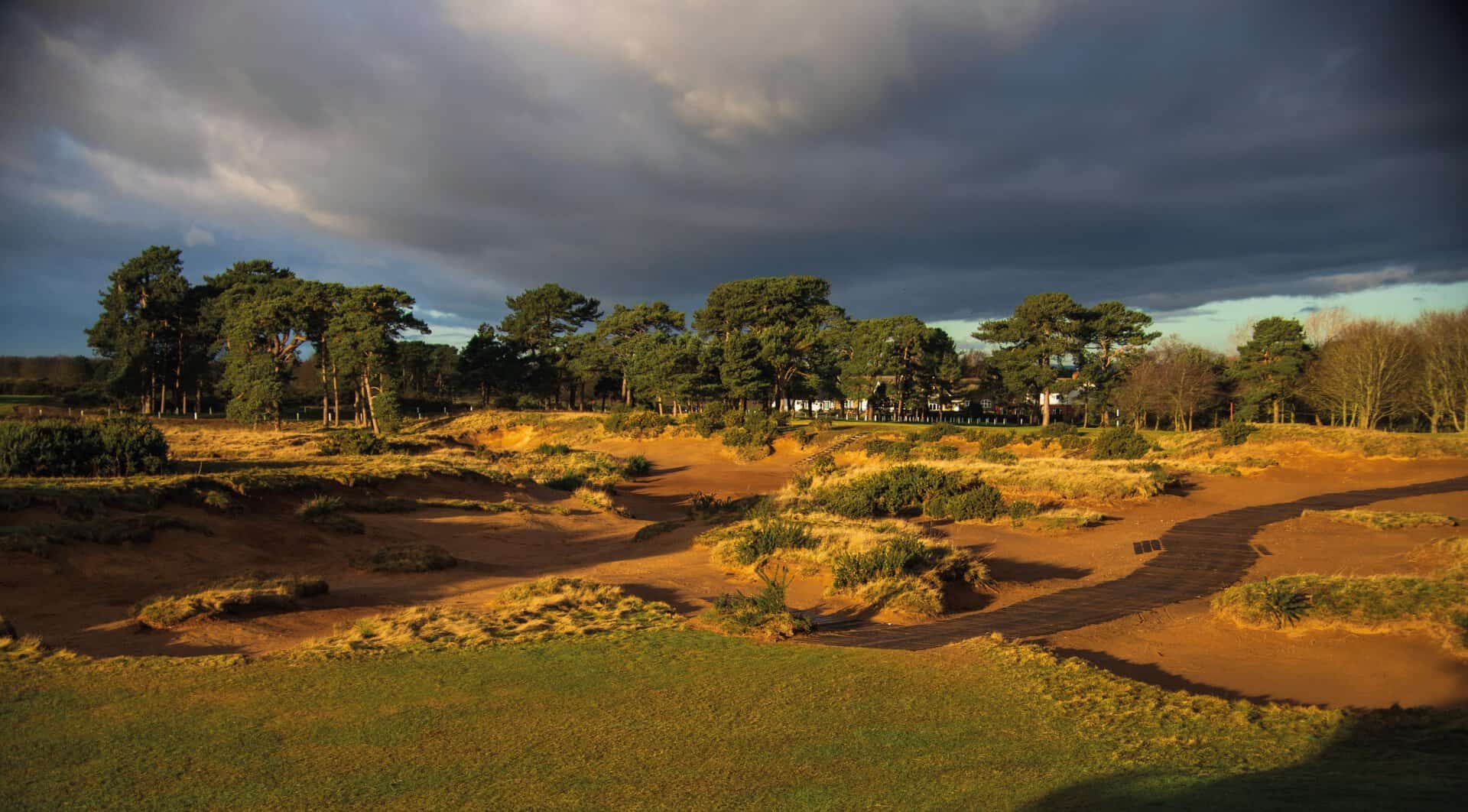
Everybody enjoyed the course. It had a bit of a parkland feel but there was still a bit of a links flavour to it.
I don’t think the Seve thing was a big matter at the time. He went on to be the figurehead and rightly so but, if anything, he would draw the best out of our players. I don’t think any of us would look at one of their team and thought ‘oh no, what am I going to do?’ It was more give me the match and let me go.
Any of my team-mates were a joy to play with, for 51 weeks they were my opponents so to sincerely root for them was fantastic. I enjoyed playing with Ray Floyd as he has that never-give-up demeanour and I probably had the same thing. Lanny Wadkins was the same, our personalities may not have been the same but we gelled.
The Ryder Cup was the ultimate experience for me in terms of team golf, I enjoyed the dinners, the locker room, mixing with the other team and the camaraderie.
EM: Nicklaus was still the first person you would go and watch, he was a big leader and he had a tremendous pull for someone of my age and he did everything the way that it should be done, the same with Tom Watson.
I had played with Ben Crenshaw in The Open at St Andrews so he was more of a friend than a fellow pro but I didn’t know Nicklaus or Watson.
Advertisement
In truth I was more interested in our team. I knew Faldo and Oosterhuis, I had played with Darcy as a kid, the same with Torrance as we were in the same boys’ team and Howard Clark and I were born six weeks apart. We first played together in the British Boys when I was 14. We still speak every few days over the phone and I’ve just sent him a magnum of wine for his 64th birthday.
HI: There is a greatness factor that Jack brought to the team but personally it didn’t affect me one way or the other as, as far as I was concerned, we were all equal and one entity. At the same time be you would be foolish to say that Jack didn’t bring a stabilising quality.
Bear in mind though that in 1975 Brian Barnes beat him twice so it has that effect on the other side too, they looked forward to playing Jack.
Two of us were in our 20s and they were 28 and 29 – we are seeing the age around the world dropping so much in golf. People now find the sport at an early age, look at tennis and where players are coming from.
Look down the road, maybe even in Paris, we might not have many over 30. By the time they are 28 they might have aced out all the older players.
Turn the page to find out what happened in the matches themselves…
MJ: I was paired with Sandy Lyle in all four matches. We played together for England as amateurs so we knew each other well and were friendly off the course and it worked well actually winning the first two games. We played well the second day but just didn’t win.
Advertisement
They were heavy favourites, their rookies were guys like Pate, Crenshaw, Lietzke and Rogers so they were extremely good rookies. We hadn’t won since 1957 but we were ahead after the first day so the morale was good. There were no celebrations as we knew what an uphill task it would be but were doing alright.
HI: Ray and I won one and lost one on Friday and then lost to Pinero and Langer on the Saturday morning. We played well but they scored better, I remember it was one of those matches where you wondered how you had lost but they were great at getting it up and down.
PR: We used a composite course which we had introduced at the first two European Opens so there were 15 holes on the Old and three on the New.
They started on the 2nd on the Old and, having eliminated two short par 4s, the 1st and 3rd on the Old, it stretched to 7,067 yards quite easily and they finished on the 18th of the New which is a better green and gets you back to where you started.
Lee Trevino worked it out and understood it, Tom Kite had won the European Open the year before and he quickly become a very knowledgeable Walton man.

JW: John Jacobs thought the 18th should be played as a short par 4 as there was a tented village on the 18th of the Old. We have a back tee for it but they thought the Americans weren’t as good wedge players as ours so they didn’t use it but that wasn’t quite true.
EM: They used to have back tees which you never saw which they called the News of the World tees which they used in the matchplay in the 50s and 60s. They were no more than 10-foot square and hidden in the heather, they never used those in the Ryder Cup for some reason but you will see some of them in use at the British Masters.
MJ: We lost seven out of eight on the Saturday, you never have the feeling of a whitewash as you are too wrapped up in your own match. There would have been quite a few scoreboards so we would have known what was going on.
JW: The unfortunate thing for us was that it is always held in September and that is the Autumn Equinox when the weather isn’t terribly good.
I went down to Ewell Village on the Saturday night and it was blowing a gale and pouring with rain and I wasn’t really sure that we would have a tented village the following day.
Kite won the European Open the year before and he had a tremendous battle with Lyle on the Sunday with 10 birdies to Lyle’s eight. The conditions favoured the Americans as the course had softened up.
MJ: Larry Nelson won all four of his matches; he was faultless, very straight and length wasn’t as important as it is today, and he putted well and he was a good match player. Add those up and you’ve got a pretty good player. If you were waiting for him to make a mistake then it wasn’t really going to happen.
HI: I don’t know if it was the greatest team but it was certainly 12 players that were playing well at the time. Great might be a word reserved for longevity like Arnold or Jack but all of us were certainly in form. There wasn’t a chink in the armour anywhere along the line.
Their better players were tasked with playing every match and that can be wearisome. It just becomes a numbers game. If you throw enough weight against another side then it becomes unrelenting.

MJ: I don’t think it mattered who you played against. Trevino was probably one you might pick as one you wouldn’t want to face.
They were definitely the best American team I have seen, they were on a par with our team in 1987 which is our best line-up.
EM: If you added the rest of the world, so players like Nicky Price and Greg Norman, the score wouldn’t have been that much different. I don’t think I’ve seen a stronger team than that one in 1981. As far as performances go I don’t know how we managed to win in 1995 but that’s a different question.
PR: The Ryder Cup is still the most outstanding thing I’ve seen in my 66 years as a member.
We have a competition on the Ryder Cup course that we play late summer which is played by the low handicappers and that is a Stableford which is good as it’s a hell of a difficult course. That has been going on every year since 1981.
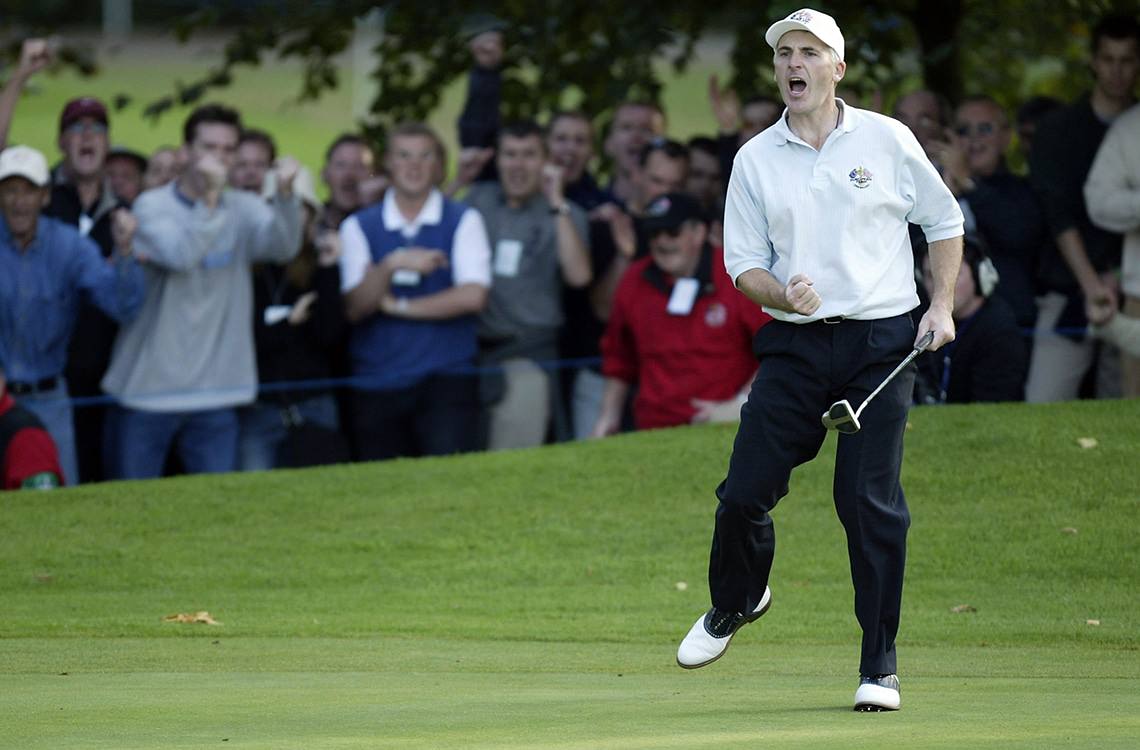
What’s it like to take on Mickelson at the Ryder Cup?