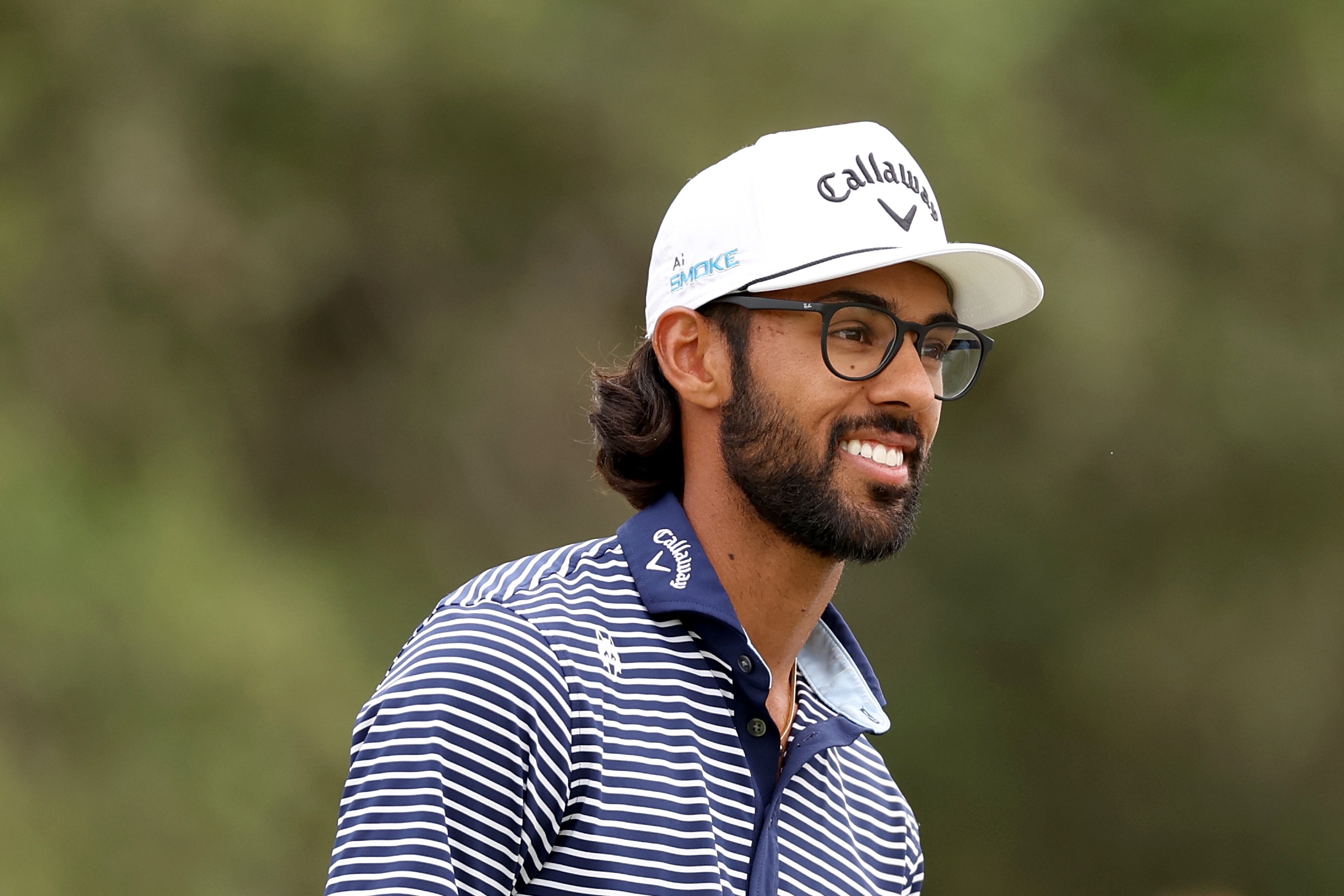



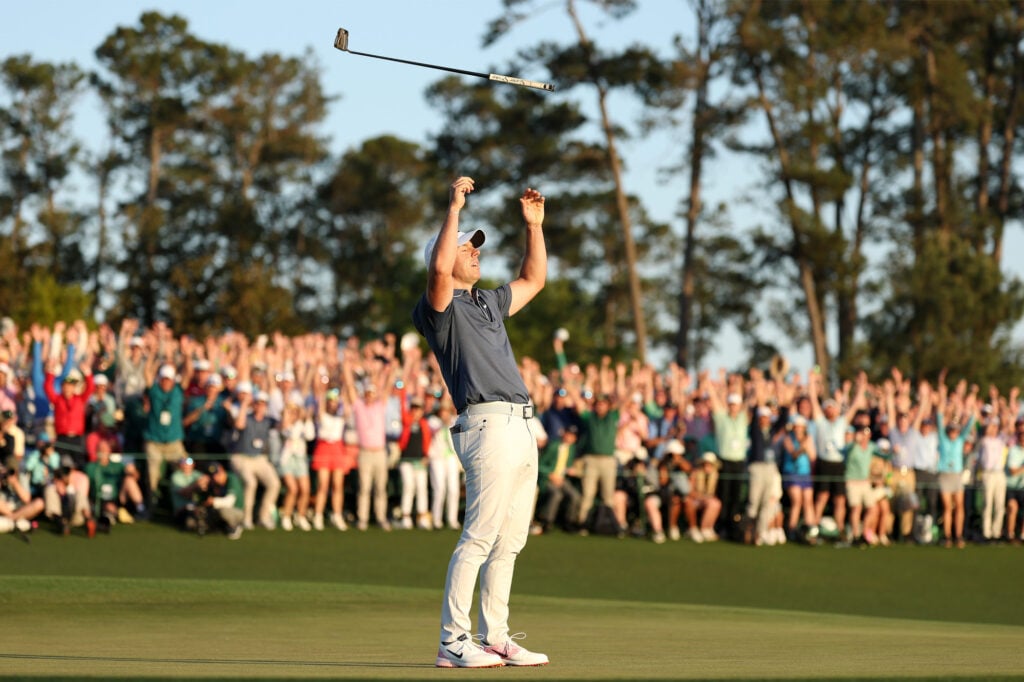
It still brings a lump to the throat, sending goosebumps cascading across the skin. Rory McIlroy’s tear-stained trek to the Augusta National clubhouse, having finally scaled the Grand Slam peak after a decade of frustration, will always be remembered as one of the Masters’ great moments.
But if you’re betting on the Northern Irishman slipping on another Green Jacket next week – and he’s currently second favourite behind Scottie Scheffler – you might consider whether it’s the best use of your cash.
We know McIlroy loves Augusta. He’s posted 34 rounds under par on a course that rewards familiarity. And now he’s finally got over the hump, after so many near misses, who can stop him?
History for one. Tiger Woods was the last player to defend the Masters in 2002 and he’s one of only three to manage it in the tournament’s nine-decade history. Jack Nicklaus and Nick Faldo make up the illustrious list.
That’s a lot of very good winners have donned the Green Jacket only to put it onto the shoulders of someone else the following year.
But on paper, the Masters is arguably the weakest field of the four majors, certainly in terms of depth, with older past champions and a host of amateur invites unlikely to challenge at the summit of the leaderboard.
So why is it so difficult?
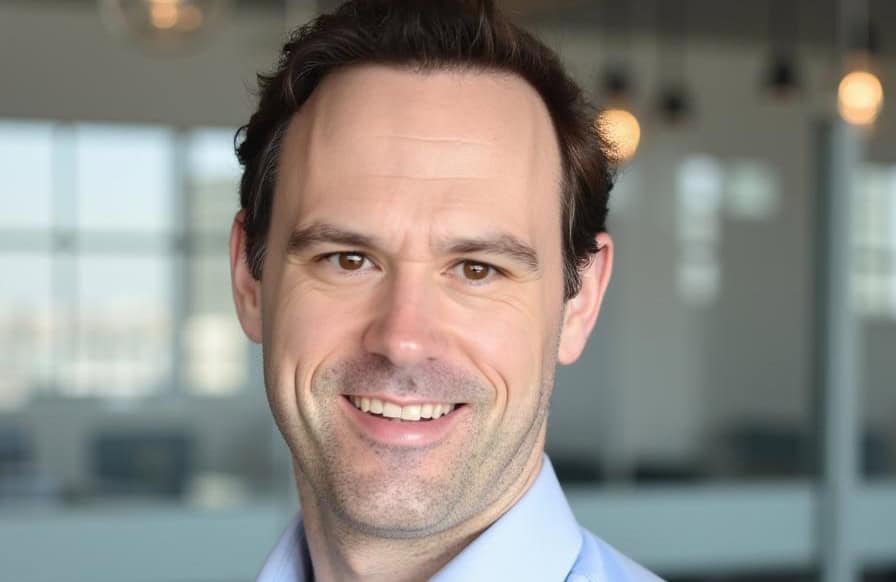
“There’s a multitude of reasons,” says Professor Adam Nicholls, a renowned specialist in sport psychology and leader of the Sport Psychology and Coaching Group at the University of Hull.
“You’d look at the quality of the players. How much difference is there between the very top players from both a technical and a psychological perspective? Then I would also look at what happens when a person has won a championship in terms of how their life might change and how it can impact their preparation when defending their title.”
Advertisement
While strength of the field plays a role, it’s only a piece of the puzzle. And if it’s about more than just form, what else gets in the way of mounting a successful defence?
The Arrival Fallacy
When you’ve been striving for something – pouring physical and mental resources into it – you believe achieving it will make you happy. After all, you’ve accomplished everything you’ve worked so hard for.
But the winning feeling can be fleeting.
“It feels like you work your whole life to celebrate winning a tournament for a few minutes,” said Scottie Scheffler, raising eyebrows in a pre-tournament press conference at The Open last year.
“We know when we achieve a goal there is a concept called the Arrival Fallacy,” Prof Nicholls explains. “We believe that when we win something for the first time we will experience lots of happiness and it will be long lasting.
“But that disappears, and as it dissipates there is a reduction in dopamine. So when people have won, to what extent does it impact their mental health?
“We know in other sports, particularly Olympic events, a lot of athletes who win gold experience a kind of post-Olympic depression.
“We’re not saying golfers experience a clinical depression, but what is happening from a psychological perspective – in terms of feelings afterwards?
“I think it would be interesting to look at performances in competitions after the majors – how players perform in the weeks and months that follow. Is it just their performance decreases in the following majors, or is it something that’s continuous?”
Defending a title isn’t an extension of the same challenge. The reward shifts when the goal is achieved, and the intensity of the pursuit changes with it.
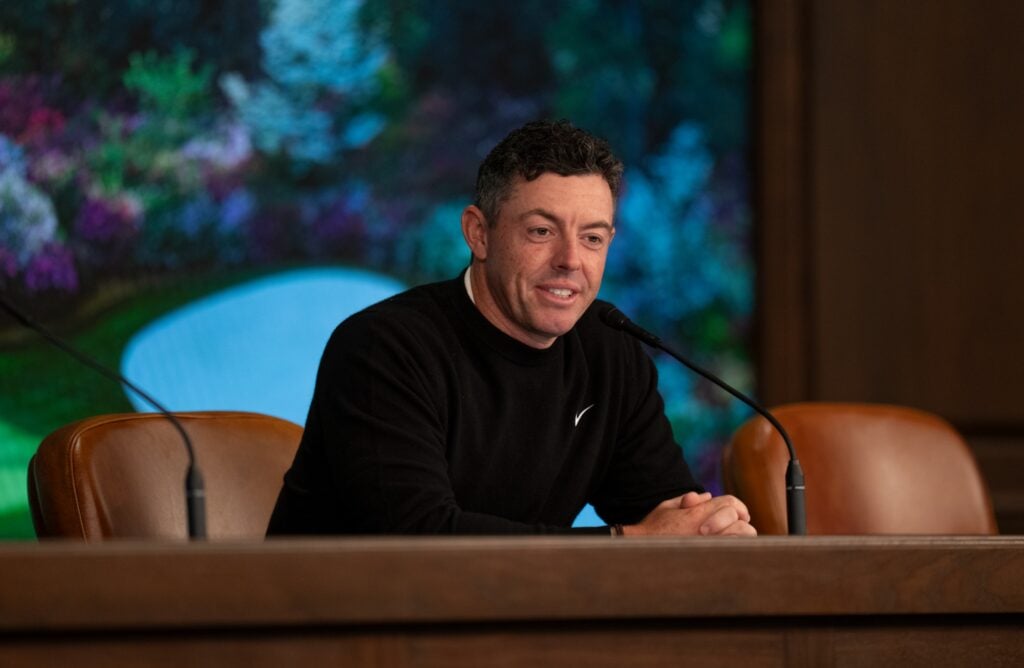
‘You want me to do another interview?’
At the Masters, that shift is amplified by the demands placed on a defending champion. When they return, they’re not just a competitor. They become a focal point of the tournament’s traditions.
There’s the Champions Dinner, for a start. Hosts can spend lots of time consulting chefs, talking to sommeliers and souring ingredients to put the menu together in the run-up to the occasion.
Then come the interviews, extra media commitments, the demands of sponsors. Everyone wants a piece of you. Can it get in the way of performing when the real work begins?
“When you’re defending, there can be a lot of distractions,” explains Prof Nicholls. “There will be a lot of pressure – added pressure and added scrutiny – and we know when players are experiencing that they can experience anxiety.
“It’s not just anxiety. It can also affect their physical performance. When people are under more pressure, they start monitoring their movements in ways they wouldn’t normally.”
And the routine – that carefully sculpted practice and preparation cycle that every elite athlete hones as they bit to peak in a big competition?
“It has to be different, because of those added responsibilities, and that is a distraction for performance.”
Prof Nicholls adds: “It’s hard to do all the things you would normally do as part of your pre-major routine. Many golfers will have set routines, such as practising for set amount of time, eating, training, and even sports massages. These routines can be affected.”
The Vacuum Effect
Look down the list of Masters winners and you’ll notice something curious: a pattern suggesting players can require time to refocus after such a career-defining victory.
You’ll see several players who failed to defend the Masters, only to then win the following year.
Advertisement
Horton Smith (1934 and 1936), Ben Hogan (1951 and 1953), Sam Snead (1952 and 1954), Arnold Palmer (1958, 1960, 1962 and 1964), Jack Nicklaus (1963 and 1965), Phil Mickelson (2004 and 2006), Bubba Watson (2012 and 2014) and Scottie Scheffler (2022 and 2024).
It’s an all-star list.
Remove Smith, the inaugural victor, and Snead, whose 1952 victory was his second, every other player won for the first time, couldn’t defend, and then returned to win again.
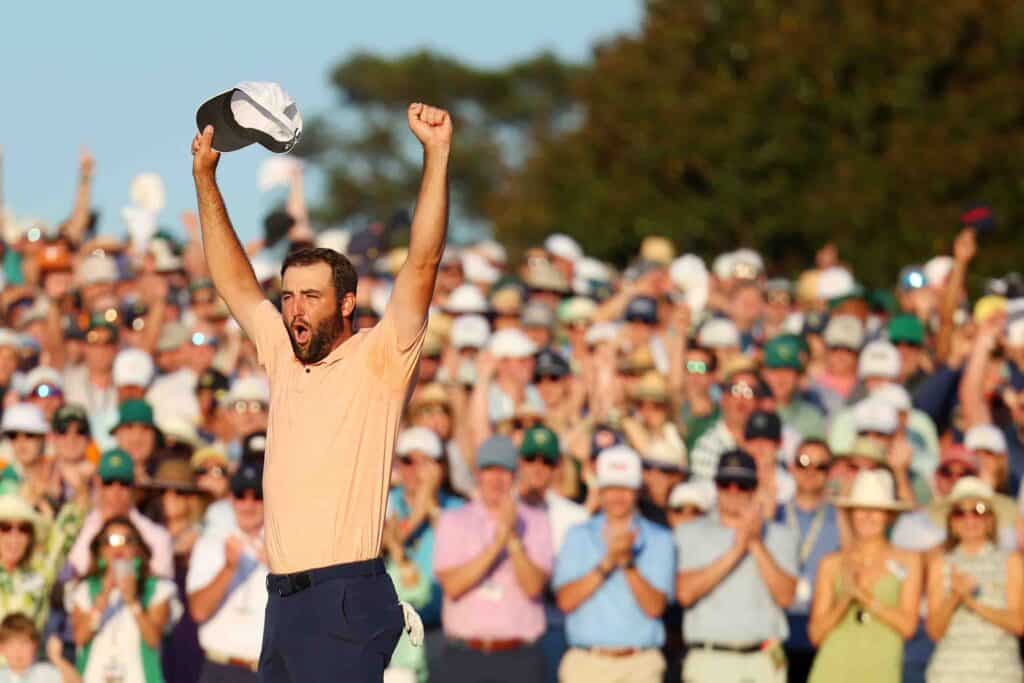
In psychology, this might be explained by the Vacuum Effect. When an athlete achieves something special – a ‘major’ accomplishment – they can lose a degree of drive and purpose.
There are new questions: Can I do it again? What if I fail this time?
Psychologists believe the motivation can shift from a desire to win, to a fear of losing.
What was a clear pursuit has left a vacuum that some find difficult to fill. It makes a successful defence even harder.
McIlroy appeared to hint at this in the months after his Masters triumph, saying: “I climbed my Everest in April, and I think after you do something like that, you’ve got to make your way back down, and you’ve got to look for another mountain to climb.”
Prof Nicholls said: “Maybe it’s the burden of being a champion – knowing they’ve been there before, being ready to do it again, but also needing to be physically and mentally ready to go through that again.
“It’s really interesting there are these year gaps, which shows it does take a lot out of them. You don’t know how much of it is the added responsibilities – like hosting the dinner – when they’re defending, because they don’t have to do it the year after and they can go back to the routine before they had their first win.”
Perception and expectation
Some of this is also on us. Why are we so quick to assume a past winner is likely to repeat?
Advertisement
Should McIlroy really be second favourite in the betting markets? He hasn’t won this year. He suffered a back injury that forced him to withdraw from the Arnold Palmer Invitational, and he could barely practice before trudging through four rounds at The Players.
By any measure, that should introduce some doubt for punters thinking of backing the Northern Irishman.
But only Scottie Scheffler is considered a better bet than a McIlroy repeat. Some of it is down to the weight of money. We are drawn to familiar names.
And that leans into false attribution and recency bias.
“That ignores all the factors that led up to them winning in the first place,” says Prof Nicholls. “As the public, we don’t really know what their preparation was like leading up to that major or what their performance was like going in.”
He adds: “But the recency effect assumes that, because they’ve done it once, they’re probably more relaxed and confident of being able to do it again.
“It’s probably the opposite. It seems that in winning there is a burden which can be difficult to shake off even 12 months later.”
What about those who have defended the Masters?
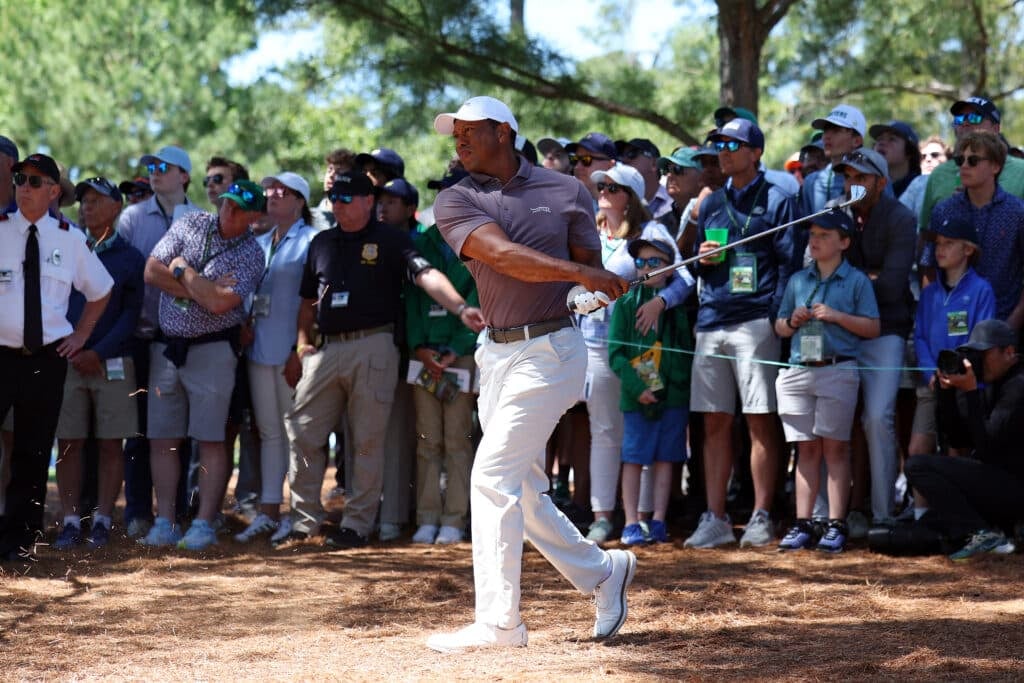
Tiger Woods is the last player to win back-to-back Masters. Nick Faldo did it in 1989 and 1990 as did Jack Nicklaus in 1965 and 1966.
That’s it. What set this terrific trio apart?
“They’re resilient and that resilience is really important,” Prof Nicholls said. “They’re able to manage setbacks, either before or during competition, and put them out of their mind.
“That’s something within all elite performers. They have a strong sense of self-belief, and they’re not as negatively impacted by criticism from others.
“It comes down to preparation as well. Even when people work hard, and that is physical preparation, it allows them to feel in shape mentally, because they know they’ve done the work beforehand. That’s why all the greats are always really hard workers. That feeds into confidence as well.”
Advertisement
Will this year be any different?
Defending a Masters crown is about more than just form or familiarity. Winning reshapes expectations and alters the mindset. It makes repeating the trick harder than it might first appear.
At Augusta, where consistency and control are so important, success or failure can depend on fine margins.
Maybe that’s why, for all the great players who have won a Green Jacket, back-to-back Masters winners remain so incredibly rare.
So for McIlroy, the only thing that might now prove harder than winning the Masters might be keeping the title.
Listen to the NCG Golf Podcast
ALSO AVAILABLE ON:
Apple Podcasts: Listen Now
Spotify: Listen Now
Amazon Music: Listen Now
Main image: Rory McIlroy receives the green jacket in 2025 | Source: Getty Images
Now have your say on the Masters
Why do you think it’s so hard to defend the Masters title? Is it the course, when a player is in form, or do these psychological factors play a part? Let us know in the comments or drop us a line on X.