



Many of us have the dream of going pro in golf, but few of us ever get to live that dream. So, how do you become a professional golfer?
Here, we take a look at how some of the best players in the world reached the PGA Tour, what routes they took, and how there’s more than one way to Go Pro in Golf.
The Routes: How some of your favourite golfers reached the summit of golf
There are multiple ways that some of the top professional players in the world today have taken in turning pro and reaching the PGA Tour, DP World Tour and LIV Golf. Some take the collegiate route, whilst others simply choose to turn pro after a stellar amateur career.
The latter immediately takes us to one of the most recognisable names in golf, Rory McIlroy.
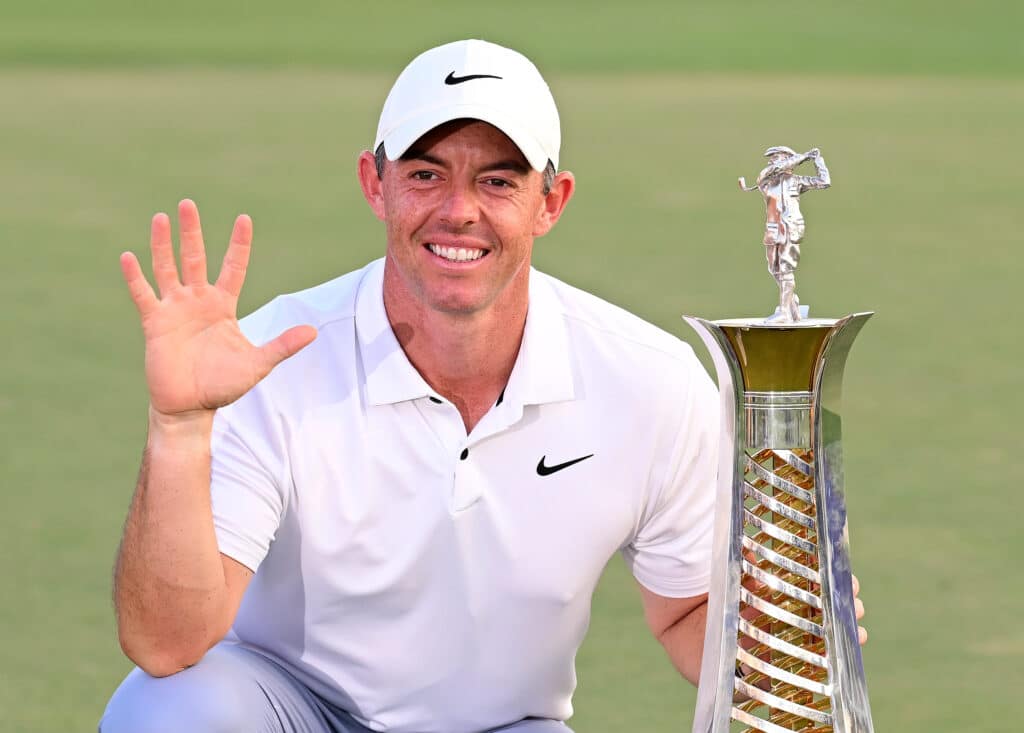
An incredible amateur career, which saw him as the top-ranked amateur in the world, rewarded the four-time major winner with the chance to turn pro early.
His amateur career was topped off by his win in Milan to claim the European Amateur Championship by three shots in 2006. Oh, and he also shot a mere 61 at Royal Portrush at 16 years of age.
The golf world was put on note and eagerly awaited his arrival in professional golf, which came in 2008. He was the youngest player to secure his European Tour card after accumulating enough prize money in that initial year.
However, not everyone on Tour chose the pro-life at such a young age or indeed had the level of amateur career McIlroy did.
The US College Golf path is a route taken by a fair few big names. None bigger in golf right now than Bryson DeChambeau.
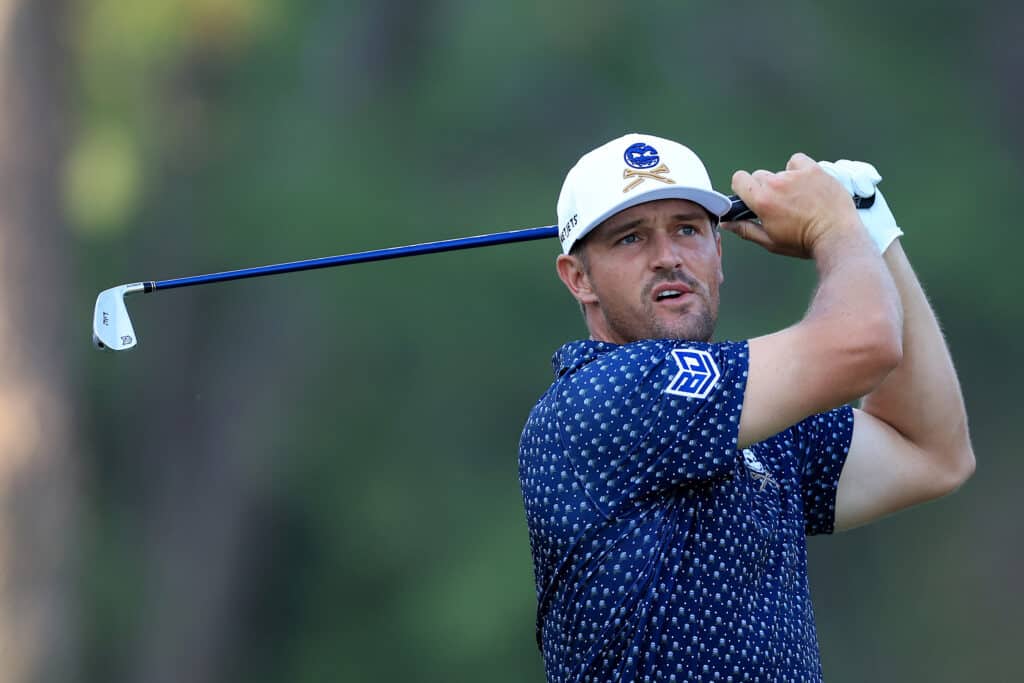
One of LIV’s biggest stars, played college golf at SMU, showing some big promise. During his college career DeChambeau won both the NCAA individual title and U.S. Amateur championship in the same year.
Advertisement
Different to McIlroy, DeChambeau made his debut on the PGA Tour as an amateur at the FedEx St Jude Classic. This is an example of how, for many, the US College system gives amateur golfers a pathway to pro tours.
In 2020, the PGA Tour implemented a program designed to provide a direct pathway for college golfers to gain playing access on tours such as the Korn Ferry Tour.
College golf also prepares students for coping with tour life as they travel around the US playing different courses. Of course, there is no right or wrong route; both have provided a path to success.
How to become a golf professional: The level of a PGA Tour player
If you are to make it in pro golf, you’ll need to be able to compete with today’s tour standard. There are currently 998 golfers in the world rankings, and some of you may be inclined to believe that scratch golfers are on par with some Tour professionals. Well, they’re not.
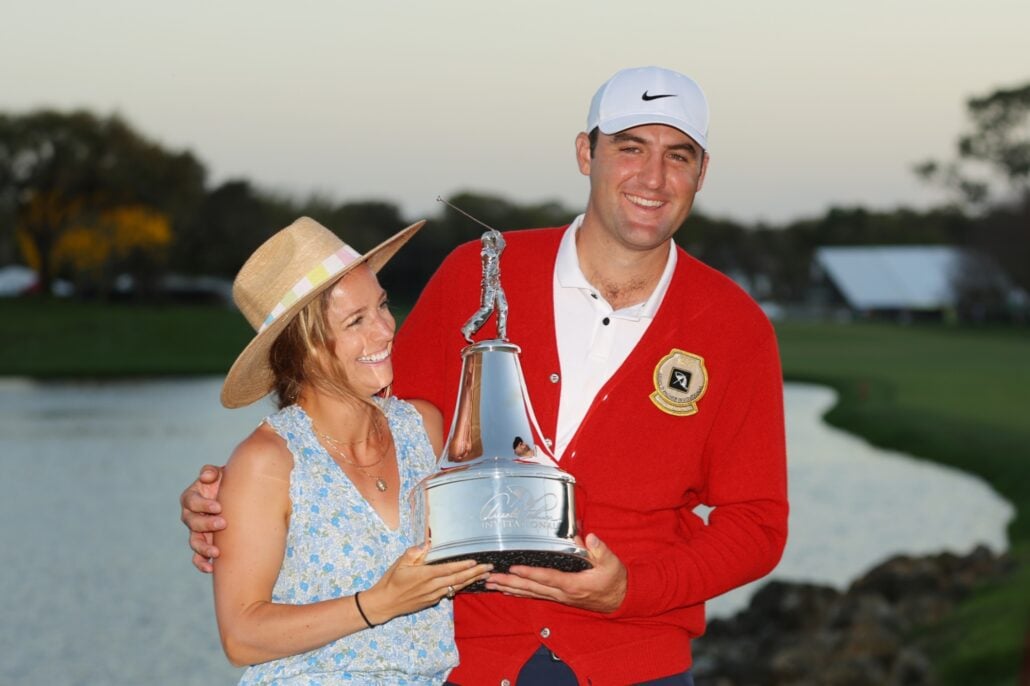
We took a look at Parker Coody’s stats on the PGA Tour this year to take a look at what it takes to just to keep your card. We have compared his stats with the number one player on Tour, Scottie Scheffler, and your average 15 handicapper.
| Stats | Scottie Scheffler | Parker Coody | Average 15 Handicapper |
| Average Driving distance | 302.3 | 302.9 | 204 |
| Greens in regulation percentage | 74.14% | 62.98% | 23% |
| Average putts per round | 28.38 | 29.00 | 32.00 |
| Birdie average per round | 4.98 | 3.41 | 0.38 |
As you can see, the difference between the average 15 handicapper and the 200th and top ranked professional golfers in the world is, well stark. For context, the average WHS Index of male golfers is 16. In essence the graph shows the difference between us and the best.
Most tour professionals average a near mammoth 100 yards more off the tee than the average amateur golfer. That’s an awful lot of club speed needed to acquire.
Efficiency on the greens are often what can distinguish a good round from a bad one. It appears to be the same principle when you’re looking to reach professional standard. The pros average fewer puts per round, but the biggest differential, is their ability to score low. To find a way to card a bunch of birdies.
Advertisement
In truth most statistics forecast a massive gap between the top pros and the average amateur. That’s to be expected.
Of course, the average golfer probably won’t play to go pro but if you were starting out in the game with that goal in mind that’s what you’d have to achieve. To secure a card on golf’s leading isn’t easy and that’s the standard.
How to become a professional golfer: The cost
Golf is an expensive sport to play for anyone. It’s no different for those who look to or have turned pro.
We often hear the sacrifice top athletes have to make in order to be successful. In golf it’s no different.
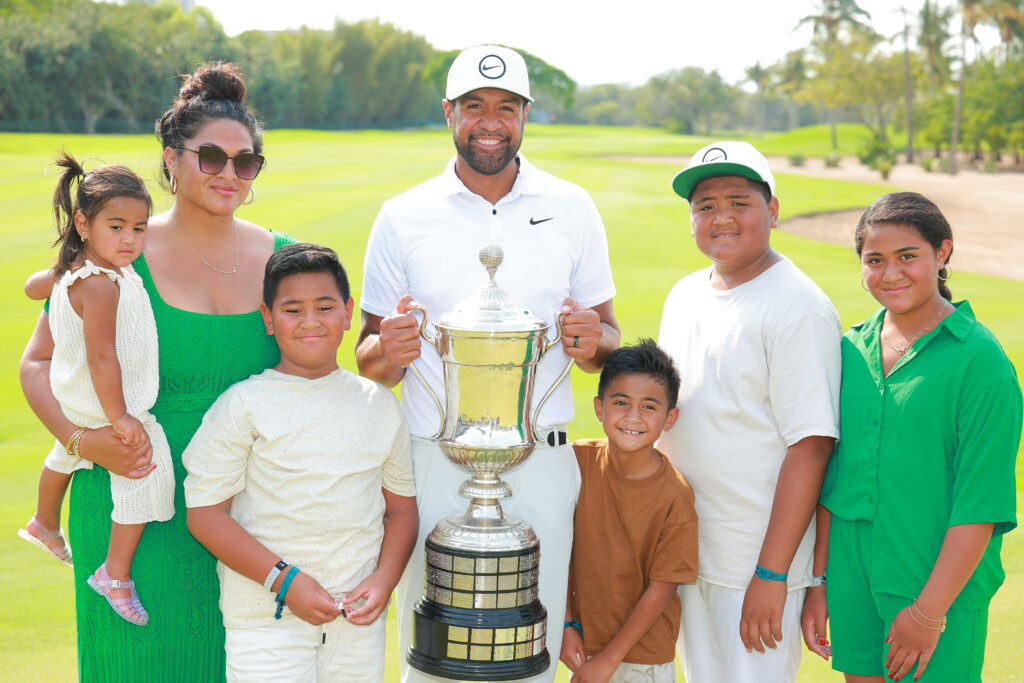
Tony Finau has previously spoke about the sacrifices his mother made to help him to achieve his dream. Finau recalled how he found his mum sitting on the bed with tears in her eyes. The 6-time PGA Tour winner noted that when he went out to dinner with his friends and family his mother was unable to join as they didn’t have enough money for dinner.
Once you make it onto a professional tour the financial pressures don’t get much easier. Professional golfer Hannah Gregg shared the scope of finances facing golfers on the Ladies European Tour. She pointed out that in order for her to make money from her first tour event she would have needed to finish at least 21st.
This really does highlight the harsh reality that face the majority of golfers. The need to have to battle extensive and hidden costs of playing a tour event every week.
Advertisement
Bailey Tardy, a LPGA Tour professional, also spoke about the hardships and subsequent doubts she had over the financial strain of being on tour.
Speaking after her win at the Blue Bay LPGA tournament she said: “Yeah, I mean, last year is a great example. I missed a bunch of cuts early in the season. It’s expensive being out here. I wasn’t making any money. I’m 27, so it’s kind of like either you make it or you go get a job.

“And so there is just so many nights where you think — especially when things are going bad, it’s like you can’t take a week off because that’s an opportunity to make money, but then you need to work on your game.
“So it’s a very fine line of whether or not you stay on the road and you push through or take a week off and try to fix things. I struggled with that a lot last year.
“So, yeah, it’s a life that’s not for everybody. You have to really love being out here and love golf, and that’s what I do.”
Despite the huge money numbers that are regularly thrown around golf in recent times a large proportion of players still feel the financial strain of pro golf.
- NOW READ: The struggles Robert MacIntyre has had with life on the PGA Tour
- NOW READ: What is the average handicap in the UK
Advertisement