


It won’t be long before the muttering starts. As round times rise, so will the chatter. Will another major be dominated by the spectre of slow play?
Championship golf is difficult. Courses are set-up to test every facet of a player’s skill and never. But competitors are playing for life-changing sums of money. This year’s Open at Royal Portrush has the joint biggest prize fund the championship has seen.
We know what happens when traffic jams start appearing, whether it’s at the top of the professional game or at your weekend medal.
When millions are watching, though, speed matters. So what do The Open’s championship committee do to try and keep things moving? They have a two-page policy that aims to “encourage and enforce prompt play”.
Here are some of the key points…
The Open Pace of Play Policy
The maximum allowable time
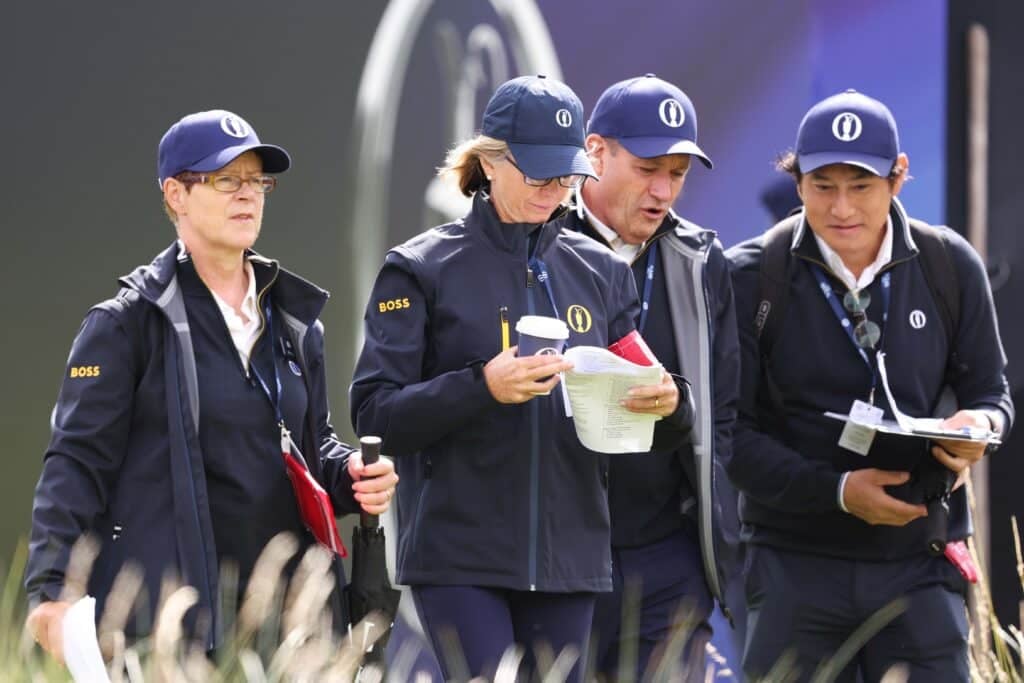
This is the maximum time the committee considers “necessary for a group to complete its round”. This is expressed as an overall time as well as a per-hole time. Referees monitoring pace of play will be given a chart with those times for every group.
It takes into account walking time between holes and the difficulty of the course. It starts as soon as the group’s tee time begins.
Is it rigorously enforced in practice? While the numbers might look rigid on a sheet of paper, in reality there are checks and balances. If one group is behind time, for example, then they will force subsequent groups behind time too. Not every one is going to go on the clock.
The Open pace of play: What is out of position?
You’ll have heard this phrase a lot on TV so let’s define what it means. The Open Pace of Play Policy says a group is out of position when it has finished playing a hole – “meaning that the ball of the last player in the group to hole out has been removed from the hole” – later than the maximum allowable time given and has failed to maintain the “starting interval with the group ahead of it”.
Advertisement
So there are two things there: the maximum allowable time and keeping up with the group in front. Players can be ahead of time but still out of position.
They’ll find themselves with the latter problem if, for example, they reach an empty par 3 and the group ahead have all teed off on the next hole.
There are caveats. If a group had a ruling or “some other legitimate delay occurs” and they find themselves out of position, “that group is expected to regain its position within a reasonable time”.
And, yes, they can employ Ready Golf to speed things up a bit.
What is an excessive shot time?
You’ve seen players line it up, look at it from a billion angles, and then step back and go through it all again. How long can they actually get away with?
“If any player is observed by the committee taking more than 120 seconds to play a shot without a valid reason, they will be notified of the excessive shot time”.
That player can get timed at any point, even if the group isn’t out of position.
The Open pace of play: What happens when a player gets timed?
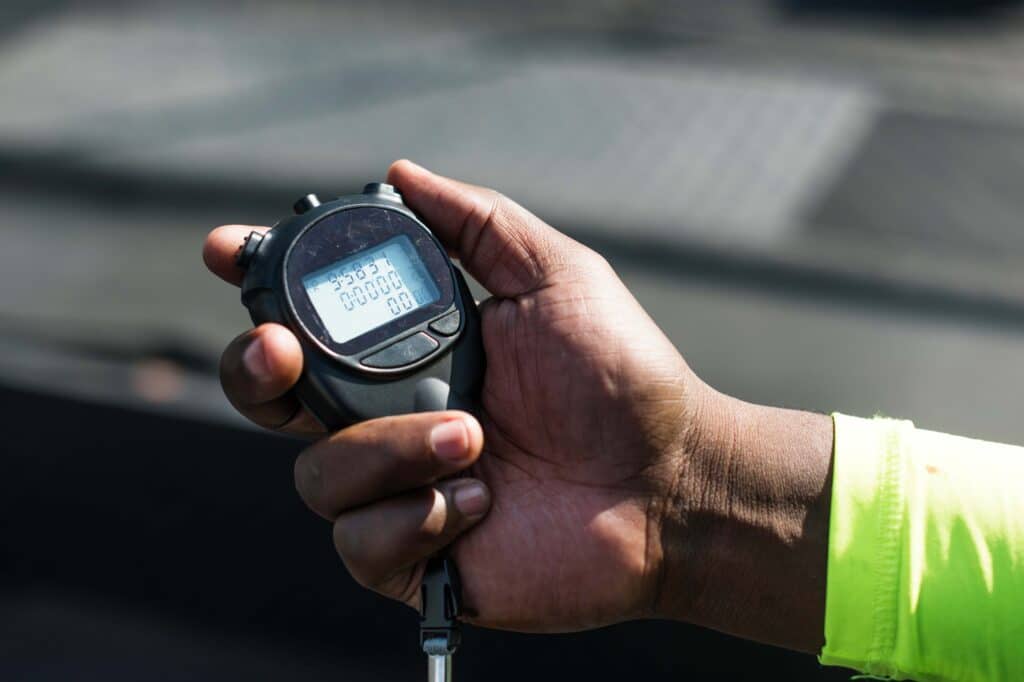
Normally, players will get an official warning before the stopwatch actually comes out. But rules officials don’t have to do that. They can start timing any group or player that’s “fallen significantly behind or is negatively affecting other groups”.
Officials will tell the group, or a specific player, they are being timed. You’ll have heard that expressed as “going on the clock”.
The process begins when it is a player’s turn and they can play “without interference or distraction”. Checking out the wind, fiddling around in a yardage book, all these things count as time taken for their next stroke.
It’s a little different on the green. They’re allowed to repair damage under Rule 13.1 before the timing of a stroke starts “provided the player is not unreasonably delaying play”.
Looking at the line and traversing the angles? It all counts towards the time taken for the stroke.
So here is the big question. If a player’s being timed, how long do they get?
They’re allowed a maximum of 40 seconds. They get an extra 10 seconds (50 in total) if they are the first to play a stroke on a par-3, a second stroke on a par 4 or 5, a third stroke on a par 5, or if they’re on or around the green.
If they’re being timed and exceed that maximum allowable time, they will be “informed as soon as possible”. This is what’s known as a ‘bad time’.
What are the pace of play penalties?
A bad time isn’t forgotten after the round. A little like yellow cards in a football tournament, they are carried through the championship.
So a player who picks one up is continually under threat. Get another, whether that’s in the same round or on a subsequent day, and it’s a penalty shot.
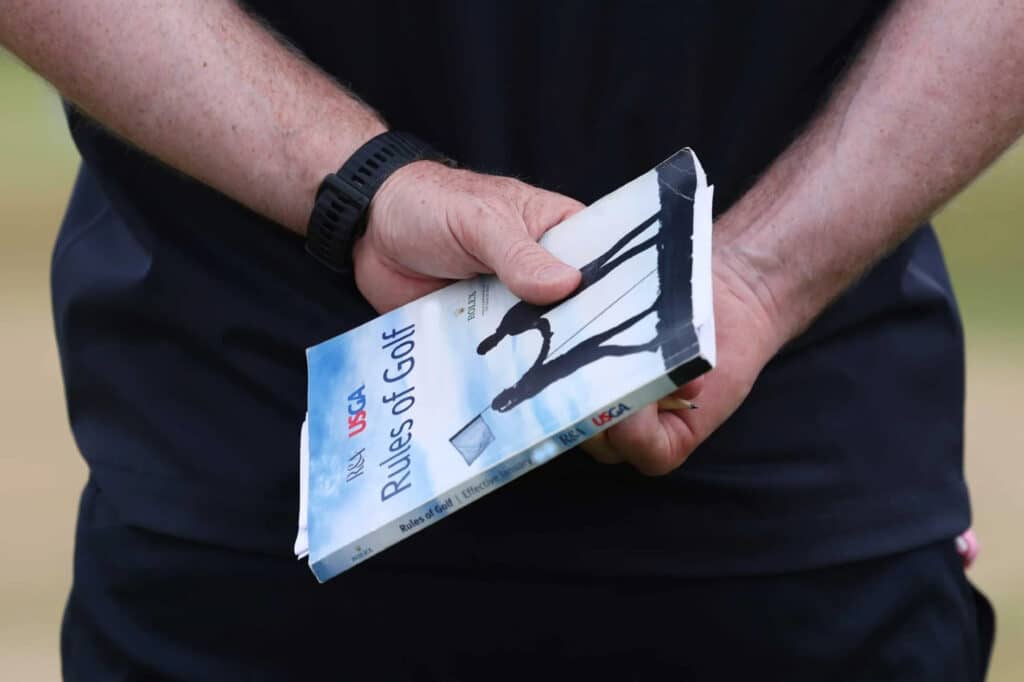
But pace of play penalties are assigned in a careful sequence. One bad time is a warning. The second comes with a one-shot sanction. Fall foul a third time and it’s an additional two penalty strokes.
If the message by that time still hasn’t hit home, and a player somehow manages to pick up a fourth bad time, then they’re putting away their clubs. Disqualification follows.
Now have your say
What do you make of The Open pace of play policy? Is it tough enough? Would you go further with penalties? Let me know your thoughts by sending me a comment on X.
Advertisement
Advertisement