

This rule in a nutshell: Players can get free relief from grandstands, TV towers, scoreboards and other structures put up for The Open this week at Royal Birkdale. A Local Rule is in place which gives relief from lie, stance, area of intended swing and, often, line of sight to the hole.
Why does this rule matter at The Open?
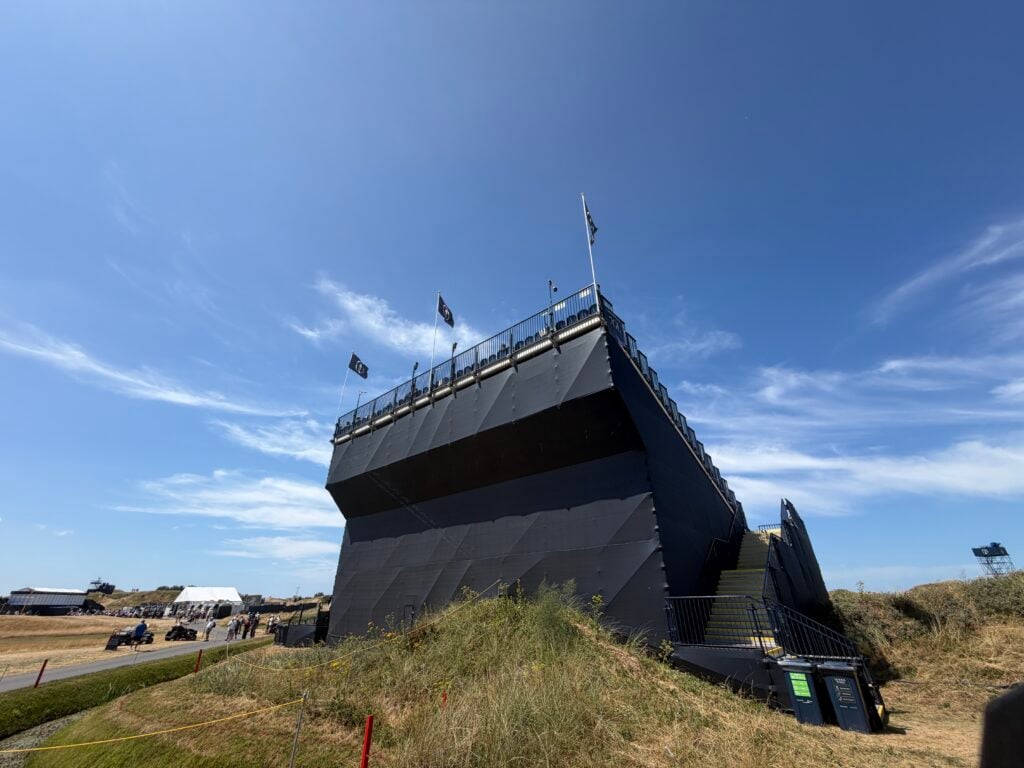
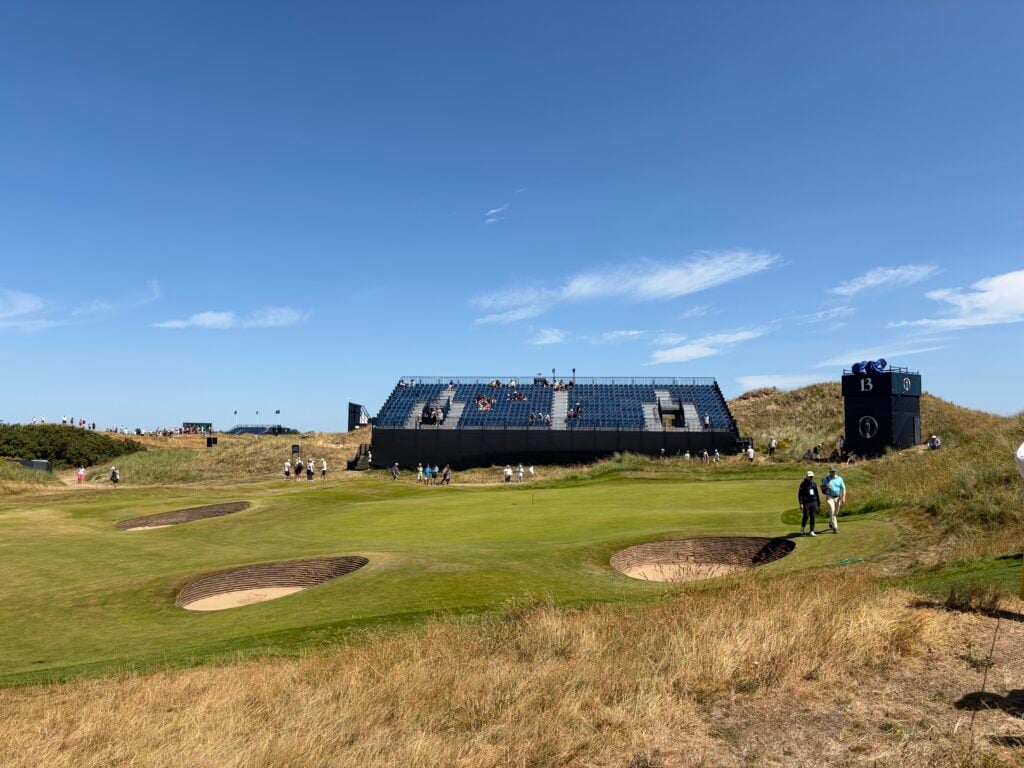
Bringing a worldwide audience to Royal Birkdale for the 154th Open this week requires thousands of temporary structures. Whether it’s the grandstands we sit in, the television towers, scoreboards, camera platforms and hospitality units, they are not part of the golf course but can easily get in the way of play.
A Local Rule gives players relief from Temporary Immovable Obstructions, which you will often find commentators and rules chiefs shorten to TIOs during broadcasts.
If you’re not the most fluent in rules, strap yourself in and I’ll try and simplify this as much as possible. It can be complicated and The R&A and USGA’s guide to TIOs runs to more than 20 pages!
What are Temporary Immovable Obstructions?
You won’t actually find them in the Rules of Golf. As mentioned earlier, temporary immovable obstructions (we’re definitely going to call them TIOs from now on) are dealt with by a Local Rule – it’s Model Local Rule F-23 for those who want to look it up.
The definition of a TIO is it’s a “structure that is temporarily added on or next to the course, usually for a particular competition, and is fixed or not readily movable”.
Grandstands are the most obvious examples, but they can also include scoreboards, television towers, and even toilets.
Because they aren’t normally there, they’re not considered to be “part of the challenge of playing the course”.
Where are TIOs found at Royal Birkdale?
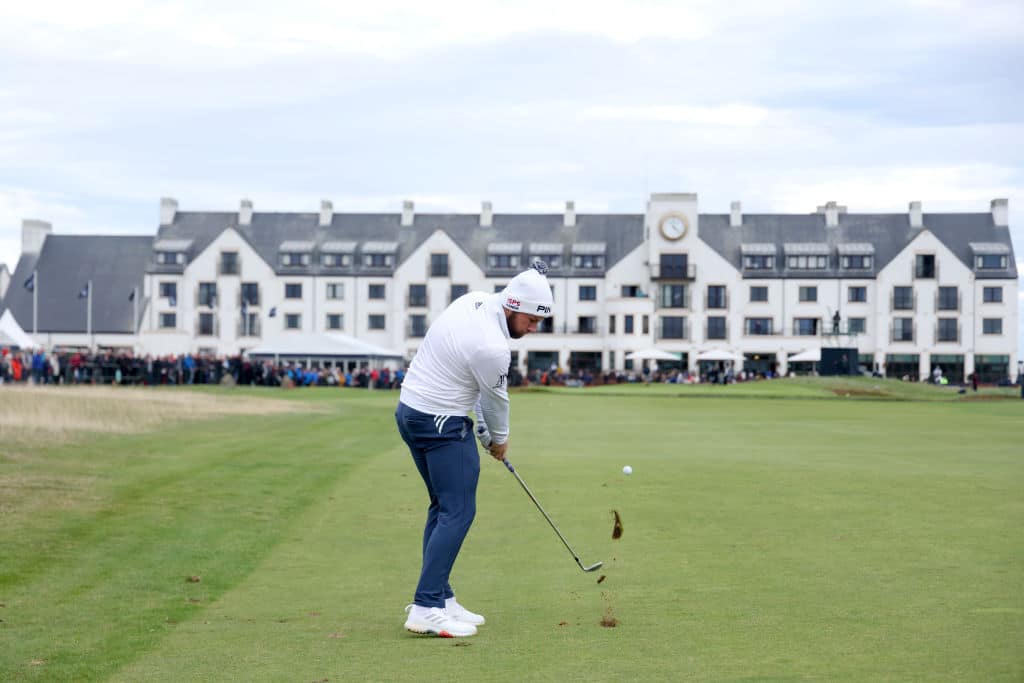
All over the golf course. The large grandstands around the 1st, 9th and 18th are obvious as are the smaller seating areas across the links. TV towers, scoreboards, and pavilions are also naturally temporary immovable obstructions.
Advertisement
But TIOs are also TV hoists, bridge handrails, catering units, metal fencing and elevated cables. There are so many, in fact, that the Local Rules covering temporary immovable obstructions runs to two pages.
What makes them different from immovable obstructions?
There is nothing to stop you treating a TIO in the same way you would an immovable obstruction, which is an abnormal course condition.
You could take relief under Rule 16 if the obstruction interfered with the lie or your ball, your area of stance or swing, or if your ball touched, was in, or on, it. You do that by finding the nearest point of complete relief from the obstruction and dropping a ball in a one-club relief area.
And if it’s known or virtually certain your ball is in there, you don’t even have to find the original ball to take relief. You use the estimated point the ball last crossed the edge of the TIO and that’s the spot of the ball to find the nearest point of complete relief.
But there is a difference when this Local Rule is in play. While you can’t have free relief for line of sight under Rule 16, you can when the TIO is found on a straight line between the ball and hole.
What is line of sight relief? And what is the corridor?
Obviously, if your ball touches, lies in, on, or under a TIO, or it it interferences with stance and swing, it qualifies anyway.
But if the obstruction is on your line of sight to the hole – on that straight line we talked about earlier – then you would also get the green light for free relief.
it also exists in on another occasion and bear with me here because it needs explaining.
This is how the R&A and USGA do it: It is if a ball is within one-club length – measured on an equidistant arc from the hole – of a spot where the obstruction would then be on the player’s direct line of sight to the hole. If you’ve watched enough golf on TV, you might have heard of this referred to as “the corridor”.
The TIO rule isn’t always as generous as people think
Spend enough time on socials and you’d think everyone was getting relief at the merest hint of a camera tower. But the rule around temporary immovable obstructions is not a free for all.
We saw a prime example of this during the second round at St Andrews in 2020 when Xander Schauffele found his ball wedged in a gorse bush.
A nearby mini-grandstand was definitely in his line of sight, and would have interfered, but the American didn’t get free relief because it was considered that “playing the ball as it lies would clearly be unreasonable because of something other than the TIO”.
In Xander’s case, the bush.
You’re also not allowed to try and manufacture a free drop.
The rule says “there is no relief when interference exists only because the player chooses a club, type of stance or swing or direction of swing that is clearly unreasonable under the circumstances”.
There’s more too. When it comes to line of sight relief, you’re not going to be able to call for a free drop if the TIO is miles away, or to be more technical “it is clearly unreasonable for a player to play the ball far enough that the ball will reach the TIO”.
How do I take relief from a TIO?
We’re just going to look at balls in the general area here – take a peek at the Model Local Rule for what to do in bunkers or penalty areas.
Advertisement
If you had interference from, let’s say a scoreboard, you’d find the nearest point of complete relief where “both physical and line of sight relief no longer exist”. That’s your reference point. You then have a one club-length relief area from which to drop – no nearer the hole, of course.
It’s worth saying again – there has to be complete relief from both physical and line of sight interference by the TIO.
Why are drop zones used?
If you’re wedged in a grandstand, have a look down into the turf or rough below and you might see a little white circle.
These are drop zones. They can be either optional, or mandatory, and they essentially speed up the process of taking relief. If they are compulsory, a player has to use them.
Would you get the same relief at your golf club?
While your club might not be hosting anything on the scale of The Open, sometimes they’ll stage an event which may have sponsorship boards, advertising hoardings, or small temporary scoreboards.
These could all be classed as temporary immovable obstructions and the same rule you’ll see at Royal Birkdale could apply.
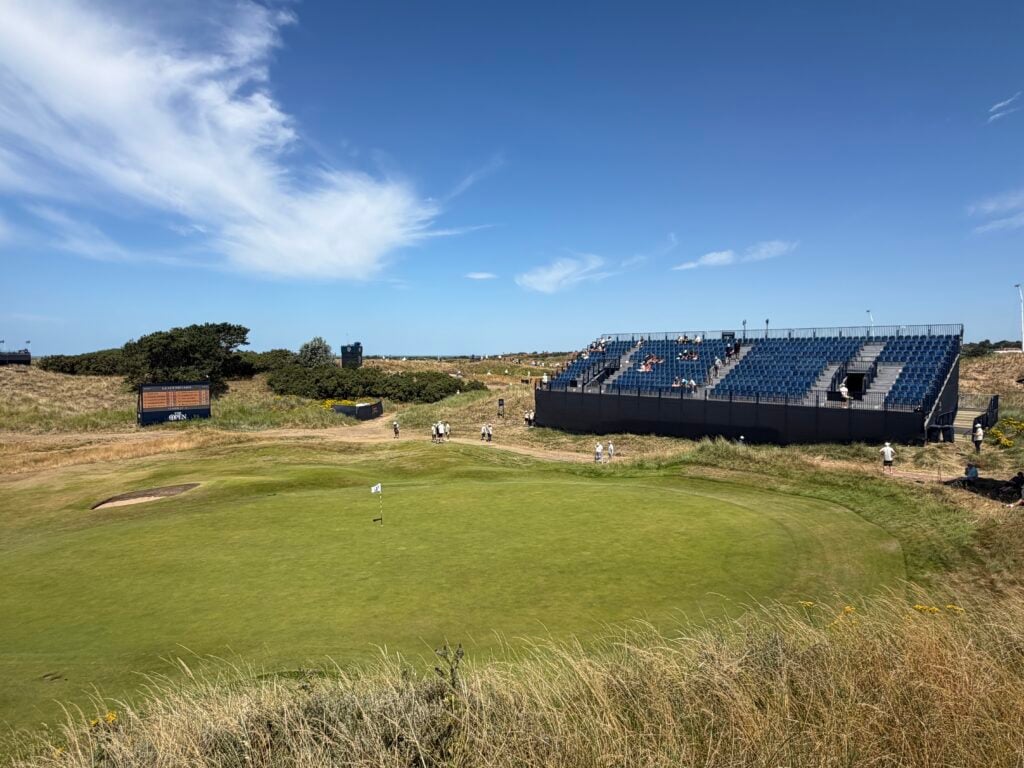
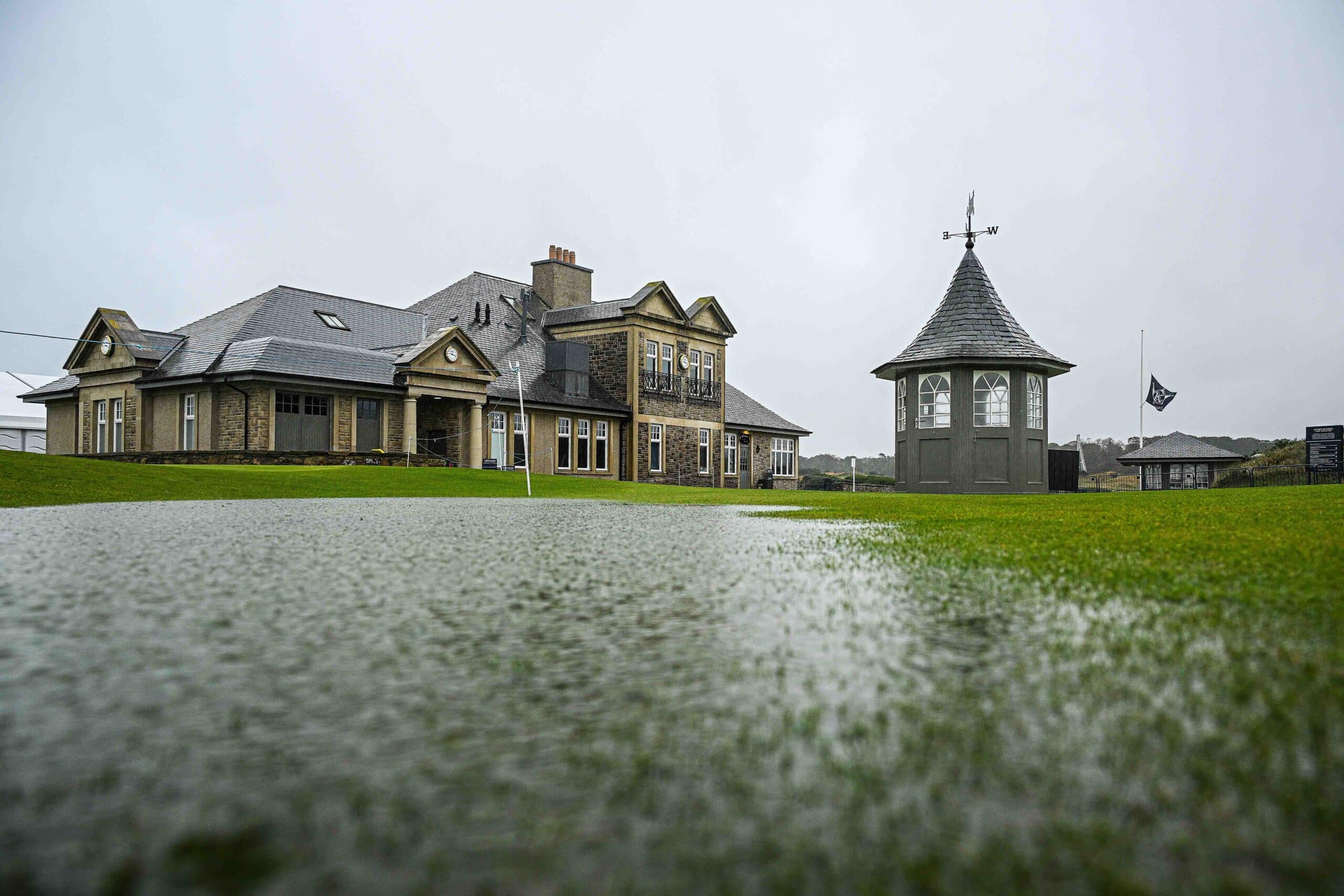
An empty grandstand at Royal Birkdale on the second practice day of the 154th Open | Source: NCG
The Open grandstand relief: quick fire FAQs
Why do players get free relief from grandstands?
Grandstands are temporary structures built for the championship and are covered by Model Local Rule F-23.
Is grandstand relief part of the Rules of Golf?
No. It applies when the competition organisers – in this case The R&A – adopt a Local Rule.
What does TIO mean?
TIO stands for Temporary Immovable Obstruction.
Now have your say
Do you agree with these rules on temporary immovable obstructions? Let me know your thoughts by leaving me a comment on X.
Advertisement