



He’s been helping to solve rules quandaries on the European Tour for some four decades.
If a pro has had a problem, or someone’s needed speeding up for slow play, it’s usually been chief referee John Paramor racing to the scene on his buggy.
Television has made him almost as famous as some of the players, and a couple of his more notable rulings – refusing Seve Ballesteros relief from the base of a tree at Valderrama in 1994 and penalising teenager Guan Tianlang at The Masters to name just two – are sporting folklore.
So who better to ask about the changes to the Rules of Golf than the man who spends his life immersed in them?
The rules can be quite difficult to understand so how long did it take you to get the grasp of them?
There are obviously a couple of ways to learn the Rules of Golf. One is to learn them almost parrot fashion, so you can recite them and recite any part of the Rule Book.
That’s fine but it’s actually putting them into practice. I looked at it kind of differently.
I started going through the Rule Book and reading a sentence and saying, ‘Why have they put that sentence there? What does that mean and what’s that trying to stop you doing? Is the player going to receive an advantage if he does the opposite to what that sentence is telling you to do?’
By trying to understand why the rule was there I think it helped me a lot to understand the Rules.
Once you understand the logic running through them, they are good common sense in an awful lot of what they say.
You might not always agree with the penalty and it might look very harsh in the circumstances but, when you look at the overall reason for why it’s there then you then realise WHY it’s there and you understand how the rules makers have got to that particular decision.
Advertisement
The easiest way is you start with the definitions. Once you read all the defined terms, of which there are a lot, and understand what they mean, it makes it very much easier to understand what the Rule means.
If you don’t understand the defined terms, what chance have you got of understanding the overall sentence – the Rule – which contains that particular definition? You’ve got no chance.
You’ve got to read them, question them: ‘why is that there?’ and you will be able to answer your own question after a little bit of analysis of golf and realise that’s why they do that. That’s when it starts to become a lot easier.
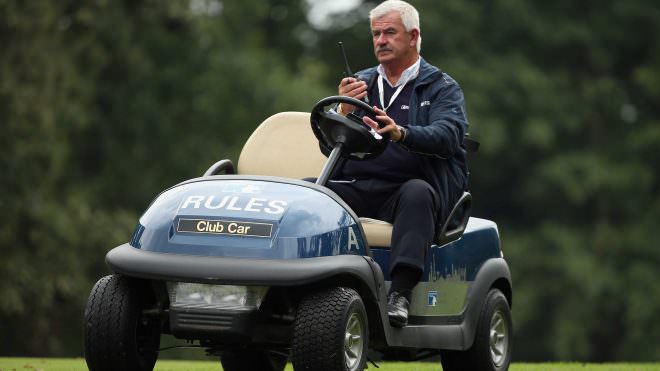
The new Rules were designed to be simpler for players to understand. Do you think they’ve achieved that?
I do. As golfers, we get ourselves into situations and sometimes someone is brave enough to get out a Rule Book and try and find the answer during a competition.
It’s very difficult for most people to find it in the current Rule Book. In the new book, you will find it a lot easier – in the way it has been ordered and the way it has been written.
The current rules are very much correct English but we all know what reading a contract is like. It’s quite difficult if you’re not used to that to get your head round all the different terms. But it is accurate.
One of the reasons behind the new rules is that we wanted to make them easier to be understood and easier to be read. It has become more conversational English, rather than what’s correct in law and correct English, to put it that way.
It is quite wordy but, to make it easier to understand and more intuitive, it is written that way.
Why does Paramor agree with the relaxation of the bunker rules and why it was decided players won’t be given relief from a divot? Find out on the next page…
Which of the changes do you like and which will have an impact in your role on Tour?
The tapping down of spike marks is a big one. That’s something we were allowed to do by agreement with The R&A some years ago and it was not really a problem.
People said players were going to make their own lie and it was going to take hours to play but it didn’t.
For the most part, everyone just did what they were expected to do – tapped down a couple of spike marks if they were on their line and continued to putt on.
Now they look and study it and think, ‘Is that a spike mark? Is that a ball mark?’ A lot of time is wasted with players deciding whether they can repair it or not.
Thankfully, under the new Rules, there won’t be any of that. You just tap it down and get going.
The removal of loose impediments in a hazard is quite something. That was quite a big step for me, with my traditionalist’s hat on, but I think it is right.
I have had too many occasions where it is unfair. You play golf at Valderrama – with all the acorns falling from the trees – and you are in a sand bunker. That’s supposed to be the hazard, not the fact your ball is surrounded by 50 acorns and will prevent you from getting any proper strike and, therefore, nulling any chance of showing your skill. Now, you will be able to remove those and play a proper shot, which kind of makes sense.
Advertisement
I’m fully behind the three-minute search (reduced from five minutes to find a ball).
When the spike mark rule was revealed, the usual question was asked: ‘Why can’t we take our ball out of a divot on the fairway?’ What’s your view?
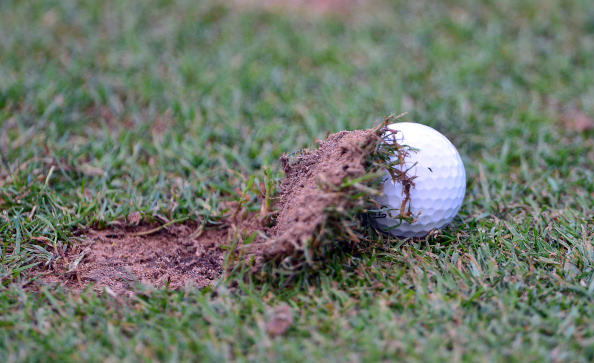
You do feel sorry for someone whose ball has rolled into a divot. There are many people who would ask what would be the harm in someone preferring their lie in a very short distance from the original position, if they’ve met the test which the course designer has set – which is to hit the fairway? Why should you end up in someone else’s divot hole? Why should you have to pay the penalty for that?
I suppose there are still enough people who believe the traditions of the game are that you play the ball as it lies, and the course as you find it. They are two pretty strong points that have held this game together for a long time.
What do I feel? I’d probably have to stick with the traditionalists and say I prefer players not to touch the ball if we can avoid it in those circumstances.
For the second part of Paramor’s interview, where he talks about his famous Seve ruling and the time he caught a cheat, click here.
- Related: Can I stop my opponent looking for my ball?
- Related: I’ve hit the ball with a practice swing. Does it count?
- Related: The tee markers are missing – what do I do?
Advertisement