



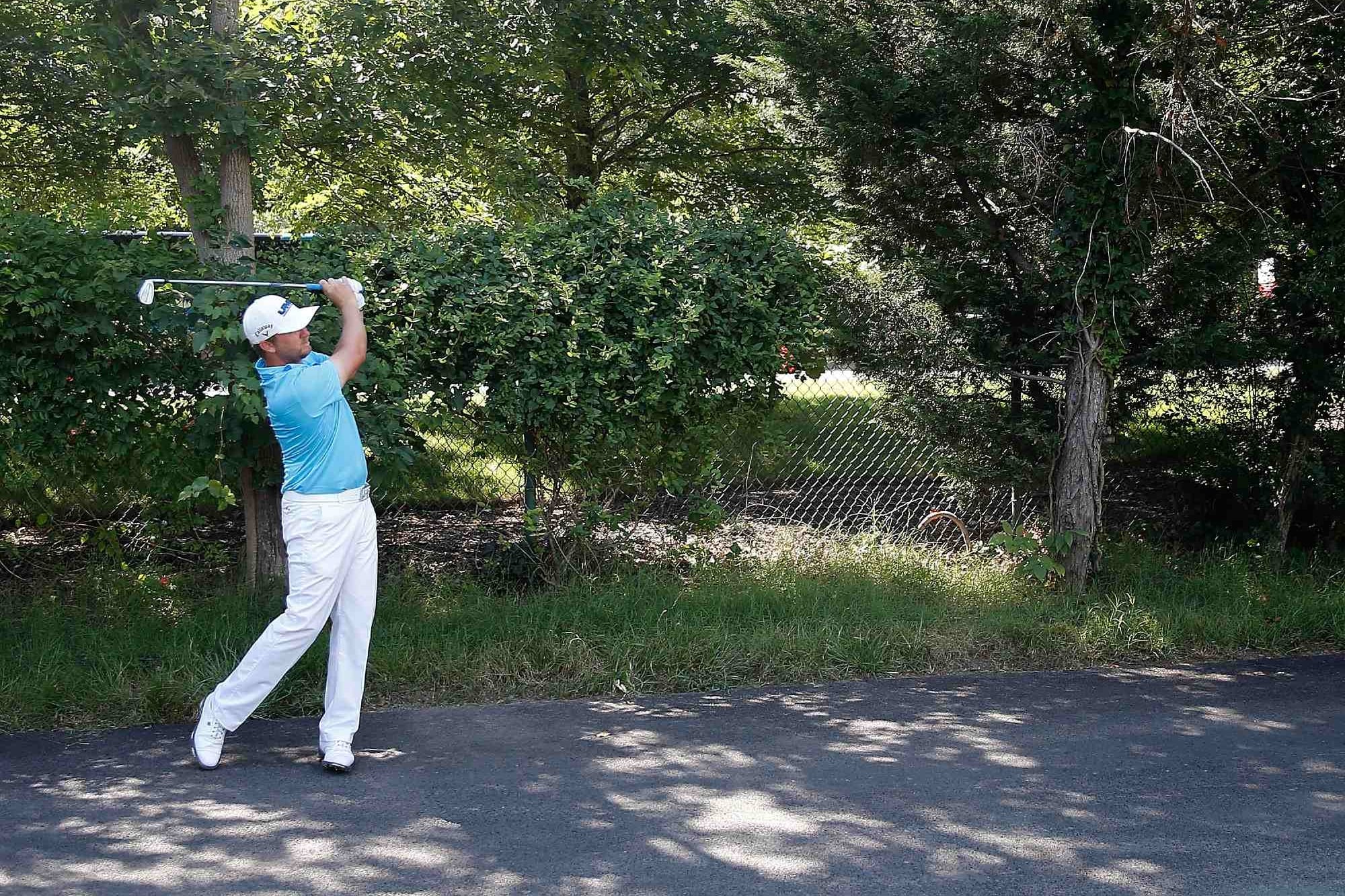
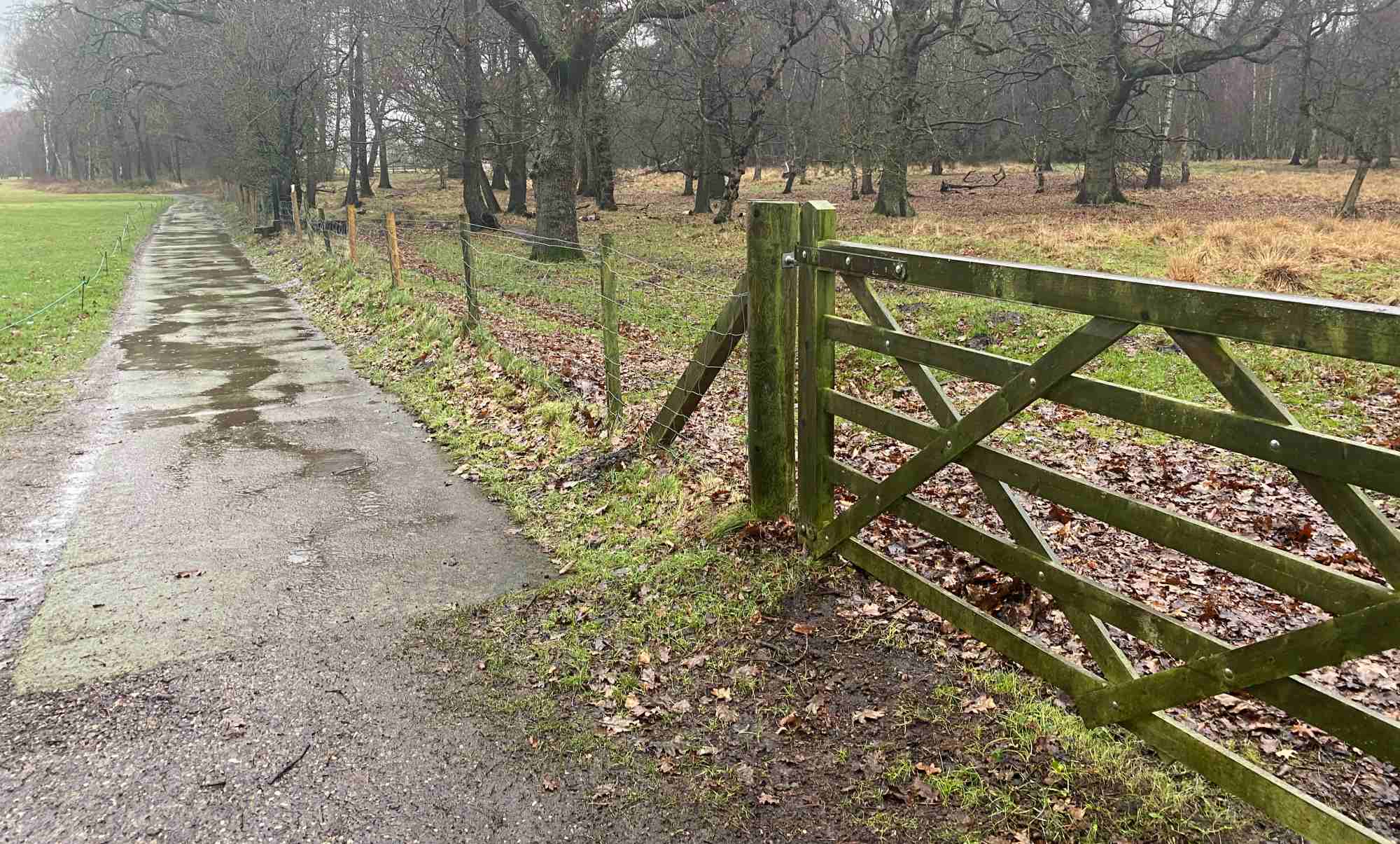
The 11th hole at my home club, York Golf Club, is a short par 3 with a twist. While the green is inside the course boundaries, the tee is on common land and a fence separates the two properties.
During the play of that hole, the fence is an immovable obstruction rather than a boundary object. Players can take relief from it under Rule 16.1b if it touches, is on it, or if it physically interferes with their area of intended stance or swing.
Near the fence, on the course side, is a path – also an immovable obstruction. The two of them are so close, in fact, that in some circumstances taking relief from one will mean being interfered by the other.
What happens now? Let’s get stuck in…
Taking relief from two immovable obstructions
Keep two things in mind when dealing with this. The first is you need to find your nearest point of complete relief from the condition where your ball currently lies, and the second is that you must treat the two conditions separately.
What I often find is players don’t think about either of these things. If their ball is on the path, for example, they don’t consider where their nearest point of complete relief might be. They simply find a nice piece of land where they are not interfered with by the path.
But a clarification to Rule 16.1 reveals that taking relief from an abnormal course condition can result in either better or worse conditions. It’s essentially down to good fortune as to whether that’s the case or not.
An example the rules give is where the nearest point of complete relief, or relief area, is in an area of rocks. If that’s where it is, that’s where you will be dropping.
It’s why referees tell players not to pick up their ball before working out first whether they actually want to take relief or not.
Advertisement
Once you’ve lifted your ball, your hand is somewhat forced. If you decide you don’t like the relief area and want to return the ball to its original spot, it’s going to come with a one-shot penalty.
So, let’s say in the situation I’ve described, your ball is on the path. What if the nearest point of complete relief then brings interference from the fence?
Well, you go through the process once more. Another clarification says if you have interference from a second abnormal course condition after taking complete relief from the first, the second is a new situation and you can take relief again.
Or, as is usually the case with an abnormal course condition, you can simply opt to play it as it lies.
What if both of the conditions interfere at the same time? In those situations, the rules say you can choose which to take relief from. If interference from the second condition then still exists, you can then take relief from that condition.
And, finally, what if you’ve done all that and you’ve made no progress? You’re back at the beginning and hindered by the original abnormal course condition.
The clarification says you’re not allowed to take relief from two conditions by dropping a ball in a relief area that is “determined by a combined nearest point of relief from both conditions”.
So are you stuck in an infinite loop, or forced to play it as it lies from one of the conditions? No. If you have taken relief from each situation and, as the clarification puts it, are “essentially back where the player started”, then you can find that combined nearest point of complete relief from both abnormal course conditions and drop in a relief area. Common sense to the rescue!
Advertisement
Got a question for our expert?
Despite the changes to the Rules of Golf in 2019 and 2023, there are still some that leave us scratching our heads. I’ll try to help by featuring the best of your queries in this column.
What do you think about these golf divot rules and golf divots in general? Let me know by leaving a comment on X.
Advertisement