


How is a golf flagstick made? Probably a bit further down your list of questions – behind, notably, are you flag in or flag out when putting?
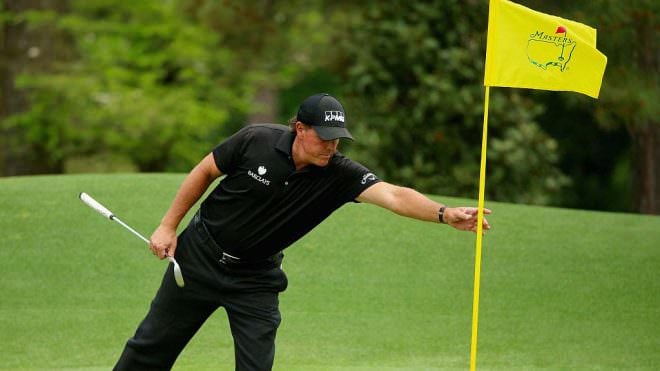
It’s been the subject on many golfers’ lips since the new Rules of Golf – allowing players to putt with the flagstick in the hole while on the green – came in at the start of the year.
The change was designed by the R&A and USGA to speed up the game. But it soon took on a life of its own on the professional tours.
We’ve had Bryson DeChambeau talking about co-efficients, Tiger Woods experimenting with it and conflicting surveys on whether it’s beneficial to have the pole in or out to hole a putt.
James Buckholt, the managing director of British Manufacturing Solutions in Luton, makes pins that are used by clubs and at top tournaments all over the world.
So who better than to get the defining word on one of golf’s hottest topics at the moment?
How is a golf flagstick made?
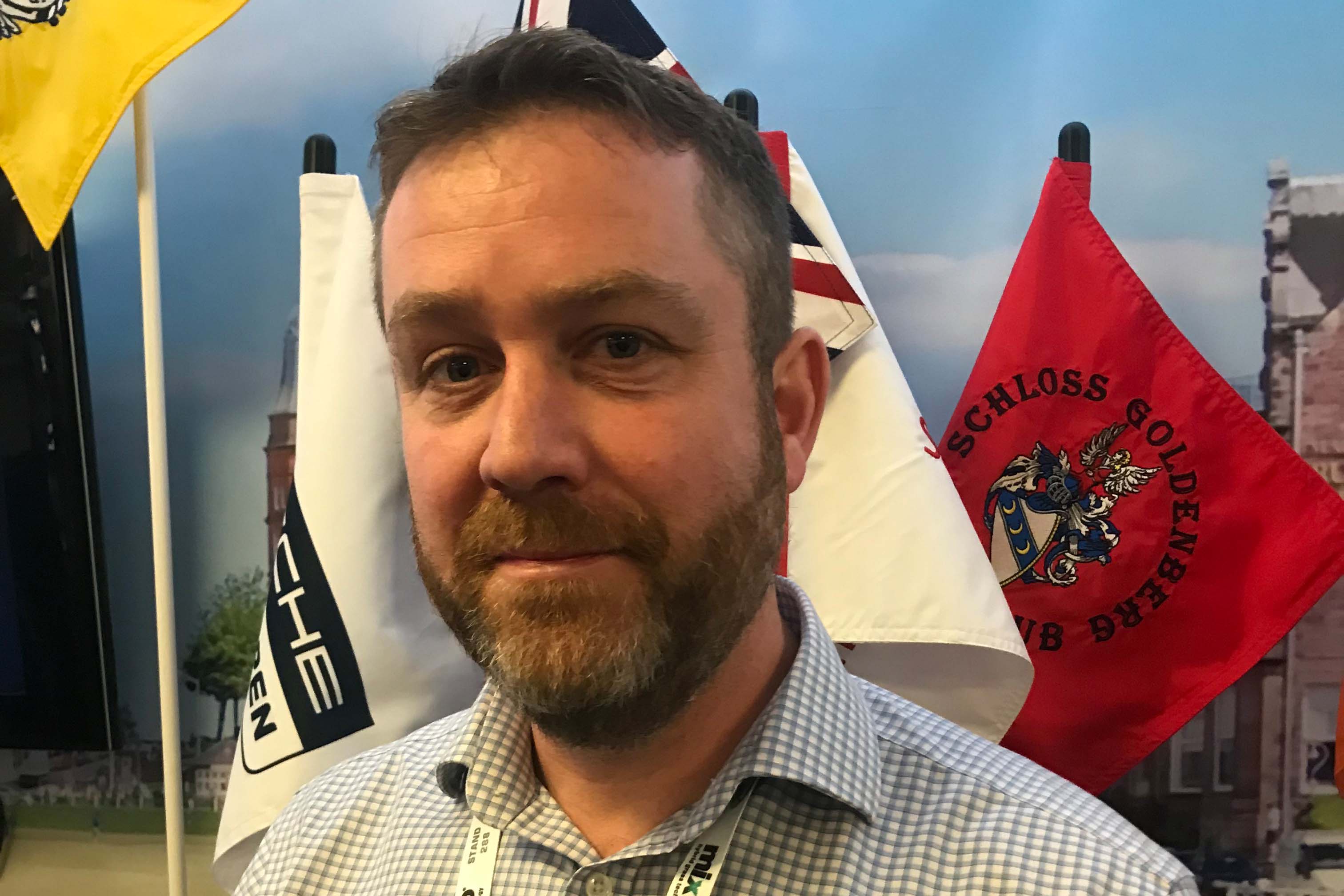
You make flagsticks…
We make a lot of flagsticks, or flag pins depending on where you are. You’ve got US and UK versions and that denotes the diameter of the ferrule that goes in the cup.
The cup has to suit the type of flagstick and there are so many variations that the two don’t always fit together that well.
So having a matching pair is quite important. The important piece is the diameter of the hole – four-and-a-quarter inches – as the ball is dropping into that.
The cup is set one inch below the surface and the pin, which sits in the ferrule in the centre, has generally been a quarter-inch piece of fibreglass.
That has been around for as long as I’ve known – and I’ve been doing this for 20 years.
Advertisement
But there have never been any rules as such, for the diameter of the flagstick, because it never interfered with the hole. You put it in and you took it out.
Some people set up a thicker one – 5/8 flagsticks – and that would have a problem with the new rule because the ball may well hit the flagstick and be obstructed so much it can’t drop in.
If it’s fibreglass in its raw state, then it is also a hard material and, technically, the ball could bounce off.
Some people paint the flagstick. We don’t. We cover it with a plastic protection and that is for a couple of reasons.
It is to protect players against the fibreglass as it will splinter and you end up with shards in your hands if you are not careful.
The quality of the fibreglass can be improved to minimise that but you’ll generally end up with a grubby looking flagstick unless you coat it in something.
The coating can add a diameter to the flagstick. That can vary depending on the type of protection used but, again, it’s pretty minimal as to what it would do to affect play.
We manufacture flagsticks from the raw material upwards.
What do you use for that?
We use fibreglass. There are a very few select clubs that might want a wooden flagstick and we do a few of those. You could use metal, or another material, but generally fibreglass is very strong and flexible and it can withstand a lot of abuse.
In general, the wind moving it would fatigue another material. If it was metal it would break.
There seem to be different sizes and thickness of flagstick…
We have a tournament, or javelin-style, flagstick. We machine that in a way where the bottom section, which is about 300mm, is still half inch. So even though the main pin you are holding onto could be thicker in the centre, the bottom piece still maintains enough space for the ball to drop in.
Advertisement
So how is a golf flagstick made?
It will start with a protruded, or extruded, type of fibreglass which has been pull-wound. That’s where the fibres are pulled through a machine with a resin and through a dye.
It comes out looking almost like toothpaste. That sets solid and becomes your raw material.
That can be a continuous length. So, in effect, when it comes out of the machine it just carries on. It is cut to the length that’s required.
The most common flagstick we manufacture is around two metres in height or between six and seven feet.
Next sees protective sleeving put over the fibreglass. We have an oven system, that we built with a computer control, and we get around 500 flagsticks in this oven.
It’s three metres long and quite a big box, which heats and shrinks the sleeving onto the fibreglass.
You could do it by hand. But we have ours specially made and it has to be done at the right temperature at the right time. That gives the quality and longevity to the surface.
Once we have ‘baked’ the flagstick it comes out and then we put the components on the top or bottom – depending on the customer’s requirement.
If it is a UK or USA ferrule, and depending on the cup it is going into, there are smooth, fluted, locking, plastic bases and heavy zinc/lead mouldings that give the bottom of the flagstick a feel of weight.
So the quality product would be more towards the metal than the plastic.
The top component sees us machine a stainless steel fitting that we crimp, or clamp, onto the fibreglass. That is what the fabric flag sits over.
Advertisement
With a special fixing on top, the flag is allowed to rotate freely on top of the fibreglass rod.
It’s amazing the impact a little rule change can have?
Now everyone’s talking about it and flagsticks – I never thought it would be such a point of conversation.
Now have your say
Are you now up to speed on how a golf flagstick is made? What do you think of the process? Let us know by leaving a comment on X.
- NOW READ: What do you do with the golf flagstick when putting?
- NOW READ: Everything you’re allowed to do with the golf flagstick
Advertisement