



The Green Book – it’s the love it or hate it putting aid about which everyone in golf has an opinion.
Ban them, argue some, alleging they are taking the skill out of reading a green and making a putt.
Leave them alone, say others, stressing the help they give is no different to the data you can get from a yardage book or GPS device.
How many of us, though, have actually used one? We decided to try and separate fact from fiction and put them to the test.
Related: The Green Book is misunderstood, says its creator
I went to Close House, the host of the 2017 British Masters, and played a series of holes with managing director Jonathan Lupton.
He’s a former England international who has won the Brabazon Trophy, twice claimed the PGA Assistants Championship, and knows the Lee Westwood Colt course greens like the back of his hand.
I’m a 9-handicap and am looking for anything that can give me an advantage as I bid to descend further into single figures.
With the rules on the Green Book about to change, we took the current version – given to the European Tour players during the British Masters – out onto the back nine to answer these two questions:
- How does it help a professional?
- How could it assist an amateur to negotiate a round?
This is what we found out…
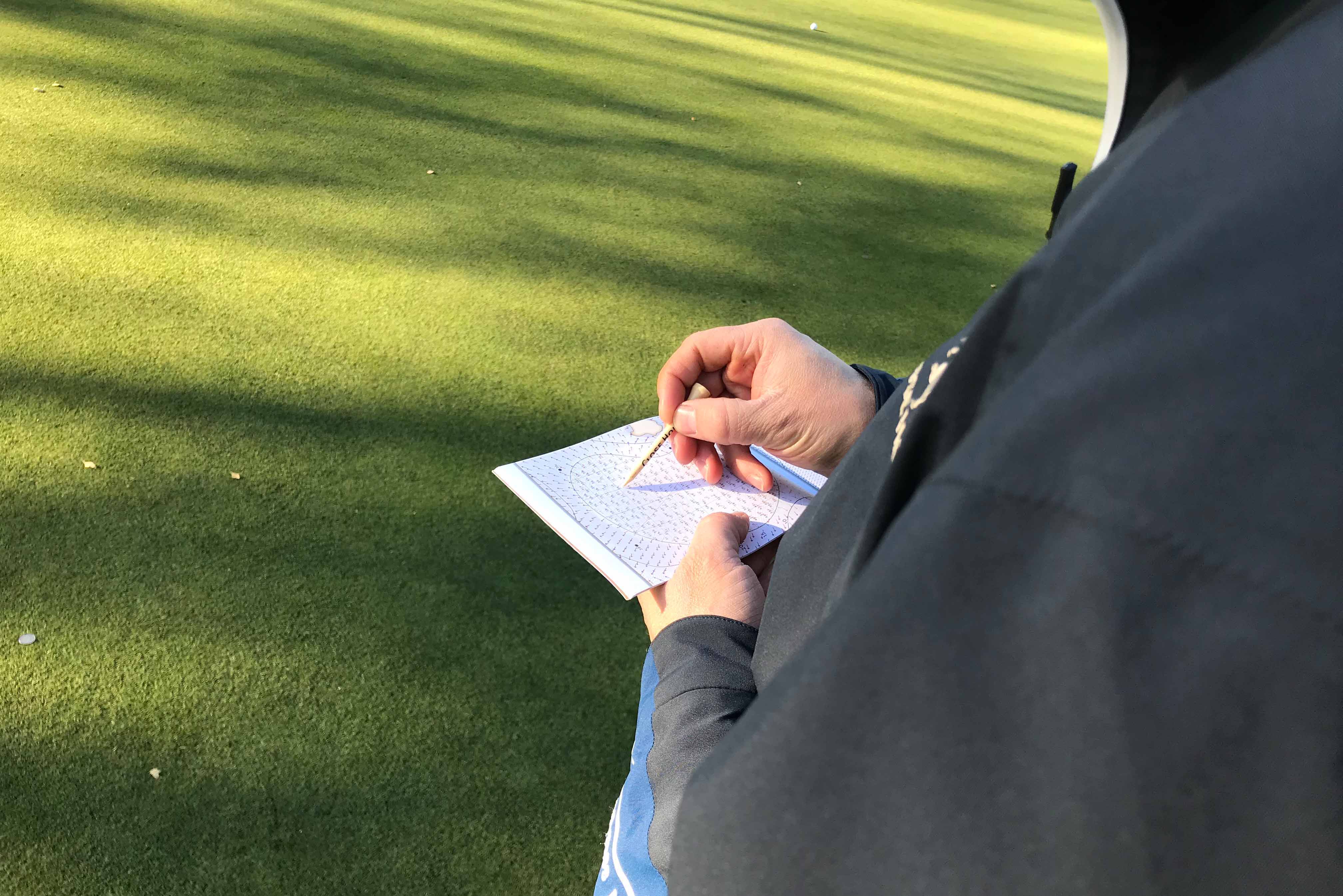
But first – what is a Green Book?
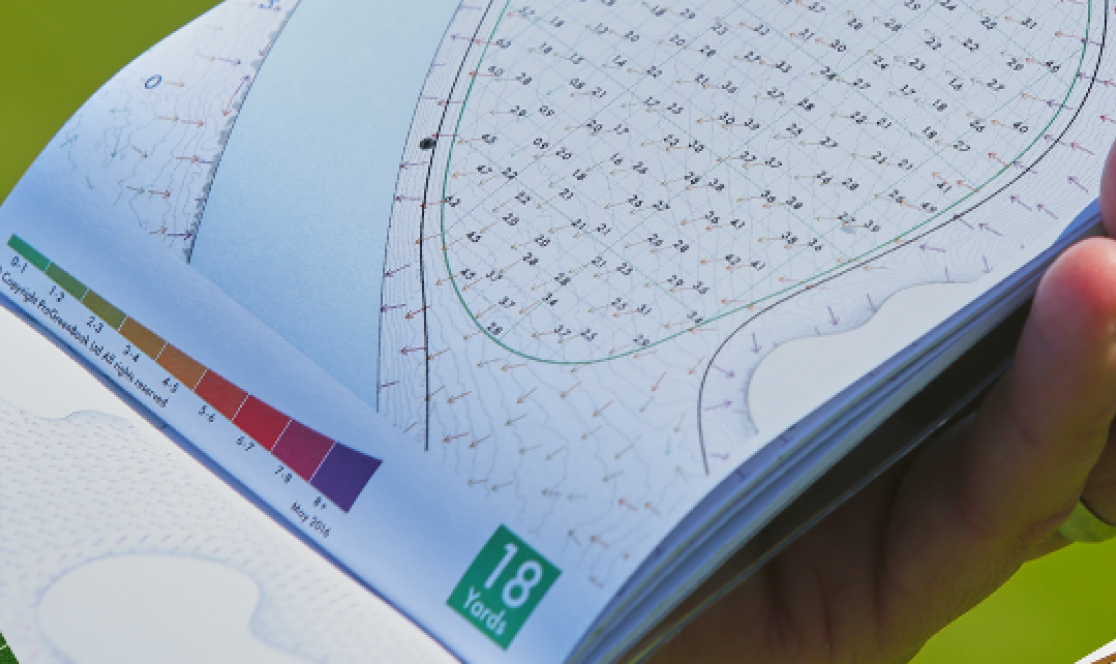
The Green Book was unveiled for the first time at the Scottish Open in 2015 and was used by Rickie Fowler to win the tournament. It is put together using laser and GPS survey data which then transforms the 3D model into drawings that are designed to help golfers understand the green and surrounding area.
It provides information about slopes that helps players predict the direction of roll for their putts.
The Green Book we used at Close House showed two maps for each green. The first provides numbers and arrows revealing the gradient of slopes. The second shows the same information, but replaces the slope numbers with more detailed arrows.
Advertisement
How difficult is it to understand?
Steve: On first glance, it seemed incomprehensible. It was a mess of numbers and arrows. When we showed the book to two club golfers, they were completely lost.
But once Jonathan had explained the principles of AimPoint to me, and pointed out how the numbers represented the gradient of slope, it was a eureka moment. By the end, I was using the numbers just as much as the arrows.
Does it slow up play?
Steve: We were definitely going into the book in some detail – lining up from sprinklers and taking it in turn to assess the gradients and borrows for each putt using the reference points on the maps.
On our third hole, the par-3 12th, we were caught by a twoball who were waiting for us to finish. We let them play through from the 13th tee and, by the time we completed the green, they were completely through and gone. We didn’t see them again.
It’s possible that with more time to assimilate the information we would find it and use it faster in the future. But given that you’re really re-assessing the data for each putt, it’s definitely going to take longer than the quick glance from sideways and behind that I’ll usually take on the greens.
Jonathan: The biggest thing for me, watching golf, is that it slows it down. I might be a little bit old fashioned in my thinking but that’s my personal belief.
We were probably going into a little bit more detail on the course (than usual) but a twoball went past us and we didn’t see them again. In six holes, they came up against us like we’d slowed down and went past us like we weren’t there. I don’t think that would usually be the case.
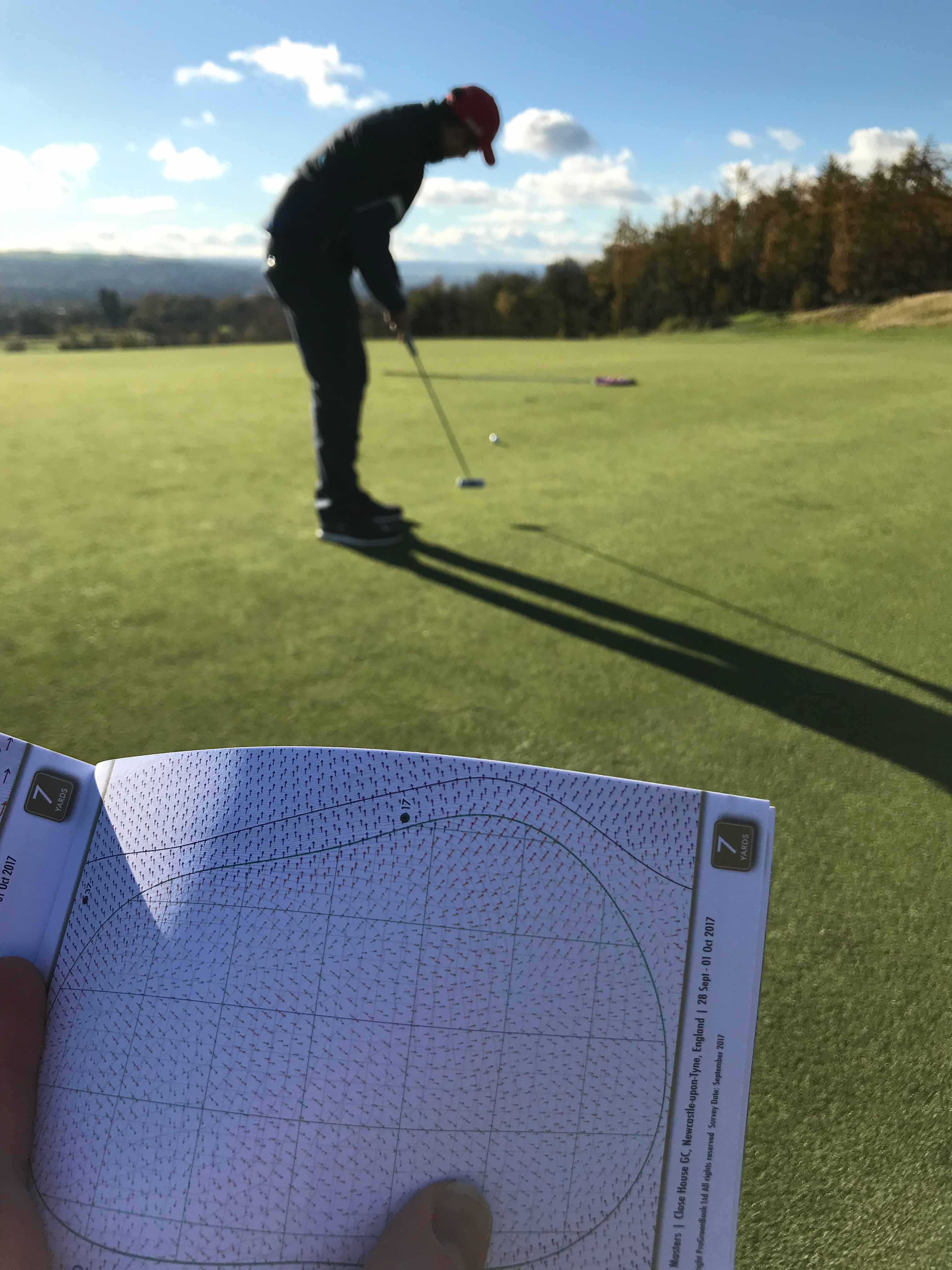
Is it better on long or short putts?
Jonathan: It’s those ones around the hole. They are the ones where there are the subtle breaks and borrows, particularly when the greens are fast. For the top players, that is where they are looking for the advantages. It is nice to stick one in from 30 feet but your make percentage is around 10%.
Steve: I’m the opposite here. I think what Jonathan is saying is absolutely correct but, at my level, I’m more worried about three putting from 30 feet than I am missing from three or four.
From distance, this book simply saves me shots. It not only gives me a direction of line but also an estimate of speed. I’ve a hard time on the Colt course actually distinguishing whether some putts are up or downhill. This means that when I’m coming across a green from distance I’m no longer guessing how fast it might be. I’ve got a number telling me all the way to hole what the slope is. That is potentially massive.
As a 9-handicapper, if I can guarantee I’ll cut out a couple of three putts a round with better gauge of distance, I’m going to be coming down pretty quickly.
So are they are a help or a hindrance and what is our final conclusion from having put the Green Book to the test? Find out on the next page…
Would it help or hurt me on the course?
Jonathan: I would hope that I was a pretty good green reader and that would be an advantage for me. So I would think the Green Book is bad for me (in terms of my opponents and the field) because it takes away an advantage of mine.
Advertisement
Yes, I can use it to read but if someone else gets the gist of it they are going to take one of my little elements away.
It levels the playing field. Some people would argue, for example, that since we went to a modern driver, which is very forgiving, it doesn’t favour the good drivers as much as it used to.
Now, for most of the players, the ball is coming off with less shape and actually they can bomb it and apply a bit more force.
There is a level that the skill of hitting the driver has disappeared in the game. With this, there is an element that green reading will be neutralised a little bit.
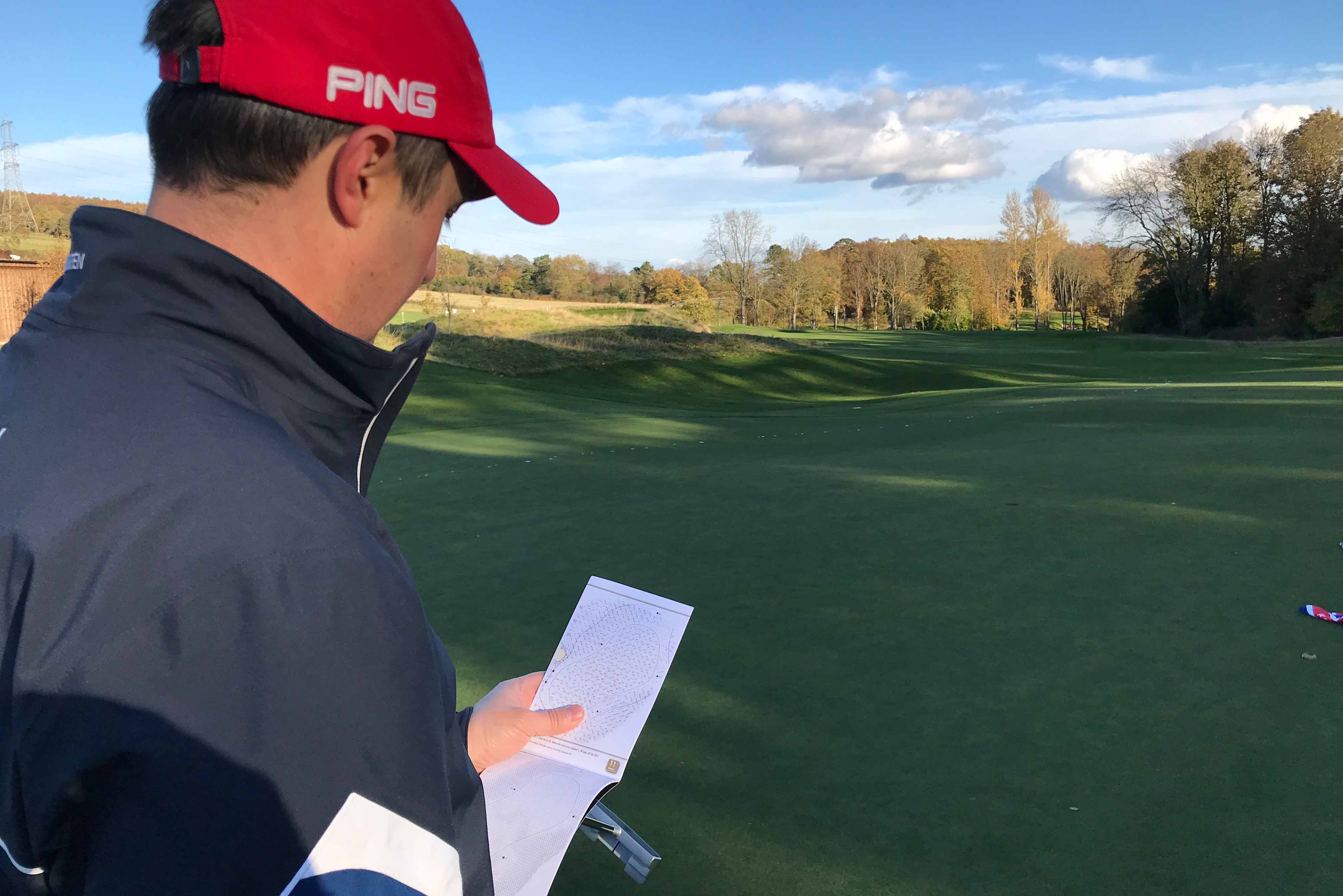
Steve: There’s little doubt it would be of help to me. I do think I have a statistical mind and enjoy using data – and am prepared to elevate that above visual senses – to try and get results. It’s very rare, for example, I’ll take to a new course without having a yardage book in tow and I’d consider a Green Book as part of the package.
So what’s our overall view?
Jonathan: For me, there are a couple of things. It takes an element of the skill level and green reading out of there, and undoubtedly it makes play slower on the main tours.
With all the changes in the game, and now that we are looking to speed play up, this makes it a little bit too slow for me.
I quite enjoyed using it and I think it could save you maybe a shot a round, which is massive. But it could save someone who doesn’t read the greens a couple of shots and, as a competitor, I don’t think that’s a great thing.
Advertisement
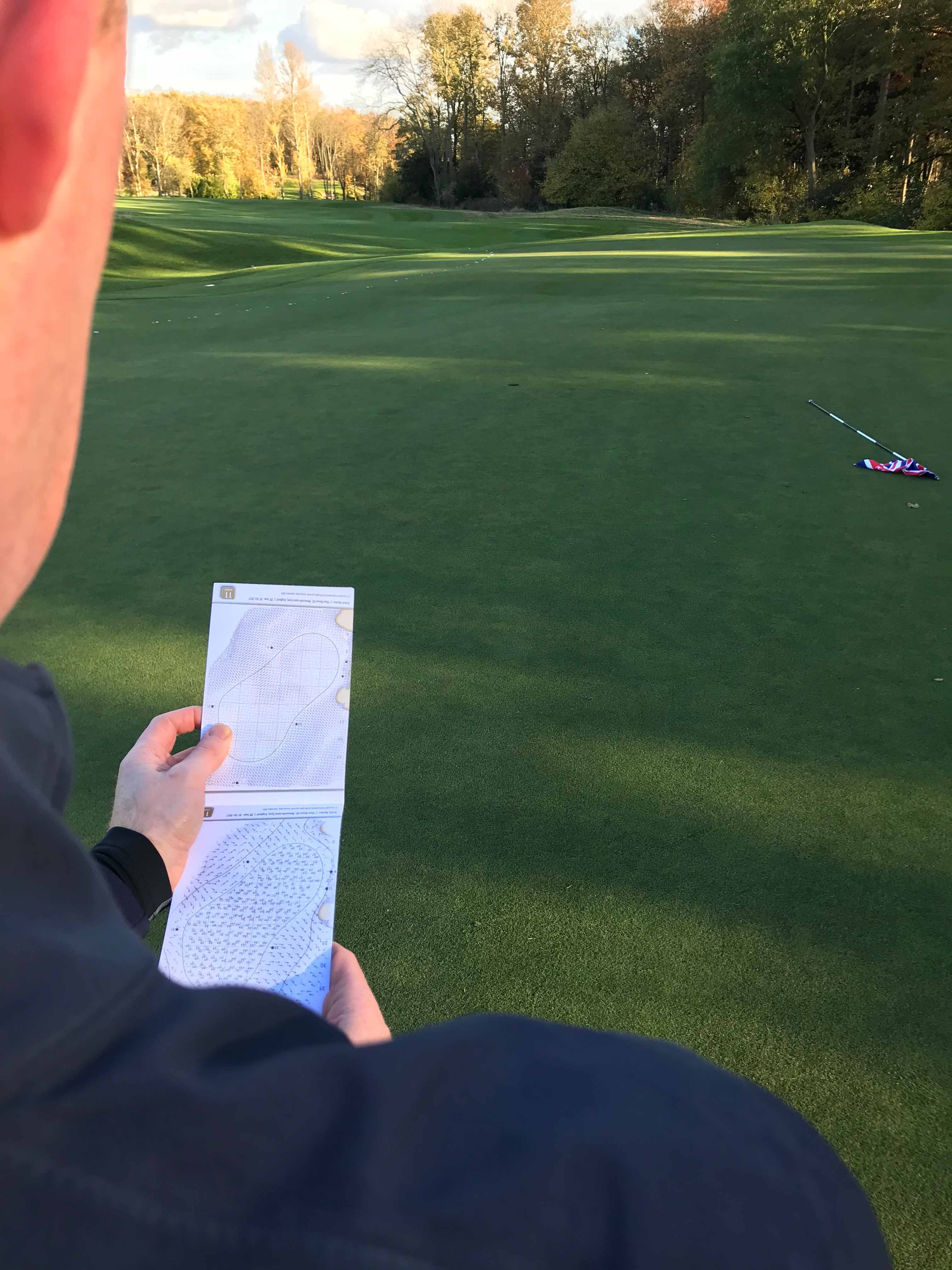
Steve: Once I got into the swing of it and, crucially, got used to the numbers, this book had a profound effect on my putting – particularly on those from distance.
I have a habit of underestimating break on those, and especially on Close House’s sloping greens. It’s hard to argue, though, when you consult the book and the arrows are pointing straight right. I found myself trusting the book rather than my eyes the longer we went on.
I don’t know whether we were paying more attention to the information on this first occasion, but that twoball left us for dead in the six holes we played.
There seems little chance, without a fair amount of forward planning and consistency, that this wouldn’t slow down my average weekend fourball.
But, on the whole, I enjoyed using the book and think it’s a similar help to yardage books, which also tell you where the humps and hollows are on the fairway and where the lines of sight are for a drive.
Green reading: The go-to putting guide for Stenson, Rose and Mickelson
Advertisement