


When you’ve got rules, you’ve got debate and drama. Just like a questionable offside decision in a football match, when a top golfer finds themselves in some Rules of Golf trouble, then the laws of the game can be put under scrutiny.
We play a sport that’s unique in its arena. A golf course is massive and the things that can happen in that vast expanse are almost limitless.
It’s why the rules are 200 pages long and the official guide, which includes clarifications and committee procedures, weighs in at more than 500. And even that doesn’t cover everything!
I must confess I’m attached to those Rules more than most. I’ve spent months at a time buried in subsections and clarifications while studying for various exams. I’ve used them to give plenty of rulings in some big amateur competitions.
My love for them is not boundless, though. There are some even I would consider having another look at.
So if you’ll allow me, I’ve co-opted myself onto the Rules of Golf Committee that looks at making alterations. If you’re expecting me to get stuck into divots, you’re going to be disappointed.
Here’s are the five rules of golf changes I would be arguing for…
Rules of golf changes: 5 I’d alter straightaway
The knee-high drop
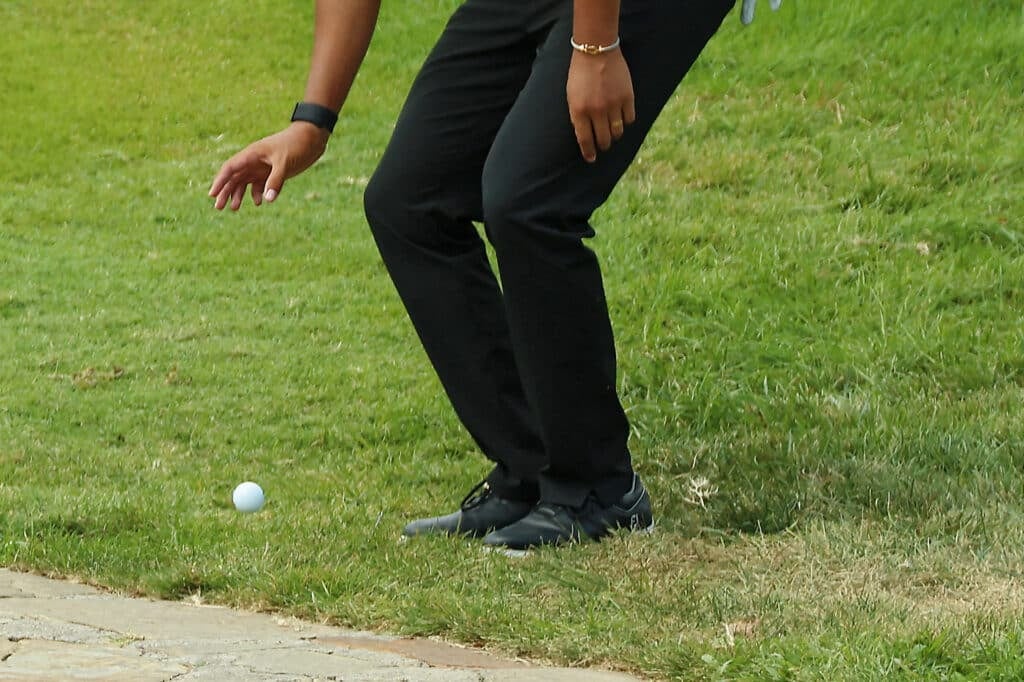
The knee bit doesn’t bother me. It’s the drop in general – especially when it comes with a penalty attached. You’ve already suffered the consequences of a mistake, and taken the stroke on the chin, why do you need to compound that by adding an element of unpredictability to the next stroke?
It’s all very Victorian. They were gluttons for punishment, weren’t they? I’d just allow you to place it. Not only would it remove this random element it would speed the game up too.
Advertisement
Everyone moans about how much time golf takes and then you can time having to drop again as a ball rolls out of a relief area. And that’s before, and the irony isn’t lost on me here, you then place it.
Oh, but people would tee it up in the rough. They’d give themselves a nice lie. Well, if you can use the rules to your advantage do so – as you would in any other area of the course.
I just don’t really see the point when someone has already accepted one punishment in possibly handing them another because of an unlucky bounce.
Rules of Golf changes: The 14-club rule
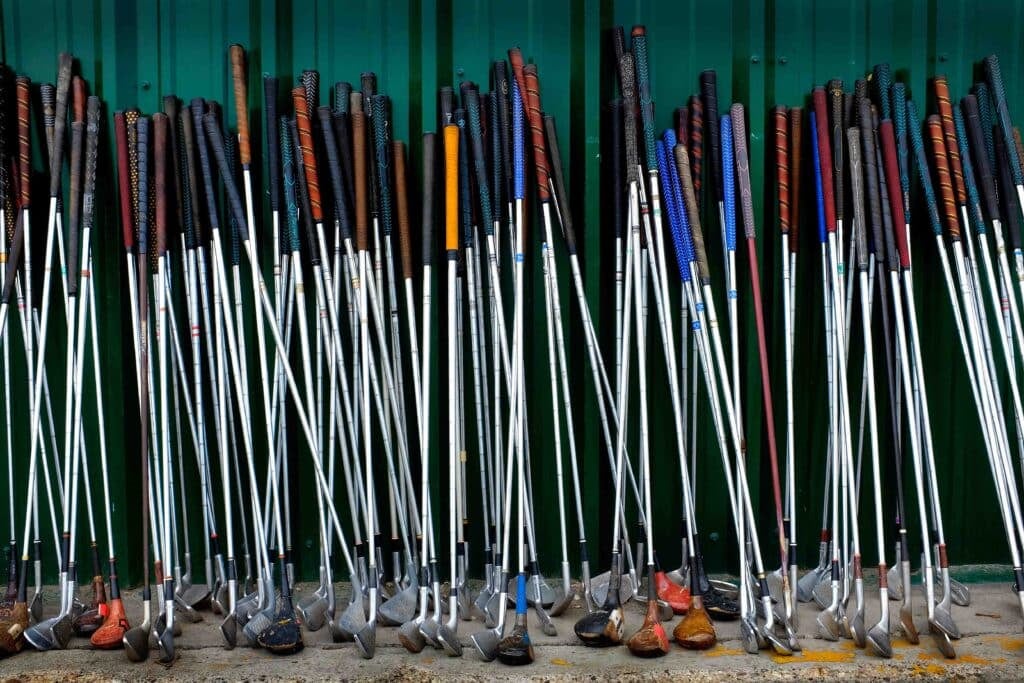
It’s an arbitrary number to start with. Brought in by the R&A in 1939 – and the USGA a year earlier – it really does seem to have been plucked out of thin area.
In his excellent book on the origins of the game’s laws, The Rules of the Green, Kenneth Chapman, quoting Robert Harris – the one-time R&A golf ball sub-committee chair in the 1930s – said the matter was sorted “without the why and wherefore of only fourteen clubs being questioned or debated”.
The point was the introduction of steel shafts had seen the tools carried by players explode. Chapman says that Lawson Little, who won the British Amateur twice in the mid 30s, carried up to 31 clubs. Think of his poor caddie.
But honestly, who cares how many are in the bag? Does it really matter if Phil Mickelson carries six wedges if the rules are the same for everyone?
Virtually certain
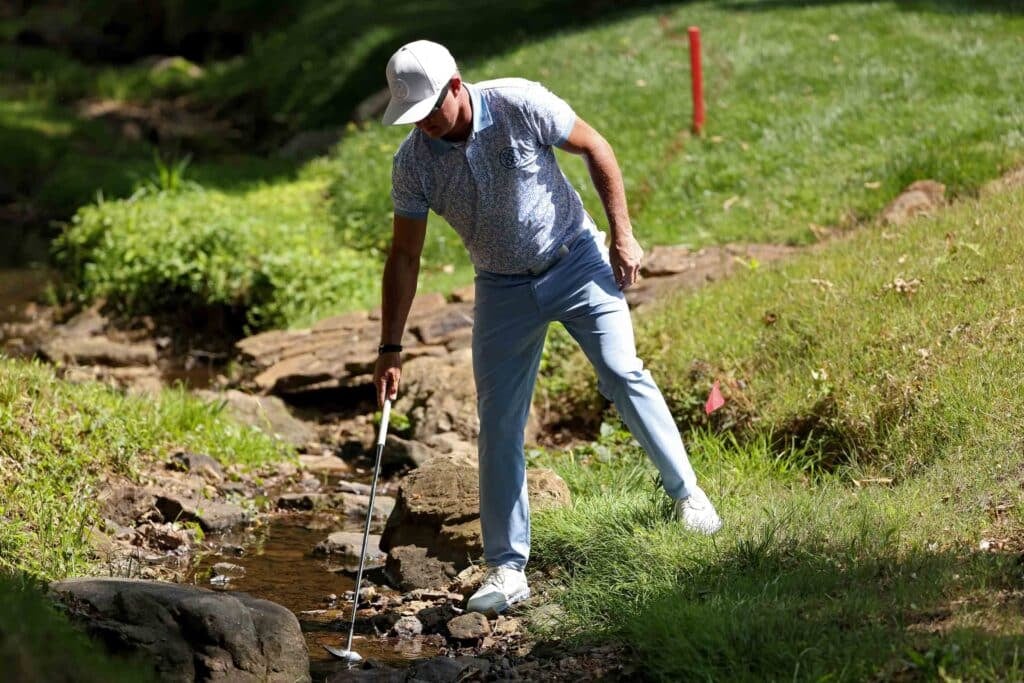
Some of you might know this, I suspect many of you don’t. To take relief in a penalty area, it has to be known or virtually certain the ball is in there. The same applies if you’re trying to work out whether your golf ball has moved. You need to know or be virtually certain it has happened.
But it’s just too vague. Why not just leave it at known? Here’s the problem. Everyone thinks it’s virtually certain their ball has gone in the penalty area. And, by the same token, they reckon it’s at least 95 per cent likely. Even if it can’t possibly be.
And how do you quantify what “at least 95 per cent” is? It’s a number on a piece of paper and nothing else. The average hacker just can’t compute it. And the official who’s at the scene? Good luck.
Take away virtually certain and, using the penalty area example again, it’s either known to be in there or it’s not. You can take relief in the first and you can’t in the second.
It would certainly save me some time out on the course trying to explain to a player that their ball could have got stuck in the rough, that it could be in that bush on the other side, and that they never saw it land means it is neither known nor virtually certain.
Rules of Golf changes: Turning off the slope function on lasers
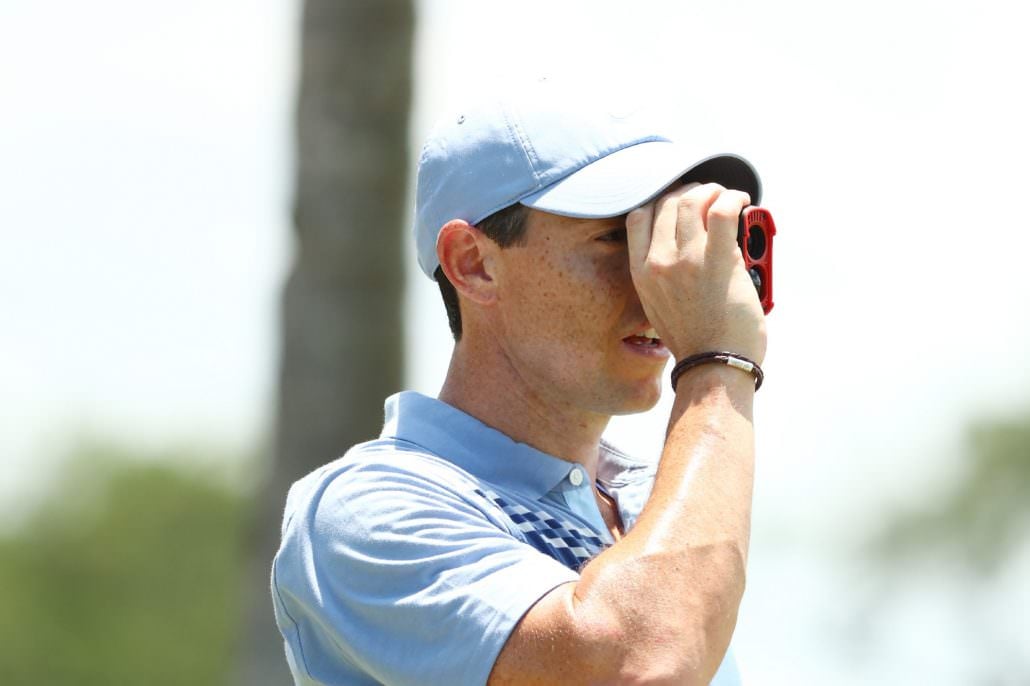
If you want to enforce this at the highest level feel free. But letting me know that it’s another five yards up the hill from the 150 that’s already displaying in the viewfinder that’s pointing at the flag makes absolutely no difference to the way I hit the shot.
Oh, but it’s part of the skill of the game! Right, take lasers away completely then. If calculating the difference in yardage between an uphill and downhill shot is so important than surely getting that number at all is just as vital?
Advertisement
But you’d be an idiot to remove distance measuring devices at club level. No one wants to see golfers pacing out yardages all over the course or slowing down the game even further.
The game is already bifurcated here, as only a fraction of professional events – in the men’s game at least – allow the use of DMDs.
A Local Rule could easily forbid the slope function in that sphere, just as they already further restrict the use of green reading materials, and leave the function available for everyone else.
It certainly beats a tough disqualification from your monthly medal because you’ve forgotten the red light is still on.

Stroke and distance
I’ve written about this in some detail before but, for any of you that didn’t catch my original grumble, here is my beef with this one.
Keeping the ball within the boundaries of the golf course is a fundamental tenet of golf. For those shots that go out of bounds, stroke-and-distance should still apply.
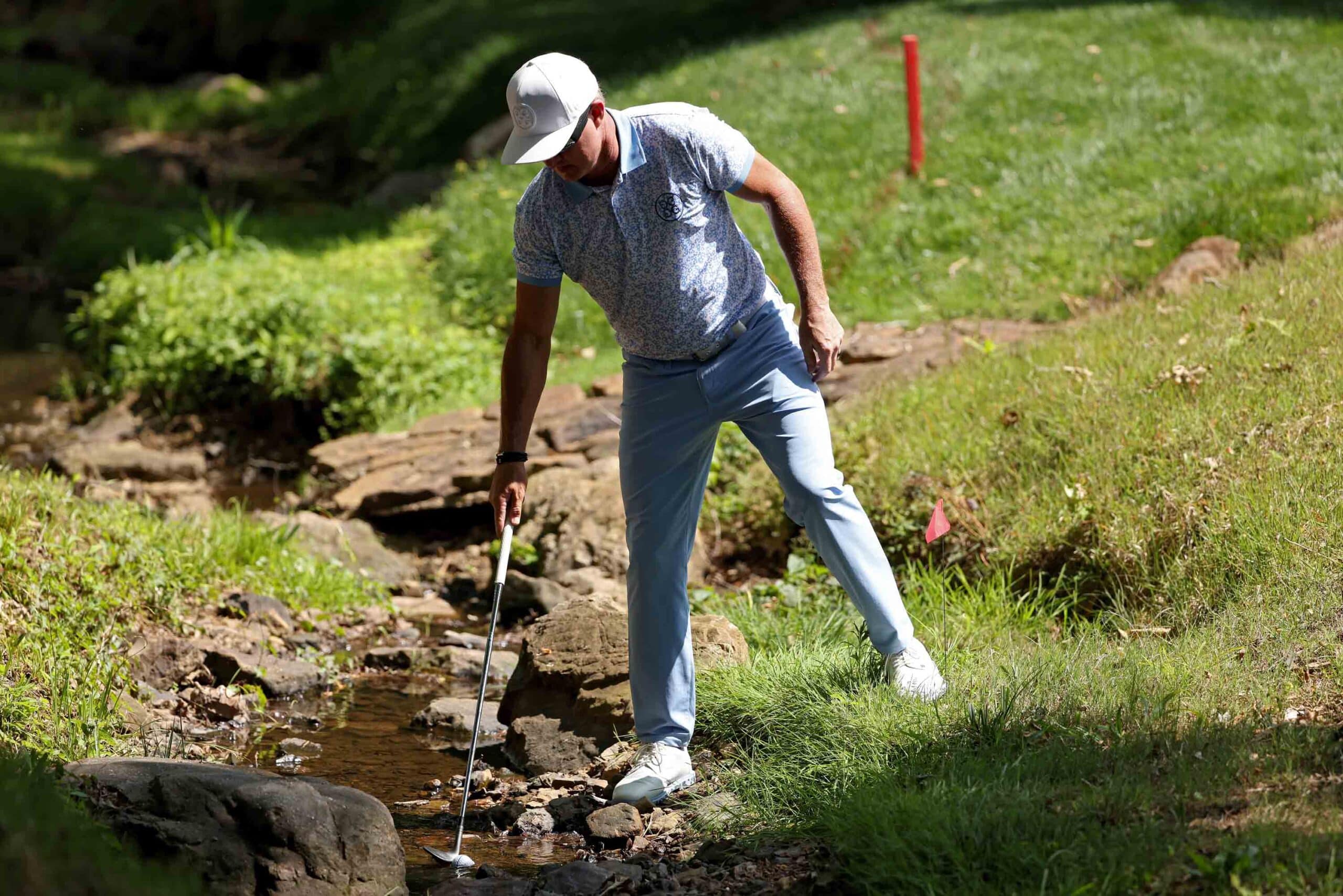
But when I think about a lost ball on the course, I find myself asking more and more how that situation is any different from a ball in a penalty area.
If it’s known or virtually certain to be in that penalty area, you can take relief at a cost of a stroke.
If the same applies for a ball that’s lost within the boundaries of the course, why can’t do you take similar relief?
Everyone does this already in friendly games. A ‘bush rule’, or whatever you call it, no one is walking all the way back to the tee when a scorecard is not on the line.
You just drop a ball, accept a penalty, and carry on.
So what if the Local Rule was tweaked, removing the ability to take relief on the edge of the fairway? What if you could drop at the point where the original ball was estimated to have come to rest on the course?
Advertisement
If that’s in the rough, drop at that point in the rough. If it’s in the trees, well… you get the drift.
- This piece on Rules of Golf changes also appears in the GCMA’s monthly Insights newsletter that is packed with expert opinion on matters relating to golf club management. Sign up to Insights for FREE here.

Now have your say
Do you agree with me on these Rules of Golf changes? Which would you alter if you were in power? Let me know by sending me a message on X.
- Looking for a golf deal: Deals of the week
- Looking for a driver: Best budget golf drivers
- Looking for golf balls: Best golf balls for mid handicappers
Advertisement