


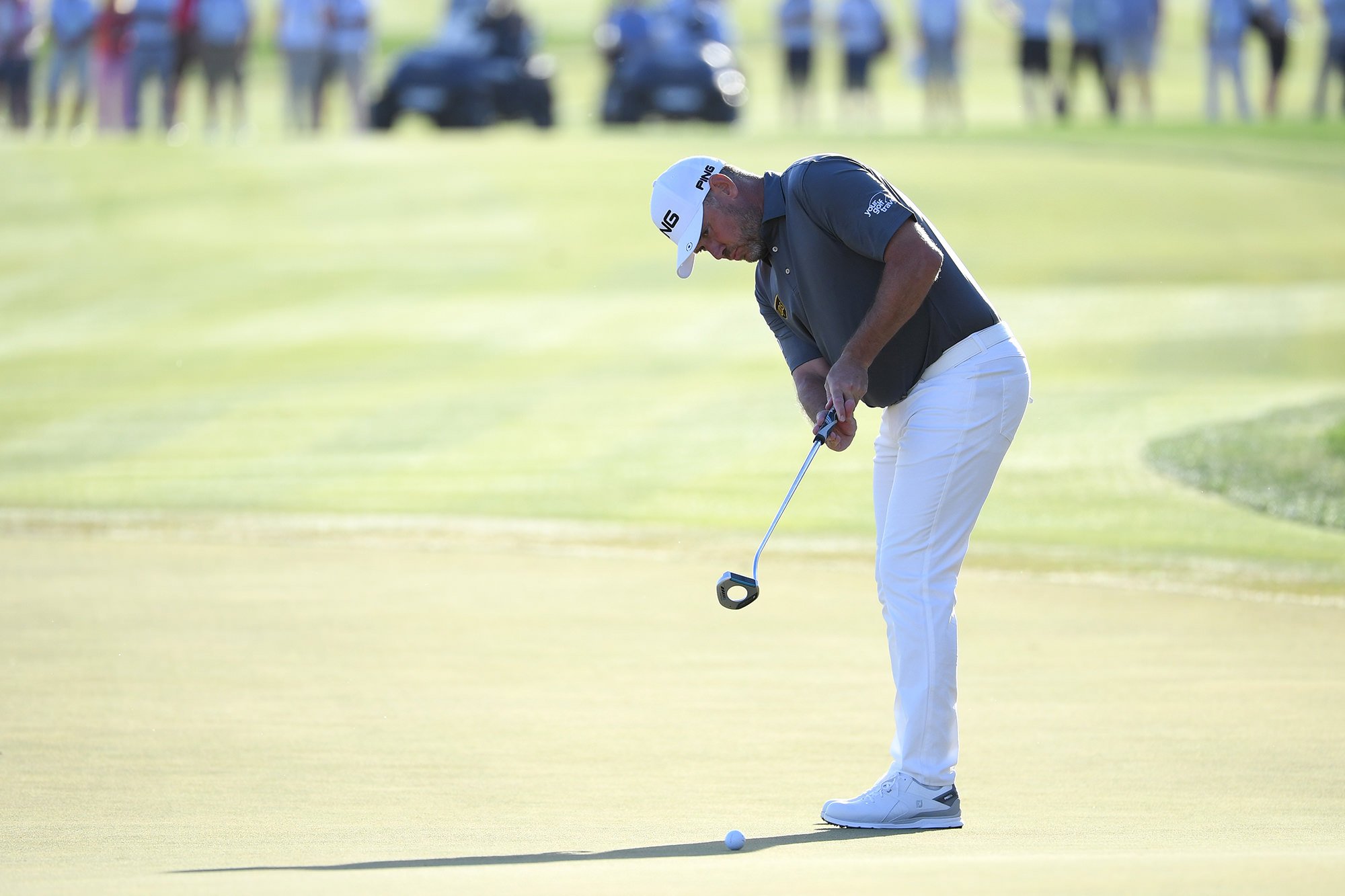
When it comes to putting, the technique isn’t always the biggest issue—it’s your mind. The key to sinking more putts lies in understanding that putting is all in your head. Your mental approach plays a crucial role in determining your success on the green. From handling pressure to maintaining focus and confidence, the psychology behind putting is often what separates good putters from great ones.
We teamed up with Karl Morris, one of Europe’s leading golf performance coach. Karl has shining resume having worked with 6 major winners and over 100 tour players. Notable names include Lee Westwood, Darren Clarke and Louis Oosthuizen. Karl isn’t a golf psychologist but helps players combine their mental game with performance on the course. Below, he discusses how your mindset can impact your putting performance. As well as giving expert tips that you can test out on the golf course.

Worry About Other’s Watching
Having someone watching you play creates a feeling of paranoia for many golfers. The issue of so-called ‘1st tee nerves’ revolves around the same notion: ‘I’m uncomfortable because people are watching and I don’t know what they’re thinking…’.
I’m sure you can relate to any number of scenarios. Say you are playing with a well- known player at your club and it is the first time you have been paired up. You want to impress that player. Over the ball, that little voice perks up inside your head, reminding you that they’re watching. The thoughts within your mind start to race and there is little you can do to shut off such a damaging, judgmental attitude.
What Can You Do?
To cure this affliction you have to change your philosophy about what you can and cannot control. You cannot control some- one from observing you or watching you. For many players, the tendency to look and observe is a natural human phenomena because we are naturally curious about what others around us are doing.
Advertisement
Therefore, you must get into your own thing, let go of the curious eyes of others and focus your attention on what you are doing rather than waste your energy on what other people are thinking. Truth is, no one really cares about your game and the way you putt!
They are probably watching you because they want to use your putt to provide them with information to help them putt! In truth. It isn’t about you at all but it is about your putt to help them!
The basic point is this: focus your energy on your putt and allow others to do whatever it is they want to do. As anything else in life. If you do not give the source of irritation energy, there ceases to be a disruption.
- RELATED: Ultimate Guide to Putting
Not Focusing on The Task in Hand
As silly as it might sound a lot of golfer’s don’t actually focus enough on what they’re doing. Player’s can be distracted by a group waiting behind for the to clear the green. Or, you might be thinking about if you locked your front door at home. Either of these little thoughts takes attention away from the putt.
What Can You Do?
The simple answer is focus. A clear, free mind can put 100% effort into what they’re suppose to be doing.
Try to direct your attention on the physical body, you will lose the thoughts of what is going on in your head. This means there will be no mental distractions. A putting stroke tends to take only a split second and so it’s not a long time to have to focus for.
Scoreboard Putting
This refers to the common problem of running a total in your mind of how you are doing. This ‘outcome focus’ takes your mind into the future. Focusing on the next shot, removes the attention from the what needs to be done here and now with the putter in hand. This creates tension over the ball, fearing a bad shot.
Forgetting score is the hardest aspect for all golfers to master because of our calculating and addictive minds. As you are playing a tournament round, you may be calculating your score and know exactly where you stand.
What Can You Do?
Stay present, focus on the task in hand. As you are getting ready to step into your putt, your focus should that, not be on score. The intention is to get the ball in the hole or as close as possible and you can deal with score after.
Do or Die Putting
“Do or Die” putting is a form of psychological desperation on the greens. Golfers who suffer this affliction are typically frustrated, fed up with mediocre results and increasingly agitated in their thought process. A mindset that says, “I need to make this or else!” is an example of taking putting to the emotional extreme.
Instead of allowing their putting talents to flourish, they place so much pressure on themselves to make putts. But in turn they only succeed in self-sabotaging their putting stroke.
Another issue here stems from the growing frustration of leaving putts short. After leaving yet another attempt in the jaws the ‘do or die’ putter has had enough. “Hit it to the hole you wimp – I can’t believe you left it short!” Nothing is as heart-breaking knowing that you have to count one more stroke for a putt that was just a quarter-roll from being successful.
What Can You Do?
Advertisement
Rather than trying to force the ball into the hole with this overly aggressive play, you have to develop the mindset that accepts the outcome. Easier said than done, I know. Putts sadly don’t all go in and so you can’t force something to happen that’s not happening. Understand that if you have the correct fundamentals and process in place the putts will drop at some point.
Breathing exercises are also a great way of recovering from a poor shot, as getting all worked up makes staying focused on the next shot more difficult.
Self Doubt
Doubt is a natural feeling especially in sport. A lot golfer’s approach a putt was fear. “I don’t like the look of this one” or “I can’t hole anything today”. This sort of negative self talk isn’t exactly setting you up for a good putt. It’s actually the opposite. It’s reinforcing negative behaviours, as you miss another “well I knew I was going to miss that”.
Being unsure on line or pace will lead to heightened anxiety and fear around the shot. If you’re not entirely comfortable when stood over the ball you’re not focusing attention on task in hand.
What Can You Do?
The significant thing to bear in mind here is that all great putters believe they can and will be successful on the green long before they actually get to the ball and study what they have left.
In the The Lost Art of Putting, the main question is, “What does this ball need to do to go in the hole?”It sounds a very simple question but the effect is when you ask that question your brain supplies very high quality information to your body.
When you answer the question you are in effect punching in a postcode, to your destination. How is the ball going to get to the hole? This means looking at lie, line, length, all factors that determine start line and pace. Then all that is left is stroke.
Advertisement
Make sure that all boxes are ticked helps to eliminate self doubt. Being confident in the process always a clear head when stood over the putt.
If it’s your physical putting ability aka your technique that you doubt then it’s worth thinking about how much time and effort you spend practicing your putting. Do you spend more time on there range that could be better spent on the putting green? If you do focus a lot on putting practice and are still struggling it might be worth investing in some lessons.
Key Points: Mentally Preparing For a Good Putt
- As you walk up to the green just focus your attention on the rise and fall of your breath for a few steps. It should immediately slow that heart rate down and focus your attention on the here and now.
- Focus on the task in hand, the putt. What happened on the last hole or shot doesn’t matter anymore as it can’t be changed. So, take one shot at the time.
- Asking the question, “What does this ball need to do to go in the hole?” Create a strong pre shot routine. This sets you up for understanding every part of the putt. Line, length, pace etc. Once you are confident in all of this information, commit!
- It’s okay if the ball doesn’t go in the hole. Granted, it’s not the outcome you’re looking for but take the positives and move on. Such as, put a nice roll on the golf ball or my pace was good.
The Lost Art of Putting Book
Karl Morris is the co author of The Lost Art of Putting book, where all of the above information and much more can be found. It is one of three books in the series.
You can purchase the book through the below link.


Advertisement