


Hideki Matsuyama is an exceptional ball striker and has had quite a year, winning the Genesis Invitational, the FedEx St Jude Championship and a bronze medal at the Olympics. In the Hideki Matsuyama swing analysis below, PGA Pro Jack Backhouse breaks down his swing to see what you can learn.
- RELATED: 3 easy steps to perfect golf posture
- RELATED: Genesis Invitational prize money. What does the winner earn?
- RELATED: Hideki Matsuyama Player Profile
Set-Up
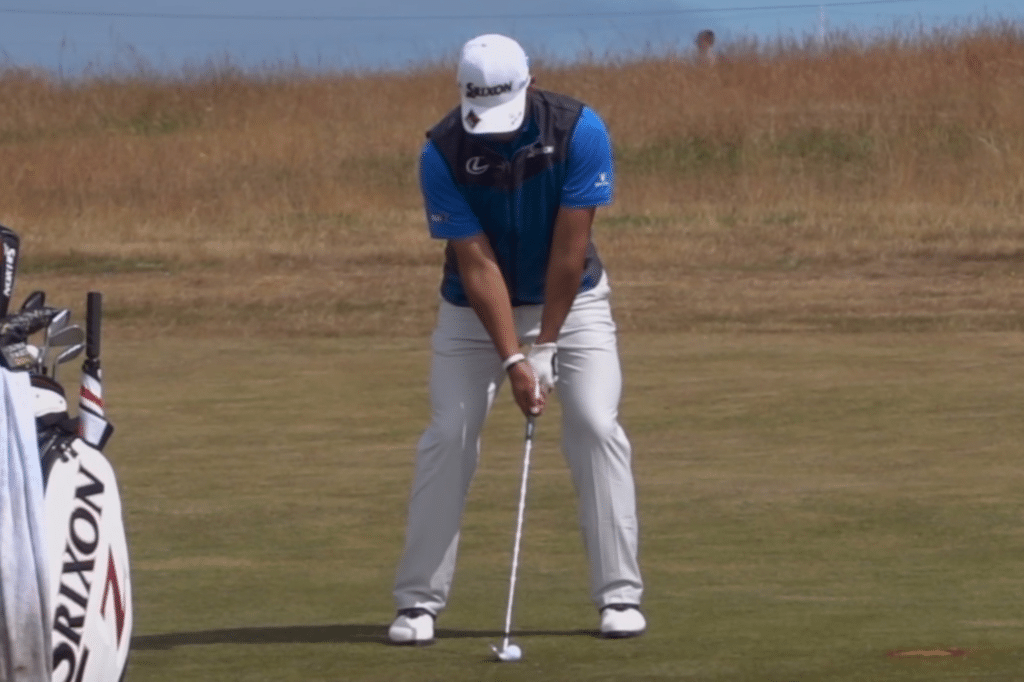
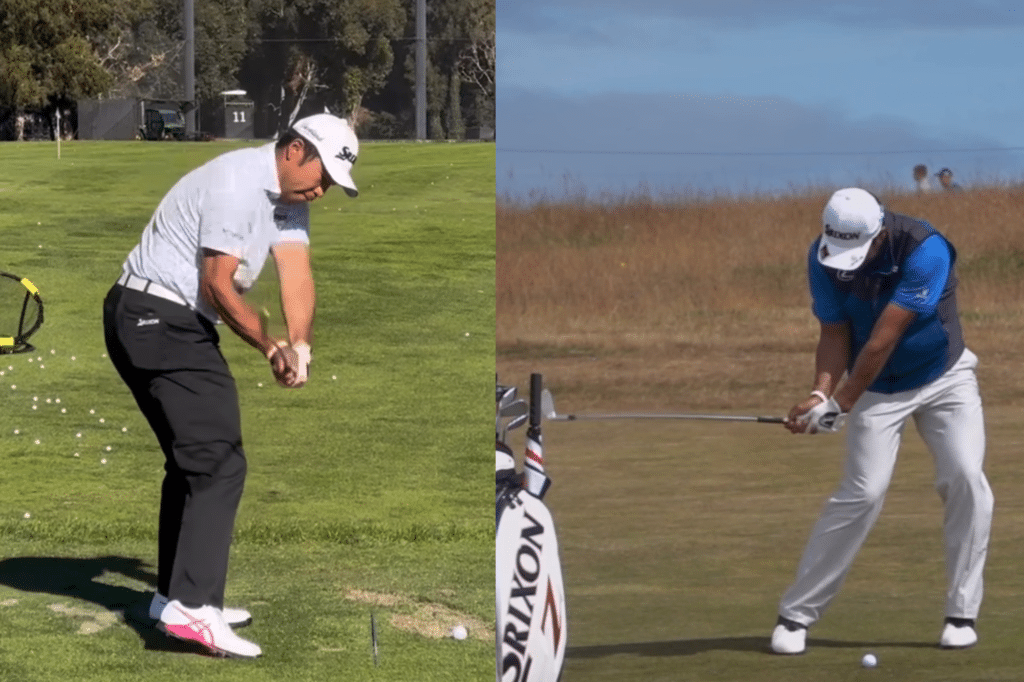
Hideki looks very strong at set-up; he takes a nice wide stance with quite a tall posture and looks ready to make an athletic movement. You can see in the image below he has an exceptionally weak grip. Matsuyama plays most, if not all, of his shots with a fade, so taking a weak grip is going to encourage the face to be more open throughout the swing, removing the likelihood of closing the face too much and hitting the dreaded double cross.
Backswing
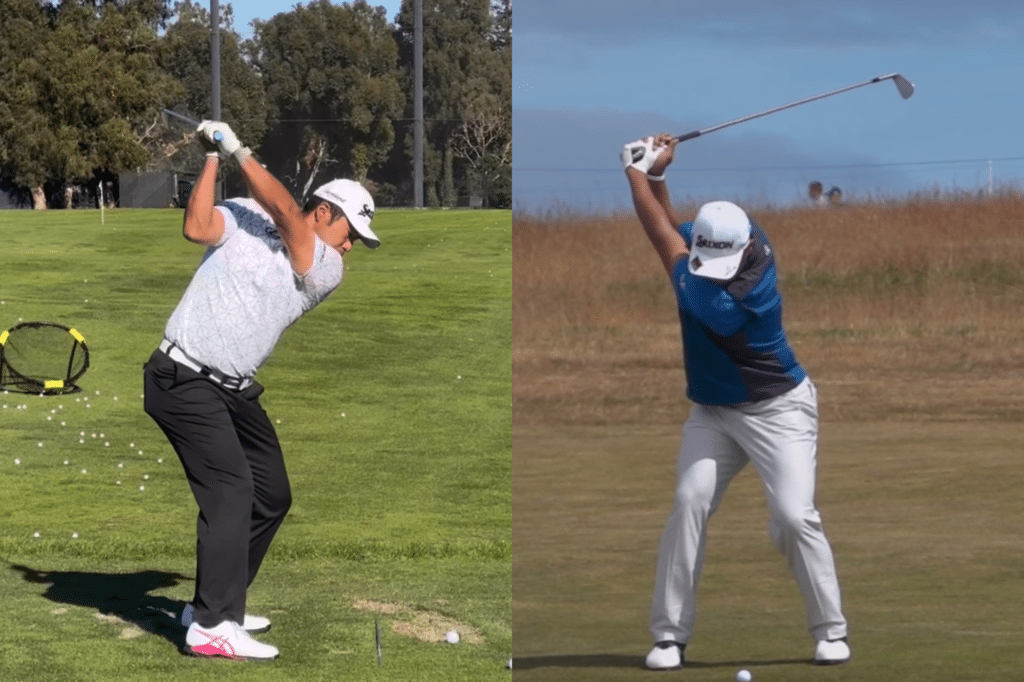
It is the backswing Hideki is most recognizable for; he turned up on tour many years ago with a very long pause at the top of the swing before starting his downswing, but he has more recently worked to lessen this, so the pause is much shorter now. Matsuyama has a really strong turn in his backswing and looks to create a lot of tension to the top; he doesn’t really let his right leg straighten very much but does accomplish a huge, centred hip turn which, in my opinion, is part of what makes him one of the best ball strikers on tour.
The arm structure and club positioning are another part of this. He doesn’t let his right arm bend more than 90 degrees and externally rotates his right arm so that the club gets into a laid-off position. This is another fade bias move, which will always result in the club steepening later in the downswing to get the swing path left and the angle of attack steeper.
Advertisement
Downswing
It is in the transition that we see Hideki really turn on the style. He bows his left wrist in transition to deloft the club and to get the clubface closed relative to the target (essential for hitting a fade). He centres his hips and his chest ahead of the ball, which again means he is in a position to really compress the golf ball. There is a lot to like about his delivery position, too. Flat left wrist, hips open but shoulders closed, clubhead and arms out in front of his right shoulder, all a coach’s dream.
Into the Finish
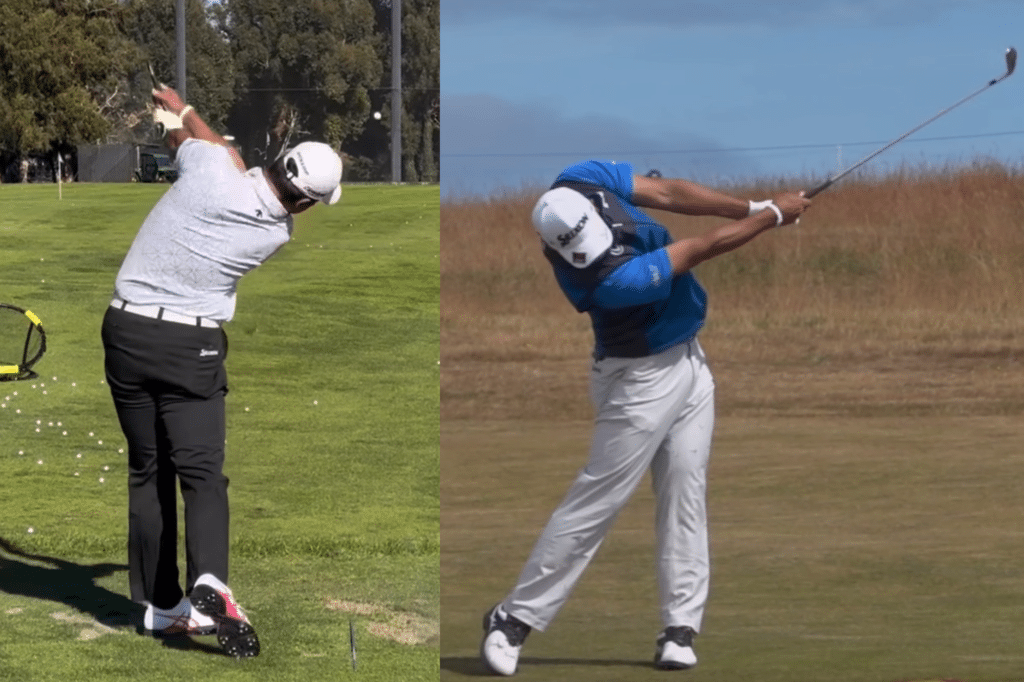
Matsuyama passes here through some more textbook positions. Look at how extended both his arms are and also his lead leg with his hips centred over his front foot. This helps hit the ball up in the air more and, when achieved, usually means the swing has been really fast. I love how low his right shoulder is below his left; he has done a great job of pivoting whilst staying in posture.
What can we learn?
Unlike Dustin Johnson’s swing, which I analysed last week, there is a lot in Hideki Matsuyama’s golf swing that is worth copying.
- A strong, wide posture
- A centred hip turn – not letting your hips move away from the target helps create a bigger shoulder turn whilst keeping weight forwards
- Getting the left shoulder and left hip ahead of the ball in the downswing – this is a great ball striker move that will also stop a slice.
- Massive extension through the ball: If you want more carry distance and shot height, then do this!
Keep an eye out for more tour winners’ swing analysis’ in the future.
- RELATED – How to hit the golf ball low
- RELATED – Can we shoot level par with hickories?
- RELATED – 5 rules of golf changes you need to know about